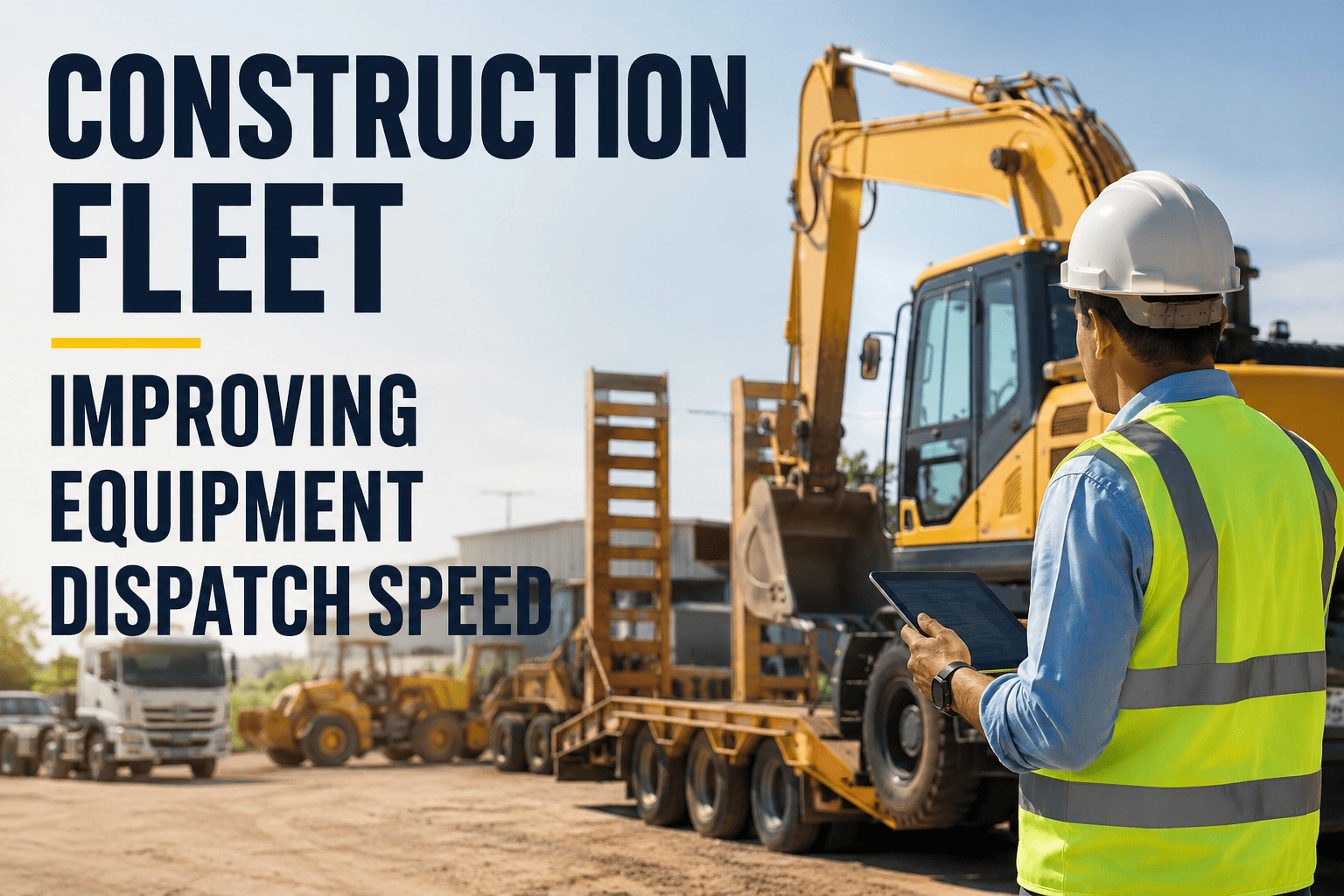
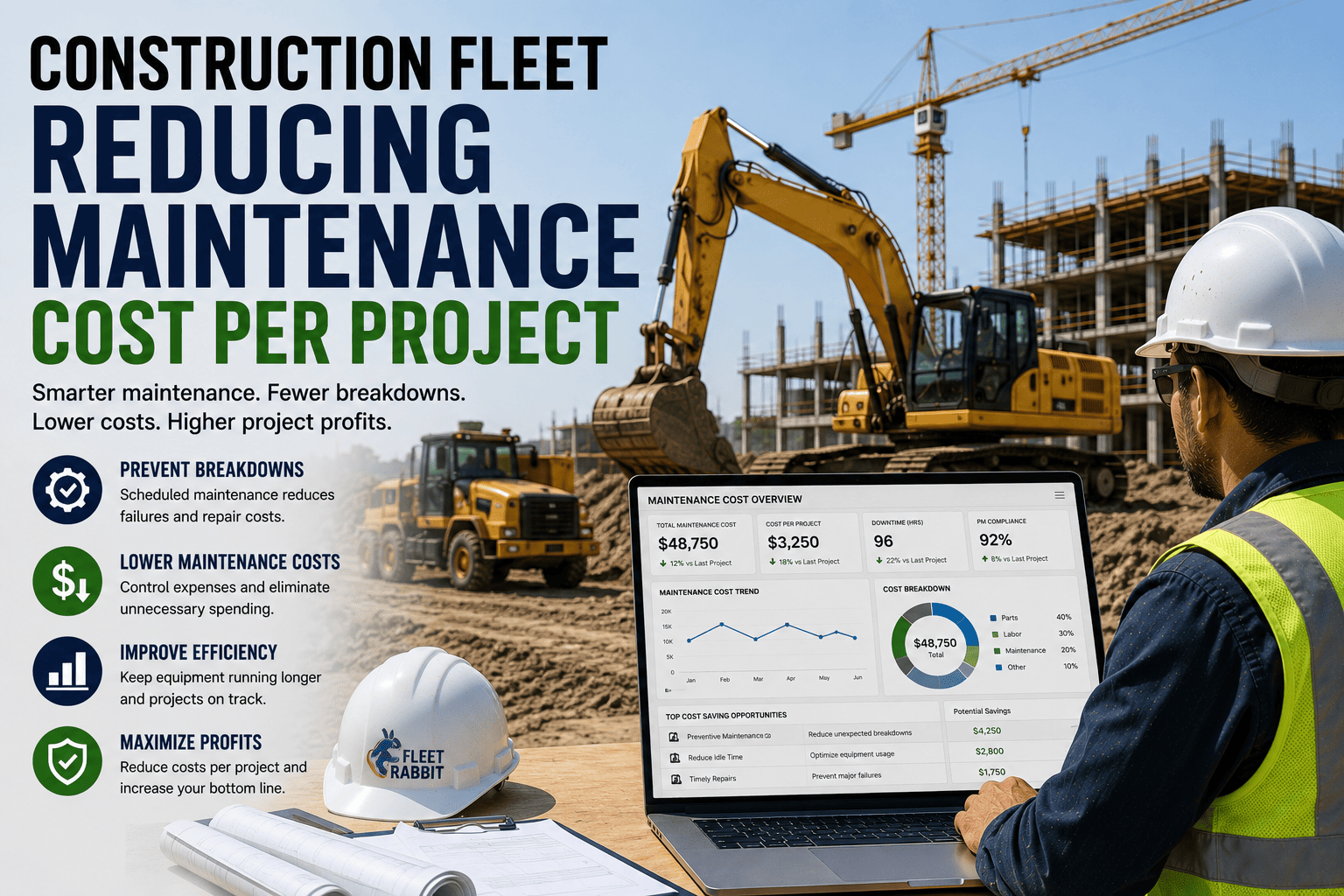
Construction fleet management is undergoing its most significant transformation in a decade — driven by five converging technologies that are reshaping how contractors track, maintain, dispatch, and optimize equipment across job sites. AI-powered predictive maintenance is catching failures 5–15 days before breakdown. Real-time telematics gives fleet managers GPS-level visibility into every machine's location, fuel consumption, and operator behavior. Electric construction equipment is moving from pilot programs to production fleets as emissions regulations tighten. Automated dispatching and smart scheduling are eliminating the phone calls and whiteboards that waste 4+ hours daily. And IoT sensor networks are creating connected construction ecosystems where every machine, tool, and site system shares data in real-time. Fleet managers who adopt these five trends in 2026 will reduce operating costs 25–40%, extend equipment life 3–5 years, and gain competitive advantages that slower-moving competitors can't match. Fleet Rabbit's AI-powered fleet management platform already delivers all five capabilities in a single, construction-purpose-built solution. Book a demo to see the future of fleet management.
Quick Answer
The five construction fleet management trends transforming 2026 operations are: (1) AI-powered predictive maintenance that detects failures 5–15 days early, (2) real-time telematics and GPS tracking for complete fleet visibility, (3) electrification of construction equipment to meet sustainability mandates, (4) automated dispatching and smart scheduling that eliminates manual coordination, and (5) IoT integration creating connected construction ecosystems. Fleet Rabbit's platform combines all five capabilities — delivering 67% downtime reduction, 34% faster deployments, 28% fuel savings, and $18K–$42K monthly cost reduction for construction fleets adopting these technologies in 2026.
Trend 1 — AI Predictive Maintenance
Trend 2 — Telematics & GPS
Trend 3 — Fleet Electrification
Trend 4 — Smart Scheduling
Trend 5 — IoT Integration
Trend 1: AI-Powered Predictive Maintenance
AI-powered predictive maintenance is the single most impactful technology trend for construction fleets in 2026 — replacing reactive "fix it when it breaks" approaches with intelligent systems that forecast equipment failures days or weeks before they occur, transforming maintenance from a cost center into a competitive advantage.
How AI Analyzes Equipment Data
Machine learning models process engine hours, coolant temperature trends, hydraulic pressure patterns, vibration signatures, and fuel consumption anomalies — comparing real-time readings against historical baselines for each specific machine. When multivariate patterns deviate from normal ranges, the AI identifies the probable failure mode with 89% accuracy and estimates time-to-failure.
Predicts Failures Before They Happen
Fleet Rabbit's AI detects developing failures 5–15 days before breakdown occurs — giving fleet managers the intervention window to schedule repairs during planned downtime instead of emergency shutdowns. Common predictions: hydraulic pump degradation, injector decline, bearing wear, filter restriction, and turbocharger degradation. System reduces false positives to under 6% after 60-day learning period.
Reduces Downtime & Repair Costs
Planned maintenance costs 2.5–4x less than emergency repairs. An $800 scheduled filter replacement vs. a $14,000 engine rebuild. Fleet Rabbit users report 67% reduction in unplanned downtime and 62% lower maintenance costs within 90 days. Advance warning enables parts ordering at standard pricing — eliminating 40% rush-order premiums that inflate emergency repair bills.
Improves Equipment Lifespan
Consistent predictive maintenance extends equipment operational life 3–5 years beyond reactive-maintenance equivalents. Machines with complete AI-managed maintenance records retain 15–20% higher resale value. Component cascade failures — where one neglected part damages connected systems — are virtually eliminated when the AI catches every developing issue early.
Trend 2: Real-Time Telematics & GPS Tracking
Real-time telematics transforms fleet management from guesswork to data-driven precision — giving fleet managers live visibility into every machine's location, performance, fuel consumption, and operator behavior across all job sites simultaneously.
Capability
Live Tracking of Vehicles & Machinery
GPS positions updated every 30–60 seconds for every piece of equipment. Map view shows fleet-wide positions across all sites with movement history, breadcrumb trails, and real-time transit tracking. Equipment utilization calculated from location and runtime data — identifying underutilized assets sitting idle at sites that no longer need them.
Capability
Fuel Consumption Monitoring
Real-time fuel level tracking with consumption rate analytics per machine, operator, and site. Identifies excessive idling (burning $15–$40/hour in diesel), fuel theft events, and inefficient operating patterns. Fleet Rabbit users report 28% fuel cost reduction from eliminating idle-heavy operators and optimizing equipment assignment to match job requirements.
Capability
Driver Behavior Analytics
Monitors operator patterns: excessive idling, harsh acceleration, over-revving, unauthorized after-hours use, and speed violations. Operator scorecards rank performance and identify training needs. Top-performing operators recognized and rewarded — creating a data-driven culture that improves fleet-wide equipment care and reduces operator-caused damage by 41%.
Capability
Geofencing Alerts
Custom geofences around every job site with instant alerts for unauthorized equipment movement. After-hours motion detection triggers immediate SMS/email/push notifications to fleet managers and security personnel. Equipment entering or leaving designated boundaries is logged with timestamp, direction, and speed. Theft detection reduces loss by 340% vs. unmonitored fleets.
41%
Less Operator-Caused Damage
340%
Theft Risk Reduction
30 sec
GPS Update Frequency
All 5 Trends — One Platform
Fleet Rabbit Delivers Every 2026 Trend in a Single Solution
Why piece together 5 different platforms when Fleet Rabbit combines AI predictive maintenance, real-time telematics, EV fleet support, smart scheduling, and IoT integration into one construction-purpose-built platform? See all five in action.
5-in-1
Platform Capabilities
14 days
To Full Deployment
Trend 3: Electrification & Sustainable Fleets
Electric construction equipment is moving from prototype to production in 2026 — driven by tightening emissions regulations, rising diesel costs, and contractor sustainability mandates that make EV adoption an operational necessity rather than an environmental gesture. Fleet managers who plan for electrification now will avoid the compliance scramble hitting the industry in 2027–2028.
Transition
Shift Toward Electric Construction Equipment
Compact excavators, wheel loaders, skid steers, and telehandlers are now available in full-electric models from CAT, Volvo, JCB, and Bobcat. Battery technology delivers 6–8 hour runtime on a single charge — sufficient for most construction shifts. Fleet managers are adopting EVs for indoor/enclosed work, urban sites with noise restrictions, and sustainability-mandated projects first, then expanding as battery range and charging infrastructure improve.
Compliance
Reduced Carbon Emissions & Environmental Regulations
EPA Tier 5 emissions standards (effective 2028) will make older diesel equipment non-compliant on federal projects. California's CARB regulations already require zero-emission equipment on public projects by 2035 with interim targets starting in 2026. Fleet Rabbit tracks emissions data per machine — helping fleet managers identify which units to replace first and documenting compliance for government contracts requiring environmental reporting.
Savings
Lower Long-Term Fuel & Maintenance Costs
Electric equipment eliminates $15,000–$28,000 annual diesel cost per machine, reduces maintenance costs 40–60% (no engine oil, fewer filters, no exhaust system service, regenerative braking reduces brake wear), and qualifies for $7,500–$40,000 federal tax credits per unit. Fleet Rabbit's total cost of ownership calculator helps fleet managers model the 5-year financial comparison between diesel and electric alternatives for every equipment class.
Planning
Sustainability Is Mandatory, Not Optional
82% of general contractors now require sustainability documentation from subcontractors. ESG reporting requirements are expanding to include Scope 3 emissions — meaning your equipment's carbon output affects your clients' sustainability scores. Fleet Rabbit generates automated ESG fleet reports showing emissions per project, fuel consumption trends, and electrification progress — documentation that wins contracts in the sustainability-conscious bidding environment.
Trend 4: Fleet Automation & Smart Scheduling
Automated dispatching and AI-optimized scheduling are eliminating the manual coordination bottleneck that costs fleet managers 4+ hours daily — replacing phone calls, whiteboards, and spreadsheets with intelligent systems that assign equipment, route operators, and coordinate job-site logistics in minutes.
01
Automated Dispatching of Vehicles
Fleet Rabbit's dispatch module replaces phone-based coordination with digital request submission, real-time availability matching, and one-click assignment. Superintendents submit equipment requests from the mobile app; dispatchers see fleet-wide availability instantly and assign the nearest qualified machine and operator. Double-booking prevention eliminates the conflicts that derail job sites every week.
Result: 34% faster equipment deployment, 100% double-booking elimination
02
AI-Based Route Optimization
For haul trucks, material deliveries, and equipment transport, Fleet Rabbit's AI calculates optimal routing based on traffic, site access points, load weight restrictions, and delivery priorities. System maximizes daily trips while minimizing fuel consumption and drive time. GPS-verified delivery confirmation ensures loads reach the correct site.
Result: 28% reduction in hauling costs, 22% more trips per day
03
Job-Site Coordination Using Software
Multi-site scheduling coordination through a single platform — ensuring equipment transfers between sites are tracked, maintenance windows don't conflict with critical-path tasks, and operator certifications match equipment requirements at every assignment. Superintendents see incoming equipment with ETAs on their mobile apps instead of calling the office every 30 minutes for status updates.
Result: 15 hours/week management time saved, zero certification mismatches
04
Reduced Idle Time Through Intelligent Assignment
AI analyzes utilization patterns across all sites — identifying equipment sitting idle while other sites have unmet demand for the same machine type. System recommends reallocation with transport logistics calculated. Idle equipment alerts trigger within 24 hours, preventing the week-long oversights that waste $1,200–$3,400/day per underutilized machine in carrying costs and depreciation.
Result: 41% idle time reduction, $38K monthly savings from optimized utilization
Trend 5: Integration with IoT & Smart Construction Sites
The Internet of Things is transforming construction job sites into connected ecosystems — where equipment, tools, safety systems, and site infrastructure share real-time data that enables construction management decisions based on actual conditions rather than estimates and assumptions.
Hardware
Sensors in Machines for Real-Time Data
IoT sensors embedded in equipment capture 50+ data points every minute: engine performance, hydraulic system health, structural stress, vibration signatures, GPS position, fuel level, and environmental conditions. Fleet Rabbit aggregates sensor data from all equipment into a unified dashboard — giving fleet managers a holistic view of fleet health that goes far beyond basic telematics location tracking.
Connectivity
Integration with Smart Site Systems
Fleet Rabbit connects with BIM (Building Information Modeling), project management platforms (Procore, Buildertrend), weather monitoring, safety systems, and material delivery tracking — creating a unified data layer where equipment availability, site conditions, and project scheduling inform each other in real-time. Equipment assignments automatically adjust based on weather delays, material availability, and inspection requirements.
Control
Remote Monitoring and Control
Fleet managers monitor equipment health, approve maintenance work orders, reassign machines between sites, and respond to alerts from any location — mobile app provides full fleet control without being physically present at any job site. Remote diagnostic capabilities allow mechanics to assess equipment issues before dispatching service trucks, reducing unnecessary mobilization trips by 35%.
Intelligence
Data-Driven Construction Management
IoT data feeds into Fleet Rabbit's AI for continuous optimization — identifying patterns in equipment usage, site productivity, and operational efficiency that humans can't detect at scale. System generates actionable insights: "Machine X is 23% less productive at Site B than identical machines at other sites — operator retraining recommended" or "Scheduling excavation before noon reduces fuel consumption 18% based on soil moisture data."
"We implemented Fleet Rabbit to consolidate five separate tools — GPS tracking, maintenance scheduling, dispatch management, fuel monitoring, and operator log books — into one platform. Within 60 days, we saw 67% fewer breakdowns from the AI predictions, 28% reduction in fuel costs from idling alerts, zero dispatch double-bookings for the first time in our company's history, and our operators actually liked using the app because it was simpler than the five systems they were juggling before. The ROI wasn't even close — we saved $34,000/month and eliminated 3 software subscriptions totaling $4,200/month. Every trend they're talking about for 2026, Fleet Rabbit already does."
VP of Fleet Operations
Multi-State General Contractor — 92 Equipment Units — Southwest US
How Fleet Rabbit Delivers All 5 Trends in One Platform
Trend 1
AI Predictive Maintenance
Telematics-fed AI models detect 8 failure modes 5–15 days early. Automated work orders with parts lists. Scheduled during low-utilization windows. 67% downtime reduction documented.
Trend 2
Real-Time Telematics
30-second GPS updates, fuel consumption analytics, operator scorecards, geofencing with instant alerts. Integrates with Geotab, Samsara, Verizon Connect, and 12+ other telematics providers.
Trend 3
EV Fleet Support
Battery charge monitoring, electric vs. diesel TCO calculator, ESG emissions reporting, charging schedule optimization. Ready for mixed diesel/electric fleets during transition period.
Trend 4
Smart Scheduling
Digital dispatch board, conflict prevention, operator certification matching, GPS transit tracking, load scheduling with route optimization. 34% faster deployments documented.
Trend 5
IoT Integration
50+ data points per machine, Procore/BIM integration, remote monitoring and control, AI-driven insights from connected equipment ecosystem. One dashboard for everything.
Frequently Asked Questions
QCan Fleet Rabbit handle a mixed fleet with both old diesel equipment and new electric machines?
Yes. Fleet Rabbit is built for mixed fleets — managing diesel equipment with traditional telematics alongside electric machines with battery monitoring, charging schedules, and range tracking. The platform normalizes data across fuel types so fleet managers see unified utilization, maintenance, and cost data regardless of powertrain. For older equipment without factory telematics, aftermarket adapters are supported. Fleet Rabbit's TCO calculator models the financial comparison between keeping diesel units vs. replacing with electric alternatives for every machine in your fleet.
See mixed fleet management in a live demo.
QHow accurate is the AI predictive maintenance — and what if it generates false alarms?
Fleet Rabbit's predictive AI achieves 89% accuracy for detecting developing failures after a 30–45 day baseline learning period, with false positive rates under 6%. The system continuously improves as it learns your specific equipment and operating conditions. When the AI flags a potential issue, it provides a confidence score and recommended action — high-confidence alerts trigger automatic work orders, while lower-confidence alerts are flagged for mechanic investigation. Fleet managers can adjust sensitivity thresholds per equipment type to balance early warning vs. alert fatigue for their specific operation.
QWhat integrations does Fleet Rabbit support with existing construction software?
Fleet Rabbit integrates with: Telematics (Geotab, Samsara, Verizon Connect, Teletrac, JDLink, Cat Product Link), construction management (Procore, Buildertrend, PlanGrid), accounting (QuickBooks, Sage, Foundation Software), fuel cards (WEX, Fuelman, Comdata), and IoT platforms (Microsoft Azure IoT, AWS IoT Core). All integrations are bidirectional — data flows in and out of Fleet Rabbit so your existing tools receive enriched fleet data. API access for custom integrations with proprietary systems.
Start a free trial to test integrations with your stack.
QIs Fleet Rabbit worth it for smaller fleets (under 25 machines)?
Absolutely. Smaller fleets often see higher per-unit ROI because each piece of equipment represents a larger percentage of fleet capacity — a single breakdown impacts a 20-unit fleet far more than a 200-unit fleet. Fleet Rabbit's pricing scales with fleet size, and the automation benefits (dispatch, maintenance scheduling, operator management) reduce administrative burden that's disproportionately heavy for small fleet managers wearing multiple hats. Typical ROI for 15–25 unit fleets: $6,000–$14,000 monthly savings with platform cost recovered within 3 weeks of deployment.
QHow quickly can we deploy Fleet Rabbit across all five trend areas?
Full deployment across all five capabilities takes 10–14 days. Day 1–3: Equipment registration, telematics integration, and GPS tracking active. Day 4–7: Dispatch module, operator management, and geofencing configured. Day 8–14: AI predictive models calibrated, IoT sensors integrated, analytics dashboards configured. Driver training averages 45 minutes per operator. The platform is designed for construction workflows — not IT specialists — so your team is self-sufficient from Day 1 with Fleet Rabbit's onboarding support handling technical setup.
Adopt All 5 Fleet Management Trends — In One Platform, In 14 Days
Fleet Rabbit combines AI predictive maintenance, real-time telematics, EV fleet support, smart scheduling, and IoT integration into a single construction-purpose-built platform — delivering 67% less downtime, 28% fuel savings, and $18K–$42K monthly cost reduction starting within 2 weeks of deployment.
AI Predictive Maintenance
Real-Time Telematics
EV Fleet Support
Smart Scheduling
IoT Integration
14-Day Deployment
April 14, 2026
By Michael
All Posts