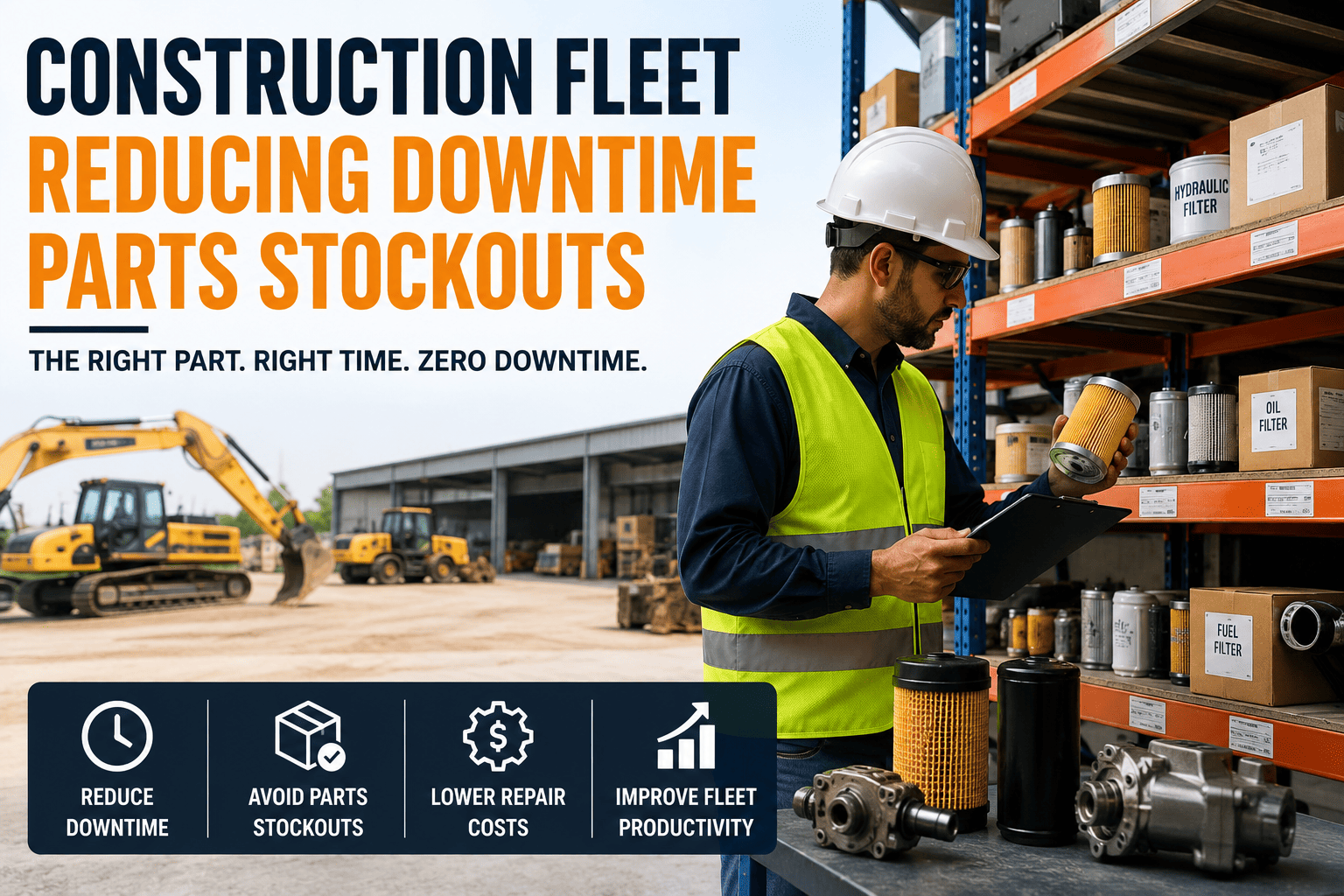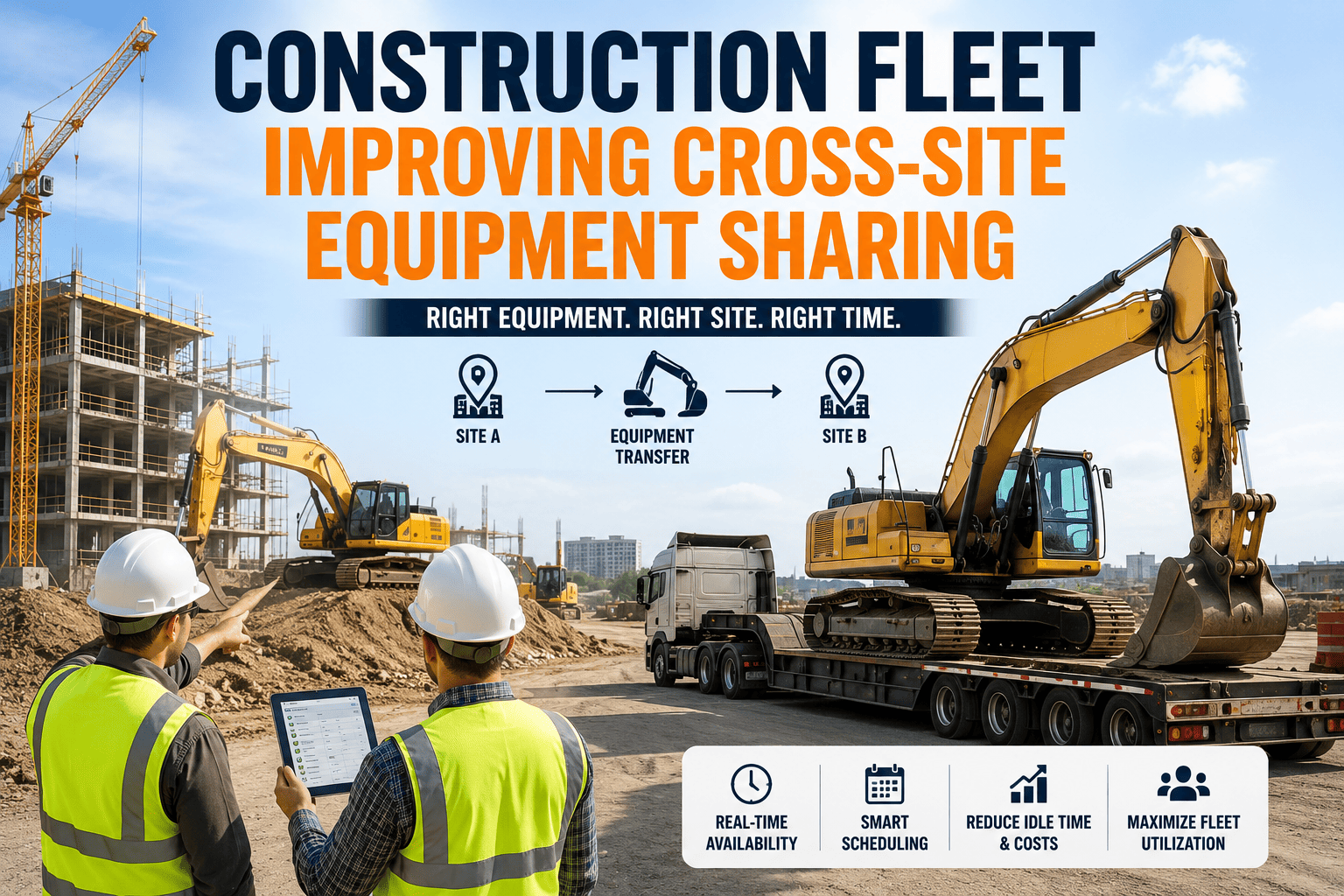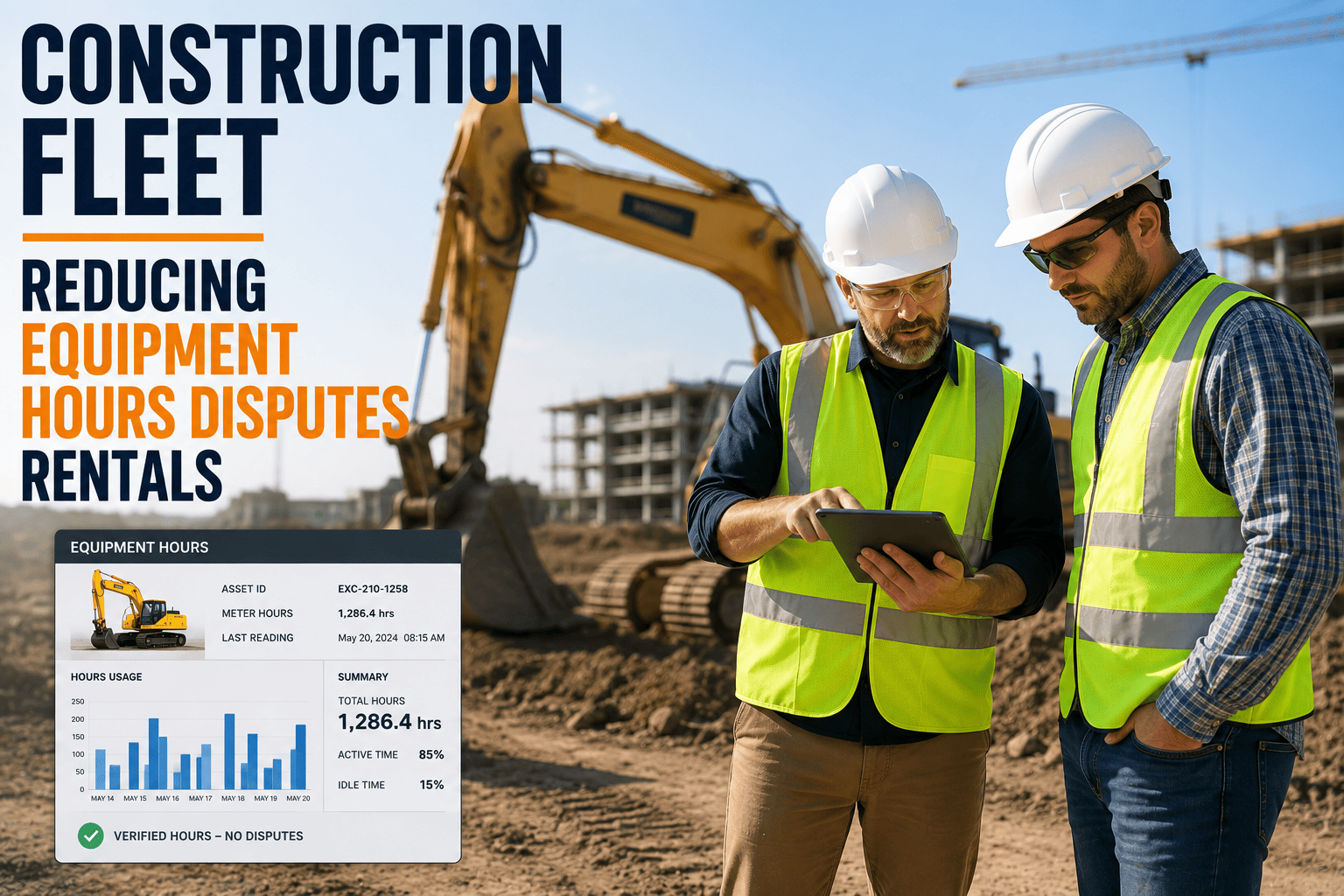
Walk any construction job site and you will see it within minutes: an excavator sitting idle behind a trailer, a skid steer nobody can account for, a supervisor on the phone asking "where is the mini excavator we rented last week?" Heavy equipment is the single largest capital investment most construction companies make, yet a shocking number of contractors still track it with a spreadsheet, a walkie-talkie, and guesswork. That gap between what equipment costs and how loosely it is managed is exactly where heavy equipment tracking software earns its keep.
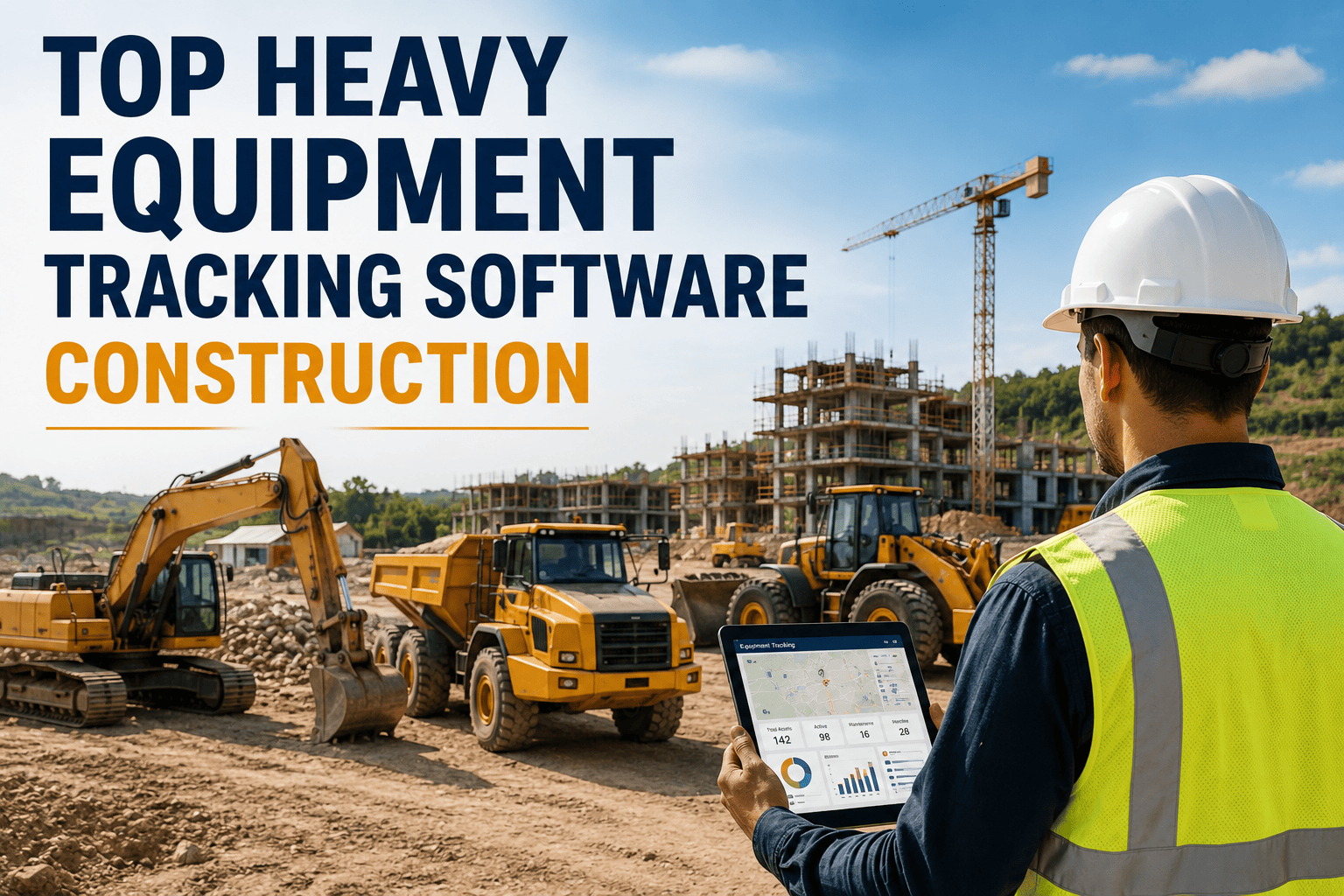
Heavy equipment tracking software combines GPS, telematics, and geofencing to show contractors exactly where every excavator, loader, and crane is, in real time, across every job site. The best platforms cut equipment theft losses, reduce idle time by 12 to 18 percent, and automate maintenance using engine hours instead of guesswork. FleetRabbit brings all of this into one dashboard built specifically for construction fleets.
Why Job Sites Need Purpose-Built Equipment Tracking
Generic vehicle fleet tools were built for mileage, routes, and delivery vans. Heavy equipment does not work on mileage. An excavator's life is measured in engine hours, a crane's compliance is measured in inspection cycles, and a dozer rarely returns to the same depot twice in a month. Job sites shift, crews rotate between projects, and cellular coverage can drop out entirely on remote sites. Tracking software built for construction accounts for all of that instead of forcing a mileage-based tool to behave like something it was never designed to be.
The financial stakes make this more than a convenience. A single crane can exceed a million dollars in value, and construction equipment theft costs the industry more than a billion dollars every year, with a large majority of stolen machines never recovered. Add in idle rental equipment, duplicate purchases because nobody knew a machine already existed on another site, and maintenance that only happens after something breaks, and the case for real-time visibility becomes hard to ignore.
The Cost of Not Knowing Where Equipment Is
Every hour spent searching for a misplaced generator or confirming which site a skid steer was last seen on is an hour of paid labor that adds zero value to the project. Multiply that across a fleet of forty or fifty assets and dozens of active sites, and the hidden labor cost of poor visibility often rivals the cost of the software that would have prevented it in the first place.
Track excavators, loaders, cranes, and generators from one live map, get instant geofence alerts, and automate maintenance from real engine hours instead of guesswork. Try it free with your first machines today.
Core Features That Separate Real Tracking Software From a GPS Dot
Not every "tracker" gives you the same value. Some platforms only show a blinking dot on a map, while others turn location data into maintenance schedules, utilization reports, and theft prevention. Before choosing a platform, compare it against the capabilities that actually move the needle on a job site.
| Feature | What It Does | Why It Matters On A Job Site |
|---|---|---|
| Live GPS Location | Shows the exact position of every tracked machine, updated continuously | Eliminates phone calls to confirm where a machine is before dispatching another one |
| Geofencing | Draws a virtual boundary around a job site and triggers an alert on exit | Flags unauthorized movement within minutes instead of the next morning |
| Engine Hour Tracking | Logs actual operating hours instead of relying on manual entry | Drives accurate maintenance scheduling and billing for rented or leased equipment |
| Idle Time Reporting | Separates true working hours from time spent sitting idle | Reveals which rentals are not worth renewing and which owned assets are underused |
| Maintenance Automation | Schedules service based on hours or thresholds rather than a calendar guess | Prevents breakdowns during peak project phases when downtime is most expensive |
| Multi-Site Dashboard | Consolidates every project location into a single fleet-wide view | Lets one fleet manager oversee equipment across ten sites without ten phone calls |
GPS, Telematics, and Proximity Tags: Choosing the Right Layer
Most contractors end up using more than one tracking method because no single tool covers every asset type well.
Hardwired GPS and Telematics
Wired into the machine's power source, these devices never need a battery change and can pull engine hours, fault codes, and fuel data directly from the equipment. This is the standard for excavators, dozers, loaders, and any powered asset that stays in service for years.
Battery-Powered Trackers
For trailers, generators, and storage containers that have no engine of their own, battery-powered GPS units provide location visibility without needing a power source. They are also a smart hidden backup on high-value machines as a second layer against theft.
QR and Bluetooth Tags
Hand tools and smaller equipment rarely justify the cost of a full GPS unit. QR codes and Bluetooth proximity tags give you accountability and last-known-location data at a fraction of the cost, which is ideal for tool cribs and laydown yards.
How Real-Time Tracking Cuts Theft and Idle Cost
Theft prevention and utilization tracking sound like two different problems, but they share the same root cause: nobody was watching. A geofenced alert the moment a loader crosses the property line after hours turns a multi-day investigation into a same-night recovery. On the utilization side, idle time reports routinely expose rented machines sitting unused for weeks, costs that disappear the moment a fleet manager can see them clearly and act.
Fleets that move from paper logs to real-time telematics typically see utilization improve by double digits and unplanned downtime drop sharply, simply because problems get caught while they are still small and cheap to fix rather than after they have already cost a project day.
Turning Location Data Into Maintenance Decisions
Location data becomes far more valuable once it is paired with engine hours. Instead of servicing every machine on a fixed calendar regardless of how hard it worked, tiered maintenance triggers based on actual hours mean a crane that ran heavy all quarter gets serviced sooner than one that sat mostly idle. That single shift, from calendar-based to hour-based maintenance, is one of the most consistent ways contractors reduce unplanned breakdowns mid-project.
FleetRabbit pairs live GPS with engine hour data so your team knows exactly which machines need service, which rentals are wasted spend, and which equipment left the job site without authorization. Book a demo and see your fleet mapped in real time.
Choosing the Right Platform for Your Fleet Size
A five-machine excavation outfit and a two-hundred-asset regional contractor need different things from a tracking platform, even though both are solving the same core problem.
Small to Mid-Size Fleets
Contractors managing under fifty machines typically get the most value from a platform that is fast to set up, does not require a long-term hardware contract, and combines GPS with simple maintenance alerts. Complexity here just slows adoption without adding real benefit.
Large and Multi-Site Fleets
Enterprise fleets running across many active job sites benefit from deeper telematics, OEM integrations with manufacturers, and a mixed-fleet dashboard that covers vehicles, heavy equipment, and small tools in one place. At this scale, the software needs to become the single source of truth for every project manager and every site.
What to Confirm Before You Commit
Ask any vendor how the platform performs on a job site with weak cellular coverage, whether inspections and work orders sync automatically once connectivity returns, and how quickly a geofence alert reaches your phone. These three questions separate platforms that work in a real construction environment from ones that only work well in a demo.
Frequently Asked Questions
Bringing It All Together
Heavy equipment is too expensive to manage on guesswork. A platform that puts every excavator, loader, and crane on one live map, alerts you the second something leaves a job site, and schedules maintenance from real engine hours instead of a calendar turns your fleet from a source of risk into a source of savings. The contractors who adopt this early are the ones who stop losing machines, stop overpaying for idle rentals, and stop discovering maintenance problems the hard way.
FleetRabbit gives construction fleets real-time GPS visibility, geofenced theft alerts, and engine-hour maintenance automation in a single platform built for job sites, not delivery vans. Start tracking your equipment today, no credit card required.