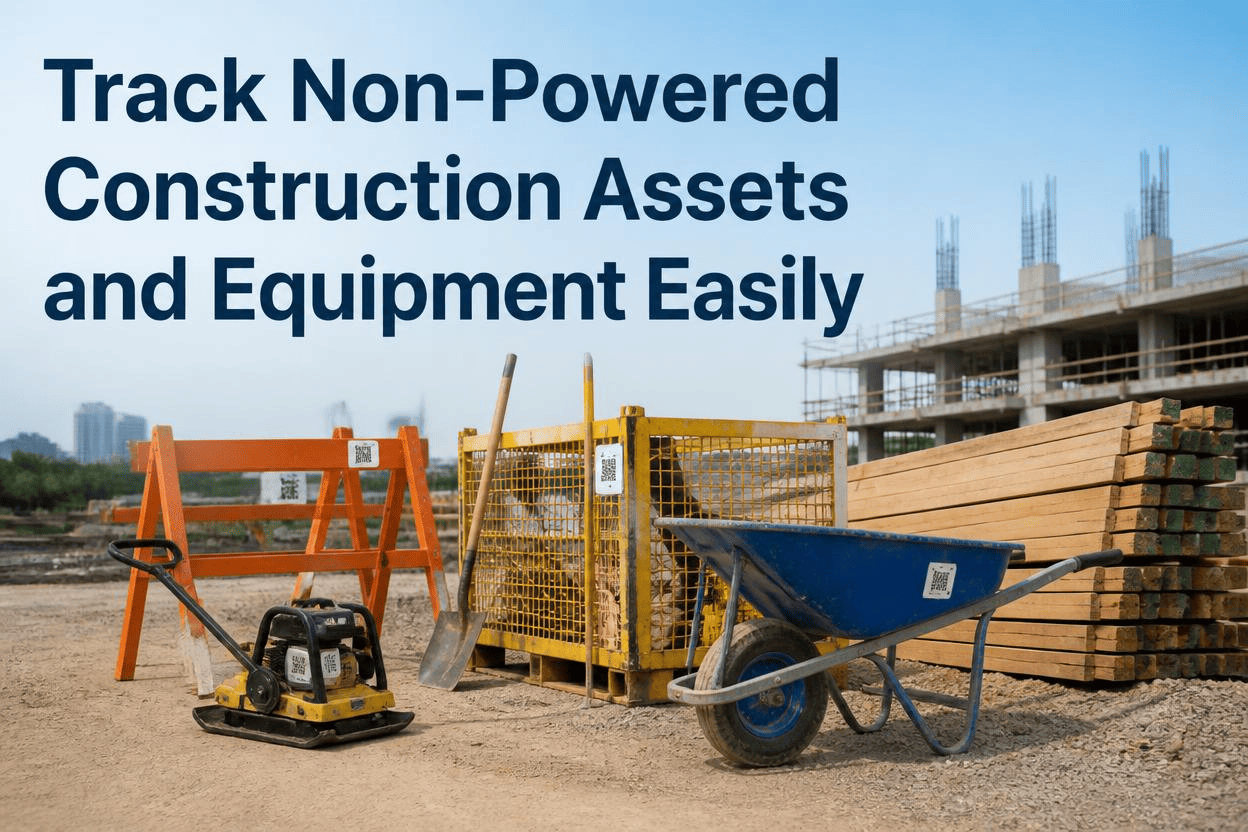
A trailer sitting in the yard does not have an engine to draw power from, a battery to tap into, or a dashboard to plug a device into. That single fact is why so many construction companies can track every truck in their fleet down to the minute, yet have no real idea where half their trailers, containers, and attachments actually are. Non-powered assets move constantly, sit idle for weeks, and rarely get the same tracking attention as the machines that drive themselves, which makes them one of the easiest things to lose track of on any job site.
Non-powered construction assets like trailers, containers, and attachments can be tracked using battery-powered GPS trackers, solar-powered units, or Bluetooth Low Energy tags, depending on how far the asset travels and how long it needs to run without maintenance. GPS and cellular trackers suit assets that leave the property, while Bluetooth tags work well for tools and equipment that stay within a yard or site. Sign up with FleetRabbit to see live location for every asset on one dashboard, or book a demo to find the right fit for your fleet.
Why Non-Powered Assets Need a Different Approach
A hardwired tracker draws power directly from an engine or battery, which is exactly what makes it a poor fit for a trailer, a shipping container, or a bucket that has no electrical system at all. Non-powered assets need a device that carries its own power supply and can survive weeks or months without anyone checking on it, since these are the items most likely to sit parked for long stretches between jobs.
No Power Source Means No Shortcuts
Trailers, containers, generators sitting idle, and attachments cannot support a device that expects a constant electrical feed. Any tracker built for these assets has to run on an internal battery or solar cell, and it has to manage that power carefully since a dead tracker is no better than no tracker at all.
Long Idle Periods Change the Math
A truck moves daily, so its tracker reports constantly and recharges from the vehicle every trip. A trailer dropped at a site for three weeks needs a device built to sip power the entire time, checking in only often enough to confirm the asset is still where it should be without draining its battery in days.
FleetRabbit brings trucks, heavy equipment, and non-powered assets like trailers and containers into a single live map, so nothing sits invisible between jobs. Sign up free and start tracking everything that moves through your sites.
Choosing the Right Tracking Technology
There is no single device that covers every non-powered asset well. The right choice depends on how far the asset travels, how long it sits idle, and how much precision you actually need. Most fleets end up combining more than one approach rather than forcing one device type across everything they own.
| Tracking Technology | How It Works | Best Suited For |
|---|---|---|
| Battery-Powered GPS | Self-contained device with an internal battery reporting location over cellular networks | Trailers, generators, containers that leave the property |
| Solar-Powered GPS | Trickle-charges from sunlight so the device effectively never needs servicing outdoors | Containers and equipment parked outdoors for months |
| Bluetooth Low Energy Tags | Broadcasts a short-range signal picked up by nearby gateways or phones, using very little power | Attachments, tools, and items that stay within a yard or site |
| Hybrid GPS Plus BLE | Combines outdoor GPS range with low-power indoor and yard visibility in one platform | Mixed fleets moving between open sites, buildings, and storage yards |
Matching Tracking to How Each Asset Actually Moves
Once you understand the technology options, the next step is mapping them to the assets that actually sit around your sites. Not every trailer or attachment needs the same setup, and overspending on precision you do not need is as costly as underspending on visibility you do.
Trailers and Dropped Equipment
Trailers that get hooked, hauled, and dropped repeatedly benefit most from a long-life battery or solar GPS tracker mounted under the frame or near the nose box, where it stays hidden and out of the way of daily use.
Placement Matters as Much as the Device
A tracker tucked under the chassis stays concealed from anyone walking past, while mounting it high enough for a clear view of the sky keeps GPS signal strong, since metal panels can block reception if the device sits buried too deep.
Shipping Containers and Storage Units
Containers that sit outdoors for months at a time are well matched to solar-powered trackers, since they eliminate the recurring cost and labor of sending someone out to recharge or replace a battery on a unit that rarely moves at all.
Attachments and Portable Tools
Buckets, forks, ladders, and toolboxes are usually too small and too numerous for a GPS tracker on every item to make financial sense. Bluetooth tags fill this gap well, offering proximity-based tracking and left-behind alerts at a fraction of the cost per unit.
Set Left-Behind Alerts at Every Site
Configuring an alert for whenever a tagged tool or attachment is left at a job site after the crew departs closes one of the most common and preventable sources of lost inventory.
FleetRabbit pairs GPS tracking for trailers and containers with lightweight tagging for attachments and tools, so every asset shows up on the same map. Book a demo to see how the setup fits your fleet, or sign up to start tracking today.
Frequently Asked Questions
Trailers, containers, and attachments deserve the same visibility as your trucks and machines. FleetRabbit brings every asset, powered or not, onto one live dashboard so you always know where your fleet actually is.