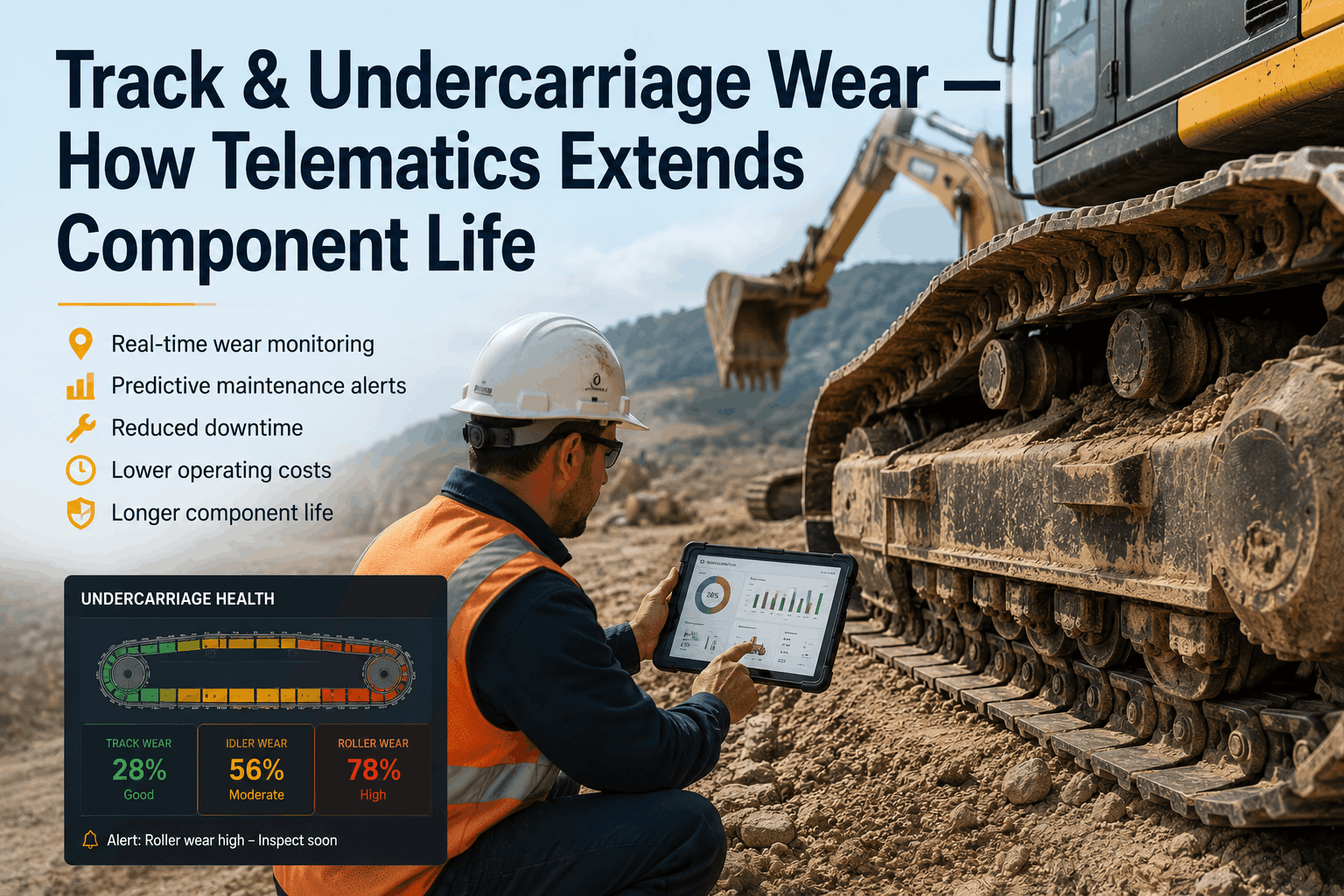
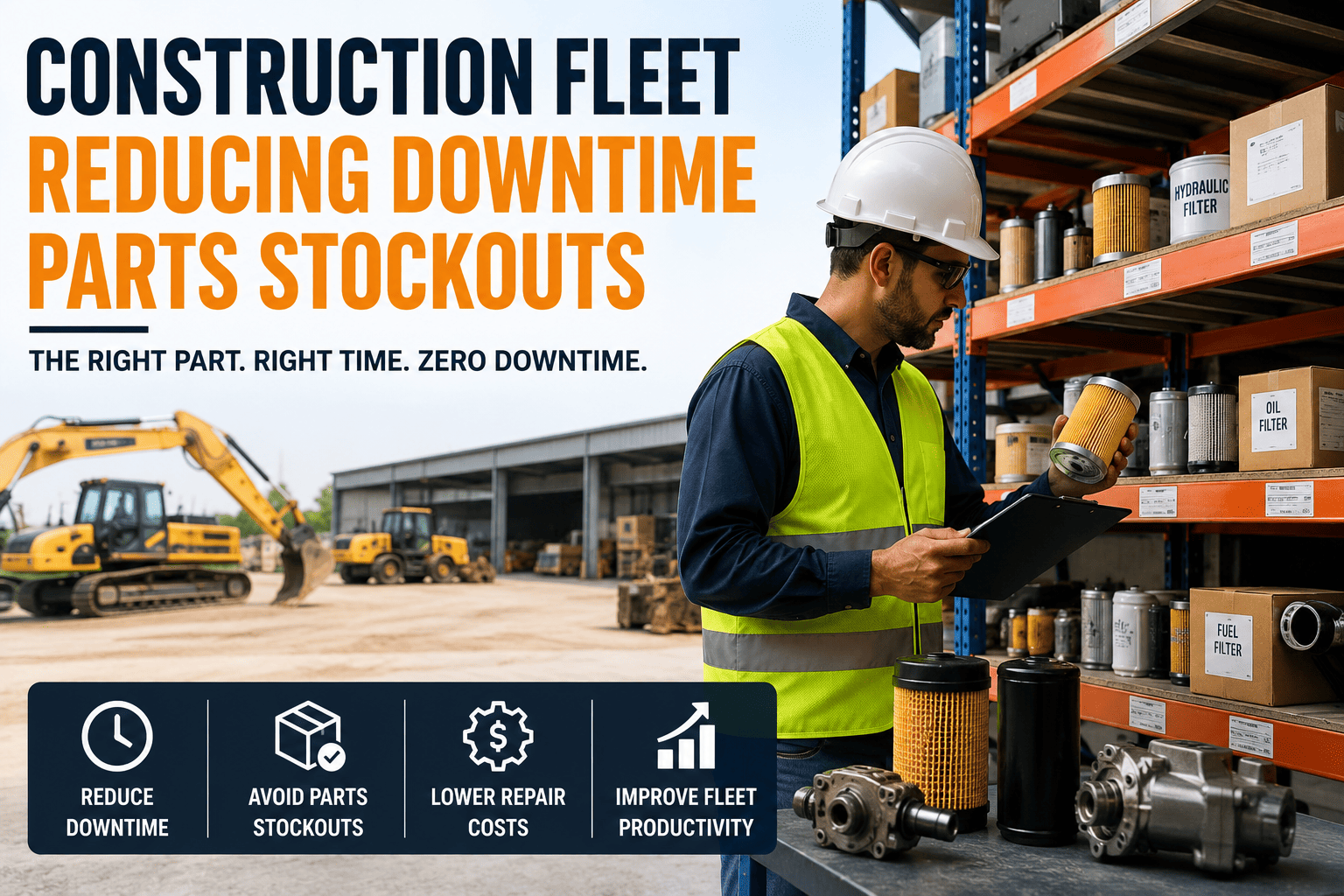
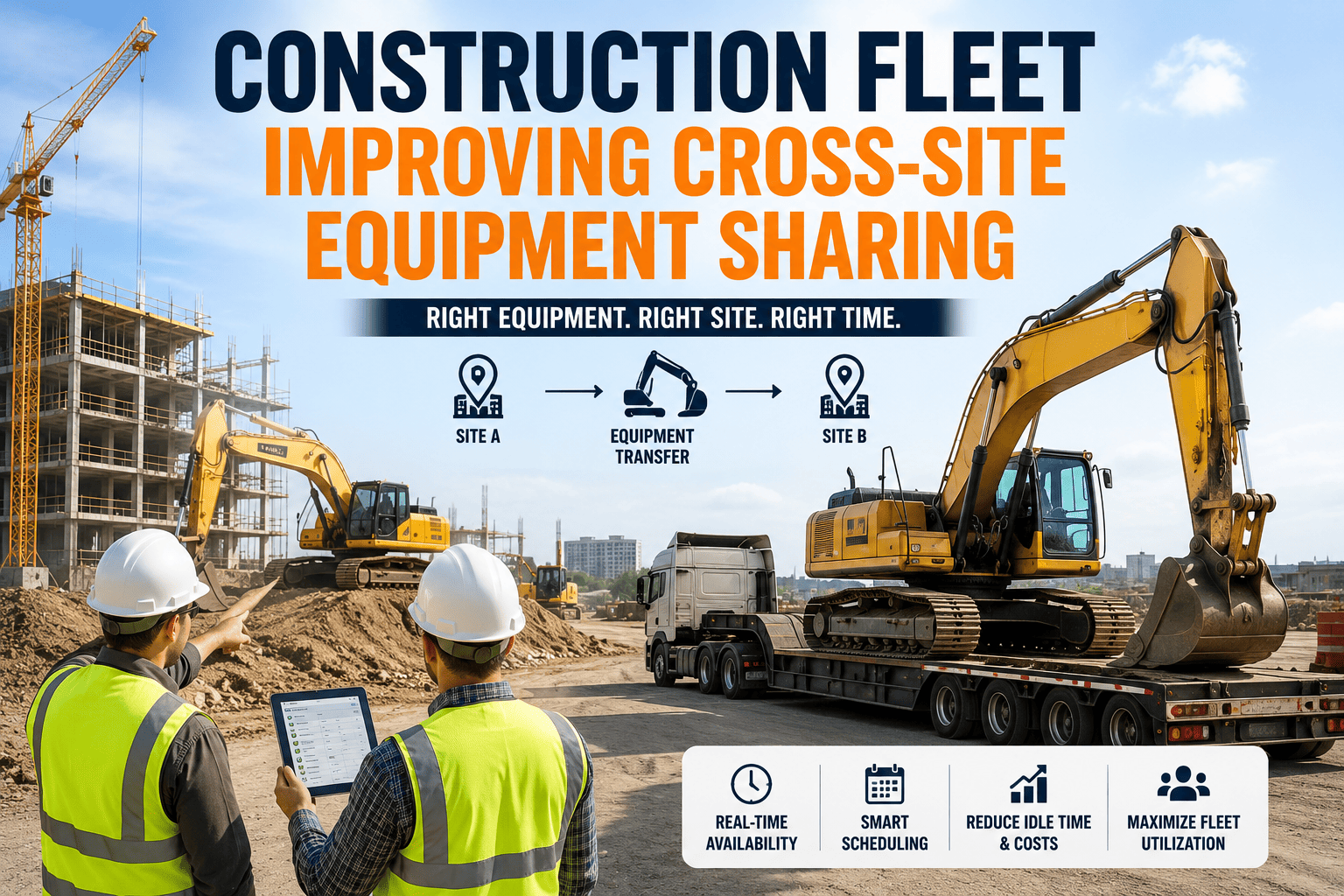
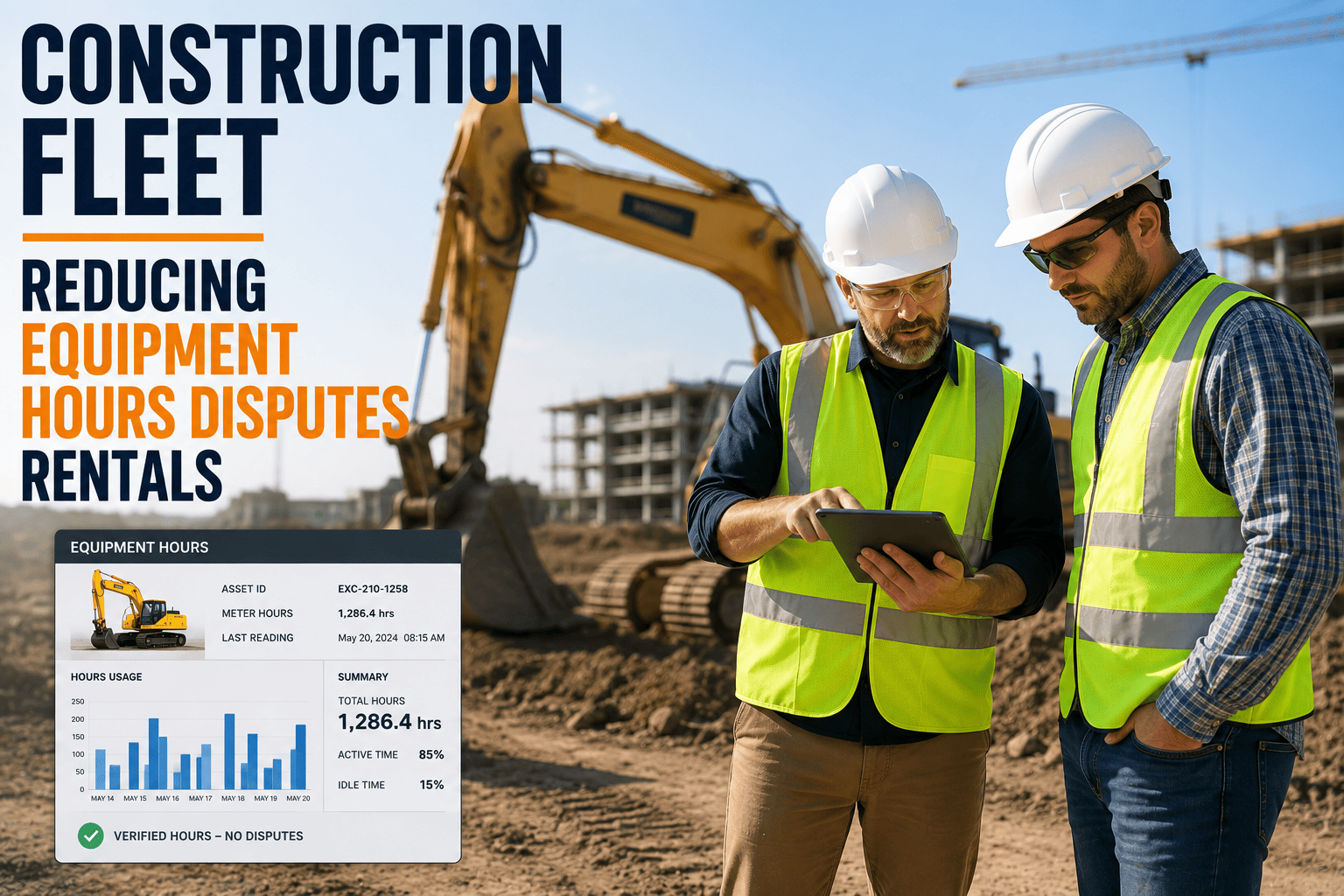
Undercarriage wear is the single largest maintenance cost in Western US tracked equipment fleets — a Phoenix dozer losing $12,000 in premature track life to overtension, a Sacramento excavator with undetected roller failures compounding into a $38,000 rebuild, a Nevada mining site running six machines with no tension monitoring. Fleet Rabbit's IoT telematics platform layers tension sensors, vibration analytics, and wear-rate modeling across excavators, dozers, and crawler cranes — OEM-agnostic, on-premise or cloud, with no equipment replacement required. Book a demo to see Fleet Rabbit's undercarriage monitoring applied to your tracked equipment fleet.
Quick Answer
Undercarriage wear costs Western US tracked equipment fleets $35,000–$85,000 per machine in premature component replacement. Fleet Rabbit's telematics platform monitors track tension, roller wear, and sprocket load in real time — delivering alerts within 60 seconds of a threshold breach and extending component life 30–50% across California, Nevada, Arizona, and Oregon job sites.
The Hidden Cost: What Undercarriage Wear Costs a Western US Tracked Fleet
A 15-unit tracked equipment fleet operating across California or Nevada job sites cycles through undercarriage components every 1,500–2,500 hours depending on terrain and tension management. Without sensor-level wear monitoring, 40–60% of component life is lost to overtension, undertension, and undetected roller failures — losses buried in maintenance variance until a telematics audit exposes the pattern.
Overtension Wear
$18K
avg per machine / premature link wear
Roller Failure
$9.4K
undetected bearing collapse per event
Sprocket Damage
$6.2K
improper tension accelerated tooth loss
Unplanned Downtime
$4.8K
per track-off or idler failure event
How Fleet Rabbit Monitors Undercarriage Wear Across Mixed Tracked Fleets
Tension Sensors + Vibration Analytics
Fleet Rabbit mounts inline tension sensors on track frames and vibration accelerometers on rollers and idlers — reading tension variance and bearing wear signatures in real time. CAN bus data cross-validates travel speed versus drivetrain load. Compatible with Caterpillar, Komatsu, Deere, Liebherr, and 40+ OEMs.
Edge AI Wear-Rate Modeling
On-device AI establishes each machine's baseline wear rate by terrain type, operator behavior, and soil conditions. Deviations beyond threshold — tension 18% above spec on a Nevada hardpan site, roller vibration consistent with bearing spalling — trigger immediate classification before the alert fires.
Works Offline — Remote Sites
Edge AI stores and processes sensor data locally on Nevada mining sites and Eastern Oregon timber roads with no cellular. Alerts queue and deliver the moment connectivity returns. Iridium satellite modem integration available for permanently off-grid Western US sites.
Capability #1: Real-Time Tension Monitoring — Catch Mis-Tension Before It Compounds
Undercarriage Life Extension — Proper Tension vs. Unmonitored Fleets
Fleet Rabbit platform data, Western US tracked equipment fleets 2024–2025. Unmonitored fleets replace undercarriage components 2.8x more frequently than IoT-monitored fleets.
1
Continuous Tension Alerts — Every Shift, Every Site
Fleet Rabbit fires SMS and dashboard notifications to fleet managers within 60 seconds of a detected tension anomaly — overtension on a hard-turning dozer, undertension crossing loose river gravel, or tension variance between left and right tracks indicating frame misalignment. Alerts include machine ID, site, GPS coordinates, and measured tension delta from spec.
Arizona highway contractor, 12 dozers: Fleet Rabbit alerted a supervisor to 22% overtension on a Cat D6 running compacted caliche. Tension corrected in 35 minutes — estimated $14,000 in premature track link wear prevented on that machine.
2
Terrain-Adaptive Tension Thresholds
Fleet Rabbit correlates tension sensor data with GPS-mapped terrain types — rocky Nevada basalt requires different target tension than soft Sacramento delta clay. Thresholds adjust automatically as machines move between zones, eliminating false positives that cause operators to ignore manual tension schedules on mixed-terrain Western US sites.
Terrain-adaptive limitsGPS zone correlationShift-level logging
3
Multi-Site Alert Routing
For California and Nevada contractors running 5–15 simultaneous job sites, Fleet Rabbit routes undercarriage alerts by site manager hierarchy — the Phoenix dozer alert goes to the Phoenix equipment supervisor, not the Sacramento fleet director. Escalation paths trigger if no acknowledgment within a configurable window.
Oregon civil contractor, 8 active sites: Reduced undercarriage alert response time from 6.1 hours to 24 minutes after Fleet Rabbit routing — preventing two track-off events in the first 60 days.
Undercarriage Monitoring Platform
Extend Track Life 30–50% Across Your Western US Fleet — Free Trial, No Hardware Commitment
OEM-agnostic sensors. Installs on any tracked machine in hours. Real-time tension alerts, wear-rate modeling, and full component accountability from day one.
Capabilities #2–5: Roller Detection, Sprocket Analytics, Operator Habits & Rebuild Planning
Capability #2: Vibration-Based Roller and Idler Failure Detection
The roller failure math: A bottom roller bearing beginning to spall produces a detectable vibration signature 200–400 operating hours before catastrophic collapse. On a 10-machine California grading fleet, undetected roller failures average $9,000–$16,000 per event versus a $600–$900 planned roller swap.
Fleet Rabbit detects: Accelerometers on each roller station read vibration frequency and amplitude every 30 seconds. Bearing-spall signatures trigger maintenance alerts weeks before failure — converting emergency rebuilds into scheduled component swaps.
Western US impact: Remote Nevada and Arizona sites make emergency part delivery extremely costly — vibration detection eliminates the compounding loss cycle.
Capability #3: Sprocket Wear Analytics — Extend Drive Component Life
The sprocket wear pattern: Sprocket tooth profile degrades predictably under proper tension — but accelerates 3–4x under chronic overtension. A 15-unit Nevada mining fleet replacing sprockets 18 months early represents $90,000–$130,000 in avoidable cost over a 5-year equipment cycle.
Fleet Rabbit tracks: Drive motor current draw versus travel speed identifies sprocket wear progression. Combined with tension data, the platform models remaining sprocket life per machine and flags when rotation or replacement should be scheduled.
Outcome: Sprocket life extension of 25–40% per machine reduces total drivetrain rebuild cost by $18,000–$35,000 per unit over the equipment lifecycle.
Capability #4: Per-Operator Undercarriage Accountability
The operator wear gap: Spinning, counter-rotating, and high-speed turns on hard terrain are the fastest paths to premature track wear. On a 20-machine California fleet, the top quartile of high-wear operators accelerates undercarriage replacement by 35–55% versus the fleet median.
Fleet Rabbit links: Operator credential at machine startup ties every tension event, hard-turn pattern, and travel-speed violation to a named operator and work order. Weekly reports surface per-operator wear scores for coaching.
Outcome: Operator accountability programs reduce high-wear behavior by 60–75% within the first 45 days — the behavior change alone recovers most platform cost.
Capability #5: Predictive Rebuild Scheduling — Budget Accuracy Across the Fleet
Western US budget context: California and Nevada contractors running competitive bid projects need component cost predictability. Surprise undercarriage rebuilds average $35,000–$85,000 per machine — blowing project margins where equipment cost was modeled at baseline replacement intervals.
Fleet Rabbit provides: Machine-by-machine remaining undercarriage life projections updated every shift, exportable to project scheduling software. Fleet-level rebuild cost forecasts flag which machines need budget allocation in the next 90, 180, and 365 days.
Premium benefit: Documented IoT undercarriage monitoring reduces heavy equipment insurance premiums 5–10% with major carriers.
Before vs. After Fleet Rabbit Undercarriage Monitoring — 15-Unit Western US Tracked Fleet
Without Undercarriage IoT
Tension checks: Weekly manual inspection
Roller failures caught early: 15–25% of events
Component life: 1,000–1,400 hrs avg
Rebuild planning: Estimate-based, ±40%
Operator wear visibility: None
Annual undercarriage cost: $35K–$85K per machine
With Fleet Rabbit IoT
Tension checks: Continuous, every 30 seconds
Roller failures caught early: 91%+ of events
Component life: 2,000–2,600 hrs avg
Rebuild planning: Sensor-based, ±8%
Operator wear visibility: Per-shift, per-operator
Annual undercarriage cost: Under $22K per machine
91%
Early Failure Detection
50%
Component Life Extended
75%
Wear Behavior Reduction
5–10%
Insurance Premium Cut
Frequently Asked Questions: Undercarriage Monitoring for Tracked Equipment Fleets
QCan Fleet Rabbit monitor undercarriage wear on older equipment without factory sensors?
Yes. Fleet Rabbit's inline tension sensors and vibration accelerometers mount externally on the track frame and roller stations — no factory sensor required. For pre-2005 equipment with no CAN bus access, the sensor array provides standalone tension and wear tracking. A 1998 Cat D8 and a 2024 Komatsu D155 run side-by-side in the same undercarriage monitoring dashboard.
QWhat happens if cellular is down on a Nevada or Arizona remote site?
Fleet Rabbit's edge AI continues recording and classifying undercarriage events locally when cellular is unavailable. Alerts queue and deliver the moment connectivity returns. For permanently remote locations, Fleet Rabbit supports Iridium satellite integration for real-time alert delivery with no cellular dependency.
QHow accurate is the remaining component life prediction?
Fleet Rabbit's wear-rate model achieves ±8–12% accuracy on remaining undercarriage life projections when calibrated to a machine's first 200 operating hours of sensor data. The model accounts for terrain type, operator behavior, tension history, and seasonal soil conditions — delivering substantially more accurate rebuild budgeting than OEM interval estimates.
QHow long does installation take on a mixed tracked fleet across multiple California job sites?
A Fleet Rabbit technician installs undercarriage sensors and connects telematics on 3–5 machines per day. A 15-unit tracked fleet is fully live in 3–5 days. Western US teams cover California, Nevada, Arizona, Oregon, Washington, and Colorado — with no equipment downtime required during sensor mounting.
Related Fleet Rabbit Resources
The four AI capabilities transforming fleet operations — real-time GPS, predictive health monitoring, dynamic route optimization, and delivery performance analytics — with ROI data for each.
AI-driven fault prediction and automated maintenance scheduling that prevents mid-project breakdowns — the reliability layer IoT sensor data powers across excavators, loaders, and cranes.
Real-time utilization tracking, idle reduction analytics, and fleet right-sizing data that reduce total heavy equipment operating cost for Western US contractors.
How GPS hardware, IoT sensors, and cloud analytics combine to deliver real-time heavy equipment visibility, predictive maintenance, and operational intelligence.
Extend Undercarriage Life Across Your Tracked Fleet — See Fleet Rabbit in Action
Fleet Rabbit's OEM-agnostic telematics platform delivers real-time tension alerts, vibration-based roller detection, sprocket analytics, operator accountability, and rebuild planning across your Western US tracked equipment fleet. On-premise or cloud. Any brand. Full ROI in 60 days.
OEM-Agnostic60s Alert TimeTension MonitoringOn-Premise Option60-Day ROI
May 30, 2026
By Michael Finn
All Posts