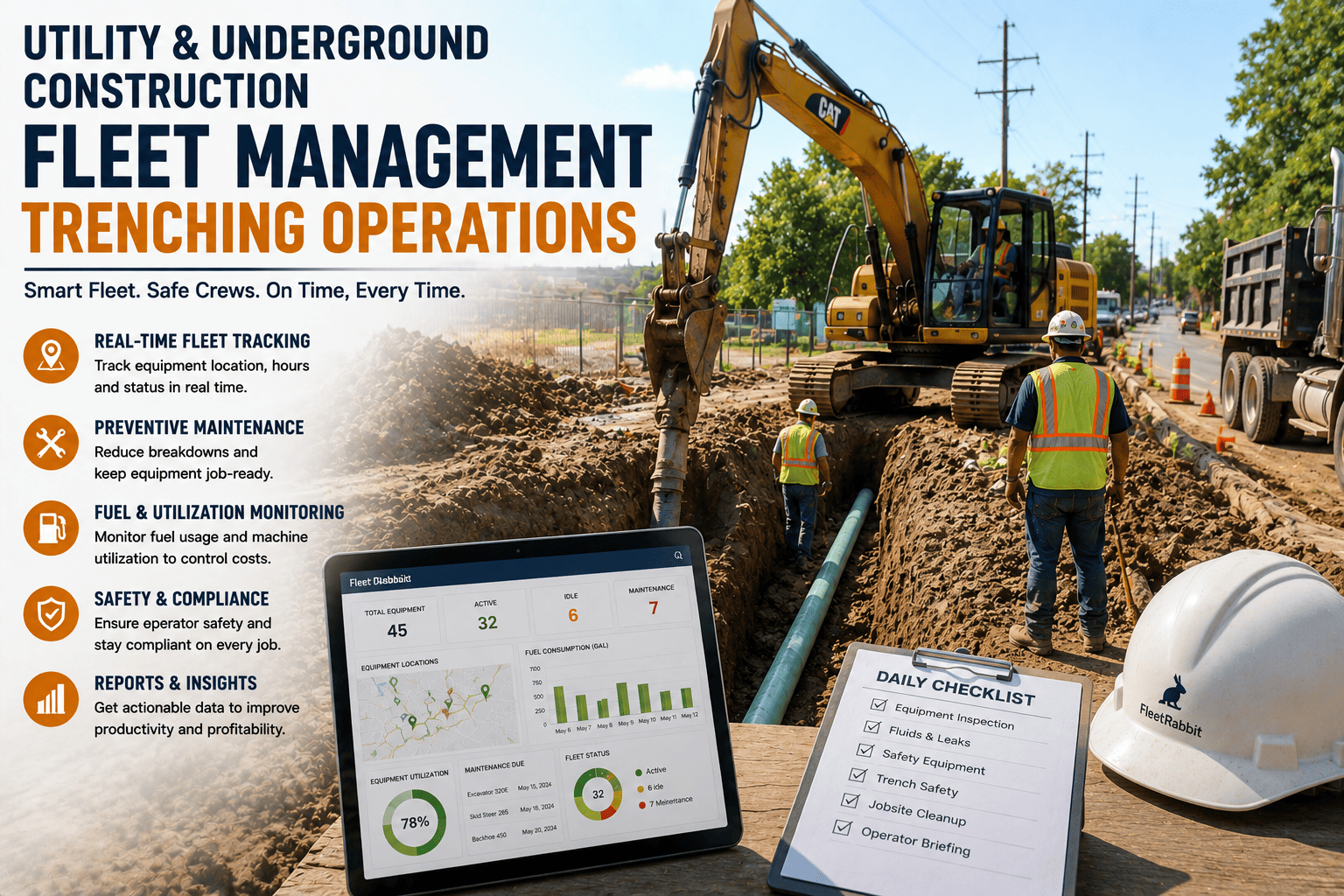
Every trench crew works above a map they can't fully see. Gas lines, electric conduit, fiber, and water mains sit buried in the same few feet of soil a trencher or excavator is about to move through, and the difference between a routine dig and an emergency call often comes down to whether the right process was actually followed before the bucket went in the ground. Underground utility work carries a kind of risk that surface construction simply doesn't, and it deserves fleet management built around that reality.
Underground utility construction fleet management software tracks 811 locate tickets, equipment assignments, vacuum excavation logs, and maintenance status together, so crews can prove compliance and reduce strike risk instead of managing tickets, trenchers, and inspection records separately. In the US and Canada, hundreds of thousands of utility strikes are reported every year, and the leading root cause remains failing to call 811 before digging in the first place.
Why Utility Strikes Keep Happening
Damage investigations consistently trace strikes back to a small set of preventable root causes, and they aren't evenly split.
Nearly half of all reported strikes trace back to just those first two causes, and both are process failures rather than equipment failures. A crew that skips the notification step or starts mechanical excavation before confirming the exact utility location is taking on risk that a documented workflow would have caught.
What's Actually at Stake on Every Trenching Job
FleetRabbit tracks locate tickets, equipment assignments, and inspection records in one system, so your crew has a documented trail from notification to backfill on every job. Sign up free to get started today, or book a demo to see it built around your crews.
Building Compliance Into the Daily Workflow
811 Ticket Status
Every locate request is logged and tracked through positive response, so no crew starts digging on an unconfirmed ticket.
Tolerance Zone Documentation
Mechanical excavation near marked lines is flagged, keeping soft-digging requirements visible to every operator.
Vacuum Excavator Logs
Potholing activity is recorded against the job, giving crews and inspectors a clear record that lines were exposed before mechanical work began.
Equipment Maintenance Status
Trenchers and vacuum excavators are tracked for service needs, so a mechanical issue never becomes the reason a soft-dig step gets skipped.
Why Vacuum Excavation Changes the Risk Profile
Mechanical digging near a marked utility carries risk no matter how careful the operator is, because a bucket or tooth makes contact with the ground with no way to feel what's underneath before it's too late. Vacuum excavation methods use water or air pressure with suction to remove soil non-destructively, letting a crew visually confirm a line's exact location before any mechanical equipment gets near it. That single step, done consistently, is one of the most effective ways to prevent a strike inside the tolerance zone.
Making Soft-Dig Steps Impossible to Skip
The gap between knowing the rule and following it under schedule pressure is where most strikes actually happen. Building a workflow where a job can't move to mechanical excavation until a potholing step is logged removes that gap entirely, turning a safety policy into something the schedule itself enforces.
Mechanical Excavation vs Vacuum Excavation Near Marked Lines
| Factor | Mechanical Excavation | Vacuum Excavation |
|---|---|---|
| Contact With Line | Direct contact risk from bucket or tooth | Non-contact, soil removed by suction |
| Use Inside Tolerance Zone | Generally not permitted by state regulation | Standard accepted soft-dig method |
| Strike Risk | Highest risk equipment type per damage data | Dramatically lower risk profile |
| Documentation Value | Limited visibility into exact line depth beforehand | Confirms exact line location before mechanical work |
Frequently Asked Questions
Most utility strikes trace back to a process step that got skipped, not equipment failure. FleetRabbit keeps your 811 tickets, vacuum excavation logs, and equipment records tied together on every job. Create your free account to get started today, or book a 30-minute demo to see it built around your crews.