A wheel loader spends its whole day doing the same brutal move: dig in, lift, pivot, dump, reverse, repeat. That grunt-and-run cycle is exactly what punishes tires and drivetrain components faster than almost any other machine on a construction site. Add in the fact that loaders rarely stay on one site for long, and most fleet managers end up fighting two battles at once — keeping the machine mechanically sound, and simply knowing where it is.
Wheel loader fleets stay productive when tire pressure and tread are checked weekly, drivetrain components are serviced on condition rather than a fixed calendar, and every machine is tracked live across sites so nobody loses hours hunting for equipment. Poor maintenance and abusive operation can cut a loader's working life in half, while a single mismanaged tire failure can sideline a machine for six hours or more. Sign up for FleetRabbit to put condition-based PM and live location tracking on every loader in your fleet.
Two Problems, One Machine
Ask any fleet manager what actually drains a wheel loader budget and you'll hear the same two answers: tires and "where did that loader go." Both problems compound each other. A loader that quietly moved to a different site last week is also a loader that missed its scheduled tire pressure check, and a loader running on soft or worn tires burns through its drivetrain faster than a well-maintained one ever would.
The Tire Problem
Two triggers cause almost every wheel loader tire failure: mismanaged maintenance and the wrong tire for the application. A sidewall failure on a quarry loader can leave the machine down for six hours or more while a replacement is sourced, during which the site quietly falls behind on truck scheduling.
The Visibility Problem
Loaders move between sites on short notice, which means a maintenance interval tied to a fixed date is almost guaranteed to be wrong. A machine you thought was sitting idle for two weeks may have logged 80 hours on a different job entirely.
What Happens When Both Go Unmanaged
Harsh working conditions combined with poor maintenance and abusive operation can cut a wheel loader's usable life in half. Field repair parts alone average roughly $3,400 a year per machine industry-wide, with overhaul costs adding another $3,900 — and that's before counting the downtime cost of a machine nobody could locate in time for its scheduled service.
Stop Losing Hours To "Which Site Is It On?"
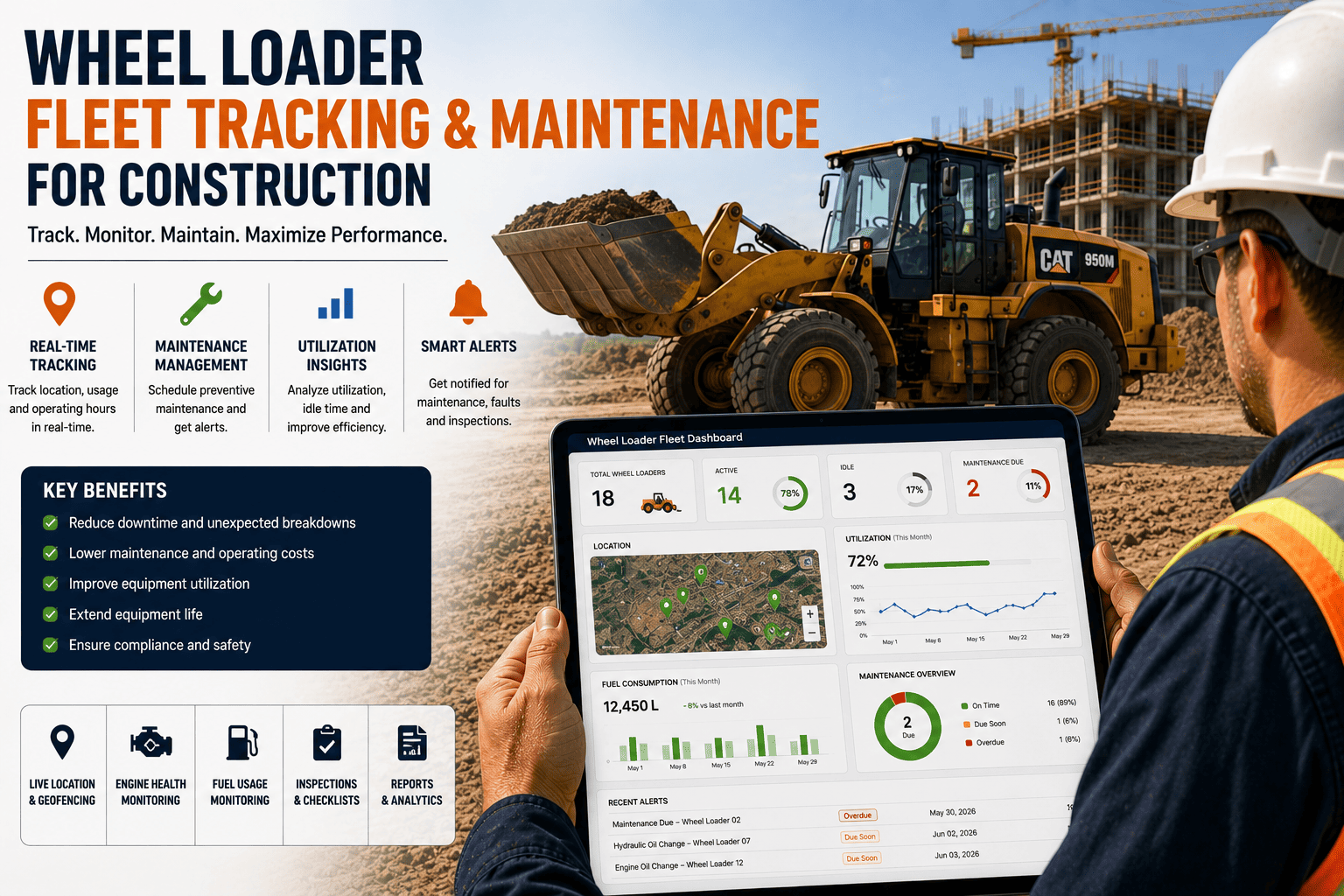
FleetRabbit gives you live location on every wheel loader across every site, tied directly to its maintenance schedule, so service follows the machine wherever it goes.
Tire Care: The Highest-Leverage Habit You're Skipping
Tire manufacturers are consistent on one point: the ideal inspection cadence is weekly, above and beyond whatever the operator checks day to day. Pressure should be measured cold, since a loader that just finished a shift will show artificially high readings.
Radial Tires
Cost more upfront but deliver better traction, flotation, and lower fuel consumption. The stronger choice for loaders working finished surfaces and long load-and-carry cycles.
Bias Tires
Lower initial cost and often preferred for rough, abrasive terrain where sidewall toughness matters more than fuel savings.
Retreading Is an Underused Lever
When the casing is in good shape, retreading a wheel loader tire can save 30 to 40 percent of the cost of buying new. That savings only shows up, though, if someone catches tread wear before the casing itself is damaged beyond repair — which is exactly what a weekly inspection is designed to do.
Drivetrain: Service By Condition, Not By Date
Modern loaders use onboard electronics to manage clutch modulation and horsepower delivery, which has already reduced a lot of the driveline damage that used to come from aggressive operators dragging the brakes or holding the throttle down. That said, electronics can't fix a maintenance interval that's tied to the wrong trigger.
Fluid & Visual Checks
Engine oil, coolant, hydraulic reservoir, fuel level, and a walk-around for leaks around the drivetrain.
Tires & Linkage
Tread depth, cold pressure, cuts or bulges, plus bucket linkage pins and bushings for wear.
Transmission & Axle Service
Transmission fluid and filter changes, axle oil inspection, and articulation joint checks tied to actual operating hours.
Articulation Joint & Frame
Rated for 7,000 to 17,000 hours in normal conditions, but abrasive environments can shorten that dramatically — which is why condition tracking beats a fixed hour target.
The Simple Detail Most Fleets Miss
Premature component failure often traces back to something small: an operator who was never told there's a grease fitting to service, or a PM sheet with no dedicated line for tire tread depth. Building tire and grease checks directly into the same PM workflow as everything else removes the guesswork and the missed step.
Tracking Loaders Across Multiple Sites
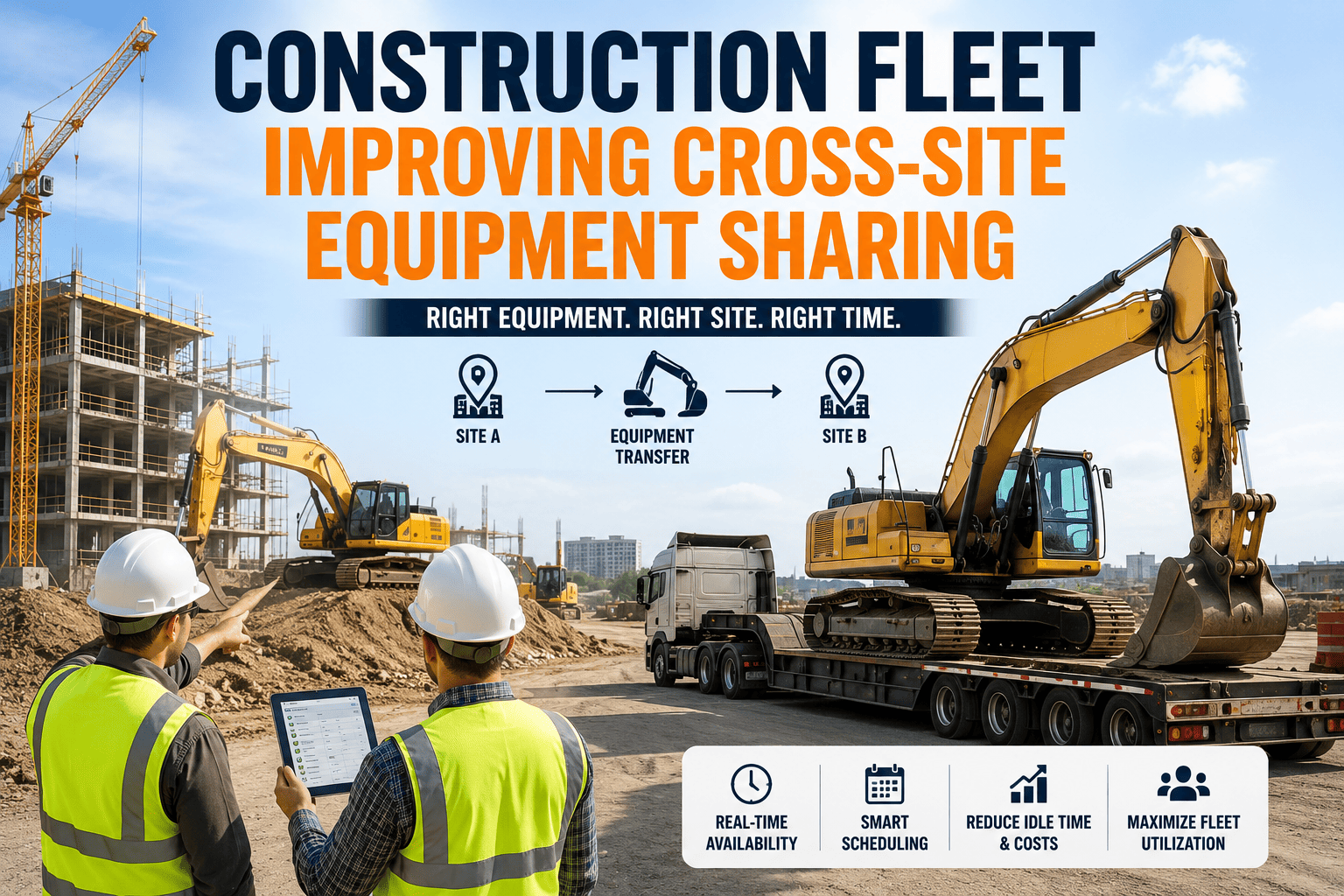
A wheel loader that moves between three sites a month needs a maintenance system built around its actual location and hours, not the calendar in someone's office. Live GPS tracking paired with hour-meter data answers the two questions that matter most every morning: where is this machine, and is it due for service.
FleetRabbit connects to loader telematics to pull real-time location and engine hours automatically, then triggers condition-based PM the moment a machine crosses its next threshold — no matter which job site it's currently sitting on. Tire checks, grease points, and transmission service all live on the same digital checklist, so nothing gets left off because a machine changed sites mid-cycle. Start a free trial and connect your first loader in minutes, or book a demo to see multi-site tracking configured around your actual fleet.
Frequently Asked Questions
Give Every Wheel Loader A Maintenance Schedule That Follows It Anywhere
Condition-based PM, live multi-site tracking, and tire checklists built into one workflow — see it running on your fleet in minutes.