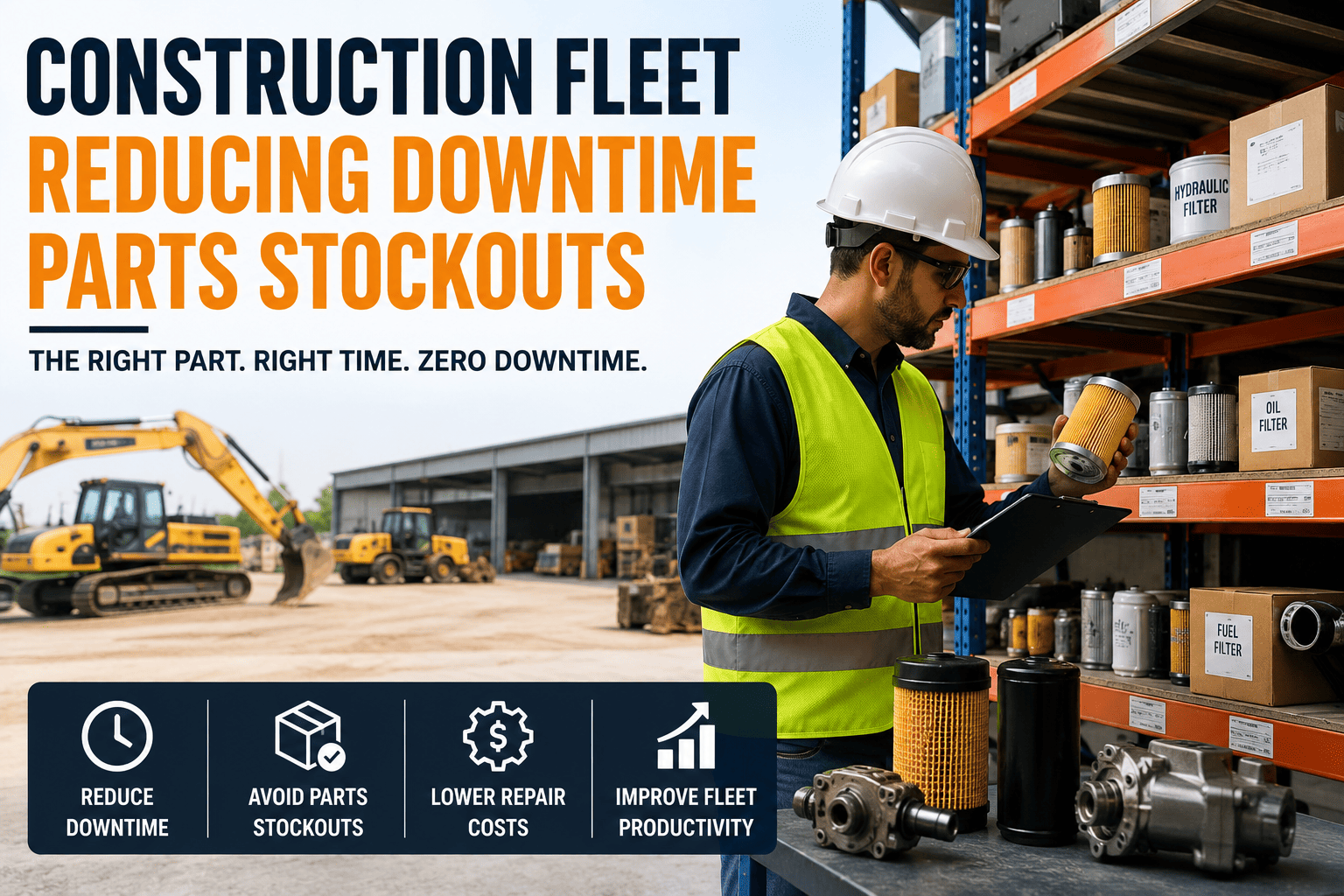
Unscheduled downtime is the silent, profit-draining killer of heavy construction operations today. In the high-stakes landscape of 2026, relying on outdated "fix-it-when-it-breaks" mentalities is no longer a viable strategy for heavy civil, general, or specialized subcontractors. When a critical tier-1 asset—like a large excavator, piler, or crane—experiences a catastrophic failure on-site, the financial damage extends far beyond the immediate repair invoice. You are facing the compounding costs of an idle crew, expensive project delays, secondary equipment rental fees, and potentially irreversible damage to your company's professional reputation. Progressive fleet managers are now aggressively shifting toward proactive, data-driven preventive maintenance (PM) to stay ahead of mechanical wear and tear before it translates into a work-stoppage event. Fleet Rabbit's Preventive Maintenance Software provides the sophisticated digital infrastructure needed to transform chaotic, emergency repairs into a streamlined, highly predictable operational process that protects your bottom line. Schedule an expert-led strategy demo to start automating your fleet's health profile today.
The Future of Preventive Maintenance in Construction
Eliminate catastrophic breakdowns and extend the life of your heavy equipment with automated service triggers, live meter tracking, and intelligent parts inventory management.
These aren't just optimistic estimates—they are the operational realities for firms that pivot from spreadsheet-based tracking to an automated maintenance ecosystem. By catching a leaking seal or a clogged filter early, you avoid the $50,000 engine overhaul that typically follows a neglected service interval. Fleet Rabbit ensures that your maintenance budget is spent on precision care, not emergency triage.
The Automated High-Performance Workflow
Moving from a chaotic, paper-based maintenance environment to a precision digital workflow requires a clear, repeatable process. Fleet Rabbit's architecture is built to remove the friction between the data your equipment is already generating and the actions your mechanics need to take. By automating the data flow, we ensure that nothing is ever missed, and every service event is a strategic, planned activity rather than an emergency response. Here is exactly how we automate your fleet's health profile:
Live Telematics Ingestion
Fleet Rabbit captures high-fidelity hour meter, odometer, and engine health data directly from your machines' onboard telematics via secure API integrations. This eliminates the persistent errors associated with manual data entry, greasy clipboard logs, or guessing service intervals based on calendar dates alone.
Predictive PM Triggers
Our intelligent engine automatically evaluates live usage against your custom service profiles. The moment an asset approaches its predefined threshold—whether it's a 500-hour engine oil change, a 2,000-hour hydraulic system flush, or a mandatory DOT safety inspection—the system triggers a proactive alert to your fleet team.
Simplified Digital Work Orders
Upon a trigger, a comprehensive digital work order is instantly dispatched to your mechanics' mobile devices. It includes a complete required parts list, historical service notes, and a step-by-step safety checklist, ensuring that every preventive service is performed to OEM standards the very first time.
Common Preventive Maintenance Mistakes Costing You Thousands
Even contractors who understand the value of preventive maintenance often fall victim to implementation errors that undermine their entire program. Recognizing these pitfalls early can save your operation from repeating costly mistakes that delay ROI and frustrate your team.
Calendar-Based Service Scheduling
Scheduling maintenance based solely on calendar dates rather than actual machine usage is a fundamental error. A dozer that worked 200 hours in January needs different service timing than one that worked 50 hours. Usage-based scheduling ensures you're maintaining equipment based on real wear, not arbitrary time periods.
Incomplete Service Documentation
Failing to document every service event comprehensively creates gaps in your maintenance history. When a mechanic writes "changed oil" without noting the oil type, filter brand, or specific issues observed, you lose critical diagnostic data that could predict future failures or support warranty claims.
Ignoring Operator Feedback Loops
Your operators are your first line of defense against equipment failure. Systems that don't capture and integrate operator-reported issues—strange noises, vibrations, fluid leaks—miss early warning signs that could prevent catastrophic failures. Digital feedback loops ensure nothing gets lost between the cab and the shop.
One-Size-Fits-All Maintenance Plans
Applying identical maintenance schedules across different machine types, ages, and duty cycles is inefficient and wasteful. A five-year-old excavator working in abrasive conditions requires more frequent attention than a two-year-old machine in light-duty applications. Customized profiles maximize efficiency.
PM Software Comparison: Breaking the Status
| Maintenance Feature | Manual Process (Whiteboards) | Fleet Rabbit (2026 Strategy) |
|---|---|---|
| Service Triggers | Reactive Repairs; usually triggered by smoke, noise, or total failure at the job site. | Proactive Alerts; triggered by real-time meter readings before the first sign of wear. |
| Parts Management | Scrambling to local dealers for last-minute parts at premium emergency prices. | Automated Inventory; system predicts part needs based on upcoming service intervals. |
| Documentation | Greasy notebooks and lost paper receipts that are impossible to audit during resale. | Permanent Digital Trails; every nut and bolt recorded in the cloud for maximum asset value. |
| Uptime Impact | Unpredictable delays that stop entire crews and wreck project milestones. | Scheduled Maintenance; equipment services are planned during low-intensity site hours. |
| Labor Efficiency | Mechanics waiting for broken machines to arrive; high volumes of overtime pay. | Steady Workflow; mechanics have a clear, predictable queue of preventive tasks. |
Preventive maintenance software for construction in 2026 is an automated platform that uses real-time equipment data to predict and schedule repairs before they become catastrophic failures. Fleet Rabbit solves this by integrating telematics, automated work orders, and inventory tracking into a single source of truth, allowing fleet managers to extend asset life by 15% and reduce unscheduled downtime by up to 50% through scheduled, data-driven interventions.
Building a Culture of Preventive Maintenance
Technology alone cannot transform your maintenance program—you need organizational buy-in from operators to executives. The most successful preventive maintenance implementations combine smart software with cultural shifts that prioritize equipment care as a competitive advantage.
Operator Accountability Programs
Assign specific operators to specific machines and track maintenance outcomes by operator. When operators know they're responsible for the long-term health of "their" equipment, pre-shift inspections become more thorough, and abuse decreases significantly. Digital inspection checklists make accountability transparent and measurable.
Maintenance Scorecards for Leadership
Executive teams need real-time visibility into fleet health metrics. Monthly scorecards showing PM compliance rates, emergency vs. scheduled repair ratios, and cost-per-operating-hour create accountability at the management level and justify continued investment in preventive programs.
Rewarding Proactive Behavior
Implement recognition programs for mechanics who identify potential failures during routine inspections and for operators who report issues early. When your team sees that preventing problems is valued more than heroically fixing emergencies, the entire operational culture shifts toward prevention.
Continuous Training Investment
Modern heavy equipment is increasingly complex, with sophisticated hydraulic, electrical, and computerized systems. Regular training on new diagnostic tools, emerging failure modes, and evolving OEM recommendations ensures your team can execute preventive maintenance at the highest professional level.
Deep Asset Longevity Features
Ironclad Warranty Protection
Modern heavy equipment manufacturers are increasingly strict about service documentation. Fleet Rabbit automatically logs every specific service interval and the exact parts used, providing an unshakeable digital record that prevents dealers from denying expensive warranty claims due to "negligent maintenance."
Asset Resale Value Optimization
When it comes time to rotate your fleet, data is your greatest asset. A machine backed by a professional, timestamped digital maintenance history sells for significantly more on the secondary market. Buyers will always pay a premium for the certainty that an asset was proactively cared for rather than reactively patched up.
Safety & Regulatory Compliance
Never let a critical safety inspection slip through the cracks. Our system tracks mandatory DOT and OSHA inspection dates, ensuring your operators are always working on safe, compliant equipment. This proactive approach significantly reduces your exposure to catastrophic on-site accidents and legal liabilities.
Precision Inventory Cost Control
Stop overstocking parts that gather dust or scrambling for emergency overnight shipments. Fleet Rabbit predicts your part requirements based on your actual fleet usage and upcoming PM triggers, allowing you to maintain a lean, just-in-time inventory that frees up critical working capital.
Calculating Your Preventive Maintenance ROI
Every dollar invested in preventive maintenance software delivers measurable returns across multiple financial categories. Understanding the complete ROI picture helps justify the transition from manual systems to automated platforms. Here's how to calculate the real financial impact:
Direct Cost Savings
Compare your current annual emergency repair costs against projected preventive maintenance expenses. Most operations see emergency repairs cost 3-5x more than scheduled preventive services. If you're spending $200,000 annually on reactive repairs, implementing a PM program typically reduces this to $120,000-140,000, creating immediate savings of $60,000-80,000.
Downtime Reduction Value
Calculate the hourly cost of an idle machine multiplied by your average downtime hours. For a $500,000 excavator generating $150/hour in productive value, reducing unscheduled downtime from 200 hours to 50 hours annually creates $22,500 in recovered productivity per machine. Multiply this across a 20-machine fleet for $450,000 in annual value recovery.
Extended Asset Lifecycle
A well-maintained machine can reliably operate 15-20% longer before requiring replacement. Delaying a $500,000 excavator replacement by just two years (from year 8 to year 10) represents $100,000 in avoided annual depreciation costs, directly improving your balance sheet and cash flow position.
Labor Efficiency Gains
Mechanics spend 30-40% less time diagnosing issues when they have complete digital service histories and predictive alerts. For a shop with 3 mechanics earning $75,000 annually, recovering 35% of diagnostic time creates approximately $78,750 in redirected labor value toward productive maintenance work.
"We haven't had a single unscheduled engine failure in six months. Fleet Rabbit alerts my mechanic three days before a service is due, giving us time to move the machine to the shop on a low-intensity day. It's completely changed our profitability on the site."
Strategic Impact: Breaking the Repair-and-Replace Cycle
In many construction firms, the maintenance department is viewed as a "cost center"—a necessary evil that consumes budget without producing revenue. However, with the right preventive maintenance software, this department transforms into a strategic profit-driver. By maintaining a steady cadence of precision care, you are effectively shifting your capital expenditure strategy.
Instead of being forced into premature, multi-million dollar asset replacements due to neglected mechanical systems, you can reliably run equipment for its full engineered lifespan. Furthermore, the granular data captured by Fleet Rabbit allows you to identify "problem children" in your fleet—specific machine models or operator habits that lead to higher-than-average wear rates—enabling you to make smarter procurement decisions in the future.
Integration with Existing Construction Tech Stack
Your preventive maintenance software shouldn't operate in isolation—it needs to seamlessly connect with your broader construction technology ecosystem to maximize efficiency and eliminate data silos. Fleet Rabbit's open architecture ensures smooth integration with the tools you already rely on.
Project Management Systems
Sync equipment availability with project schedules in platforms like Procore, Buildertrend, or CoConstruct. When a machine is flagged for maintenance, the system automatically updates project timelines and alerts superintendents to arrange backup equipment before delays occur.
Accounting & ERP Platforms
Direct integration with QuickBooks, Sage 300, or Foundation pushes maintenance costs directly into job costing modules. This real-time financial visibility ensures accurate project profitability tracking and eliminates double-entry between maintenance and accounting systems.
Telematics Providers
Fleet Rabbit connects natively with major telematics platforms including Cat Product Link, John Deere JDLink, Komatsu KOMTRAX, and aftermarket solutions like Trackunit. This direct integration ensures hour meters and diagnostic codes flow automatically without manual intervention.
Parts Suppliers & Distributors
Automated purchase order generation sends parts requests directly to your preferred suppliers when inventory triggers low-stock alerts. Integration with major parts distributors streamlines procurement and ensures critical components arrive before maintenance windows open.
Real-Time Maintenance Metrics You Should Be Tracking
Modern fleet management isn't just about oil changes; it's about tracking the KPIs that correlate directly to job-site profitability. With Fleet Rabbit, you gain instant visibility into:
- Mean Time to Repair (MTTR): This measures your shop's diagnostic and repair speed. A high MTTR usually indicates a lack of organized service manuals or delays in parts procurement—bottlenecks that Fleet Rabbit eliminates through automated digital documentation and inventory syncing.
- PM Compliance Rate: The gold standard of fleet health. It tracks the percentage of scheduled services completed within the OEM-recommended window. Maintaining a 95%+ compliance rate is the most effective way to guarantee asset longevity.
- Emergency vs. Scheduled Work Ratio: Ideally, 80% of your shop's work should be scheduled. If your mechanics are spending more than 20% of their time on "emergency" triage, your fleet is suffering from hidden neglect that will eventually lead to major project delays.
- Component Wear Rates: By cross-referencing telematics data with repair history, you can pinpoint exactly when high-wear items like hydraulic pumps, undercarriages, or injectors are likely to fail, allowing for "surgery" before the "heart attack."
- Total Mechanical Availability: This metric represents the percentage of time your fleet is truly ready for operation. Every minute of availability regained translates directly into more yards moved and higher daily production targets met.
- Labor Utilization: Track how effectively your mechanics' time is being used. Are they spending hours searching for parts or manually entering data? Digital workflows ensure they stay "on the wrenches" rather than stuck behind a desk.
The True Cost of a Single Engine Failure
Consider a standard Tier-4 engine failure on a job site. The direct repair cost might be $45,000 for a long block replacement. However, when you factor in the $2,000/day rental for a replacement unit, the $3,500/day idle crew labor (the "ripple effect"), and the potential $10,000/week liquidated damages for project delays, a single neglected $500 oil change can balloon into a $100,000 operational catastrophe. This "Mechanical Butterfly Effect" can erase the entire profit margin of a specialized subcontract in a matter of days. To truly understand the gravity of an unplanned failure, you must account for the variables that never appear on a mechanic's invoice:
- Logistical Triage: The cost of emergency low-boy transport to haul the dead asset off-site and deliver a rental—often costing $1,500+ in immediate unbudgeted mobilization fees.
- Administrative Overhead: The 10-15 hours of management time spent by superintendents and operations heads scrambling to re-assign crews, find rental replacements, and explain delays to the GC.
- Upstream Reputational Damage: If you are the bottleneck on a multi-million dollar infrastructure project, your firm becomes a liability in the eyes of the General Contractor, directly reducing your chances of winning future bid-invites.
- Opportunity Loss: While your top mechanic is performing a "heroic" 20-hour engine swap in the field, they are neglecting the routine maintenance of five other machines, essentially sowing the seeds for the next five failures.
Modern Tier-4 and Tier-5 engines are marathons of engineering complexity; they do not tolerate "approximate" maintenance. Preventive maintenance software is, in essence, a high-yield insurance policy against operational bankruptcy, transforming the very nature of how your company values its physical assets.
Seasonal Maintenance Strategies for Construction Equipment
Construction equipment faces dramatically different environmental stresses across seasons. A proactive preventive maintenance program accounts for these seasonal variations and adjusts service protocols accordingly to prevent weather-related failures.
Winter Preparation (October-November)
- Switch to winter-grade hydraulic fluids and engine oils
- Install block heaters and battery warmers on critical equipment
- Inspect and replace worn coolant hoses before freezing temps arrive
- Stock winter-specific parts like glow plugs and cold-weather batteries
- Test fuel anti-gel additives in diesel systems
Spring Recommissioning (March-April)
- Comprehensive inspections after winter storage periods
- Replace air filters clogged with winter debris and road salt
- Inspect undercarriages for corrosion from de-icing chemicals
- Lubricate all grease points after prolonged cold-weather operation
- Check hydraulic systems for winter-induced seal degradation
Summer Heat Management (June-August)
- Intensify cooling system inspections and radiator cleanings
- Monitor hydraulic oil temperatures in extreme heat conditions
- Increase air filter service frequency in dusty summer conditions
- Inspect tire pressure more frequently due to heat expansion
- Verify proper operation of cab air conditioning systems
Fall Equipment Audits (September-October)
- Conduct comprehensive pre-winter equipment assessments
- Address all deferred maintenance items before harsh weather
- Prepare storage protocols for equipment being winterized
- Order long-lead-time parts for winter maintenance schedules
- Train mechanics on cold-weather diagnostic procedures