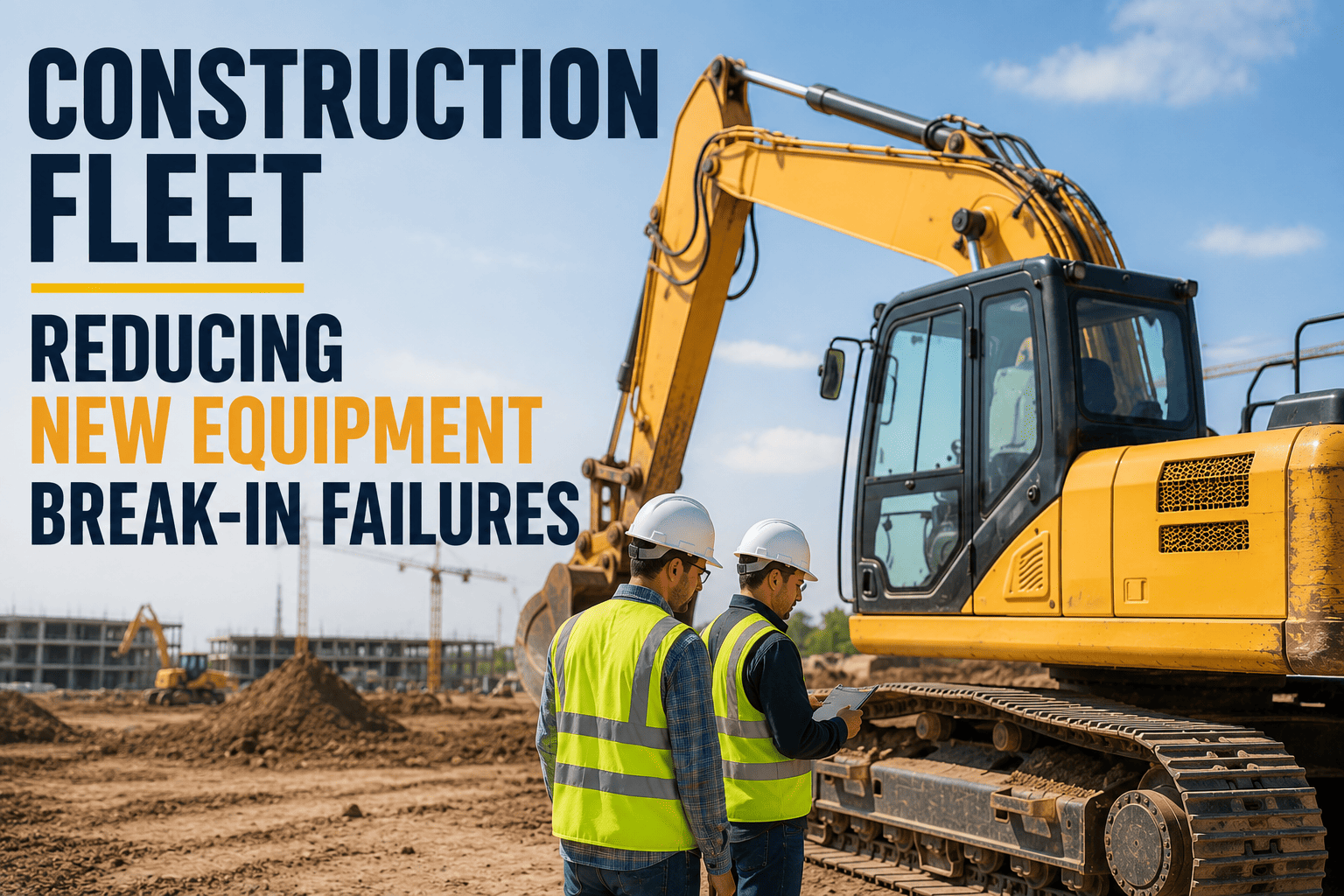
Every job site has the same clipboard. It hangs in the cab, gets rained on, gets signed without being read, and eventually gets tossed in a drawer where nobody looks at it again. The operator checks the boxes because checking the boxes is the rule, not because anyone expects the sheet to change what happens next. That habit, repeated across thousands of machines every morning, is exactly why so many preventable equipment failures still make it onto job sites.
Paper pre-start inspections fail contractors because they are easy to rubber-stamp, slow to reach the shop, and impossible to search once a defect actually needs to be tracked down. Paper-based inspection programs pass only around 73 percent of audits compared to 96 percent for digital programs, and most hydraulic failures show detectable warning signs weeks before they happen, yet paper checklists routinely miss them. FleetRabbit replaces the clipboard with a digital pre-start inspection that flags issues instantly and builds an audit-ready record automatically.
What Paper Inspections Are Actually Costing You
The pre-start inspection is supposed to be the cheapest, highest-value safety and maintenance habit a fleet has. It takes minutes and it happens before the machine ever leaves the yard. The problem is not the inspection itself, it is the paper it lives on. A defect that never gets recorded protects nobody, and a defect that gets recorded three days late gives a developing failure three more days to turn into a breakdown or an incident.
Warning Signs Are There Long Before The Failure
Hydraulic failure is one of the leading causes of excavator downtime, and most of it does not happen without warning. A large share of hydraulic failures show detectable signs, weeping fittings, scored rods, discolored fluid, weeks before the actual failure. A rubber-stamped paper checklist is exactly the kind of gap that lets those early signs slip past unnoticed shift after shift.
Compliance Gaps Show Up At The Worst Possible Moment
OSHA requires a documented pre-shift inspection for heavy equipment, and enforcement in recent years has focused heavily on proving that inspections actually happened, not just that a policy exists on paper. Serious violations can carry fines well into the thousands of dollars, and a lost or illegible paper form offers no defense during a surprise audit.
FleetRabbit turns every pre-start check into a timestamped, photo-backed digital record that reaches your maintenance team the instant a defect is flagged. You can sign up for free to try it on your own fleet, or book a demo to see equipment-specific templates in action.
Paper Pre-Start Forms Versus Digital Inspections
Placed side by side, the gap between a paper clipboard and a digital inspection tool is not a matter of style, it changes what actually gets caught and what gets missed.
| What Matters | Paper Checklist | Digital Inspection |
|---|---|---|
| Proof Of A Real Check | A signature only, easy to complete without inspecting anything | Photo capture and timestamps make skipping a check obvious |
| Time To Reach The Shop | Hours to days, depending on when the form is dropped off | Instant, a work order is generated the moment a defect is flagged |
| Searchable History | Buried in a filing cabinet, effectively unsearchable | Every past inspection is searchable by machine, date, and defect |
| Audit Readiness | Roughly 73 percent audit pass rate industry-wide | Roughly 96 percent audit pass rate industry-wide |
| Trend Visibility | No easy way to spot a machine failing the same check repeatedly | Recurring defects surface automatically across the fleet |
How Contractors Are Switching Without Slowing Down Operators
Moving off paper does not mean adding steps to an operator's morning. Done right, a digital pre-start check takes about as long as filling out the paper version, and every defect it captures does far more work after it is submitted.
Step 1: Build The Checklist Around Each Machine Type
An excavator, a wheel loader, and a dump truck do not fail the same way, so their pre-start checklists should not look identical. Equipment-specific templates keep operators focused on the checks that actually matter for that asset.
Step 2: Require A Photo On Anything Flagged As Defective
A photo turns a subjective note into evidence. It also removes the temptation to rubber-stamp a check, since a flagged item needs visual proof before it can be closed out.
Why Photo Verification Changes Behavior
Once operators know a flagged item requires a picture, inspections stop being a formality and start being an actual look at the machine, because the shortcut of signing without looking no longer works.
Why This Also Protects The Contractor
A photo-backed record is far stronger evidence during an insurance claim, an OSHA visit, or a warranty dispute than a signature on a sheet that could have been filled out anywhere.
Step 3: Route Defects Straight Into A Work Order
The moment an inspection flags a real issue, it should become a tracked work order automatically, not a note that waits for someone to notice it later.
Contractors who make this switch are not chasing paperwork for its own sake, they are trying to close the gap between when a problem first appears and when someone actually does something about it. Fleets that sign up for FleetRabbit typically see that gap shrink from days to minutes within the first few weeks.
A checklist only protects your fleet if what it finds actually gets acted on. FleetRabbit turns every pre-start check into an instant alert, a tracked work order, and an audit-ready record, no clipboard required.