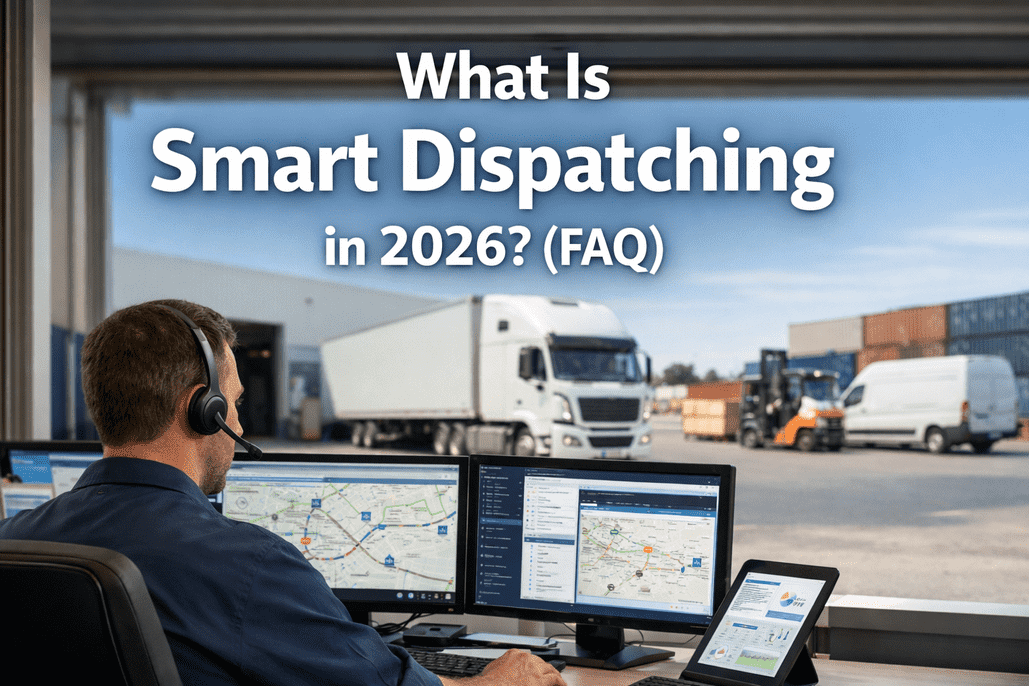
Smart dispatching in 2026 isn't just faster load assignment—it's AI systems that predict problems before they occur, automatically reoptimize routes mid-delivery, and learn from every trip to become smarter over time. Gartner projects that by 2026, over 80% of large enterprises will adopt AI-driven fleet optimization, with early adopters already reporting 10-25% cost reductions, 98% on-time delivery rates, and 55% increases in dispatcher productivity. This FAQ explains exactly how smart dispatching works, what AI capabilities power modern systems, and how your fleet can transition from reactive operations to predictive intelligence. Sign up for FleetRabbit to upgrade your dispatch operations today.
Smart Dispatching: The 2026 Transformation
Frequently Asked Questions
What is smart dispatching and how does it work in 2026?
Smart dispatching uses artificial intelligence, machine learning, and real-time data to automate and optimize how loads, routes, and drivers are assigned. Unlike traditional dispatch that relies on human judgment and static planning, AI-powered systems process thousands of variables in milliseconds—traffic patterns, weather conditions, delivery windows, driver hours, vehicle capacity, and customer preferences—to make decisions that would take human dispatchers hours.
The Five Pillars of Smart Dispatching in 2026
Predictive Intelligence
Anticipates traffic, delays, and disruptions before they happen—eliminating 60-70% of delivery exceptions
Dynamic Optimization
Continuously recalculates optimal routes as conditions change—no dispatcher intervention required
Multi-Constraint Balancing
Weighs cost, time, driver hours, customer preferences, and vehicle capacity simultaneously
Continuous Learning
Analyzes every trip outcome to refine predictions and improve future recommendations
Automated Communication
Sends accurate ETAs and proactive updates to customers without dispatcher involvement
The transformation from reactive to predictive dispatching represents the most significant operational shift in trucking since GPS tracking. Book a demo to see smart dispatching in action.
How does AI improve route optimization in real time?
AI route optimization processes live data feeds—traffic conditions, weather, road closures, delivery windows—and automatically adjusts routes without requiring manual dispatcher input. While traditional planning freezes once a route is dispatched, AI systems continuously adapt throughout the day.
AI vs. Traditional: Response Time Comparison
Real-World AI Routing Results
UPS's ORION system processes 30,000 route optimizations per minute, saving 38 million liters of fuel annually and preventing approximately 100,000 metric tons of CO2 emissions each year. Sign up to bring similar optimization power to your fleet.
What ROI can fleets expect from smart dispatching?
Fleets implementing AI-powered dispatch consistently report measurable improvements across every operational metric. The route optimization software market is projected to grow from $8.02 billion in 2025 to $15.92 billion by 2030—driven entirely by documented ROI.
Documented Smart Dispatching Benefits
Calculate Your Dispatch Savings
Discover how much time and money your fleet could save with AI-powered dispatching. Get a personalized ROI analysis based on your fleet size and operations.
What capabilities define smart dispatch systems in 2026?
Modern AI dispatch platforms combine multiple intelligent capabilities that work together to create adaptive, self-improving fleet operations. Understanding these features helps evaluate which solutions match your operational needs.
Core Smart Dispatch Capabilities
Dynamic Rerouting
Automatic path changes when traffic, weather, or road conditions change—no dispatcher call needed
Predictive ETAs
Machine learning analyzes historical patterns to provide accurate arrival predictions that improve over time
Load Matching
AI automatically matches available capacity with shipping needs, reducing empty miles by up to 45%
Exception Prevention
Identifies potential delays before they occur and automatically adjusts to prevent customer impact
Driver Assignment Optimization
Balances workload, HOS compliance, skills, and preferences to assign the right driver to each job
Customer Communication
Automated status updates and proactive delay notifications without dispatcher involvement
How does smart dispatching handle complex constraints?
Complex constraints are where AI dramatically outperforms traditional planning. While human dispatchers struggle to balance multiple time windows, vehicle restrictions, driver certifications, and customer requirements, AI handles thousands of constraints simultaneously.
Multi-Constraint Optimization
AI evaluates all variables simultaneously in milliseconds—work that takes human planners hours
The more complex your operation, the greater the advantage of AI optimization. Fleets with multi-stop routes, varied delivery windows, and diverse vehicle types see the largest efficiency gains. Schedule a consultation to discuss your specific operational complexity.
What's the difference between Generation 3 and Generation 4 dispatching?
The shift from Generation 3 (GPS-enabled TMS) to Generation 4 (AI-native systems) isn't incremental—it's transformational. Understanding this evolution helps fleet managers appreciate what's now possible.
Dispatch Technology Evolution
How do I transition my fleet to smart dispatching?
Implementing AI-powered dispatch follows a proven roadmap that most fleets complete within 4-8 weeks. The key is starting with your existing data and building intelligence incrementally. Sign up for FleetRabbit to begin your smart dispatch journey.
Smart Dispatching Implementation Path
Data Integration
Connect existing GPS, ELD, and TMS systems
Week 1Baseline Learning
AI analyzes historical patterns and operations
Week 2-3Parallel Testing
Run AI recommendations alongside current dispatch
Week 4-5Full Deployment
AI-powered dispatch goes live with monitoring
Week 6+The Cost of Waiting
Fleets without AI dispatching face 10-15% higher transportation costs than optimized competitors. As McKinsey reports, companies using AI in supply chains have already achieved a 12.7% drop in logistics costs. Every month of delay means thousands in avoidable expenses.
Ready for Intelligent Dispatching?
FleetRabbit's AI-powered platform delivers predictive routing, automatic optimization, and real-time decision support that transforms your dispatch from a cost center into a competitive advantage.