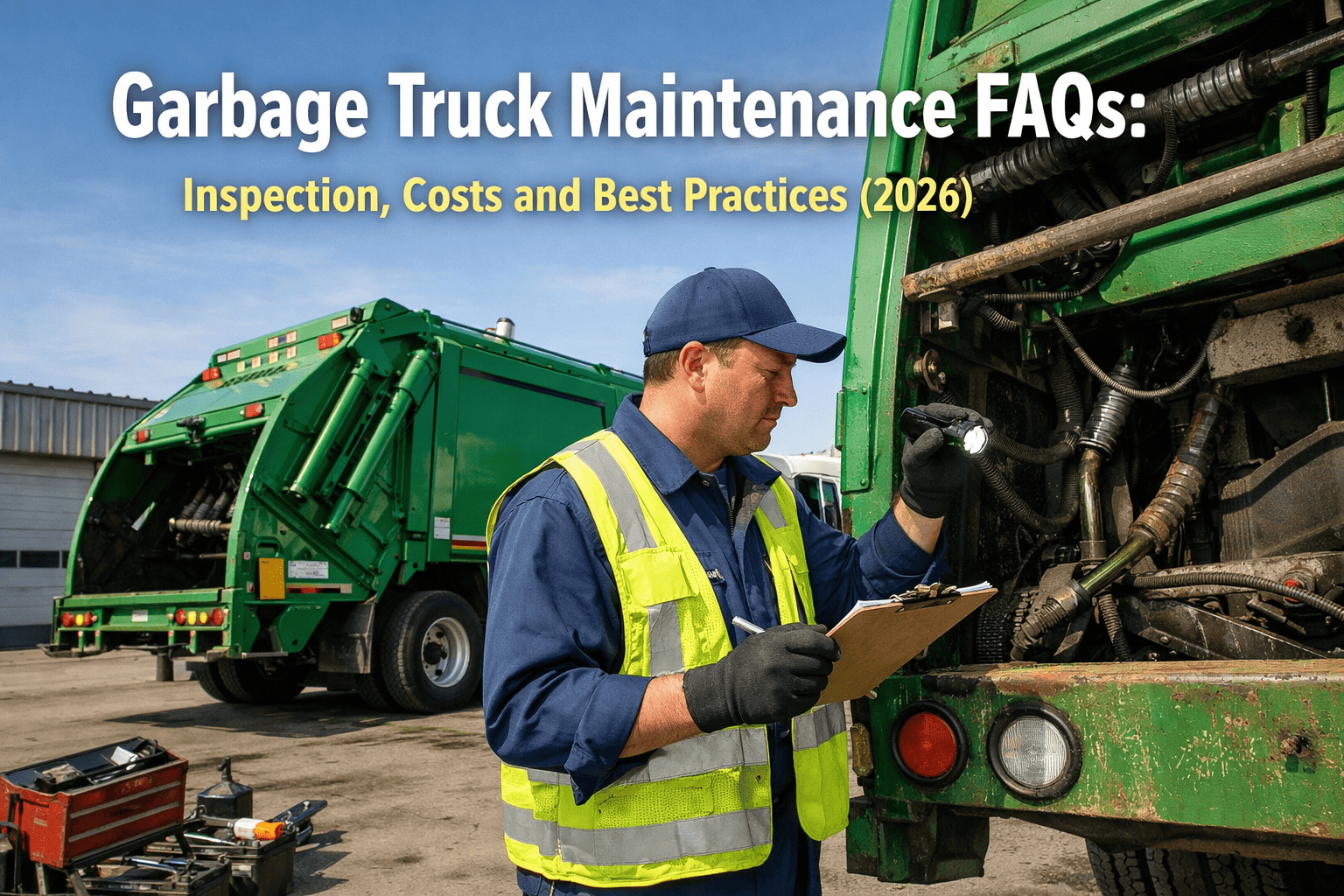
Your garbage trucks are the least fuel-efficient vehicles on American roads. At 2.5 miles per gallon, burning 10,000 gallons annually per truck, and spending 50% of operating time idling at stops,every unnecessary mile hits harder than any other fleet type. A 20-truck operation running unoptimized routes quietly loses $80,000-$150,000 per year in preventable costs. Book a demo to see how AI route optimization eliminates this waste.
The difference between profitable and struggling waste haulers isn't fleet size or equipment quality—it is route intelligence. While manual planning creates predictable patterns, AI-powered systems continuously analyze traffic fill levels, and service windows to build routes that minimize every cost driver simultaneously. Fleets implementing smart routing reduce fuel consumption by 20-30% and eliminate 90% of overtime costs. Start your free trial and see your actual route inefficiencies mapped in under 10 minutes.
What Route Inefficiency Actually Costs Your Operation
Route inefficiency in waste collection compounds faster than any other fleet type because of unique operational characteristics. Stop-and-go driving at 2.5 MPG burns fuel at 3x the rate of delivery vehicles. Compactor cycling consumes fuel even while stationary. Customer service windows create hard constraints that turn small delays into major route disruptions.
The Hidden Cost Multiplier Effect
Waste collection has the worst fuel economy of any commercial vehicle class. When routes aren't optimized, every inefficiency compounds exponentially—more miles means more fuel, more driver hours, more brake wear, more customer complaints, and more emergency callbacks.
- 2.5 MPG average = $1.60+ per mile in fuel costs alone
- 50% of operating time spent idling burns 0.8 gallons/hour
- Each 10% route improvement saves $4,200 annually per truck
- Overtime wages compound at 1.5x, turning $30/hr into $45/hr
The Four Cost Categories of Inefficient Routes
Understanding where money actually leaks helps prioritize optimization efforts. Most waste fleet managers track fuel costs but miss the 60% of total waste hiding in labor, maintenance, and service recovery categories.
Fuel Waste
At $4.20/gallon and 2.5 MPG, every unnecessary mile costs $1.68 in fuel alone. A 15-mile daily route deviation burns $6,120 extra per truck annually—before counting idling waste.
$64/day per truckOvertime Labor
Unbalanced routes force some drivers into 2+ hours overtime while others finish early. At $45/hr overtime rates, 2 hours daily costs $90—multiplied across your fleet creates catastrophic labor waste.
$90/day per truckAccelerated Wear
Excessive braking, stop-and-go cycles, and rough terrain destroy brakes, transmissions, and hydraulic systems 40% faster than optimized routes. Preventable maintenance adds $35+ daily per vehicle.
$35/day per truckService Recovery
Missed pickups trigger customer service calls, emergency dispatches, and contract penalties. Each callback costs $120+ in labor, fuel, and administrative overhead—destroying margins on that customer entirely.
$120/event callbackWhy Garbage Routes Become Inefficient
Route inefficiency doesn't happen suddenly—it accumulates gradually through predictable patterns that manual planning cannot address. Understanding these root causes reveals why technology is the only permanent solution. For more on predictive approaches, see our guide on AI predictive maintenance for fleets.
Static Route Decay
Routes built 6 months ago don't account for new construction, traffic pattern changes, or seasonal variations. What worked in January fails in July as conditions evolve but routes stay frozen.
Customer Base Drift
New accounts get appended to existing routes regardless of geographic efficiency. One new customer in the wrong location adds 8+ miles of backtracking to every weekly service.
Driver Knowledge Loss
When experienced drivers leave, their route optimizations leave with them. New drivers follow GPS blindly without knowing which shortcuts or timing tricks saved 45 minutes daily.
Fill Level Blindness
Without container sensors, trucks visit half-empty bins and skip overflowing ones. Ghost stops waste 20% of route time while full containers generate complaints and overflow fees.
Calculate Your Route Inefficiency Cost
Most waste fleets lose $4,000-$7,000 per truck annually to preventable route waste. See your exact exposure in 5 minutes.
The Route Efficiency Self-Assessment
Before investing in optimization technology, identify which specific inefficiencies plague your operation. Most waste fleet managers know something is wrong but struggle to pinpoint exactly where money leaks. Check the symptoms that match your operation:
Chronic Overtime
Some drivers finish 2+ hours late while others clock out early—routes are unbalanced
Weekly Complaints
Customer calls about missed pickups happen every single week without fail
Ghost Stops
Trucks visiting containers that turn out to be nearly empty—wasted stops
Morning Planning Chaos
Dispatchers spend 60+ minutes daily building routes manually from scratch
Fuel Budget Overruns
Monthly fuel costs consistently exceed budget by 15%+ with no explanation
No Route Metrics
Can't answer basic questions about miles per stop or cost per customer
Real-World Route Inefficiency Numbers
Industry benchmarks reveal the stark difference between optimized and unoptimized waste collection operations. These metrics come from fleet management software data across 500+ waste haulers. For implementation strategies, explore our route optimization software guide.
Route Efficiency Gap
Unoptimized fleets vs AI-optimized
Average Fuel Savings
After route optimization
Overtime Reduction
With balanced route planning
On-Time Completion
AI-optimized route adherence
How AI Route Optimization Works
Modern AI routing platforms process dozens of variables simultaneously—traffic patterns, container fill levels, customer time windows, truck capacity, driver HOS, and historical performance data—to generate routes that minimize total operational cost, not just distance.
Dynamic Route Generation
AI recalculates optimal routes daily based on current conditions, not static historical patterns.
Fill Level Integration
Container sensors feed real-time data to skip empty bins and prioritize overflowing containers.
Traffic-Aware Timing
Routes adjust departure times and sequences to avoid peak congestion and construction delays.
Load Balancing
Workloads distribute evenly across drivers to eliminate overtime while maintaining service quality.
Manual vs AI-Optimized Route Comparison
The operational gap between traditional manual planning and AI-powered route optimization continues to widen as algorithms improve. This comparison uses verified data from waste fleets that switched to AI routing within the past 18 months.
| Metric | Manual Routes | AI-Optimized | Improvement |
|---|---|---|---|
| Daily planning time | 45-90 minutes | Under 5 minutes | 90% faster |
| Miles per stop | 0.8-1.2 miles | 0.4-0.6 miles | 50% reduction |
| Driver overtime | 12-18 hrs/week | 2-4 hrs/week | 78% reduction |
| Missed pickups | 3-8 per week | Under 1 per week | 87% fewer |
| Fuel cost per stop | $2.40-$3.20 | $1.60-$2.10 | 34% savings |
| Route adaptability | Weekly updates | Real-time | Continuous |
Integration with Existing Fleet Systems
Modern route optimization platforms connect seamlessly with telematics, fuel cards, maintenance systems, and customer management software to create unified fleet intelligence. No rip-and-replace required—AI layers on top of your existing infrastructure. Learn more about telematics platform integration.
GPS Telematics
Real-time location feeds enable dynamic route adjustments
Fuel Cards
Transaction data validates route efficiency improvements
Maintenance Systems
Route data predicts component wear patterns
See Your Routes Optimized in Real-Time
Upload your current route data and watch AI identify $40,000+ in annual savings opportunities within minutes.
Implementation Timeline and ROI
Route optimization delivers the fastest payback of any fleet technology investment. Most waste haulers see positive ROI within 30 days as fuel and overtime savings accumulate immediately after deployment. For detailed ROI projections, use our fleet management ROI calculator.
Connect existing telematics, import customer locations, and upload historical route data. AI begins analyzing patterns and identifying optimization opportunities immediately. Zero operational disruption during setup.
Run AI-optimized routes on 3-5 trucks while comparing against baseline metrics. Drivers provide feedback on turn-by-turn feasibility. System calibrates to local road conditions and operational constraints.
Expand optimized routing to entire fleet. Dispatchers receive training on exception handling and route modifications. Real-time monitoring confirms expected efficiency gains materializing across all vehicles.
AI learns from every completed route, continuously improving accuracy. Seasonal patterns, new customers, and road changes automatically incorporate into future route calculations. Savings compound monthly.
Frequently Asked Questions
Stop Losing $4,000+ Per Truck to Route Inefficiency
Route inefficiency is the largest controllable cost in waste collection operations. Every day without optimization adds fuel waste, overtime hours, accelerated wear, and missed service calls to your bottom line. The technology to eliminate these costs exists, works with your current equipment, and typically pays for itself within 30 days.
The math is simple: at $4,000-$7,000 annual savings per truck and $3/vehicle/month software cost, route optimization delivers 10-20x ROI. Book a demo and see your specific savings potential calculated from your actual route data.
Start Eliminating Route Waste Today
Free for up to 3 vehicles. Import your routes in 10 minutes. First optimization recommendations within 24 hours.
No credit card required - Works with any GPS provider - 14-day money-back guarantee