Fleet management software, GPS tracking, DOT compliance fuel savings, predictive maintenance — these are the questions fleet managers search for every day. This guide answers the 10 most important ones with real numbers, direct answers, and zero filler. Sign up for FleetRabbit free and put the answers to work on your fleet today.
What is fleet management software and how does it work?
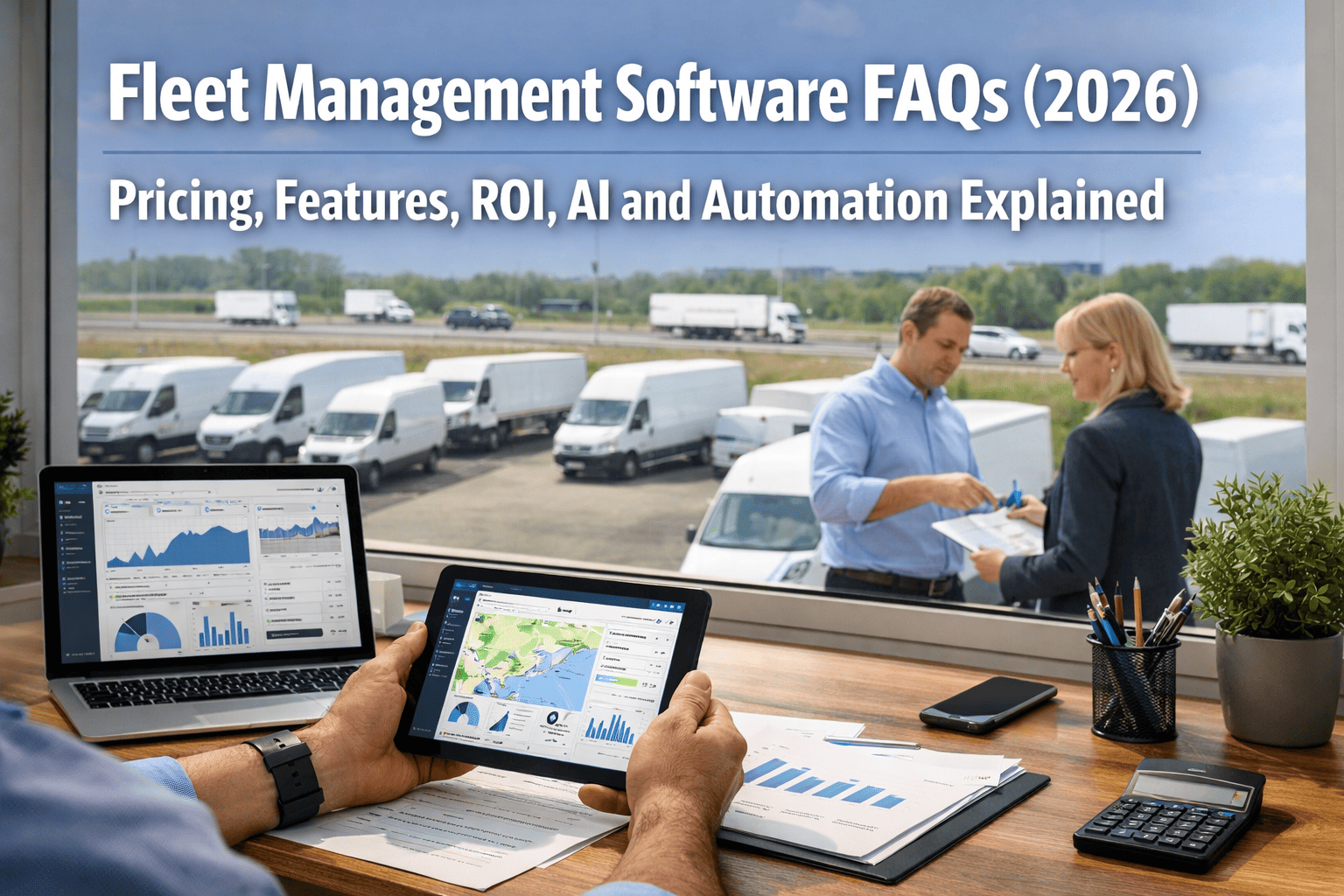
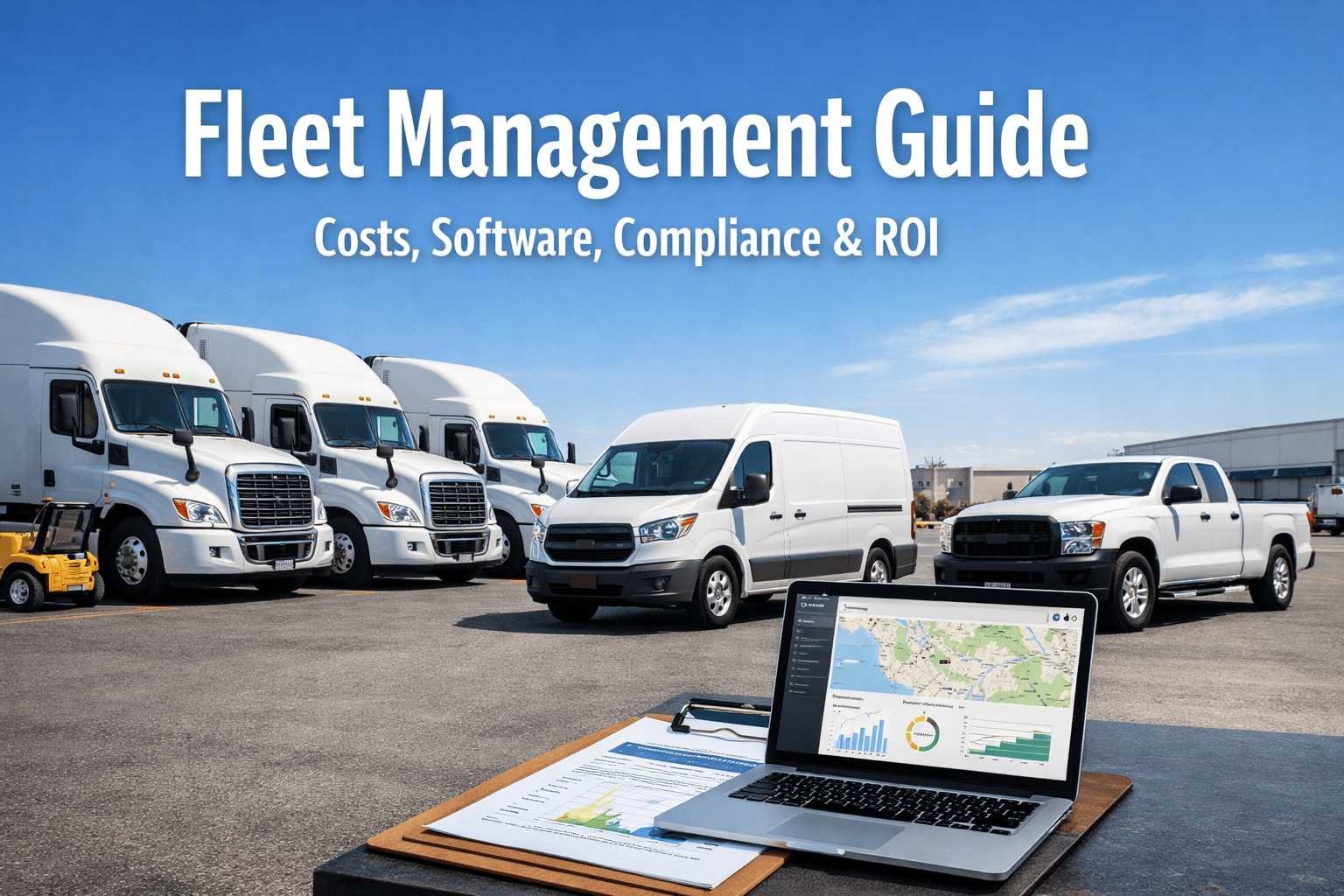
Fleet management software centralizes vehicle tracking, maintenance scheduling, compliance documentation, driver management, and analytics into one system. It connects to telematics hardware already installed in most commercial vehicles, pulling engine diagnostics, GPS location, fuel consumption, and driver behavior data in real time — then surfaces actionable alerts so the right person acts at the right time.
Data Collection
Telematics sensors capture engine temperature, GPS, fuel consumption, DTC codes, and driver events 24/7 from every vehicle in the fleet.
AI Analysis
Machine learning models process sensor patterns against vehicle-specific baselines, flagging deviations that historically precede failures or policy violations.
Prioritized Alerts
Fleet managers and technicians receive ranked alerts by severity — critical failures first, maintenance reminders second, behavior coaching third.
Automated Action
Work orders, PM schedules, compliance records, and reports generate automatically — reducing admin time and eliminating manual tracking gaps.
How much does fleet management software cost per vehicle?
Fleet management software typically ranges from $3 to $25 per vehicle per month depending on features, fleet size, and whether hardware is bundled. Most fleets recover the cost within the first prevented breakdown. Start free with FleetRabbit — up to 3 vehicles, no credit card required →
How does GPS tracking improve fleet efficiency?
GPS tracking gives dispatchers real-time visibility into vehicle locations, enables route optimization, eliminates unauthorized use, and provides accurate ETAs. The efficiency gains compound — better routing cuts miles, fewer miles cuts fuel, and live location data eliminates the constant phone calls drivers hate and dispatchers waste time on.
What is DVIR and why is it important for fleets?
DVIR (Driver Vehicle Inspection Report) is a federally mandated pre-trip and post-trip inspection record required under FMCSA 49 CFR Part 396.11 & 396.13 for all CMVs in interstate commerce. Drivers must inspect specific systems and sign off before operating. Records must be retained for at least 3 months. Violations carry fines up to $16,000 per incident and CSA score points that raise insurance premiums.
How can fleets reduce fuel costs effectively?
Fuel is typically 25–35% of total fleet operating costs. Fleets that reduce it systematically address three layers: driver behavior (fastest lever), vehicle condition (TPMS, engine health), and route efficiency (structural layer with the highest ceiling). The best results come from addressing all three simultaneously with data.
Driver Coaching
Speed governance and smooth acceleration coaching. Results visible within 30 days of deploying scorecards.
Idle Reduction
At $1.38/hr diesel burn, 4 idle hours/day across 100 trucks loses $201K annually. Automated alerts cut this dramatically.
Tire Pressure (TPMS)
A single tire 10 PSI below spec reduces MPG by ~0.3%. The most underestimated fuel drain in commercial fleets.
Route Optimization
Manual dispatch produces routes 8% longer than optimal. AI routing eliminates unnecessary miles — highest ceiling of all four levers.
What is predictive maintenance in fleet management?
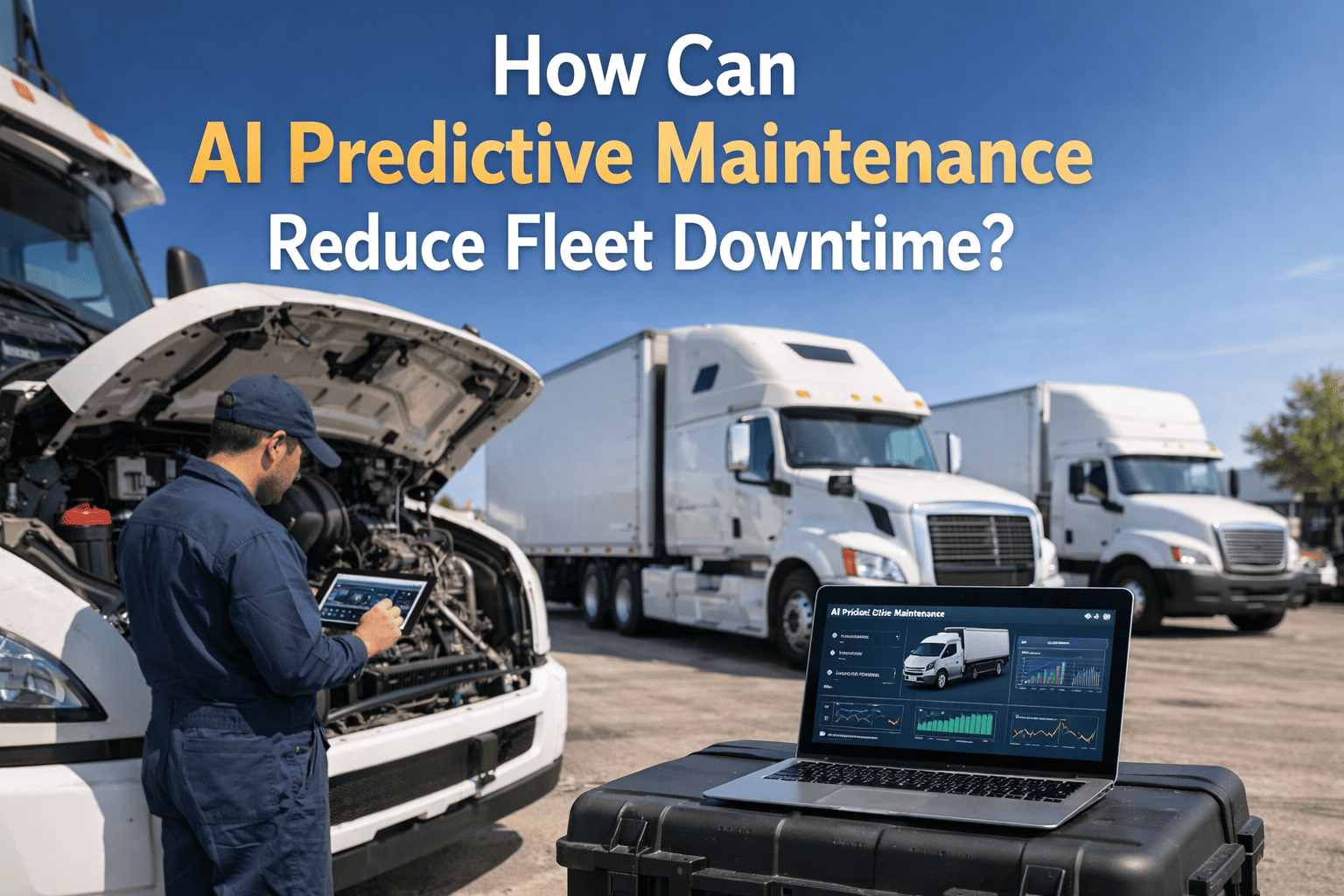
Predictive maintenance uses machine learning trained on vehicle sensor data to forecast component failures before they happen. Unlike preventive maintenance (fixed schedule) or reactive maintenance (wait for failure), predictive acts only when data shows a specific component approaching its failure threshold — typically 14–28 days before breakdown. Start free and get your fleet’s first AI predictions within 72 hours →
Reactive
Fix it when it breaks. Highest cost per repair. Unplanned downtime. No advance warning. Industry average: 73% of fleets still here.
Preventive
Fix it on a schedule. Eliminates some surprise failures but wastes parts with remaining useful life. Overtreats healthy vehicles.
Predictive
Fix it when data says it needs it. Lowest cost. Planned downtime. 14–28 days advance warning. Only 27% of fleets use this today.
How does fleet software help with DOT compliance?
DOT compliance for commercial fleets covers vehicle inspections (DVIR), Hours of Service logging, driver qualification files, drug and alcohol records, and maintenance documentation. Fleet software centralizes all of this into one audit-ready system — replacing paper logs and disconnected spreadsheets.
DVIR Records
Digital pre/post-trip with photo evidence, driver signatures, and automatic defect-to-work-order routing. Stored for required retention periods.
HOS Monitoring
Real-time hours tracking against FMCSA limits. Automated alerts before drivers approach HOS violations.
Maintenance Records
Complete service history per vehicle with timestamped work orders. Instantly exportable for DOT audits and roadside inspections.
Driver Qualifications
License expiry, medical certificate renewals, and training records tracked with automated alerts before any document lapses.
What is the ROI of fleet management software?
Fleet management software ROI comes from four buckets: fuel savings, maintenance cost reduction, compliance fine avoidance, and labor productivity. Combined, a typical 50-vehicle fleet achieves 10–25x return on software cost in year one. The math is straightforward when you quantify what the software prevents rather than just what it costs.
Want to model the exact savings potential for your fleet size? Book a free 30-minute briefing — we’ll run the numbers for your specific mix →
Can fleet software integrate with telematics providers?
Yes — and this is critical. Most fleets already have telematics hardware. The value of fleet software multiplies when it connects to your existing telematics rather than requiring you to replace it. FleetRabbit integrates with all major providers, pulling vehicle data directly into the AI engine without any hardware changes.
How does driver behavior monitoring improve fleet safety?
Driver behavior monitoring tracks speeding, harsh braking, rapid acceleration, sharp cornering, and idle events using telematics and AI. The data feeds per-driver scorecards that show fleet managers which drivers are creating safety risk and unnecessary vehicle wear — and give drivers direct feedback on what to improve.
Ready to Put These Answers to Work on Your Fleet?
FleetRabbit brings GPS tracking, AI predictive maintenance, DVIR, DOT compliance, driver coaching, and fuel analytics into one platform — starting free for up to 3 vehicles.