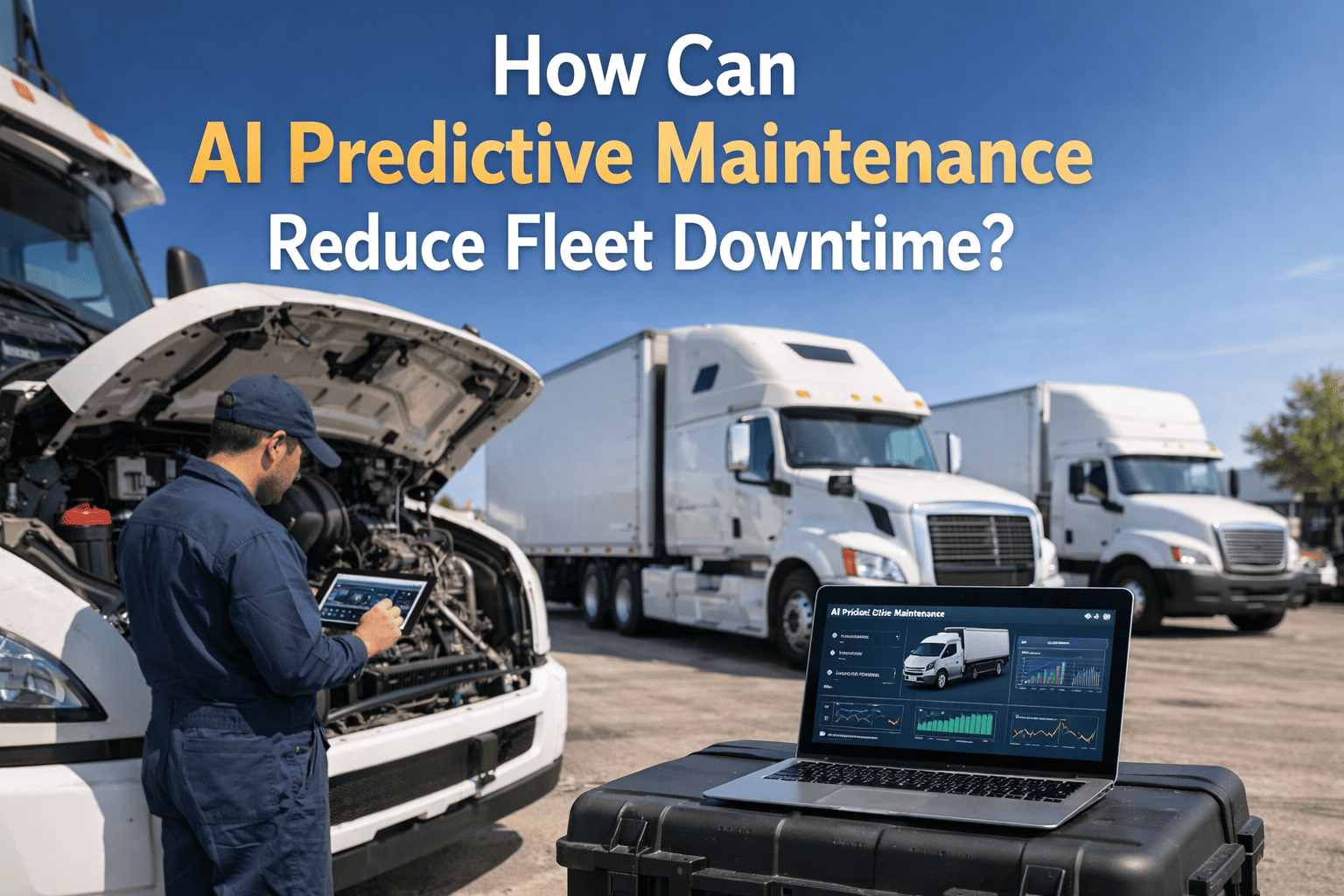
This comprehensive guide provides step-by-step instructions for implementing AI-powered predictive maintenance solutions that reduce breakdowns by 70%, lower maintenance costs by 30%, and extend vehicle life through intelligent diagnostics and automated scheduling. Start your AI maintenance implementation - takes 20 minutes.
Master AI Predictive Maintenance Today
Get comprehensive AI-powered maintenance solutions that prevent 70% of unexpected breakdowns while reducing maintenance costs by 30%. Transform your fleet with intelligent predictive analytics.
Frequently Asked Questions
What is the role of AI in predictive fleet maintenance?
AI revolutionizes fleet maintenance by transforming reactive repairs into proactive prevention through machine learning algorithms that analyze vehicle data patterns, predict component failures before they occur, and optimize maintenance schedules. Access our complete AI maintenance framework - ready in 15 minutes:
- Predictive failure analysis using machine learning to identify component degradation patterns
- Real-time diagnostic monitoring through continuous vehicle health assessment
- Automated maintenance scheduling based on actual vehicle condition rather than calendar dates
- Cost optimization algorithms that balance maintenance timing with operational requirements
- Performance trend analysis identifying efficiency degradation before major failures
- Intelligent fault code categorization prioritizing critical issues requiring immediate attention
How does AI improve traditional fleet maintenance approaches?
AI-powered predictive maintenance delivers superior results compared to traditional reactive or scheduled maintenance by leveraging data-driven insights and machine learning algorithms. Get our maintenance comparison analysis - takes 10 minutes:
AI vs Traditional Maintenance Comparison
| Maintenance Approach | Breakdown Prevention | Cost Reduction | Vehicle Uptime | Maintenance Efficiency |
|---|---|---|---|---|
| Reactive Maintenance | 0-10% | Baseline | 85-90% | Poor |
| Scheduled Maintenance | 30-40% | 10-15% | 92-95% | Moderate |
| AI Predictive Maintenance | 70-85% | 25-35% | 97-99% | Excellent |
What types of AI algorithms are used in fleet predictive maintenance?
Modern predictive maintenance systems employ multiple AI techniques to analyze vehicle data and predict maintenance needs with high accuracy. Schedule an AI technology consultation - 30 minutes:
Core AI Technologies in Fleet Maintenance:
- Machine Learning Classification for fault code analysis and failure pattern recognition
- Time Series Analysis predicting component wear based on historical performance data
- Anomaly Detection Algorithms identifying unusual vehicle behavior indicating potential issues
- Neural Networks for complex pattern recognition in multi-sensor data streams
- Regression Analysis estimating remaining useful life of vehicle components
- Clustering Algorithms grouping vehicles with similar maintenance patterns for optimization
How does AI analyze vehicle data to predict maintenance needs?
AI systems continuously process massive amounts of vehicle sensor data, identifying subtle patterns and correlations that human analysis would miss. Learn about AI data analysis solutions - takes 20 minutes:
- Sensor data integration from engine diagnostics, telematics, and IoT devices
- Pattern recognition identifying early warning signs in performance metrics
- Trend analysis tracking gradual degradation in component performance
- Correlation mapping connecting operational conditions to maintenance requirements
- Risk scoring algorithms prioritizing vehicles most likely to experience failures
- Predictive modeling forecasting optimal maintenance timing for each vehicle
What are the key benefits of implementing AI predictive maintenance?
AI-powered predictive maintenance delivers measurable improvements across all aspects of fleet operations, typically providing ROI within 3-6 months. Access our benefits calculator - takes 12 minutes:
Proven AI Maintenance Benefits:
- Breakdown reduction of 70-85% through early failure detection
- Maintenance cost savings of 25-35% via optimized scheduling
- Vehicle uptime improvement to 97-99% availability
- Component life extension of 15-25% through proper maintenance timing
- Labor efficiency gains of 30-40% through automated planning
- Inventory optimization reducing parts carrying costs by 20-30%
How much does AI predictive maintenance implementation cost?
Understanding AI maintenance system costs and ROI helps with budget planning and technology investment decisions. Get our AI cost analysis tools - ready in 15 minutes:
AI Predictive Maintenance Investment
| Cost Component | Range | Notes |
|---|---|---|
| AI software platform | $50-$200/vehicle/month | Based on fleet size |
| Sensor integration | $500-$2,000/vehicle | One-time hardware cost |
| Implementation services | $10,000-$50,000 | Setup and training |
| Data integration | $5,000-$25,000 | System connectivity |
| ROI timeline | 3-6 months | Through cost savings |
What data sources do AI maintenance systems require?
Effective AI predictive maintenance depends on comprehensive data collection from multiple vehicle and operational sources. Get our data integration guide - takes 10 minutes:
- Engine diagnostic data including fault codes, performance parameters, and sensor readings
- Telematics information covering vehicle usage patterns, driver behavior, and operating conditions
- Maintenance history records providing context for failure patterns and repair effectiveness
- Environmental data including weather conditions, route characteristics, and load factors
- Fuel system data monitoring consumption patterns and efficiency metrics
- Operational metrics such as mileage, hours of operation, and duty cycles
How does AI handle different vehicle types and maintenance requirements?
Modern AI systems adapt to diverse fleet compositions through machine learning algorithms that customize predictions for each vehicle type and application. Schedule a fleet customization consultation - 30 minutes:
AI Adaptation Capabilities:
- Vehicle-specific modeling tailored to different truck types, engines, and applications
- Usage pattern recognition adapting to local delivery, long-haul, or specialized operations
- Component library management maintaining separate models for different parts and systems
- Environmental adjustment accounting for climate, terrain, and operating conditions
- Load factor integration considering cargo weight and type in maintenance predictions
- Driver behavior correlation factoring in driving style impact on maintenance needs
What are the challenges of implementing AI predictive maintenance?
Understanding common implementation challenges helps fleets prepare for successful AI maintenance adoption. Access our implementation guide - takes 15 minutes:
Common AI Implementation Challenges:
- Data quality issues requiring clean, consistent, and comprehensive information
- Integration complexity connecting AI systems with existing maintenance management software
- Initial learning period where AI models require time to achieve optimal accuracy
- Staff training requirements for technicians and managers using AI-driven insights
- Change management transitioning from traditional to AI-guided maintenance practices
- Technology investment in sensors, connectivity, and processing infrastructure
How accurate are AI predictions for vehicle maintenance needs?
AI predictive maintenance systems achieve high accuracy rates through continuous learning and refinement of prediction models. Get our accuracy metrics dashboard - ready in 10 minutes:
- Failure prediction accuracy typically 85-95% for major component failures
- False positive rates reduced to 5-15% through advanced algorithms
- Prediction time horizons ranging from days to months depending on component type
- Continuous improvement as systems learn from more data and outcomes
- Component-specific accuracy varying based on sensor availability and failure patterns
- Confidence scoring providing reliability indicators for each prediction
What metrics should fleets track to measure AI maintenance success?
Key performance indicators help measure AI predictive maintenance program effectiveness and identify optimization opportunities. Set up your AI KPI dashboard - takes 15 minutes:
- Mean Time Between Failures (MTBF) showing improvement in component reliability
- Planned vs unplanned maintenance ratio indicating prediction effectiveness
- Maintenance cost per mile demonstrating cost optimization results
- Vehicle availability percentage measuring uptime improvements
- Prediction accuracy rates tracking AI system performance
- Parts inventory turnover showing optimization of spare parts management
- Technician productivity metrics measuring efficiency gains from AI guidance
How does AI predictive maintenance integrate with existing fleet management systems?
Successful AI integration requires careful planning and consideration of existing technology infrastructure and workflows. Schedule an integration consultation - 30 minutes:
Integration Requirements:
- API connectivity enabling seamless data flow between AI and management systems
- Work order automation generating maintenance tasks based on AI predictions
- Inventory management sync coordinating parts ordering with predicted needs
- Scheduling system integration optimizing maintenance timing with operational requirements
- Reporting dashboard unification consolidating AI insights with operational metrics
- Mobile accessibility providing AI recommendations to field technicians and drivers
Master AI Predictive Maintenance Today
Get comprehensive AI-powered maintenance solutions that prevent 70% of unexpected breakdowns while reducing maintenance costs by 30%. Transform your fleet with intelligent predictive analytics.