Traditional oilfield fleet safety programs rely on reactive disciplinary protocols where unsafe driver behaviors are identified through post-incident investigation or periodic manager review of aggregated safety metrics — creating systematic intervention delays where drivers operate with dangerous habits for days, weeks, or months between unsafe events and corrective coaching, during which period the probability of serious accidents compounds with each subsequent trip until inevitable collision occurs. The fundamental limitation of reactive safety management stems from temporal disconnect between behavior and consequence — when drivers receive coaching sessions addressing speeding violations, harsh braking events, or distracted operation patterns weeks after incidents occurred, the corrective feedback loses effectiveness because drivers cannot recall specific circumstances that triggered unsafe behaviors, situational learning opportunities are permanently lost, and behavioral modification requires abstract connection between past actions and delayed consequences rather than immediate cause-effect reinforcement. Progressive oilfield operators deploy AI-powered real-time driver coaching systems that fundamentally transform safety intervention timing through in-cab feedback delivery at the precise moment unsafe behaviors occur — when drivers exceed speed limits by 10+ MPH, FleetRabbit's AI system immediately triggers audible alerts and dashboard visual warnings providing instant notification enabling immediate speed correction before accidents develop, when harsh braking events indicate insufficient following distance or distracted operation, real-time coaching prompts drivers to increase spacing and refocus attention during the actual driving scenario creating situational awareness and behavioral modification, when rapid acceleration or aggressive cornering patterns emerge, immediate feedback reinforces safe operation techniques while drivers can still adjust current maneuvers rather than learning abstractly from historical data reviewed days later. This real-time intervention architecture delivers documented safety improvements of 45-52 percent reduction in preventable accidents within 90 days of deployment compared to baseline performance under reactive coaching models, with particularly dramatic impact on high-risk driver populations where individuals scoring in lowest safety performance quartile show 68 percent accident reduction when receiving immediate AI coaching versus traditional delayed disciplinary approaches. Book a demo to see FleetRabbit's AI coaching system demonstrated with actual in-cab alert scenarios.
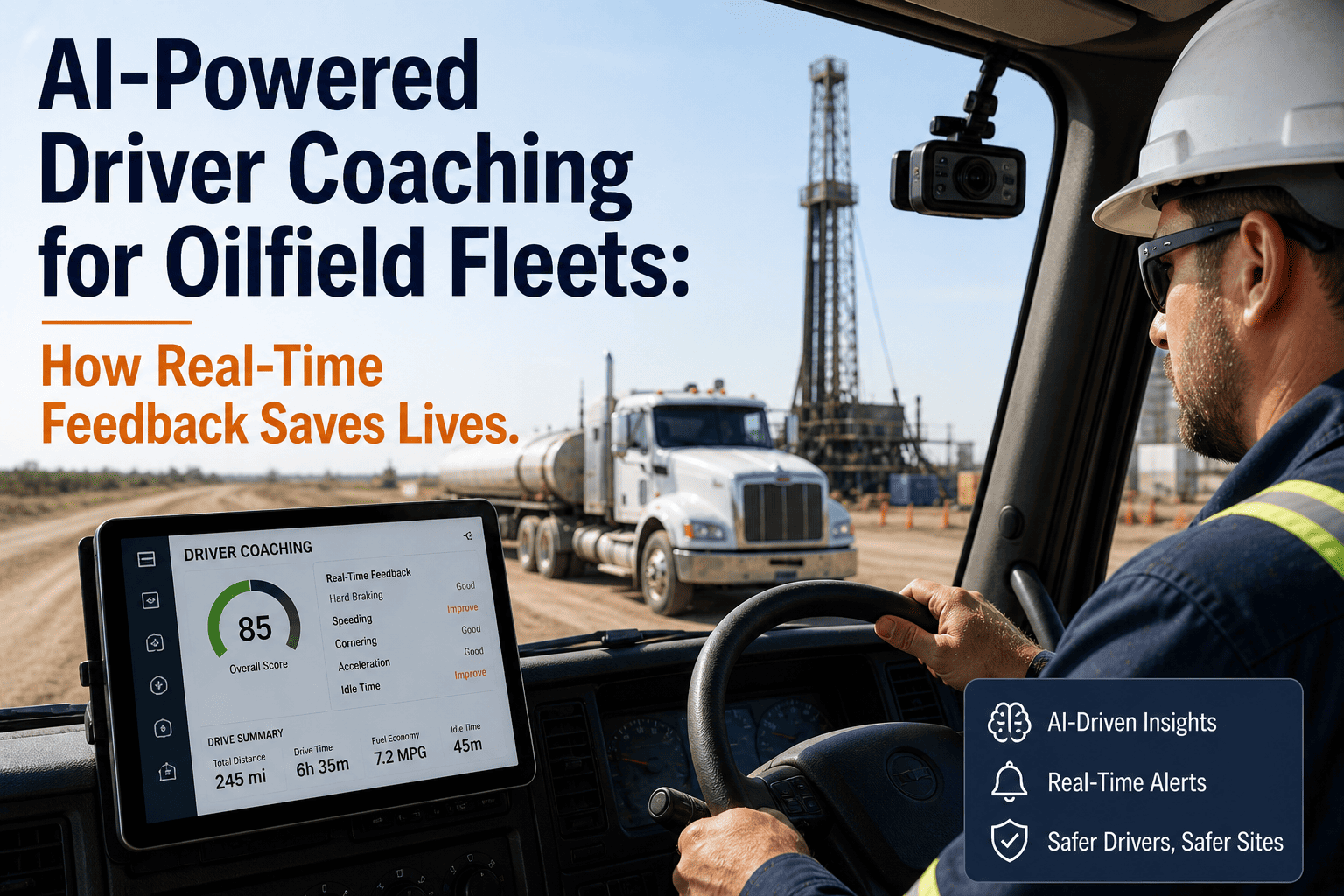
AI-Powered Driver Coaching for Oilfield Fleets: How Real-Time Feedback Saves Lives
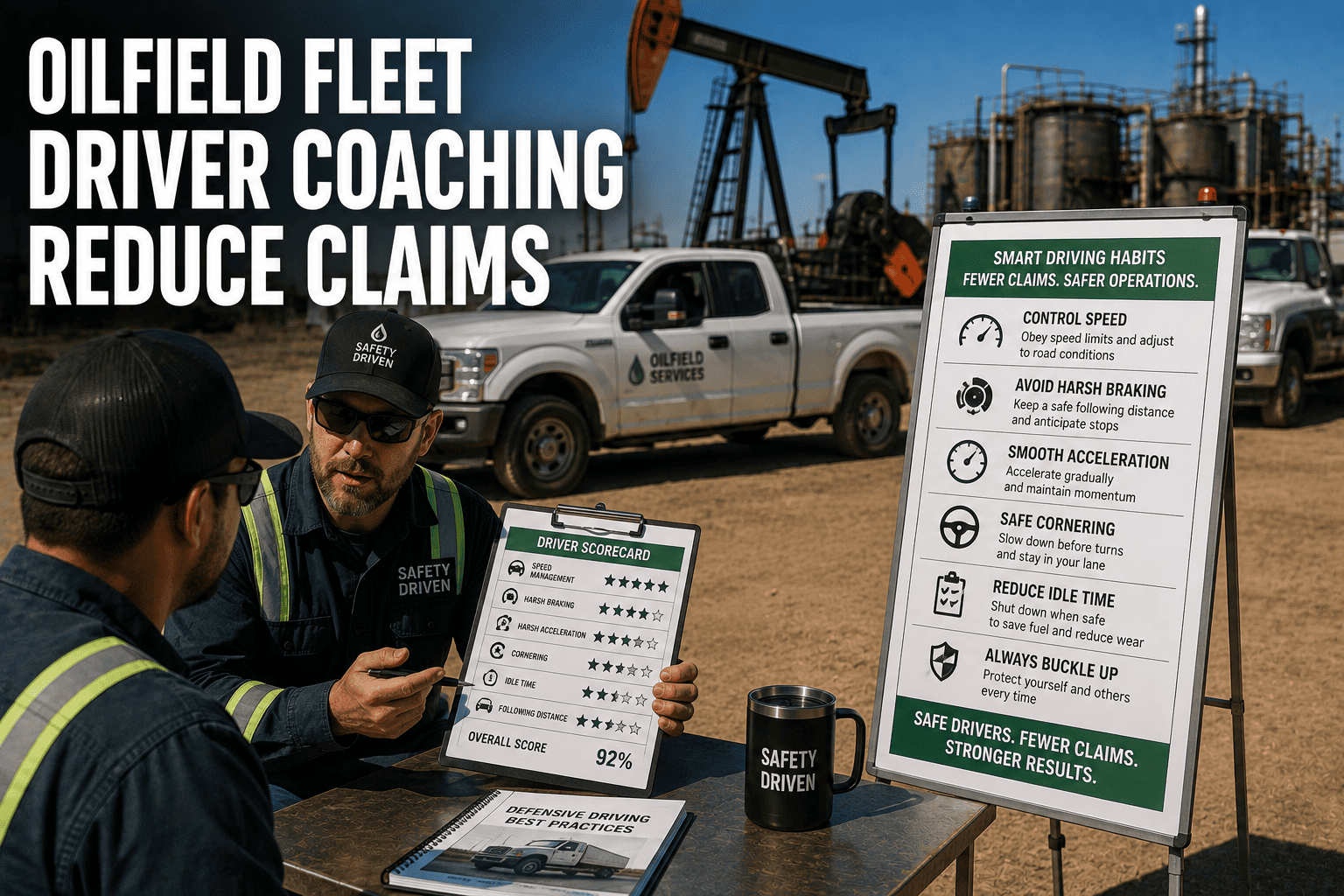
Reactive disciplinary action after accidents doesn't prevent incidents. FleetRabbit's AI coaching delivers in-cab real-time audio alerts and visual warnings the moment unsafe driving is detected — before collisions happen.
Why Traditional Delayed Feedback Cannot Prevent Oilfield Fleet Accidents
Traditional fleet safety programs identify unsafe driver behaviors through lagging indicators including post-accident investigation revealing speeding violations or distracted operation as contributing factors, weekly or monthly manager review of aggregated safety metrics showing drivers with elevated harsh braking rates or cornering forces, periodic telematics reports highlighting individuals exceeding speed limits during previous operational periods, and quarterly performance evaluations comparing driver safety scores against fleet averages. These reactive identification mechanisms create systematic intervention delays where unsafe behaviors continue unaddressed for extended periods between occurrence and corrective action.
The temporal disconnect between behavior and coaching fundamentally undermines intervention effectiveness through multiple psychological and practical mechanisms. When drivers receive disciplinary meetings or coaching sessions addressing speeding violations that occurred two weeks prior, they cannot recall specific circumstances that prompted excessive speed — was it attempting to meet unrealistic dispatch schedules, unfamiliarity with posted limits on unfamiliar routes, speedometer calibration error, or momentary inattention? Without situational context, drivers cannot identify root causes or develop specific behavioral modifications preventing recurrence. The delayed feedback creates abstract learning requirements where drivers must intellectually connect past actions to delayed consequences rather than experiencing immediate cause-effect reinforcement that naturally conditions behavioral change.
The operational consequence manifests as persistent unsafe behavior patterns where drivers accumulate multiple speeding violations, harsh braking events, or aggressive operation incidents before coaching interventions occur — during which exposure period the probability of serious accidents compounds with each subsequent trip. High-risk drivers operating with dangerous habits for 30-60 days between identification and coaching create disproportionate accident exposure consuming 70-80 percent of total fleet collision costs despite representing only 15-20 percent of driver population. By the time reactive coaching addresses unsafe patterns, preventable accidents have already occurred generating injury claims, vehicle damage costs, insurance premium increases, and regulatory compliance violations that coaching can no longer prevent.
FleetRabbit's AI coaching system eliminates intervention delays through real-time in-cab feedback delivered at the precise moment unsafe behaviors occur — enabling immediate correction before accidents develop. Start a free trial to activate AI coaching for your driver population →
How FleetRabbit's Real-Time Coaching System Works
FleetRabbit continuously monitors driver behavior through vehicle telematics sensors, instantly detecting unsafe patterns and delivering immediate in-cab coaching before accidents occur.
Continuous Real-Time Behavior Monitoring
FleetRabbit's AI engine analyzes vehicle telematics sensor data at one-second intervals throughout all operational hours, tracking acceleration, braking, cornering, and speed patterns against established safety thresholds calibrated for vehicle type, load conditions, and road classifications. The system maintains persistent baseline understanding of individual driver normal operating patterns enabling detection of behavioral anomalies indicating elevated risk — when normally cautious drivers suddenly exhibit aggressive operation suggesting distraction, fatigue, or emotional disturbance, the AI flags deviation from established patterns triggering enhanced monitoring and preemptive coaching even before specific threshold violations occur.
Instant Alert Triggering and Severity Classification
When driver behavior exceeds safety thresholds, FleetRabbit's AI system immediately classifies event severity determining appropriate coaching intervention level. Minor threshold violations — speeding 5-10 MPH over limit on rural highways with clear conditions — trigger gentle reminder alerts providing awareness without excessive distraction. Moderate violations — speeding 10-15 MPH over limit, harsh braking indicating marginal following distance, or moderate cornering forces — generate standard coaching alerts with audible tones and dashboard visual warnings. Severe violations — speeding 15+ MPH over limit, extremely harsh braking suggesting imminent collision risk, or dangerous cornering forces approaching rollover thresholds — activate urgent coaching with loud alerts, flashing dashboard warnings, and potential automatic speed limiting intervention where vehicle systems permit remote control.
In-Cab Feedback Delivery and Driver Response
FleetRabbit delivers coaching alerts through integrated in-cab hardware providing both audible and visual feedback channels ensuring driver awareness regardless of environmental conditions. Audible alerts use distinct tones for different violation types — single beep for minor speeding, sustained tone for harsh braking, urgent alarm for critical violations — enabling drivers to identify issue categories without reading dashboard displays while maintaining focus on road conditions. Visual warnings display on dashboard-mounted tablets or integrated vehicle displays showing violation type, current versus safe parameter values (actual speed vs posted limit), and brief corrective guidance ("Reduce speed to 55 MPH"). Voice coaching messages provide specific behavioral instructions during sustained violations ("Harsh braking detected — increase following distance to 4 seconds").
Adaptive Learning and Personalized Coaching
FleetRabbit's AI coaching system continuously learns individual driver response patterns adapting intervention strategies to maximize effectiveness while minimizing alert fatigue. When drivers consistently correct behaviors immediately upon receiving minor alerts, the system maintains gentle coaching approaches recognizing high responsiveness. When drivers ignore or dismiss repeated minor alerts eventually triggering moderate violations, the AI escalates intervention intensity providing earlier warnings with increased urgency. The system tracks coaching effectiveness metrics including time-to-correction after alerts, recurrence rates of specific violation types, and overall safety score trends — using this performance data to personalize coaching strategies optimizing behavioral modification for each driver's learning style and risk profile.
Real-Time AI Coaching Delivers 45-52% Accident Reduction Within 90 Days
Real-time AI coaching delivers accident reductions of 45-52 percent within 90 days, with particularly dramatic impact on high-risk driver populations showing 68 percent improvement. ROI typically exceeds 10,000 percent within first year. Schedule a demo to review safety improvement projections for your fleet profile →
FleetRabbit AI Coaching Implementation Timeline
System Configuration and Baseline Assessment
FleetRabbit AI coaching module activated in system configuration with safety threshold calibration for vehicle types, operational territories, and risk tolerance levels. Fleet-wide baseline safety assessment conducted using historical 90-day telematics data establishing pre-deployment accident rates, driver safety score distributions, and violation frequency patterns. High-risk driver population identified for targeted intervention priority. In-cab hardware installation scheduled for dashboard tablet mounts and audible alert speakers.
Driver Training and Pilot Deployment
Driver training sessions conducted explaining AI coaching purpose, alert types and meanings, expected behavioral responses, and privacy considerations. Emphasis on coaching intent as safety improvement tool rather than punitive surveillance system. Pilot deployment to 10-15 percent of fleet including mix of high-performing and high-risk drivers enabling system validation and alert threshold refinement based on actual operational feedback before full-scale rollout.
Full Fleet Deployment and Monitoring
AI coaching activated across entire fleet following pilot validation and threshold adjustment. Real-time monitoring of alert frequency, driver correction response times, and safety score trends. Manager dashboards track fleet-wide coaching effectiveness showing which drivers respond positively to real-time feedback versus individuals requiring supplemental traditional coaching. Alert fatigue monitoring ensures intervention frequency remains within acceptable ranges preventing driver desensitization.
Continuous Optimization and Impact Measurement
AI coaching system continuously adapts intervention strategies based on individual driver response patterns and fleet-wide effectiveness metrics. Monthly safety performance reviews compare accident rates, safety scores, and violation frequencies against pre-deployment baseline demonstrating ROI and identifying opportunities for coaching strategy refinement. High-risk drivers showing insufficient improvement receive supplemental traditional coaching addressing root causes beyond immediate behavioral correction.
Common Questions About AI Driver Coaching
Deploy AI Coaching Delivering 45-52% Accident Reduction Within 90 Days
FleetRabbit's AI coaching system continuously monitors driver behavior through vehicle telematics sensors tracking acceleration, braking, cornering, and speed patterns at one-second intervals, instantly detecting unsafe behaviors and delivering immediate in-cab feedback through audible alerts, visual dashboard warnings, and voice coaching messages the moment violations occur — when drivers exceed speed limits by 10+ MPH triggering immediate correction prompts, when harsh braking events indicate insufficient following distance activating spacing guidance, when rapid acceleration or aggressive cornering emerges providing real-time technique reinforcement — enabling behavioral modification during actual driving scenarios rather than abstract learning from historical data reviewed days or weeks later through traditional reactive coaching approaches. Documented deployment results show 45-52 percent reduction in preventable accidents within 90 days compared to baseline performance, with particularly dramatic impact on high-risk driver populations showing 68 percent accident reduction and 69 percent decrease in drivers scoring below 70/100 safety threshold, generating ROI exceeding 10,000 percent within first year through accident cost avoidance of $540,000 for typical 250-vehicle oilfield fleet versus $9,000 annual platform investment.
Transform Fleet Safety Through Immediate Behavioral Intervention
Traditional oilfield fleet safety programs rely on reactive disciplinary protocols identifying unsafe driver behaviors through post-incident investigation or periodic manager review of aggregated safety metrics creating systematic intervention delays where drivers operate with dangerous habits for days, weeks, or months between unsafe events and corrective coaching, during which exposure period the probability of serious accidents compounds with each subsequent trip until inevitable collision occurs — with fundamental limitations stemming from temporal disconnect between behavior and consequence where coaching sessions addressing violations weeks after occurrence lose effectiveness because drivers cannot recall specific circumstances, situational learning opportunities are permanently lost, and behavioral modification requires abstract connection between past actions and delayed consequences rather than immediate cause-effect reinforcement. FleetRabbit's AI-powered real-time driver coaching system transforms safety intervention timing through in-cab feedback delivery at the precise moment unsafe behaviors occur — continuous monitoring of driver behavior through vehicle telematics sensors capturing acceleration, braking, cornering, and speed data at one-second intervals throughout all operational hours, instant alert triggering when behaviors exceed safety thresholds with severity classification determining appropriate intervention levels from gentle reminders for minor violations to urgent alarms for critical risks, multi-modal feedback delivery through audible alerts, visual dashboard warnings, and voice coaching messages providing specific corrective guidance, and adaptive learning personalizing coaching strategies based on individual driver response patterns and risk profiles — delivering documented safety improvements of 45-52 percent reduction in preventable accidents within 90 days of deployment compared to baseline performance under reactive coaching models, with particularly dramatic impact on high-risk driver populations showing 68 percent accident reduction and 69 percent decrease in drivers scoring below 70/100 safety threshold, generating ROI exceeding 10,000 percent within first year through accident cost avoidance of $540,000 for typical 250-vehicle oilfield fleet versus $9,000 annual platform investment.