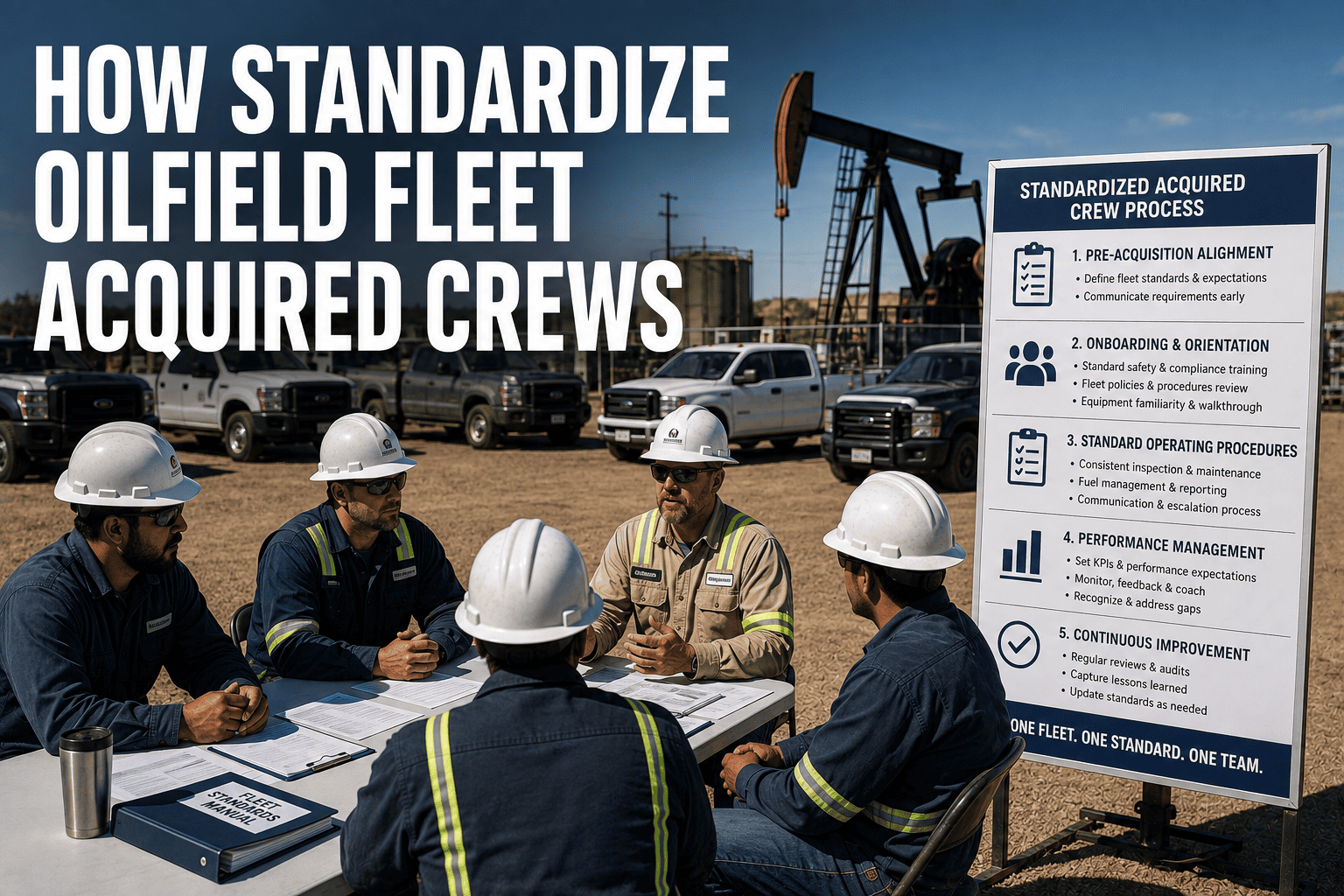
The deal closes and overnight your fleet doubles in size. Thirty trucks from the acquired company roll into your yard with their own maintenance schedules, their own inspection forms, their own fuel card programs, their own driver qualification files, and their own way of doing absolutely everything. Your dispatch team cannot see the new trucks. Your maintenance team does not know what service history exists. Your safety manager has no idea whether the acquired crews actually completed the pre-trip inspections their paperwork claims they did. For the first sixty to ninety days after an oilfield fleet acquisition, the combined operation runs as two separate companies sharing a parking lot, and the cost of that operational disconnect eats into acquisition value every single day. Standardizing fleet operations across acquired crews is not an integration nice-to-have. It is the mechanism that converts a collection of separate fleets into a single operation that delivers the synergies the acquisition was supposed to create.
Oilfield fleet acquisitions typically take 6 to 18 months to achieve operational standardization, with each month of delay costing 2 to 5 percent of the acquired fleet's annual operating budget in lost efficiency. A 50-vehicle acquired fleet with 4 million dollars in annual operating costs loses 67000 to 333000 dollars per month while operations remain unstandardized. FleetRabbit provides a single platform that absorbs acquired fleets into standardized inspections, maintenance, reporting, and workflows within weeks rather than months.
The Four Pillars of Fleet Standardization
Successful post-acquisition fleet standardization addresses four operational pillars in a specific sequence that builds momentum rather than creating chaos. The sequence matters because each pillar creates the foundation for the next. Attempting to standardize everything simultaneously overwhelms both the integration team and the acquired crews, often resulting in a partial standardization that leaves the worst problems unsolved.
Pillar One: Visibility and Data Unification
The first and most urgent pillar is getting every vehicle from both fleets onto a single visibility platform. Until you can see all vehicles, you cannot manage them consistently. This means deploying your telematics and fleet management platform onto every acquired vehicle within the first two to four weeks. The acquired vehicles may have existing telematics devices that can be integrated or may require new device installation. Either way, the priority is speed over perfection. A vehicle with basic GPS tracking on your platform is infinitely more manageable than a vehicle with a sophisticated system on a separate platform you never check. During this phase, you are not changing how the acquired crews work. You are simply gaining the ability to see what they are doing. This visibility data also serves a critical due diligence function by revealing the actual condition and utilization of the acquired fleet, which often differs from what was represented during the acquisition process. FleetRabbit's rapid deployment process gets acquired vehicles onto a unified platform within days per vehicle, making the visibility phase achievable in two to four weeks even for large acquisitions. Sign up for FleetRabbit to get the unified platform that makes every subsequent standardization step possible.
Pillar Two: Inspection Standardization
Once all vehicles are visible, the next pillar is standardizing the inspection process that every driver performs before operating any vehicle. This is the highest-priority operational standard because it directly affects safety, liability, and regulatory compliance from day one. The acquired fleet's existing inspection process gets replaced with your standardized digital inspection template that covers all required checkpoints for the vehicle types in the combined fleet. The inspection template should be identical across all crews and all vehicles, creating a consistent compliance baseline that your safety team can monitor from a single dashboard. Inspection standardization typically faces the most crew resistance because drivers view their existing process as adequate and the new process as unnecessary change. The most effective approach is leading with the safety rationale and making the new inspection visibly faster and easier than the old one. When drivers discover that the digital inspection on their phone takes 3 minutes instead of the 8-minute paper process they were doing, resistance drops sharply. Within two to three weeks of deployment, most acquired drivers prefer the new system once they experience it, especially when they see that their completion rates are now visible alongside the existing crews, creating positive competitive pressure.
Handling Inspection Gaps During Transition
The transition period between deactivating the old inspection process and fully adopting the new one creates a compliance gap that must be managed explicitly. The safest approach is a brief parallel period of three to five days where both the old and new inspection processes run simultaneously. This ensures no inspection is missed during the switchover while training the acquired drivers on the new process. After the parallel period, the old process is deactivated and only the new standardized process counts for compliance tracking. Any acquired driver who has not completed training on the new system by the end of the parallel period should be assigned a buddy from an existing crew who can provide one-on-one coaching until they are proficient.
Pillar Three: Maintenance Schedule Alignment
Maintenance standardization is the most complex pillar because it requires reconciling two different maintenance philosophies, parts inventories, and service provider relationships. The acquired fleet may follow a different maintenance interval schedule, use different parts specifications, or rely on different service providers. The standardization process starts with importing all available maintenance history from the acquired fleet's records into your fleet management system. This history reveals the actual maintenance condition of each acquired vehicle, which often differs significantly from the maintenance records presented during acquisition due diligence. Once history is imported, each acquired vehicle is assessed against your standard maintenance schedule and assigned a catch-up plan that brings it into compliance over 30 to 60 days without pulling too many vehicles out of service simultaneously. The catch-up plan prioritizes safety-critical services like brakes and steering first, then moves to preventive maintenance intervals, then addresses deferred maintenance items. This phased catch-up approach keeps the combined fleet operating while systematically eliminating the maintenance debt that came with the acquisition.
Consolidating Maintenance Providers
Multiple maintenance providers across the combined fleet create pricing inefficiency and inconsistent quality. The standardization process evaluates all maintenance providers from both fleets against criteria including labor rates, parts pricing, geographic coverage, capacity for your fleet size, and quality metrics from completed work orders. Providers that do not meet your standards are phased out as vehicle service assignments shift to preferred providers over 60 to 90 days. This timeline allows for orderly transition without creating service bottlenecks. In remote oilfield locations where provider options are limited, the consolidation may result in retaining providers from both fleets but standardizing the work order format, parts specifications, and quality expectations that each provider must follow regardless of which original fleet they served.
FleetRabbit absorbs acquired fleets into your standardized operations within weeks. Unified telematics visibility in week one. Standardized digital inspections in week two. Maintenance schedule alignment in weeks three through six. Single-dashboard reporting from day one across every vehicle, every crew, every location.
Pillar Four: Reporting and Workflow Unification
The final pillar replaces the fragmented reporting and workflow systems with a single operational framework that every crew follows. This includes standardized dispatch workflows,统一的 incident reporting procedures, unified fuel management processes, and consolidated performance reporting that allows leadership to compare crews, vehicles, and locations on identical metrics. Reporting unification is placed last because it depends on the first three pillars being in place. You cannot generate meaningful comparative reports between crews if one crew's inspection data lives in a different system, their maintenance data uses different categories, and their fuel data comes from a different card program. Once the first three pillars are standardized, the reporting pillar essentially builds itself because the data is already flowing through a single platform in consistent formats. The workflow unification component requires more deliberate change management because it alters daily routines for dispatchers, drivers, and supervisors. The most effective approach is defining the target workflows, training all crews on the new processes, and then flipping the switch simultaneously rather than gradually. Gradual workflow adoption creates confusion about which process to follow, while a clean cutover with adequate training creates clarity even if the initial days are slightly less efficient.
The Integration Timeline That Works in Practice
| Phase | Duration | Key Actions | Success Metric |
|---|---|---|---|
| Rapid Visibility | Weeks 1 to 2 | Deploy telematics on all acquired vehicles, import vehicle data, establish baseline utilization and condition metrics | 100 percent of acquired vehicles visible on unified platform |
| Inspection Deployment | Weeks 2 to 4 | Train acquired drivers on digital inspections, run parallel period, deactivate old process, monitor completion rates | 90 percent plus inspection completion across all crews |
| Maintenance Alignment | Weeks 3 to 8 | Import maintenance history, assess vehicle condition, create catch-up plans, consolidate providers, align schedules | All vehicles on standard maintenance schedule with catch-up plans active |
| Workflow Unification | Weeks 6 to 12 | Standardize dispatch, incident reporting, fuel management, and daily operational workflows across all crews | All crews following identical workflows with unified reporting |
| Optimization | Weeks 10 to 24 | Right-size combined fleet, optimize routes across crews, consolidate facilities, capture synergy savings | Synergy targets met, combined fleet operating at pre-acquisition efficiency levels |
Managing Crew Resistance Without Delaying Progress
Acquired crew resistance to standardization is predictable, rational from their perspective, and manageable with the right approach. The mistake most acquirers make is treating resistance as a discipline problem rather than a communication and inclusion problem. The acquired crews are not resisting because they are difficult. They are resisting because their professional identity and competence are wrapped up in the processes they have used successfully for years, and those processes are being replaced by something unfamiliar.
Identify and Preserve What Works
Before replacing any acquired process, explicitly evaluate whether it might actually be better than your existing standard. Acquired companies often have developed creative solutions to local operating challenges that your standardized process does not account for. A crew operating in a specific basin may have developed an inspection checklist addition for terrain-specific risks that your standard template omits. A maintenance interval they developed for extreme cold operations might be more appropriate than your general standard for vehicles operating in that environment. When the integration team demonstrates that it is selectively adopting acquired practices rather than unilaterally replacing everything, resistance drops significantly because crews see their expertise being valued rather than discarded. The standardization template should have a basin-specific or region-specific appendix that incorporates the best practices from acquired crews, giving those crews visible ownership of part of the new standard.
Use Data to Replace Opinions
Standardization debates between acquired and acquiring crews often devolve into opinion conflicts where each side defends their approach based on experience rather than evidence. The unified platform eliminates these debates by providing objective data. When an acquired crew claims their maintenance interval is adequate and your standard is too conservative, the actual failure data from both fleets settles the question. When they claim their inspection process catches the same issues as your digital system, the completion rate and defect identification data provides the answer. Data-first standardization conversations are shorter, less emotional, and more likely to achieve genuine buy-in because the conclusion comes from evidence rather than authority. FleetRabbit provides the comparative data that makes these conversations productive. Book a demo to see how unified fleet data resolves standardization debates with evidence.
The Critical Role of Acquired Supervisors
The most underutilized resource in post-acquisition standardization is the acquired company's frontline supervisors. These individuals have operational knowledge, crew relationships, and credibility that the integration team cannot replicate. Making them active participants in the standardization process rather than passive recipients of new procedures transforms them from potential resistance leaders into integration champions. The practical approach is assigning each acquired supervisor a specific standardization workstream, such as leading the inspection rollout for their crew or managing the maintenance catch-up plan for their vehicles. When supervisors own part of the implementation, they communicate it to their crews with authenticity that an integration manager from the acquiring company cannot match. This approach requires trusting acquired supervisors with meaningful responsibility during a period when the acquiring company naturally wants tight control, but the tradeoff in accelerated adoption is overwhelmingly worth it.
Cost Synergies That Standardization Unlocks
Standardization is not just about operational consistency. It is the mechanism that converts acquisition rationale into actual financial savings. The specific synergy categories that fleet standardization unlocks vary by acquisition but typically include several high-impact areas.
Fleet Right-Sizing
Once both fleets operate on a unified platform with accurate utilization data, the combined fleet almost always has excess capacity. Acquired fleets are typically staffed and equipped for their standalone operational requirements, and the acquiring company's network can often absorb the acquired work with fewer total vehicles through route optimization and load consolidation. A combined fleet of 80 vehicles from two 40-vehicle companies often can be right-sized to 65 to 70 vehicles without any service level degradation, eliminating 10 to 15 vehicles worth of depreciation, insurance, maintenance, and labor costs. At 40000 to 60000 dollars per vehicle annually, this right-sizing saves 400000 to 900000 dollars per year. The key is that right-sizing cannot happen accurately until standardization provides reliable utilization data for the combined fleet, which is why rushing to right-size before standardization often results in cutting too many or too few vehicles.
Consolidated Purchasing Power
A standardized fleet with unified specifications for parts, fluids, tires, and fuel creates purchasing leverage that neither fleet had independently. Negotiating tire contracts for 80 vehicles with standardized specifications yields 10 to 20 percent better pricing than two separate 40-vehicle fleets with different tire specifications. The same principle applies to fuel purchasing, where a combined volume commitment to a single fuel card program unlocks pricing tiers and rebate structures unavailable to smaller separate programs. Maintenance parts standardization eliminates the need to stock two different inventories for vehicles performing similar work, reducing parts carrying costs by 15 to 25 percent through consolidation. These purchasing synergies collectively represent 5 to 12 percent of total fleet operating cost, but they are only accessible after specification standardization creates a unified demand signal that suppliers can price against.
Insurance and Compliance Consolidation
Operating two separate fleet insurance policies, two DOT compliance programs, and two safety management systems doubles administrative overhead and often results in higher combined costs than a single unified program. A standardized fleet on a single platform can present a unified safety and compliance picture to insurers that demonstrates stronger risk management than either fleet could show independently. This unified presentation often unlocks 5 to 15 percent premium reductions compared to the sum of the two separate policies. The compliance consolidation eliminates duplicate DOT filing requirements, duplicate drug testing program administration, and duplicate safety audit preparation, freeing administrative capacity for value-adding activities rather than duplicated effort. Sign up for FleetRabbit to build the unified platform that makes every synergy category accessible from the same data foundation.
Your newly acquired fleet is operating on separate systems, separate processes, and separate standards that prevent you from capturing the synergies you paid for. FleetRabbit brings every vehicle, every crew, and every process onto a single platform in weeks, not months. Inspections, maintenance, reporting, and workflows standardize in a phased sequence that maintains operations while building toward a truly unified fleet. Stop managing two companies and start managing one.