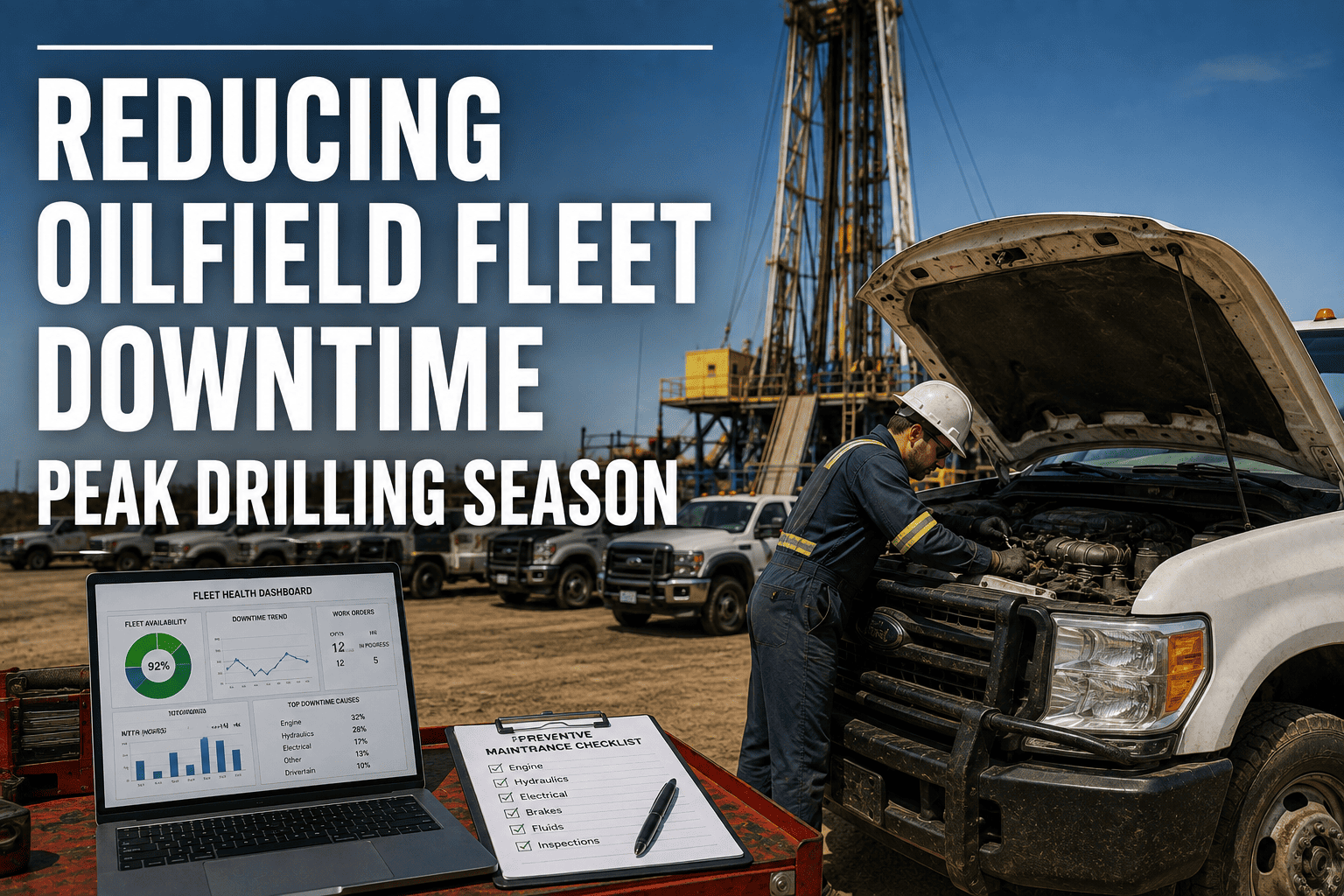
Peak drilling season changes the math on downtime. The same broken mud pump that costs a moderate sum in the slow months turns into a five or six figure loss when every rig in the basin is racing to hit well counts before weather windows close and rig rates climb. Crews are stretched thinner, parts suppliers are backlogged, and contractors who normally show up within hours are juggling three other emergencies at once. A single stalled service truck or seized top drive during peak season does not just cost the day it sits idle, it can push an entire pad schedule back by a week.
Oilfield operators lose an average of 3.2 million dollars annually to unplanned equipment downtime, and every hour a rig or critical service unit sits idle during peak drilling season costs 6000 to 20000 dollars in lost production. Top drive failures alone can reach 1 million dollars a day in delayed operations. Fleets that shift to predictive, condition based maintenance ahead of peak season cut unplanned downtime by 60 to 75 percent.
Why Peak Drilling Season Changes the Downtime Equation
Outside of peak season, an unplanned repair is an inconvenience. During peak season, it is a scheduling emergency. Rig rates are highest when demand is highest, so every idle hour on a contracted rig burns money at the top of the pricing curve. Crews that would normally rotate in relief technicians are already fully deployed across other pads, which means the same failure that took six hours to resolve in the off season can take two or three times longer simply because nobody is available to respond. Weather windows add another layer of pressure in many basins, where operators are racing to complete wells before seasonal access roads close or temperatures make certain work impractical.
The result is that downtime cost during peak season does not scale evenly with the rest of the year, it compounds. A mechanical failure that would cost a moderate five figure sum in March can cost multiples of that in the busiest weeks of summer or the pre winter completion rush, once you factor in premium contractor rates, expedited freight on parts, and the knock on delay to every rig or truck scheduled behind the failed unit. Operators who plan for this compounding effect before the season starts, rather than reacting once it hits, are the ones who protect their margins when it matters most. Fleet teams that want a head start can sign up for FleetRabbit before the season ramps up to get baseline equipment health data in place while there is still time to act on it.
FleetRabbit gives oilfield fleets real time visibility into equipment health so failures get caught weeks before they happen, not during the busiest week of the year. Start monitoring your critical assets now and walk into peak season with confidence instead of guesswork.
Where Peak Season Breakdowns Cost The Most
Not every asset carries the same downtime risk. A handful of high value, high wear components drive most of the lost hours once demand peaks, and knowing which ones deserve the closest attention lets maintenance teams focus limited technician time where it matters.
| Critical Asset | Peak Season Failure Risk | Typical Downtime Cost | Early Warning Signal |
|---|---|---|---|
| Top Drives | High, heaviest use during continuous drilling pushes | Up to 1 million dollars per day in delayed operations | Vibration anomalies and gearbox temperature drift |
| Mud Pumps | High, accounts for a large share of equipment driven downtime | 6000 to 20000 dollars per idle hour | Fluid end liner wear and valve seat erosion |
| Service and Fluid Trucks | Elevated, longer routes and extended hours accelerate wear | 3500 to 6500 dollars per incident | Brake wear, tire pressure anomalies, engine fault codes |
| Compressors and Pumping Units | Moderate to high, cavitation risk climbs with throughput | 15000 to 25000 dollars emergency premium per event | Acoustic cavitation signatures and seal seepage |
| Downhole Tools | High, drill bit and tool string stress rises with faster cycles | Full non productive time exposure for the well | Torque and drag pattern deviations |
Building A Peak Season Readiness Plan
The fleets that come through peak season with the least downtime are almost never the ones with the newest equipment, they are the ones with the most disciplined preparation in the weeks before demand spikes. A readiness plan built around these four pillars closes most of the gaps that cause emergency breakdowns.
Pre Season Inspection Sprints
Run a compressed, fleet wide inspection sprint 30 to 45 days before peak activity begins. Focus on the assets identified in the table above first, since they carry the highest downtime cost per failure. Document every defect found, however minor, and schedule the repair before the season starts rather than deferring it into the busy window.
Spare Parts Pre Positioning
Order and stage the parts most likely to be needed, based on last season's failure history, before supplier lead times stretch out. Fluid end liners, bearings, seals, and common truck wear parts should sit in inventory at the yard closest to where they will be needed, not on backorder when the failure happens.
Real Time Condition Monitoring
Time based maintenance schedules assume every asset degrades at the same predictable rate, which is rarely true once equipment is pushed harder during peak months. Continuous vibration, temperature, and pressure monitoring flags developing problems four to six weeks ahead of failure, giving maintenance teams a window to schedule the repair on their terms.
Cross Trained Backup Crews
Identify which technicians can step into a second role if the primary specialist for a given asset is already deployed elsewhere. Peak season response times suffer most when a qualified technician exists somewhere in the fleet but is not positioned to reach the failure quickly.
Technology That Keeps Rigs Running When Demand Peaks
Roughly three quarters of oilfield operators still rely solely on scheduled maintenance intervals with no real time condition monitoring in place, which means most fleets are effectively guessing at equipment health right when the cost of guessing wrong is highest. Closing that visibility gap before peak season begins is the single highest leverage move a maintenance team can make.
Predictive Analytics And Alerting
Sensor data on vibration, temperature, and fluid condition feeds into a system that flags abnormal patterns automatically, rather than waiting for a technician to notice a problem during a routine check. Critical alerts route directly to maintenance supervisors so nothing sits unresolved in an inbox during the busiest week of the quarter.
What Gets Monitored
Vibration signatures on top drives and pumps, engine and brake diagnostics on service trucks, and pressure trends on compressors are the highest value signals to track first, since they cover the assets responsible for the largest share of downtime cost.
What Changes Operationally
Maintenance teams shift from reacting to failures to scheduling repairs on their own timeline, during planned windows rather than in the middle of an active drilling push. That shift alone is what separates fleets that hit 60 to 75 percent downtime reductions from fleets still running reactive maintenance.
FleetRabbit's platform brings this monitoring, alerting, and digital work order management into one system built specifically for oilfield fleet operations. Operators preparing for the next peak season can book a demo to see how the platform tracks critical assets across a full fleet in real time, or explore the tools directly by choosing to sign up and connect existing telematics data right away.
Benchmarks Worth Tracking Through The Season
A short list of metrics, reviewed weekly during peak months, gives fleet managers an early warning if downtime is creeping up before it becomes a crisis.
The Payoff Of Preparing Early
Fleets that shift from reactive breakdown response to systematic, condition based maintenance reduce unplanned downtime by 60 to 75 percent, and the fleets that get this in place before peak season begins capture nearly all of that benefit during the exact weeks it is worth the most. The investment in inspection sprints, parts pre positioning, and real time monitoring pays for itself the first time it prevents a single major failure during the busiest stretch of the year. Operators who want to see the return on this kind of preparation modeled against their own fleet can book a demo and walk through the numbers with a specialist before the next season starts.
The busiest weeks of the drilling season are exactly when downtime costs the most and response times are slowest. FleetRabbit gives oilfield fleets the real time visibility and predictive maintenance tools needed to walk into peak season prepared instead of reacting to the next breakdown.