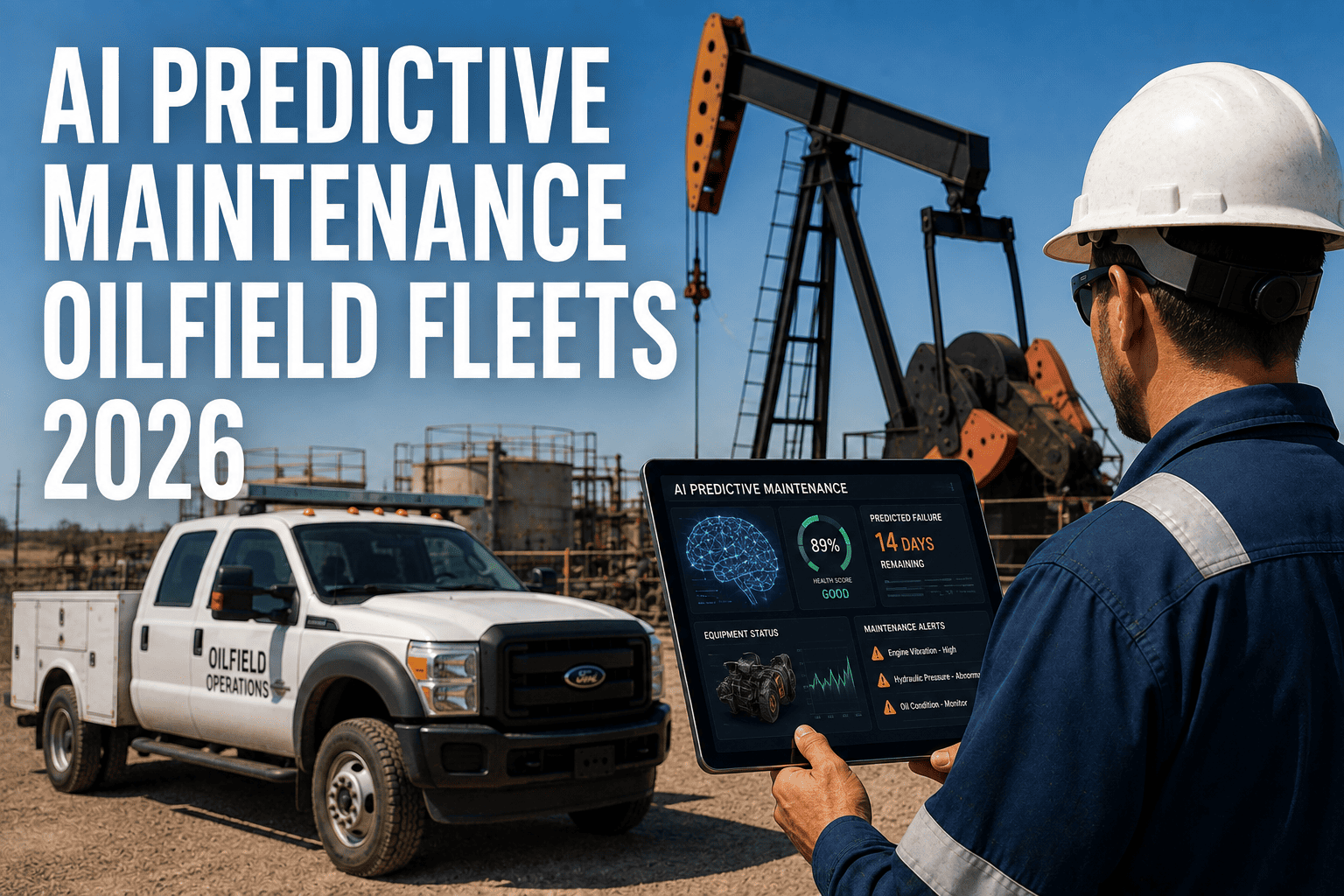
Every oilfield fleet manager has heard some version of the AI pitch by now: sensors watch your trucks, an algorithm predicts failures weeks in advance, and breakdowns quietly disappear. Some of that is true. Some of it is marketing dressed up in machine learning language. For fleets running workover rigs, frac support trucks, and wireline units across remote pads, the difference matters, because a wrong bet on technology costs real uptime in places where a tow truck might be hours away. Here is what AI predictive maintenance can genuinely deliver for oilfield fleets in 2026, and where the hype gets ahead of the hardware.
Mature AI predictive maintenance platforms now flag major component failures 20 to 45 days ahead of a breakdown with 85 to 95 percent accuracy, using telematics data fleets already collect. For oilfield operations specifically, the technology reduces unplanned downtime by roughly 30 to 45 percent, but only when it is trained on data from vehicles doing similar work, not generic highway trucking patterns.
Myth Versus Reality For Oilfield AI Maintenance
Vendor pitches in this space tend to blur what AI can actually do with what sounds impressive in a sales deck. Oilfield duty cycles, stop-and-go pad moves, extended idle for rig support, heavy PTO use, don't behave like line-haul trucking, so claims built on general fleet data don't always translate.
AI needs expensive new sensors installed on every vehicle before it can predict anything useful.
Most platforms generate real predictions from telematics and OBD data your trucks already produce, with setup measured in hours, not sensor installs measured in weeks.
AI predictions apply equally well to any vehicle, from a pickup to a workover rig.
Accuracy depends heavily on training data matching your actual equipment and duty cycle. Oilfield-specific models outperform generic fleet models on PTO-heavy, high-idle assets.
Predictive maintenance eliminates breakdowns entirely.
It catches 75 to 95 percent of developing failures early. It does not stop road hazards, driver error, or catastrophic one-off events, but it removes most of the preventable losses.
How The Prediction Actually Works
Machine learning models build a normal operating baseline for each vehicle, based on its own history, not a generic fleet average. A frac support truck idling for six hours a day at a wellsite has a completely different normal than a crew truck doing highway miles between yards. Once that baseline exists, the model watches for gradual drift, oil pressure trending slightly lower, coolant temperature creeping up under the same load, voltage variability increasing at idle, and calculates a failure probability rather than waiting for a hard fault code.
What Gets Monitored On Oilfield Equipment
The specific parameters that matter shift depending on the asset. A pulling unit and a fuel hauler don't fail the same way, and a model tuned for one won't catch the early signs on the other.
| Equipment Type | Key Signals Monitored | Common Early Warning |
|---|---|---|
| Workover / Pulling Units | Hydraulic pressure, PTO engagement cycles, engine load under high torque | Hydraulic pump wear signature weeks before pressure loss on the job |
| Frac Support Trucks | Extended idle temperature curves, battery voltage, alternator output | Charging system degradation visible during idle-heavy shifts |
| Fuel & Water Haulers | Brake wear rate, tire pressure trends, transmission shift patterns | Faster than expected brake wear tied to loaded route grades |
| Wireline & Crew Trucks | Fault code frequency, fuel rail pressure, misfire pattern history | Injector degradation flagged before a road-call misfire |
FleetRabbit builds oilfield-specific baselines from your existing telematics, no new hardware required. Sign up free and start generating predictions within days, not months.
Where The Technology Still Has Limits
Being straight about the limits builds more trust than another round of inflated claims, and it helps fleet managers set expectations correctly before rollout.
Data Quality Determines Everything
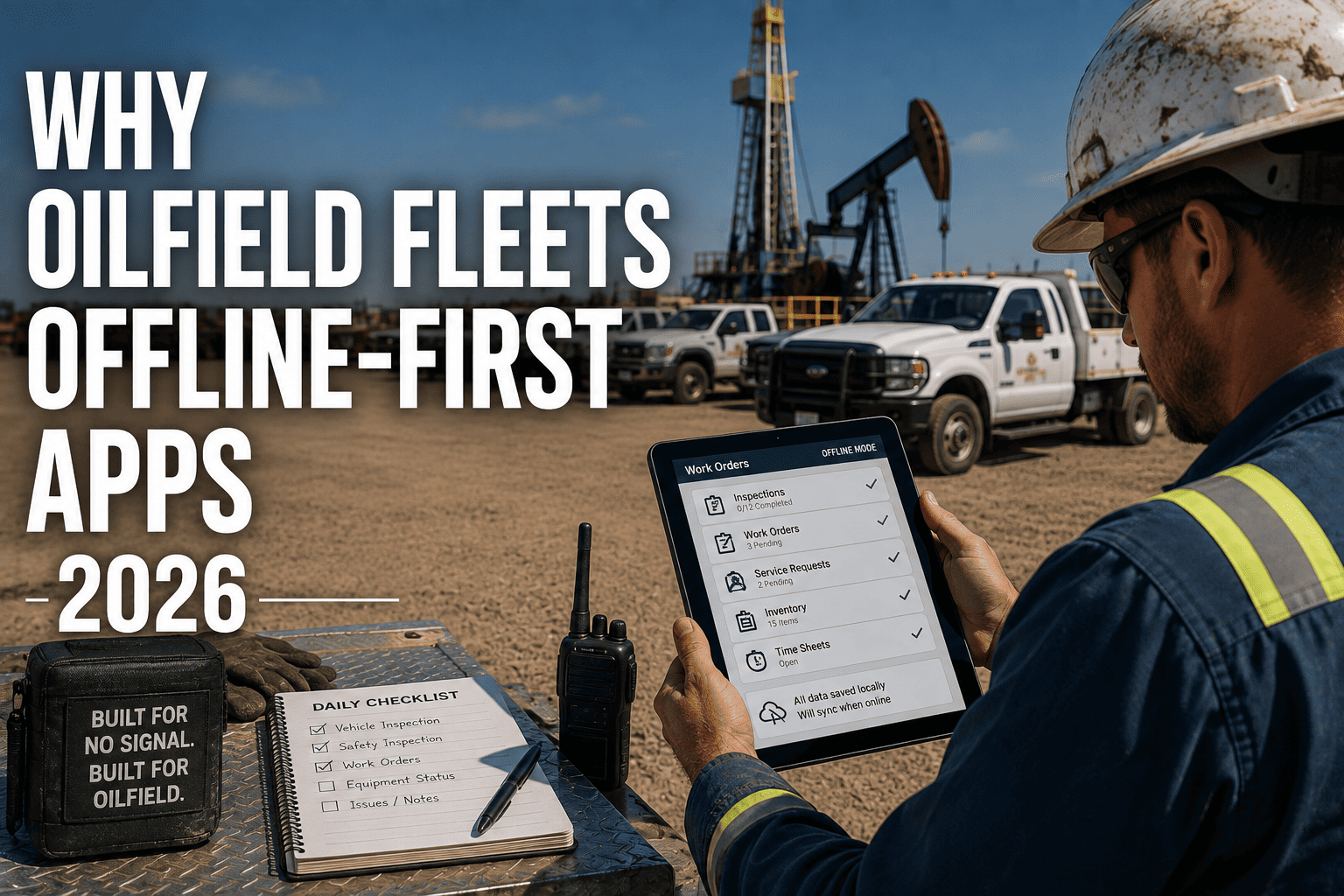
A model trained on sparse or inconsistent telematics data produces weak predictions, regardless of how advanced the underlying algorithm is. Vehicles with gaps in reporting, due to remote locations with poor connectivity, need buffered data collection that syncs once signal returns, or the model is working with an incomplete picture.
What To Check Before You Commit
Ask any vendor how their model performs on assets with intermittent connectivity, and ask for oilfield-specific accuracy numbers rather than generic fleet averages. A platform that can't answer either question directly is likely running one model for every industry.
New Assets Take Time To Learn
A freshly added vehicle has no operating history, so early predictions on it are naturally less confident than on equipment the system has watched for months. Most platforms flag this transparently with a confidence score, rather than presenting a new asset's prediction with the same certainty as an established one.
What Realistic ROI Looks Like
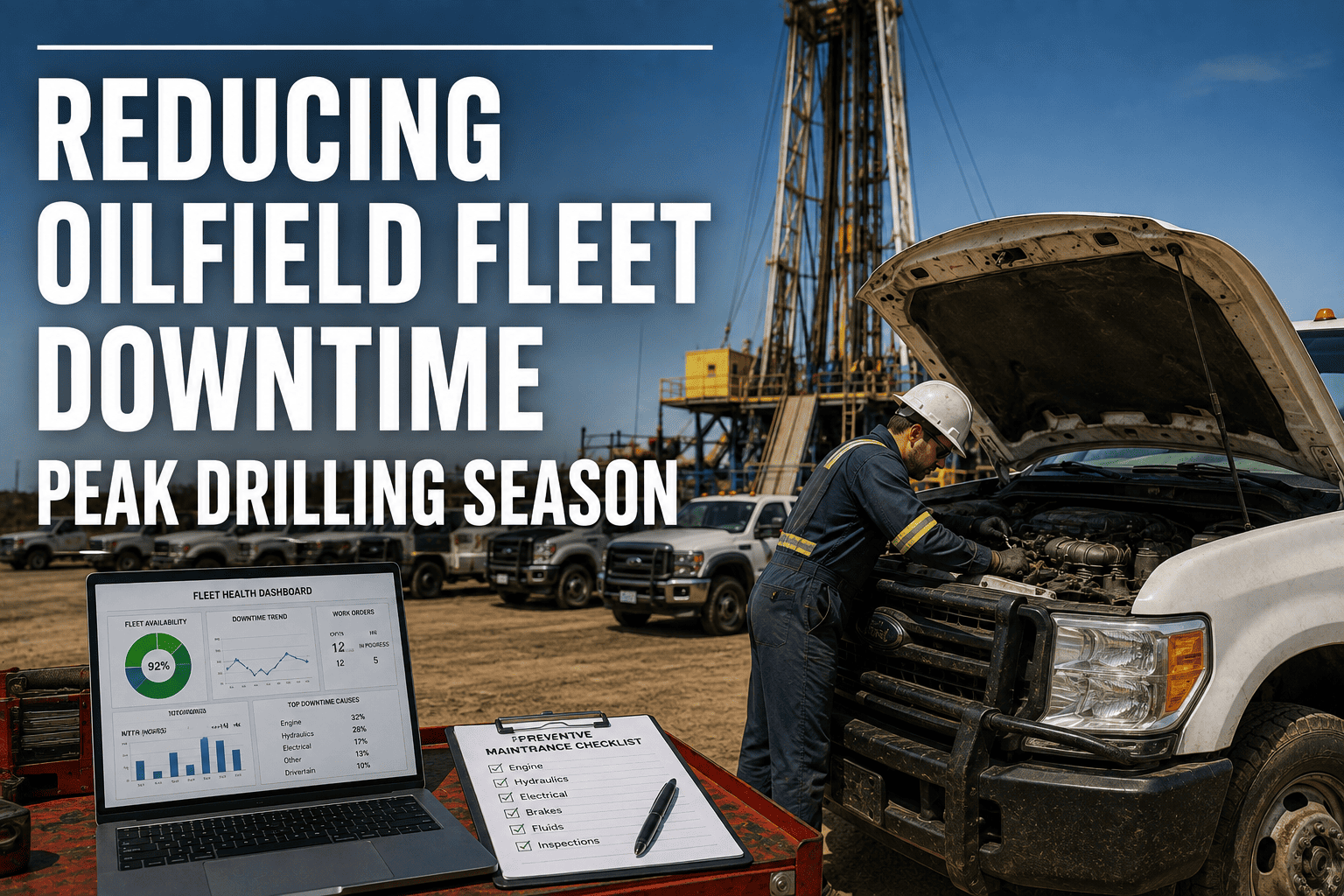
Numbers from operators actually running these systems in 2026 cluster in a believable range rather than the extreme figures sometimes used in marketing. Fleets moving from reactive to AI-assisted maintenance typically see unplanned downtime drop by 30 to 45 percent within the first two quarters, with the earliest gains coming from the highest-mileage, highest-value assets rather than the entire fleet at once. Maintenance cost per vehicle mile tends to fall by 15 to 25 percent as emergency repair premiums get replaced by scheduled work during planned downtime windows. The pattern holds across equipment types, workover rigs, frac trucks, haulers, because the underlying mechanism is the same: catching degradation while it is still cheap to fix.
Talk to our team about how FleetRabbit's models are trained on oilfield duty cycles, not generic highway trucking data. Book a demo and bring your toughest questions.
Key Takeaways For 2026
AI predictive maintenance for oilfield fleets has moved past the pilot-program stage, but it is not the universal fix some vendors describe. The technology delivers real, measurable results, earlier failure detection, fewer emergency repairs, lower cost per mile, when it is trained on data that actually reflects how oilfield equipment operates. The gap between fleets seeing 40 percent downtime reduction and fleets seeing almost nothing usually comes down to whether the underlying model understands PTO-heavy, high-idle, remote-site duty cycles or was simply repurposed from generic trucking data.
The best next step is a direct look at what your own vehicle data can already tell you, rather than another comparison of vendor claims on a spec sheet.
FleetRabbit turns the telematics your oilfield trucks already generate into failure predictions built for the way your equipment actually works. Start free or talk to our team about your fleet's specific duty cycles.