GPS tracking tells you where your vehicles are — AI-powered telematics tells you what they're doing, how they're performing, why they're degrading, and when they'll need intervention before failure occurs. In 2026, the distinction between basic fleet tracking and intelligent fleet analytics is the difference between reactive visibility and predictive optimization — and that distinction directly determines whether oilfield fleet managers spend their time chasing breakdowns or preventing them. Traditional GPS platforms provide location dots on a map; FleetRabbit's AI telematics platform integrates real-time position with engine diagnostics, driver behavior analysis, HSE compliance monitoring, predictive maintenance algorithms, and automated intervention workflows in a single intelligence layer that transforms raw vehicle data into actionable fleet performance insights. A Permian Basin operator managing 140 heavy-duty oilfield vehicles deployed FleetRabbit's AI telematics to replace their legacy GPS-only system — achieving 34% reduction in unplanned downtime, 28% decrease in fuel waste from harsh driving, and $620K annual savings from predictive maintenance versus reactive repair cycles. This deep-dive exploration reveals what AI-powered telematics actually delivers beyond location tracking, how machine learning transforms vehicle data into maintenance intelligence, and why oilfield operators are migrating from basic GPS to comprehensive fleet analytics platforms. Book a demo to see AI telematics in action for oilfield fleets.
From GPS Dots on a Map to Predictive Fleet Intelligence
Why Basic GPS Tracking Fails Oilfield Fleet Operations
GPS tracking solves the "where is my vehicle" question — but oilfield fleet management requires answering far more complex questions that location data alone cannot address. Fleet managers need to know not just vehicle position, but operational context, mechanical health, driver performance, compliance status, and predictive failure risk — none of which can be inferred from latitude and longitude coordinates refreshing every 30 seconds. Legacy GPS platforms were designed for stolen vehicle recovery and route verification, not for the systematic performance optimization and predictive maintenance intelligence that modern oilfield operations demand.
What Basic GPS Tracking Cannot Tell You
Mechanical Health Status
GPS shows vehicle moving at 45 mph. AI telematics reveals engine operating at 210°F coolant temperature with P0128 fault code (thermostat malfunction) — predicting cooling system failure within 72 hours if not addressed.
Driver Performance Context
GPS shows vehicle stopped for 45 minutes. AI telematics classifies stop as: authorized meal break vs. unauthorized deviation vs. mechanical issue requiring assistance — with driver behavior scoring and coaching triggers.
Fuel Efficiency Degradation
GPS tracks mileage. AI telematics correlates fuel consumption with load weight, terrain grade, ambient temperature, driver behavior, and engine efficiency — identifying 18% fuel waste from excessive idling and aggressive acceleration patterns.
Predictive Maintenance Requirements
GPS logs odometer miles. AI telematics analyzes engine hours, load cycles, duty severity, oil analysis trends, and historical failure patterns — forecasting transmission service requirement in 14 days versus waiting for catastrophic failure.
Compliance Risk Indicators
GPS confirms vehicle entered wellsite. AI telematics validates: pre-trip inspection completed, driver certifications current, vehicle PM up-to-date, and HAZMAT documentation present — blocking non-compliant site access before it occurs.
Operational Efficiency Patterns
GPS measures route distance. AI telematics calculates: time-on-task percentage, non-productive idle time, geofence compliance, schedule adherence, and billable utilization rate — revealing 22% capacity loss from inefficient routing and excess dwell time.
The Data Richness Gap
Basic GPS tracking captures 2–4 data points per vehicle per minute (latitude, longitude, speed, heading). FleetRabbit's AI telematics ingests 400+ data points per vehicle per minute across position, engine diagnostics, driver inputs, environmental sensors, and compliance systems — then applies machine learning algorithms to transform this raw data stream into actionable intelligence that GPS-only platforms cannot generate.
The Permian Basin operator in our case study was paying $28/vehicle/month for GPS tracking that showed vehicle locations. They're now paying $3/vehicle/month for FleetRabbit's AI telematics that delivers location PLUS predictive maintenance, behavior analytics, and compliance automation. Start free trial — deploy AI telematics in 5–7 days →
What Makes FleetRabbit's Telematics Platform "AI-Powered"
The term "AI-powered" in fleet telematics is frequently misused to describe basic rule-based alerting — such as "send alert when speed exceeds 75 mph" or "flag vehicle when odometer reaches PM interval." True artificial intelligence in telematics involves machine learning algorithms that recognize patterns across massive datasets, predict future states based on historical signatures, and continuously refine accuracy through feedback loops without manual rule programming. FleetRabbit's AI telematics architecture operates across three distinct intelligence layers, each delivering capabilities that static GPS tracking fundamentally cannot achieve.
Pattern Recognition Across Fleet History
FleetRabbit's machine learning engine analyzes years of maintenance records, fault code sequences, oil analysis trends, and failure events across your entire fleet to identify failure signatures invisible to human observation — such as discovering that vehicles operating in high-dust environments with frequent P2002 codes (diesel particulate filter efficiency) fail turbochargers 67% more frequently than fleet average within 8,000 engine hours.
Real-Time Anomaly Detection and Classification
Beyond recognizing historical patterns, FleetRabbit's AI continuously monitors live telemetry streams to detect deviations from established baselines — automatically classifying anomalies as critical safety risks requiring immediate intervention, degrading performance meriting scheduled maintenance, or benign variations needing no action. This real-time classification eliminates alert fatigue from false positives while ensuring genuine issues receive appropriate escalation.
Predictive Forecasting and Automated Intervention
The highest-value AI capability is predictive forecasting — using current telemetry combined with historical failure signatures to calculate probability of component failure within specific time horizons, then automatically triggering maintenance work orders, parts procurement, and downtime scheduling before catastrophic failure occurs. This shifts fleet operations from reactive repair to proactive intervention.
Machine Learning Accuracy Improvement
When the Permian Basin fleet initially deployed FleetRabbit's predictive maintenance AI, failure prediction accuracy started at 68% — meaning the system correctly forecasted component failures 68% of the time. After 6 months of continuous learning from actual failure events and false predictions, accuracy improved to 92%. This self-improving capability is what distinguishes true AI from static rule-based alerting systems that never get better over time.
AI-Driven Predictive Maintenance: From Fault Codes to Failure Forecasts
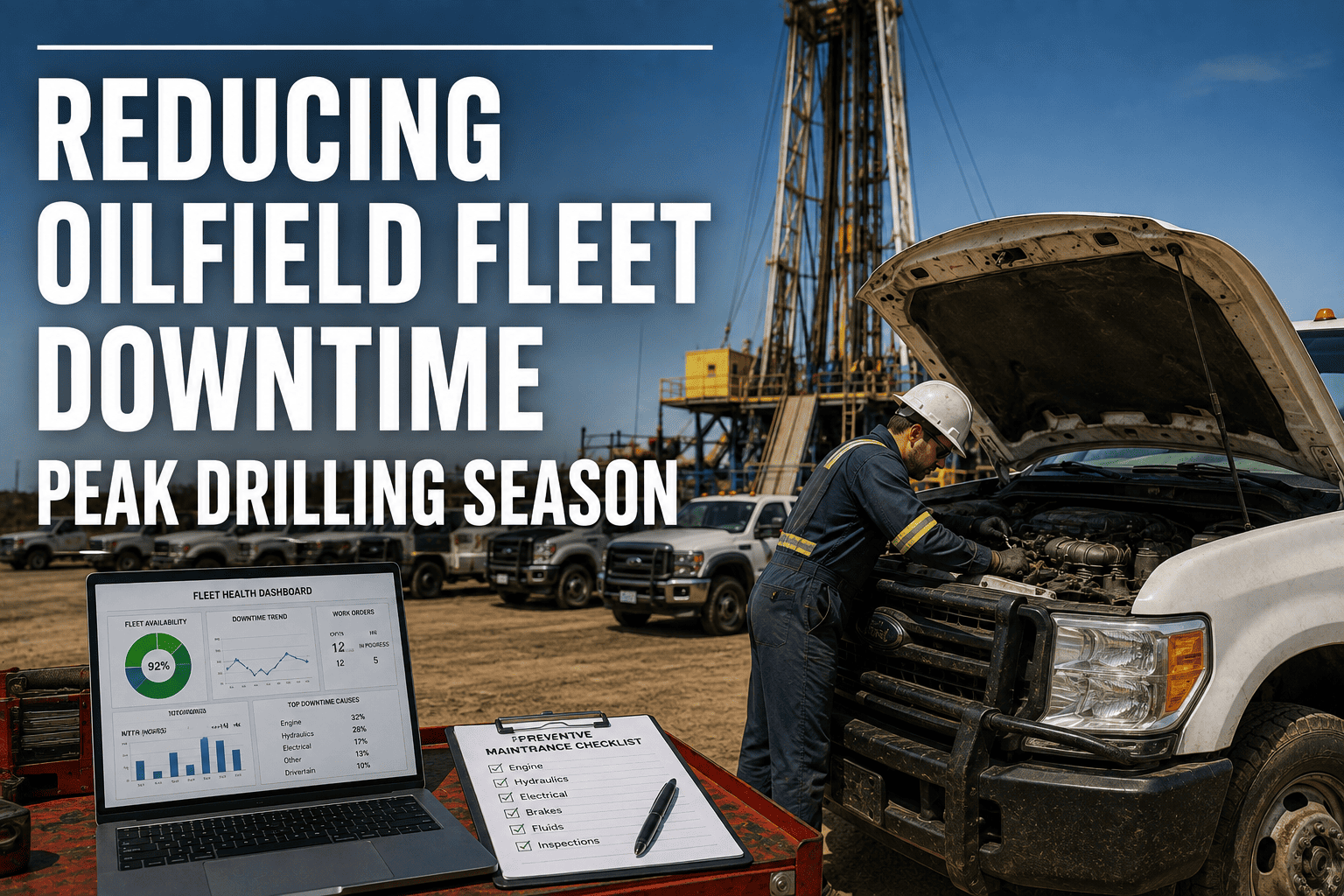
Predictive maintenance represents the highest-ROI application of AI telematics in oilfield fleet operations — replacing calendar-based service schedules and reactive repairs with condition-based intervention driven by real-time degradation indicators and historical failure patterns. Traditional preventive maintenance follows fixed intervals regardless of actual component condition; AI predictive maintenance monitors continuous telemetry streams to determine optimal intervention timing based on each vehicle's specific operating environment, utilization intensity, and degradation velocity.
FleetRabbit Predictive Maintenance Intelligence Stack
Multi-Source Data Aggregation
Platform ingests J1939 diagnostic codes, oil analysis lab results, driver-reported DVIR defects, telematics sensor data, maintenance work order histories, and parts replacement records into unified vehicle health database
Failure Signature Library Development
Machine learning algorithms analyze historical failure events to identify leading indicators — such as discovering that turbocharger failures are preceded by oil pressure fluctuations and P0299 codes 87% of the time
Real-Time Degradation Monitoring
Live telemetry streams continuously compared against failure signature library — system calculates probability of component failure across multiple time horizons (7/14/30/90 days)
Automated Intervention Workflow
When failure probability exceeds threshold, FleetRabbit auto-generates maintenance work order, reserves parts inventory, schedules downtime window, and notifies technicians — intervention occurs before failure, not after
Real-World Predictive Maintenance Scenarios from Case Study Fleet
Predictive Maintenance ROI: AI Telematics vs. Reactive Repair
AI-Powered Driver Behavior Analytics and Performance Optimization
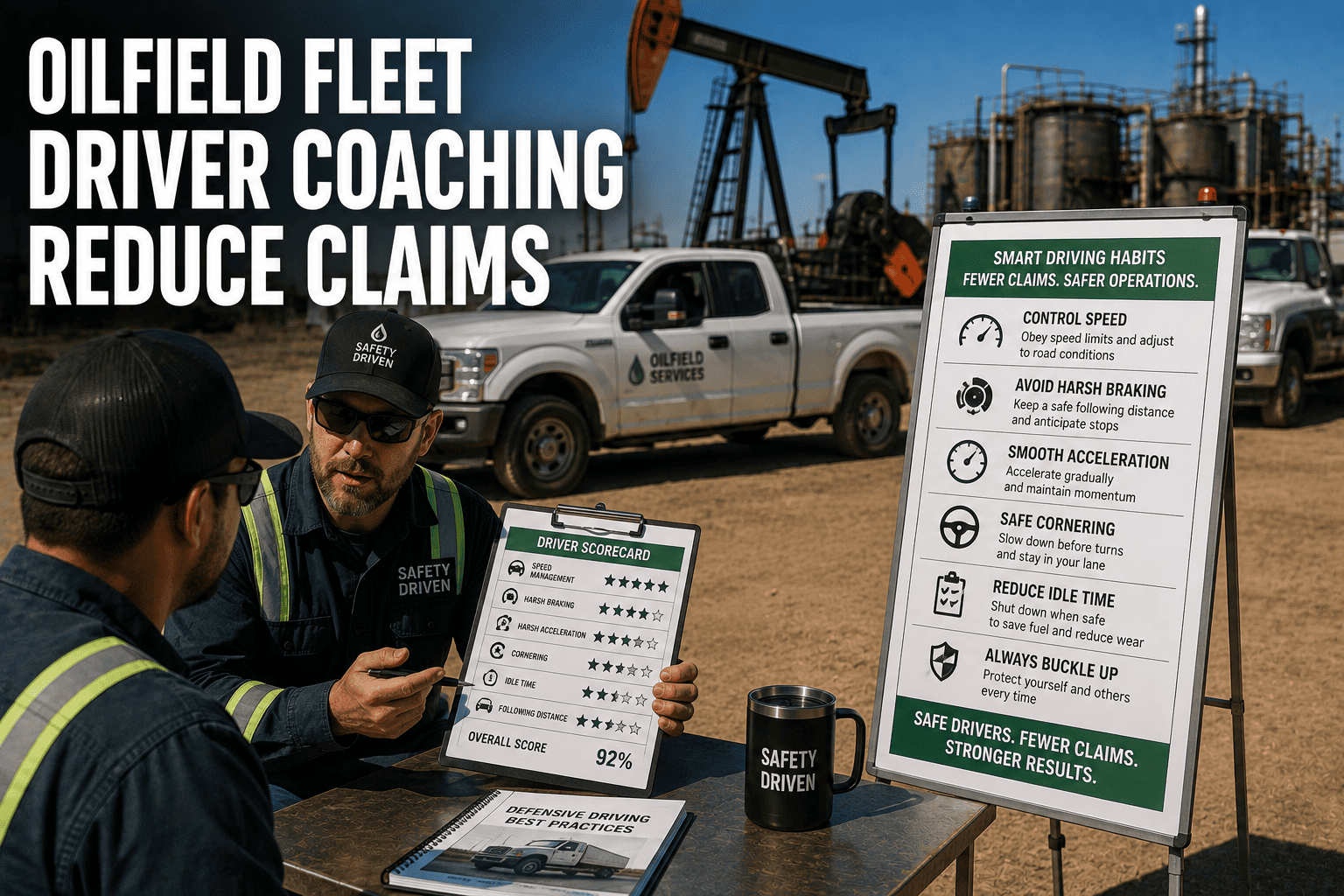
Driver behavior represents the single largest controllable variable in fleet fuel efficiency, vehicle wear rates, safety incident frequency, and maintenance cost — yet most fleets lack systematic visibility into how drivers actually operate vehicles beyond occasional supervisor ride-alongs or post-incident investigations. FleetRabbit's AI behavior analytics continuously monitors accelerator inputs, braking patterns, cornering forces, idle time, and speed compliance — then applies machine learning to distinguish between hazardous driving requiring immediate intervention versus normal operational variation that needs no action.
What AI Behavior Analytics Measures
Harsh Acceleration Events
Throttle inputs exceeding 0.3g acceleration rate — correlated with 18% higher fuel consumption and 2.4× faster brake pad wear versus smooth acceleration baseline
Hard Braking Frequency
Deceleration events exceeding 0.4g — indicates following distance issues, distraction, or route unfamiliarity requiring targeted coaching intervention
Excessive Idle Time
Engine running while stationary beyond operational requirements — fleet-wide idle reduction from 28% to 12% of engine hours saved $87K annually in fuel costs
Speed Compliance Violations
Operating above posted limits or company policy thresholds — tracked per driver with trend analysis identifying chronic violators requiring progressive discipline
Cornering G-Force Events
Lateral acceleration during turns indicating unsafe speeds for conditions — AI distinguishes between hazardous cornering and normal maneuvering in tight wellsite access roads
How AI Transforms Behavior Data Into Action
Fuel Waste Reduction Through Behavior Optimization
The Permian Basin fleet implemented AI-driven driver coaching targeting harsh acceleration, excessive idling, and speed violations. Within 4 months, fleet-wide harsh acceleration events decreased 64%, idle time dropped from 28% to 12% of engine hours, and average MPG improved 2.8 miles per gallon. At $3.40/gallon diesel across 140 vehicles averaging 35,000 miles annually, the behavior improvements delivered $118K annual fuel savings — a 22× ROI on FleetRabbit's $3/vehicle/month platform cost.
AI behavior analytics transforms driver management from reactive discipline to proactive coaching — using data to improve performance rather than punish violations. FleetRabbit's machine learning identifies improvement opportunities invisible to human observation. Start free trial — deploy behavior intelligence →
Real-Time Diagnostic Integration: From Fault Codes to Automated Work Orders
Modern heavy-duty vehicles generate hundreds of diagnostic trouble codes (DTCs) across engine, transmission, brake, and emissions control systems — but most fleets only discover these codes during annual inspections or after catastrophic failures, not in real-time when early intervention could prevent cascading damage. FleetRabbit's AI telematics continuously monitors J1939 and OBD-II diagnostic streams, automatically classifying fault severity, providing repair guidance, and generating maintenance work orders before minor issues escalate into major breakdowns.
AI Diagnostic Intelligence Workflow
Telematics units poll vehicle ECUs every 30 seconds capturing active, pending, and historical fault codes across all systems without requiring manual scan tool diagnostics or shop visits
Machine learning algorithm categorizes each fault code as: CRITICAL (immediate safety risk requiring vehicle stop), URGENT (performance degradation needing same-day attention), MONITOR (trending issue for scheduled service), or INFORMATIONAL (logged for pattern analysis)
Critical codes trigger immediate SMS alerts to fleet managers and affected drivers with vehicle shutdown recommendations. Urgent codes generate next-day service appointments. Monitor-level codes aggregate into weekly maintenance planning reports
System auto-generates maintenance work orders with fault code interpretation, probable causes, recommended diagnostic procedures, and parts suggestions — eliminating technician guesswork and reducing diagnostic time
After repair completion, AI monitors for code reoccurrence, tracks root cause effectiveness, flags chronic issues requiring engineering investigation, and identifies warranty-eligible manufacturer defects
Critical Fault Code Scenarios: AI-Powered Early Intervention
Deploying AI Telematics: From Legacy GPS to Intelligence Platform
Transitioning from basic GPS tracking to AI-powered telematics requires structured deployment that balances immediate quick-win capabilities with long-term machine learning model development. FleetRabbit's phased implementation delivers measurable improvements within 30 days while building the data foundation for advanced predictive analytics over the following 90–180 days.
Phase 01: Foundation Deployment
Phase 02: Intelligence Activation
Phase 03: Advanced Analytics
Phase 04: Optimization & Scaling
Frequently Asked Questions
How is AI telematics different from basic GPS tracking with rule-based alerts?
Basic GPS tracks location and triggers pre-programmed alerts when thresholds are exceeded (speed > 75 mph, idle > 30 min). AI telematics uses machine learning to recognize patterns humans cannot see — such as identifying that specific fault code sequences predict transmission failure with 89% accuracy 18 days before catastrophic failure. Static rules cannot predict; AI learns and improves continuously.
Does FleetRabbit's AI telematics work with older vehicles that have limited diagnostic capability?
Yes. For vehicles without advanced OBD-II/J1939 diagnostics, FleetRabbit uses alternative data sources: driver-reported DVIR defects, maintenance work order histories, oil analysis trends, and utilization patterns to predict failures. Predictive accuracy improves with diagnostic data but works across mixed-age fleets including legacy assets.
How long does it take for AI predictive maintenance to become accurate?
Initial predictive capability activates within 30 days using imported historical maintenance data. Accuracy starts at 65–70% and improves continuously as the AI learns from actual failure events. By 6 months, most fleets achieve 85–92% prediction accuracy. The system never stops learning — accuracy continues improving as long as failure data accumulates.
Can FleetRabbit's driver behavior analytics distinguish between harsh driving and normal operation in challenging terrain?
Yes. The AI establishes individual baselines per driver accounting for their typical operating environment — recognizing that drivers navigating rough wellsite access roads will have different normal patterns than highway-only operators. Behavior scoring is context-aware, preventing false discipline for legitimate operational requirements while flagging genuine safety concerns.
What happens to FleetRabbit's AI models if we replace a large portion of our fleet with new vehicles?
AI models adapt to fleet composition changes automatically. When new vehicle types are added, the system begins building baseline behavior and failure patterns for those assets while maintaining historical knowledge for existing vehicles. Fleet managers can also import manufacturer reliability data to accelerate predictive capability for new asset types.
Does FleetRabbit integrate with existing CMMS or ERP maintenance systems?
Yes. FleetRabbit offers bi-directional API integration with major CMMS platforms (Fleetio, Fiix, UpKeep) and ERP systems (SAP, Oracle, Microsoft Dynamics) — synchronizing predictive work orders, parts consumption, fault code data, and completed maintenance histories without manual duplicate entry across systems.
Replace GPS Dots on a Map With Predictive Fleet Intelligence
FleetRabbit delivers the complete AI telematics platform — predictive maintenance forecasting, driver behavior optimization, real-time diagnostic intelligence, and automated intervention workflows — configured to your fleet, deployed in 5–7 days, delivering measurable ROI within 30 days.