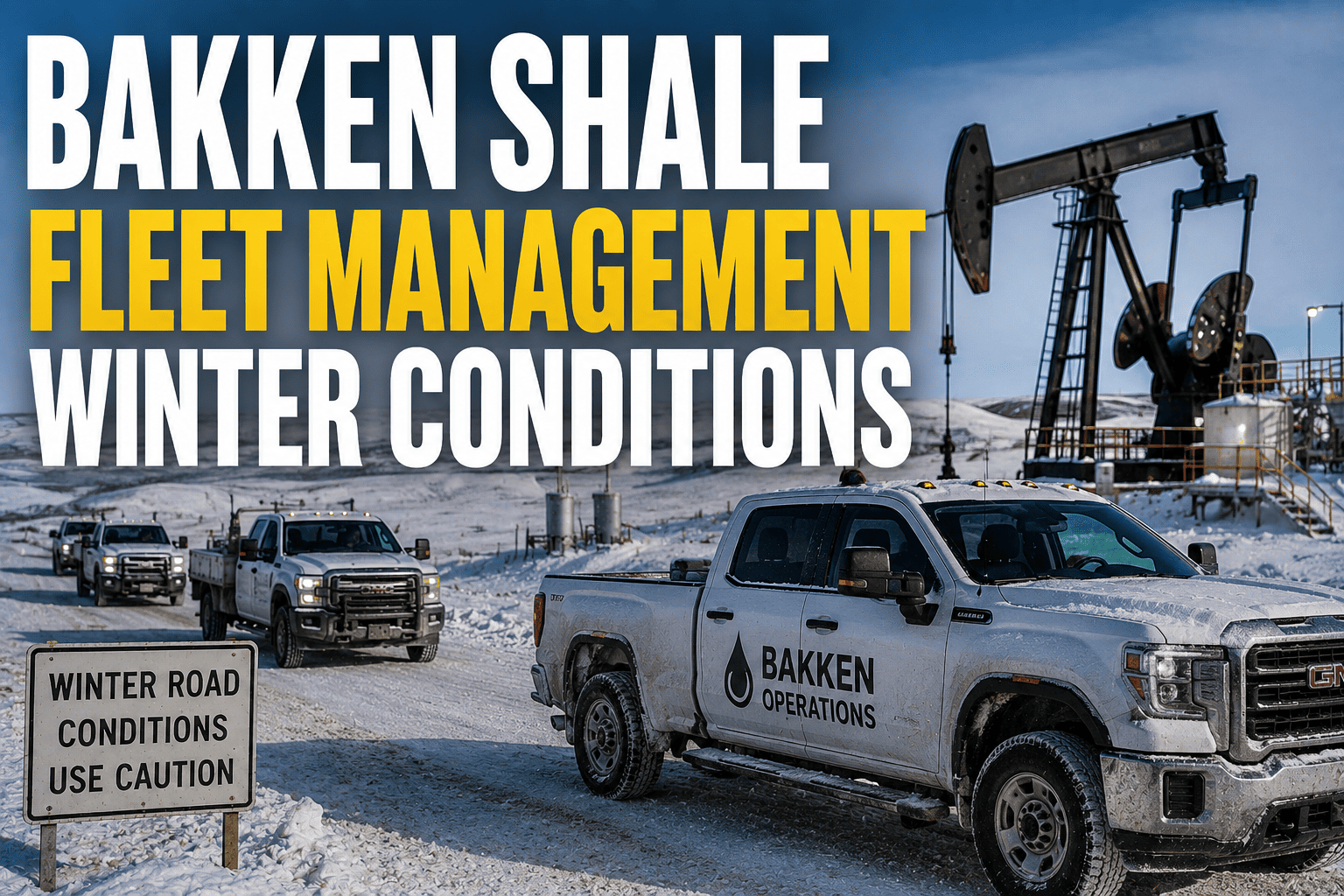
Windchills in the Bakken Shale regularly drop to seventy below zero, and at that temperature, a fleet isn't just fighting bad roads, it's fighting physics. Diesel gels in the tank, batteries lose most of their cranking power, hydraulic lines stiffen, and a truck that shuts down at a remote wellsite outside Williston can turn into a multi-hour recovery operation before a driver is even in danger. Bakken fleet managers who treat winter as a routine season instead of a serious operational risk are the ones who end up with the highest repair bills and the most missed loads.
North Dakota's oil regulators have reported windchills as low as seventy below zero across Bakken fields, conditions severe enough to strain both workers and equipment and trigger a sharp rise in spills and mechanical failures during cold snaps. Frac fluid heating alone is often needed eight to ten months of the year in this region. Fleets running proactive cold-weather monitoring catch battery, engine, and fluid problems before a truck fails at a remote pad, instead of after.
Why Bakken Winters Are Uniquely Hard on Fleets
The Williston Basin doesn't just get cold, it gets cold in a way that compounds every other operational challenge a fleet already deals with. Remote wellsites, gravel access roads, and long distances between pads mean a mechanical failure in January isn't a quick tow call, it's a recovery mission. Add wind exposure across open prairie terrain, and windchill alone can turn a manageable minus-twenty day into a dangerous minus-seventy event within hours.
Once a well or a piece of equipment shuts down in that kind of cold, getting it running again is far harder than a normal restart. The same is true for trucks. A diesel engine that gels or a hydraulic system that stiffens up doesn't just delay a load, it can strand a driver miles from the nearest heated shelter.
The Domino Effect of One Cold-Weather Breakdown
A single truck failure during a Bakken cold snap rarely stays isolated. Dispatch has to reroute other loads to cover the gap, a recovery crew has to travel out in the same brutal conditions, and the stranded driver needs monitoring until help arrives. What starts as a dead battery can turn into hours of lost productivity across the entire fleet.
FleetRabbit tracks battery health, engine temperature, and vehicle diagnostics in real time so fleet managers see a developing problem before a driver is stuck at a remote Bakken wellsite. Start a free trial and put your first three vehicles under winter-ready monitoring today.
The Cold-Weather Failure Points Every Bakken Fleet Should Track
Not every part of a truck fails the same way in extreme cold. Some components degrade gradually and give warning signs, while others fail suddenly with almost no notice. Knowing the difference determines whether a fleet catches a problem in the shop or on a gravel road forty miles from town.
| System | Cold-Weather Risk | Warning Signs | Prevention Approach |
|---|---|---|---|
| Batteries | Sharp drop in cranking power below freezing | Slow starts, dimming lights, voltage drift | Remote battery health monitoring and alerts |
| Diesel Fuel Systems | Fuel gelling in extreme sub-zero temperatures | Hard starts, power loss, fuel filter clogging | Scheduled additive treatment and tank heater checks |
| Hydraulic Lines | Fluid thickening reduces system responsiveness | Sluggish lift or brake response | Cold-rated fluid and pre-trip inspection alerts |
| Tires | Pressure loss accelerates in falling temperatures | Underinflation warnings, uneven wear | Automated tire pressure tracking |
| Engine Block | Extended cold soak makes restart difficult | Extended crank time, rough idle | Block heater scheduling tied to real-time temperature data |
Building a Winter-Ready Bakken Fleet Program
The fleets that come through a Williston winter with the fewest breakdowns are the ones that stop treating cold-weather prep as a once-a-year checklist and start treating it as an ongoing monitoring process. That shift usually starts with visibility into vehicle health data that updates continuously, not a paper inspection sheet filled out once a week.
Real-Time Diagnostics Instead of Guesswork
Waiting for a driver to report a slow start or a rough idle means the fleet is always one step behind the failure. Continuous engine and battery diagnostics flag the early signs of cold-weather stress, giving maintenance teams a chance to intervene during a scheduled stop instead of an emergency roadside call.
What Early Alerts Actually Prevent
A battery flagged for declining voltage on a Tuesday can be swapped during routine maintenance. That same battery, left unmonitored, is far more likely to leave a driver stranded at a remote pad on a Friday night when temperatures are dropping fastest and help is hardest to reach.
Coordinating Recovery Before It's Needed
Knowing exactly where every vehicle is located matters even more in winter, when a stranded truck on an unmarked gravel lease road can be difficult to locate quickly. Live GPS tracking with satellite fallback keeps dispatch connected to every vehicle even where cellular coverage disappears across open Bakken terrain.
Fleets that book a demo with FleetRabbit typically start by mapping their highest-risk routes and oldest vehicles, then layer in automated alerts for battery voltage, engine temperature, and tire pressure before the first hard freeze hits. It's a practical way to see the impact on real trucks before scaling monitoring across an entire winter fleet.
FleetRabbit's live diagnostics flag battery, engine, and tire issues before extreme cold turns them into breakdowns. Book your demo and see exactly how it works across Williston Basin routes.
Frequently Asked Questions
Bakken winters aren't forgiving, and neither is the cost of an unplanned breakdown at a remote wellsite. FleetRabbit gives Williston Basin fleets real-time battery, engine, and location visibility so problems get caught before the temperature drops. Start your free trial today, no credit card required.