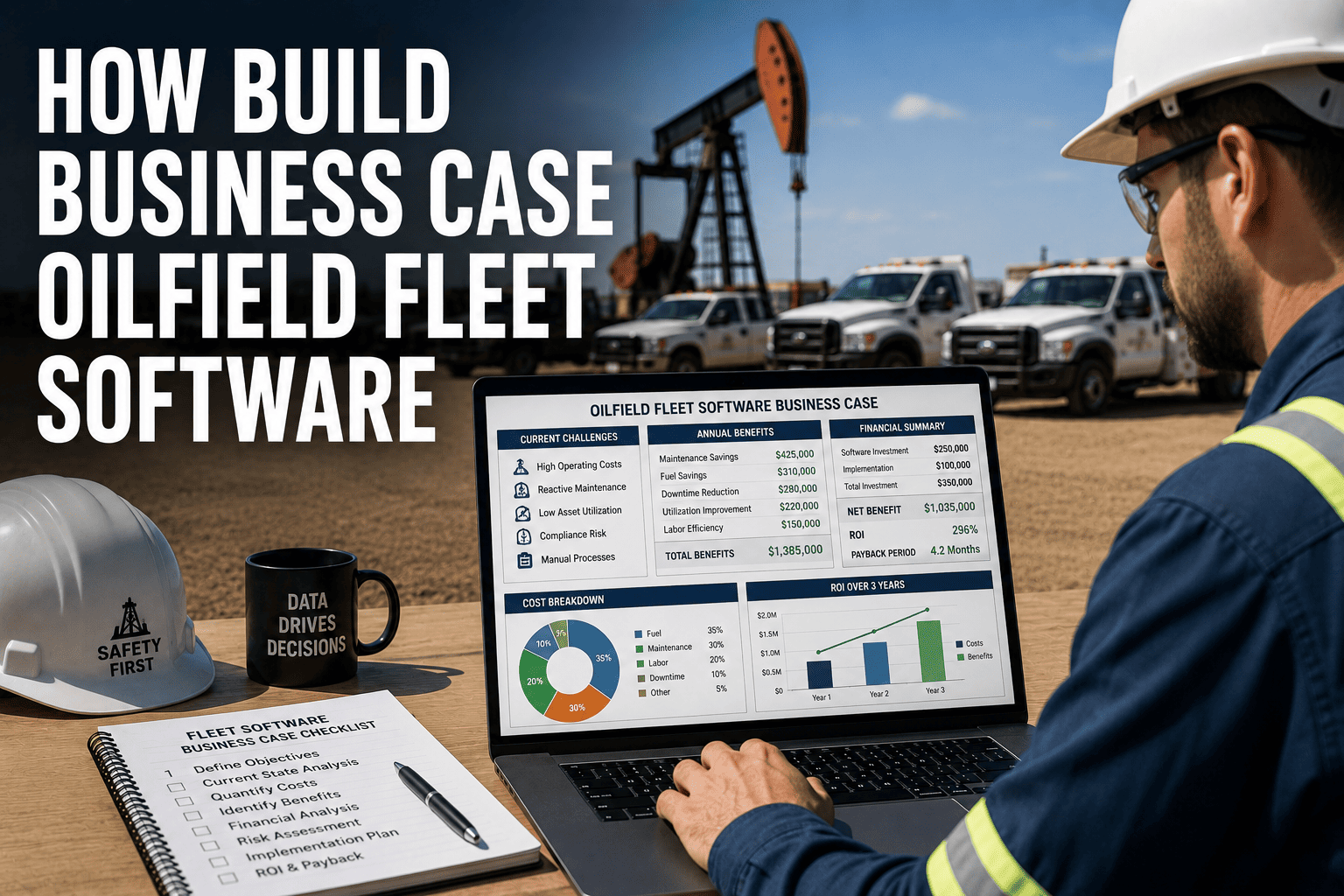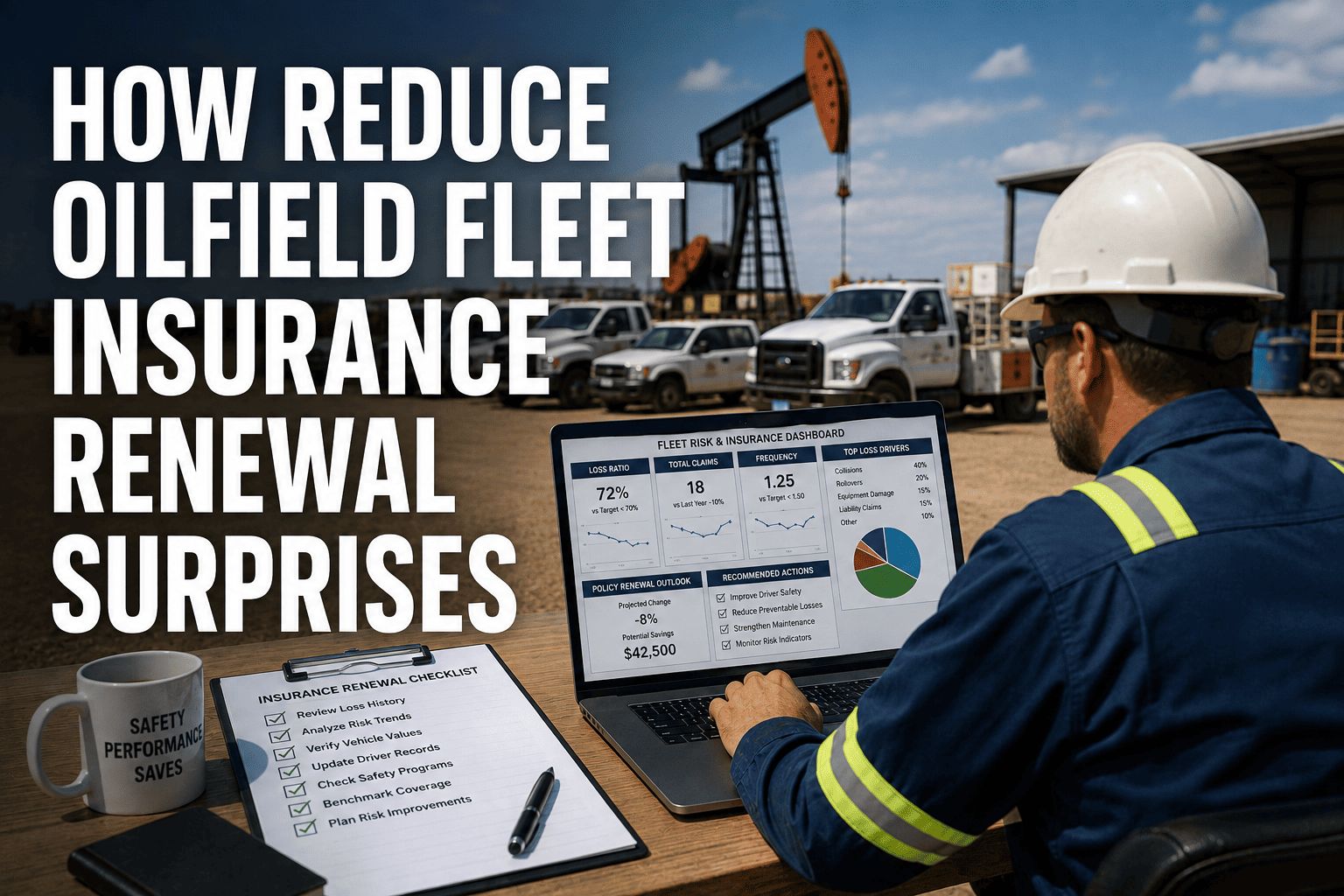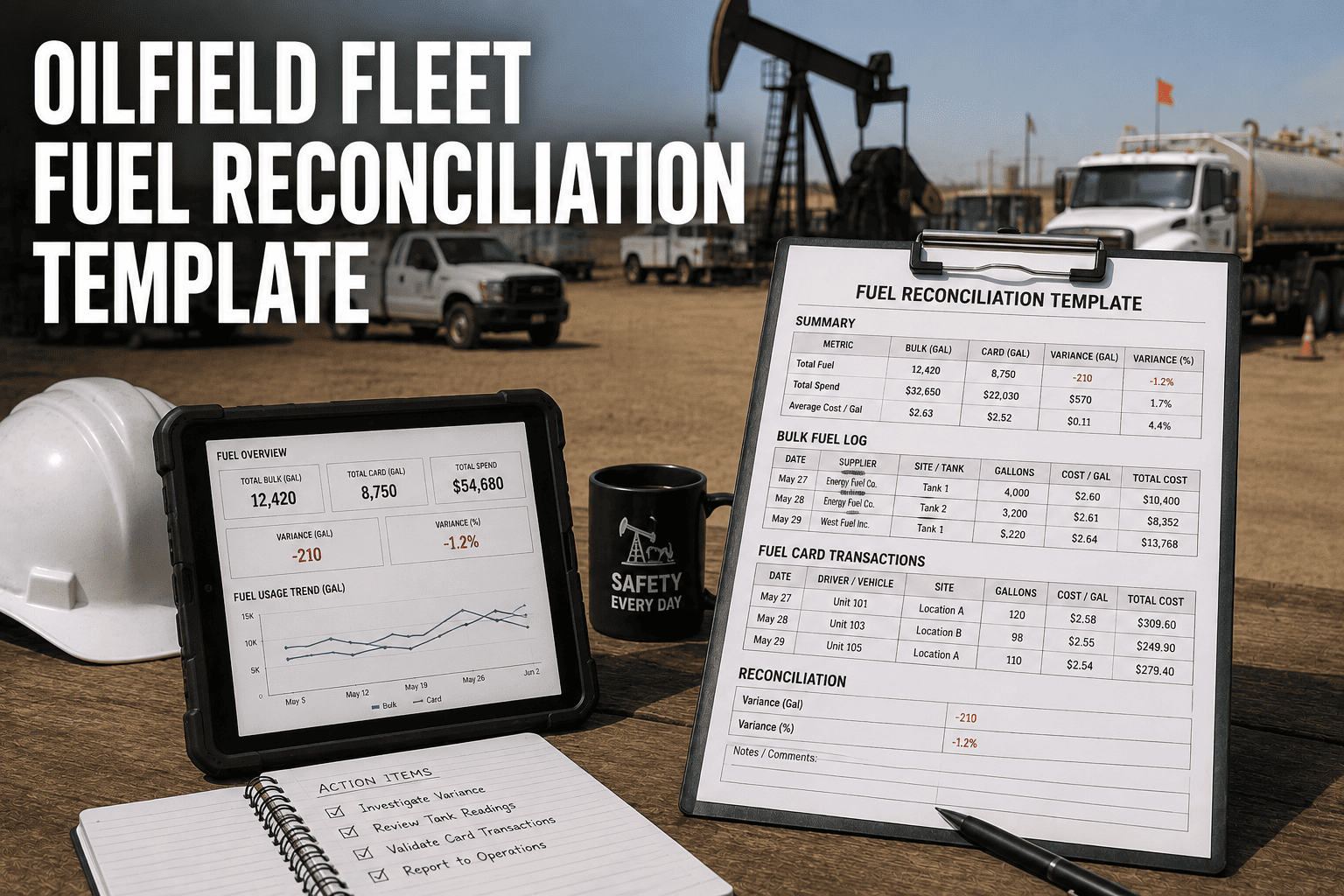
Running a fleet of 5, 15, or 40 vehicles in the oilfield is a different job than running a fleet of delivery vans in a city. Your trucks disappear into basins with no cell signal for hours. Every vehicle hauling produced water or chemicals falls under DOT HMR rules. A missed HSE certification or an undocumented pre-trip inspection can shut a well site down for a day. Most fleet software on the market was built for parcel delivery and retrofitted for oil and gas later, which is exactly why so many small operators end up paying for features they cannot use and missing the ones they actually need. This guide breaks down what small oil and gas fleets should actually look for in 2026, how the leading platforms stack up, and why FleetRabbit was built oilfield-first instead of oilfield-adjacent.
The best fleet management software for small oil and gas operators combines satellite-backed GPS for no-signal basins, offline-capable DVIR for HAZMAT vehicles, automated HSE certification tracking, and engine-hour based predictive maintenance — without forcing you into a 50-vehicle minimum or a multi-year contract. FleetRabbit delivers all of it starting at 3 vehicles for $3 per vehicle per month, with a free trial you can sign up for here or a 30-minute demo you can book here.
What Small Oil and Gas Fleets Actually Need
Small operators carry the exact same regulatory weight as major producers, just with fewer vehicles to spread the cost across. That means the software you pick has to earn its keep on every single truck. Four requirements separate software that merely tracks vehicles from software that protects your operation:
Satellite-backed GPS for dead zones
If your trucks run gravel roads and lease access points with no cell towers nearby, cellular-only GPS is a liability. Dual-mode tracking that switches to satellite the moment signal drops keeps your dispatch board accurate everywhere your fleet actually goes.
Offline DVIR for HAZMAT vehicles
A driver hauling produced water or corrosive chemicals still needs to complete a pre-trip inspection even with zero bars. Software that queues the inspection locally and syncs once connection returns keeps you compliant without slowing the driver down.
Automated HSE certification tracking
Every driver certification, every safety training renewal, every hazmat endorsement expiration should generate an alert before it lapses — not after an auditor finds the gap.
Engine-hour predictive maintenance
Oilfield vehicles rack up engine hours idling at a wellsite far faster than they rack up miles. Maintenance scheduling built around mileage alone misses failures that hour-based tracking would have caught weeks earlier.
| Requirement | Why It Matters for Small Operators | What to Look For |
|---|---|---|
| Satellite GPS | Remote basins have inconsistent or no cellular coverage | Automatic satellite fallback, no manual switching required |
| Offline DVIR | HAZMAT inspections cannot be skipped due to signal loss | Local queuing with automatic sync on reconnect |
| HSE Tracking | Lapsed certifications create audit and safety risk | Automated renewal alerts tied to driver profiles |
| Predictive Maintenance | Idle-heavy engine hours wear components faster than mileage suggests | Engine-hour and mileage tracking combined |
| Entry Pricing | Small fleets cannot absorb enterprise minimums | No vehicle minimum, transparent per-vehicle rate |
Try satellite GPS, offline DVIR, and HSE automation on your own vehicles before committing to anything. Sign up free and add your first truck in minutes, or book a demo and we'll walk your team through it live.
Comparing the Top Options for Small Operators
Here is how the platforms small oil and gas fleets evaluate most often stack up on the criteria that matter in the field, not on a generic feature checklist built for city delivery fleets.
| Platform | Satellite GPS | Offline DVIR | Starting Price | Vehicle Minimum |
|---|---|---|---|---|
| FleetRabbit | Yes, automatic | Yes, full offline | $3/vehicle/mo | 3 vehicles |
| Enterprise Telematics Suites | Add-on, extra cost | Limited | $25-46/vehicle/mo | Often 50+ |
| Budget GPS Trackers | Not available | Not available | $13-25/vehicle/mo | None |
| Basic Maintenance Apps | Not available | Not available | $5/vehicle/mo | None |
Budget GPS trackers and basic maintenance apps are inexpensive, but neither was designed around hazmat compliance or remote basin coverage, so oilfield operators outgrow them fast. Enterprise telematics suites cover the oilfield use case but price small operators out with add-on fees and high vehicle minimums. Book a 30-minute demo to see how FleetRabbit closes that gap without the enterprise price tag.
Why Small Operators Choose FleetRabbit
FleetRabbit was purpose-built for upstream, midstream, and downstream field operations from day one, not adapted from a logistics platform after the fact. That difference shows up directly in what small operators get for their per-vehicle rate.
How to Choose Without Overpaying
Start by listing every vehicle that transports hazardous materials and confirm the platform handles hazmat-aware routing and offline DVIR out of the box, not as a paid add-on. Next, map where your vehicles actually operate: if any regularly lose cell signal, satellite fallback is not optional. Then check the pricing structure for a vehicle minimum. Many small operators discover mid-sales-call that a platform's advertised rate only applies above 50 units. Finally, ask how long implementation takes. An oilfield fleet cannot afford to wait months for a system that should be protecting it now. Sign up for a free FleetRabbit trial to test each of these against your own fleet before you commit to anything.
A simple evaluation checklist
Coverage and connectivity
Confirm satellite fallback activates automatically, with no manual toggling required from the driver.
Compliance automation
Confirm HSE certifications, hazmat endorsements, and inspection records generate alerts before expiration, not after.
Total cost at your fleet size
Ask for the exact per-vehicle rate at your current fleet size in writing, including any minimums or add-on fees.
There is no faster way to know if a platform fits your operation than running it on your own trucks. Sign up and connect your first vehicles today, or book a demo and we'll configure a walkthrough around your exact fleet size and compliance needs.
Every hazmat inspection, every HSE certification, every truck in a dead zone — FleetRabbit was built to keep small oil and gas operators covered without an enterprise price tag. Sign up free and connect your first vehicles in minutes, or book a demo to see it configured around your fleet.