A tank reading looks normal on the dashboard, but the truck sat idle at a remote pad for four hours overnight and nobody can explain why fifteen gallons are missing. This is the reality for most oilfield fleets still relying on manual fuel logs and end-of-month reconciliation. By the time a discrepancy shows up on a spreadsheet, the fuel is long gone and the pattern behind it has already repeated a dozen times across the fleet. Choosing the right fuel management software is what separates operators who catch these losses in minutes from operators who discover them a month too late.
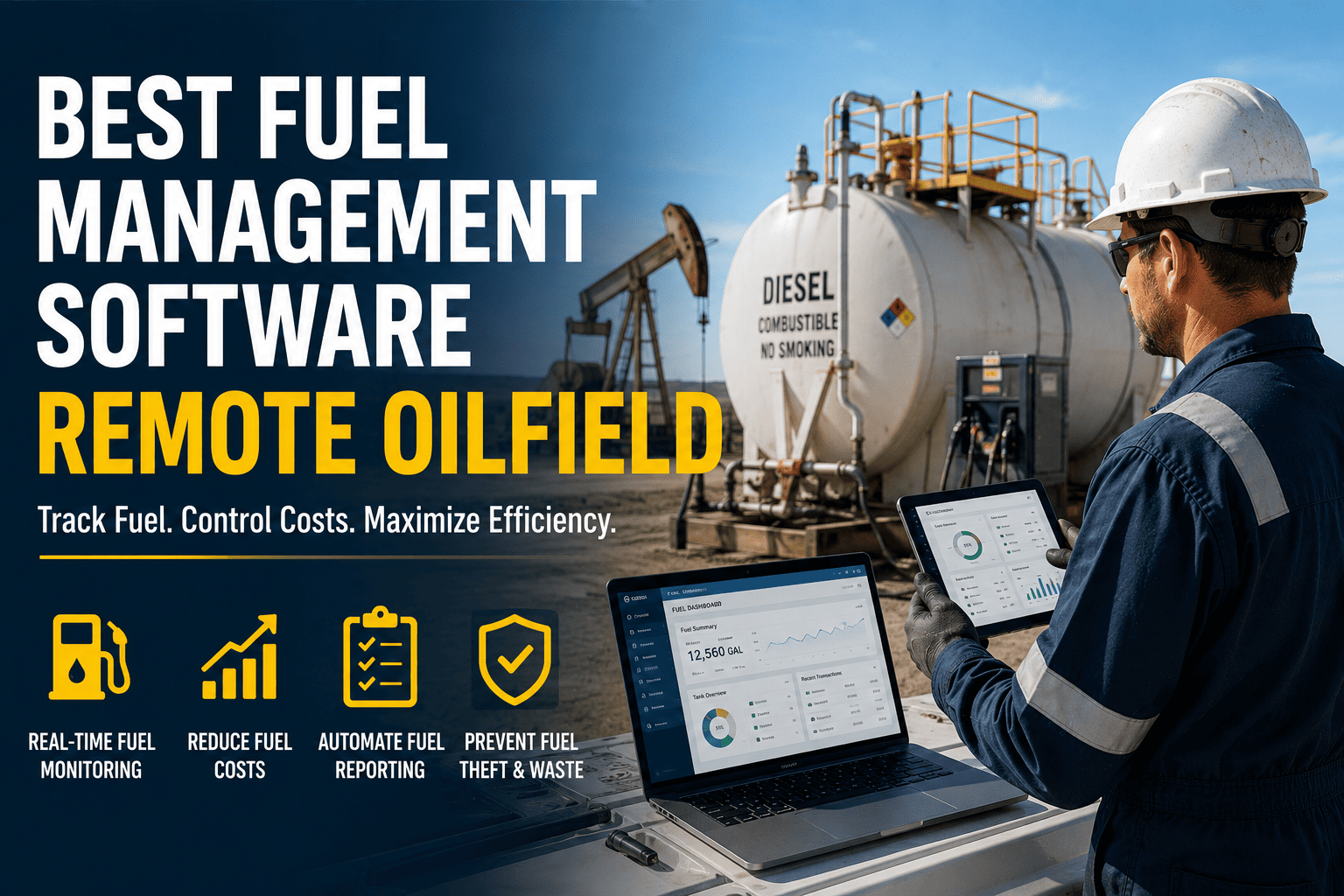
The best fuel management software for remote oilfield operations combines real-time tank monitoring, GPS-correlated theft detection, offline data caching for low-connectivity wellsites, and automated consumption reporting. Fuel theft and inefficiency can drain tens of thousands of dollars annually from a mid-size oilfield fleet when tracked manually. Sign up free or book a demo to see how FleetRabbit closes that gap in real time.
Why Remote Oilfields Need a Different Kind of Fuel Software
Fuel management built for city delivery routes and highway fleets does not translate well to a wellsite. Oilfield operations run equipment in locations with spotty or no cellular coverage, use bulk bowsers instead of retail fuel stations, and often run generators and equipment continuously for hours at a stretch. A tool designed for standard trucking misses the specific failure points that drain oilfield fuel budgets.
What Unmanaged Fuel Loss Actually Costs
Fuel theft, idling waste, and inefficient routing are rarely a single dramatic event. They are a slow drain that compounds across a fleet, month after month, until a mid-size oilfield operation is losing a meaningful share of its annual fuel budget without a clear line to any one cause.
FleetRabbit monitors fuel levels, idling, and location data continuously, even across low-connectivity oilfield sites. Sign up free to see your fleet's fuel data in real time, or book a demo to walk through your specific sites with our team.
Must-Have Features in an Oilfield Fuel Management Tool
Before comparing platforms, it helps to know exactly which features actually matter for a wellsite environment, rather than general trucking features that don't translate to remote operations.
Comparing What Different Tools Actually Deliver
Fuel management platforms vary widely in how well they handle remote, low-connectivity oilfield conditions. This comparison focuses on the capabilities that matter most for wellsite operations rather than generic trucking fuel-card tracking.
| Capability | Standard Fleet Fuel Tools | FleetRabbit for Oilfields |
|---|---|---|
| Connectivity Handling | Assumes continuous cellular connection, loses data in dead zones | Caches data offline and syncs automatically once signal returns |
| Theft Detection | Relies mainly on fuel card transaction anomalies | Correlates tank levels, GPS, idling, and driver behavior in real time |
| Bulk Fuel Visibility | Limited or no support for on-site bowsers and storage tanks | Direct monitoring of bulk fuel dispensing and storage |
| Alert Speed | Batch reporting at end of day or end of month | Anomaly alerts within minutes of detection |
How to Evaluate a Fuel Management Platform for Your Fleet
Not every fleet needs every feature on day one. Use these questions to prioritize what matters most for your operation before committing to a platform.
Does It Work Where Your Trucks Actually Operate
Ask any vendor directly how their platform behaves when a vehicle spends hours outside cellular range. If the answer is vague, that is a sign the tool was not built with remote wellsites in mind.
Can It Tell the Difference Between Waiting and Wasting
Idle time at a wellsite is sometimes unavoidable. The right tool should distinguish between necessary waiting and excessive idling that is quietly burning through the fuel budget.
The Bottom Line for Oilfield Fleet Managers
Fuel is one of the largest controllable costs in an oilfield operation, and it is also one of the easiest to lose track of when trucks and equipment spend hours off the grid at remote pads. Software built for standard trucking routes simply was not designed for bowsers, dead zones, and extended idle time at wellsites. The operators who protect their fuel budget are the ones running platforms built specifically for those conditions, catching anomalies in minutes instead of discovering them at month-end.
If your fleet is still reconciling fuel logs by hand or relying on fuel cards alone, it is worth seeing what real-time visibility looks like. Sign up free to connect your fleet and start monitoring fuel data today, or book a demo to walk through your specific wellsite challenges with our team.
FleetRabbit gives oilfield fleets real-time tank monitoring, GPS-correlated theft detection, and offline-ready tracking built for remote wellsite conditions. Start your free trial today with no credit card required.