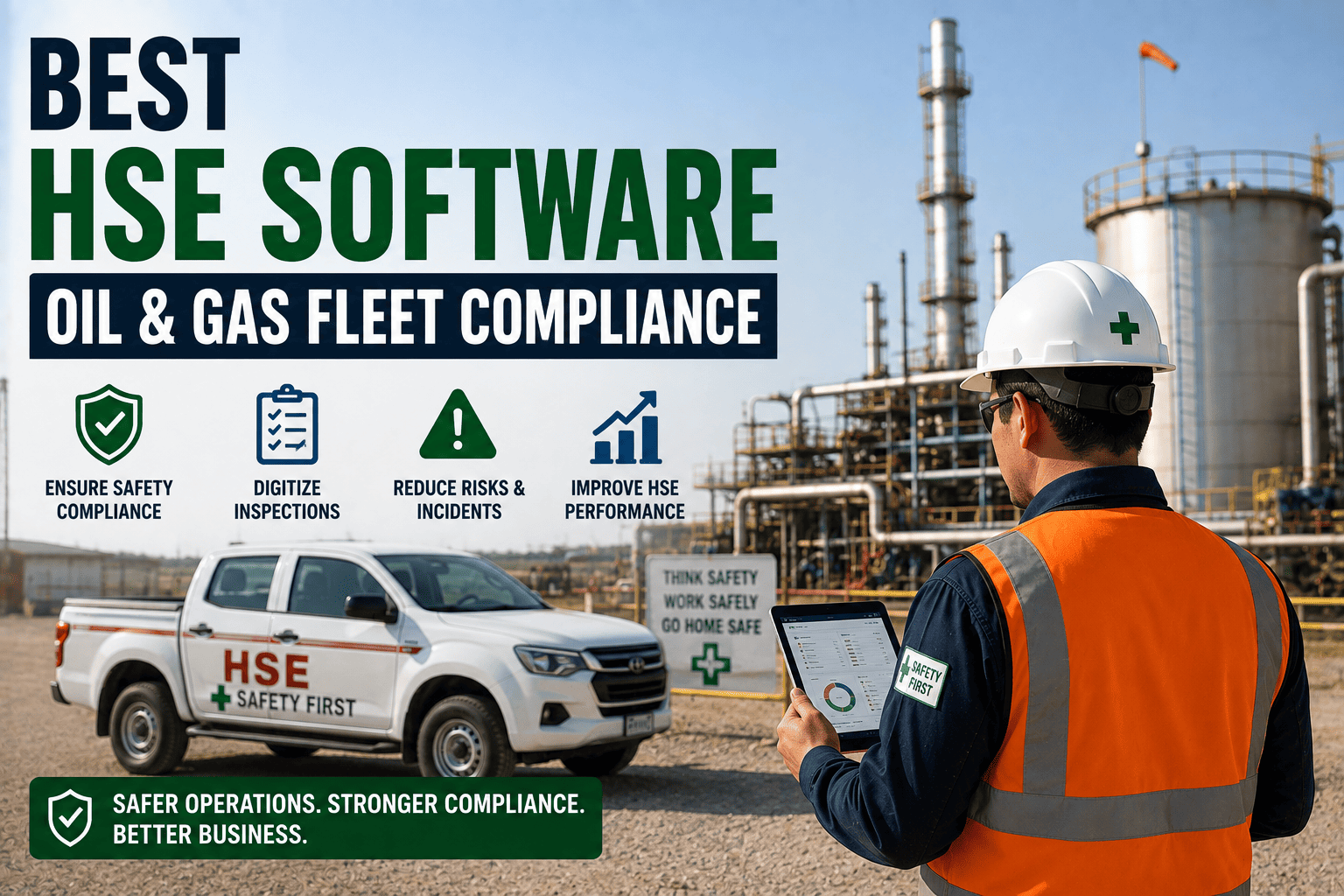
An oil and gas HSE team doesn't get graded on how few incidents happen, it gets graded on how fast a hazard gets reported, how completely a corrective action gets closed out, and whether the paperwork is ready the moment an auditor asks for it. A missed permit-to-work step or an incident report that sits unfiled for a week isn't just a compliance gap, on a well site or in a fleet yard it's the kind of gap that turns into a stop-work order, a suspended contract, or worse.
The strongest HSE software for oil and gas fleet compliance combines incident management, digital inspections, corrective action tracking, and audit-ready documentation in one connected system, rather than spreadsheets and paper forms scattered across field crews and back-office teams. For fleet-heavy operators, a platform that ties HSE data directly to vehicle and equipment records closes the gap that standalone safety apps leave open. Start a free trial to see how FleetRabbit connects fleet compliance and HSE in one place.
The Three Types of HSE Platforms You'll Run Into
Every option on the market falls roughly into one of three categories, and knowing which one you're actually shopping for saves months of evaluation.
Enterprise EHS Suites
Built for refineries and large operators with dedicated compliance teams, these platforms cover process safety management, emissions tracking, and multi-site regulatory reporting in depth. They're powerful, but often overbuilt and expensive for a mid-size operator or contractor that just needs field crews reporting incidents and closing out inspections reliably.
Mobile-First Inspection Apps
Lightweight, offline-capable tools focused on digitizing checklists and audits. They solve the paper problem well, but most stop at the inspection itself, leaving corrective action tracking and fleet-specific compliance data as a separate system a team has to manage on the side.
Fleet-Integrated HSE Software
Ties incident reporting, inspections, and corrective actions directly to vehicle and equipment records, so a driver violation, a failed pre-trip inspection, and an HSE incident on the same asset all live in one history instead of three disconnected tools. This is the category most oil and gas fleet operators are underserved by, because general EHS suites weren't built with fleet data in mind.
FleetRabbit connects incident reports, inspections, and corrective actions directly to the vehicle or equipment that triggered them, giving compliance teams one audit-ready record instead of three disconnected systems. Start your free trial and see your fleet's HSE data in one dashboard.
What To Actually Evaluate Before You Buy
Feature lists look similar across most HSE platforms until you dig into how each capability actually behaves in the field. These are the questions worth asking in a demo.
Does It Work Fully Offline
Well sites and remote yards routinely lose signal. A platform that can't capture a complete incident report or inspection offline and sync it automatically later isn't built for oilfield conditions.
Are Corrective Actions Enforced, Not Just Logged
A corrective action with no owner and no deadline is a note, not a control. Look for automatic assignment, due-date tracking, and escalation when an action goes overdue.
Is Documentation Audit-Ready At All Times
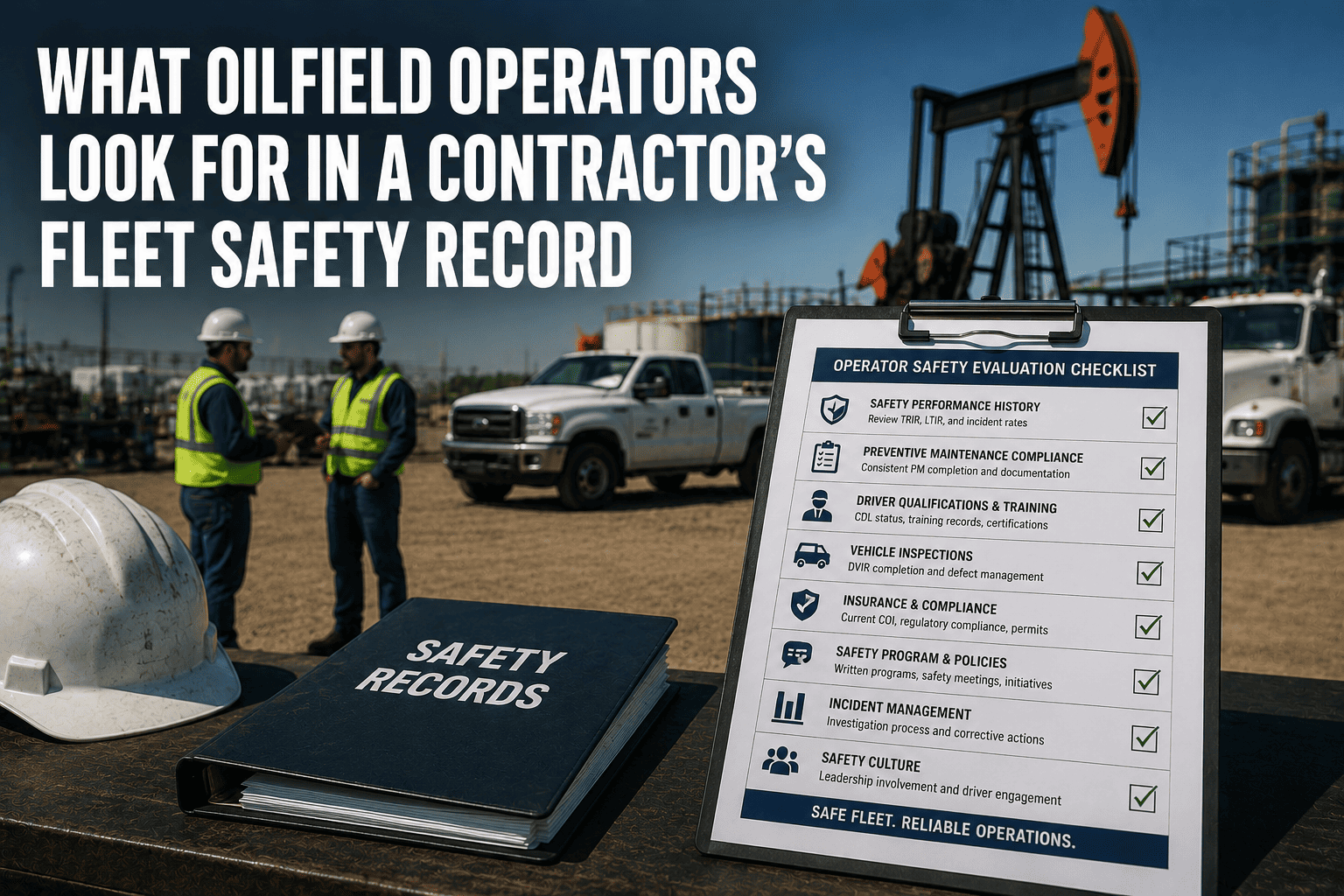
Compliance documentation shouldn't need to be assembled the week before an audit. It should already exist, complete and organized, because every inspection and incident fed into the system as it happened.
Does It Connect To Your Fleet And Equipment Records
An HSE incident tied to a specific vehicle, driver, or piece of equipment is far more useful than a standalone report, because it lets you see patterns by asset instead of treating every event as isolated.
| Evaluation Criteria | Enterprise EHS Suites | Mobile Inspection Apps | Fleet-Integrated HSE |
|---|---|---|---|
| Offline Field Capture | Varies by module | Strong | Strong |
| Corrective Action Tracking | Deep, complex setup | Basic to moderate | Built-in with asset context |
| Fleet And Vehicle Data Tied In | Rare, needs integration | Not typically included | Native |
| Best Fit | Large refineries, dedicated compliance teams | Field-heavy audits and checklists | Fleet-heavy oil and gas operators and contractors |
Why Fleet Teams Are Moving To Integrated Platforms
Oil and gas operations run on vehicles as much as they run on rigs, from crew trucks to service vehicles to heavy equipment moving between sites. When HSE software and fleet management live in separate systems, a compliance team ends up cross-referencing two dashboards to answer a simple question, like whether the truck involved in yesterday's incident had a current inspection on file. An integrated platform answers that in one lookup.
FleetRabbit was built around this exact gap, keeping incident reports, inspections, corrective actions, and vehicle compliance records connected to the same asset history. Compliance teams get audit-ready documentation without assembling it manually, and field crews get a single mobile tool instead of juggling separate apps for safety and fleet data. Teams evaluating their current setup can book a demo to see how an integrated view compares to what they're running today.
FleetRabbit gives HSE and fleet teams one connected system for incidents, inspections, corrective actions, and audit-ready compliance records, in the field or at the office.
Frequently Asked Questions
Scattered spreadsheets and disconnected apps make audit-readiness a scramble instead of a given. FleetRabbit keeps incidents, inspections, corrective actions, and fleet compliance connected to the same asset record, so your team is always ready for the next audit, not chasing paperwork after the fact.