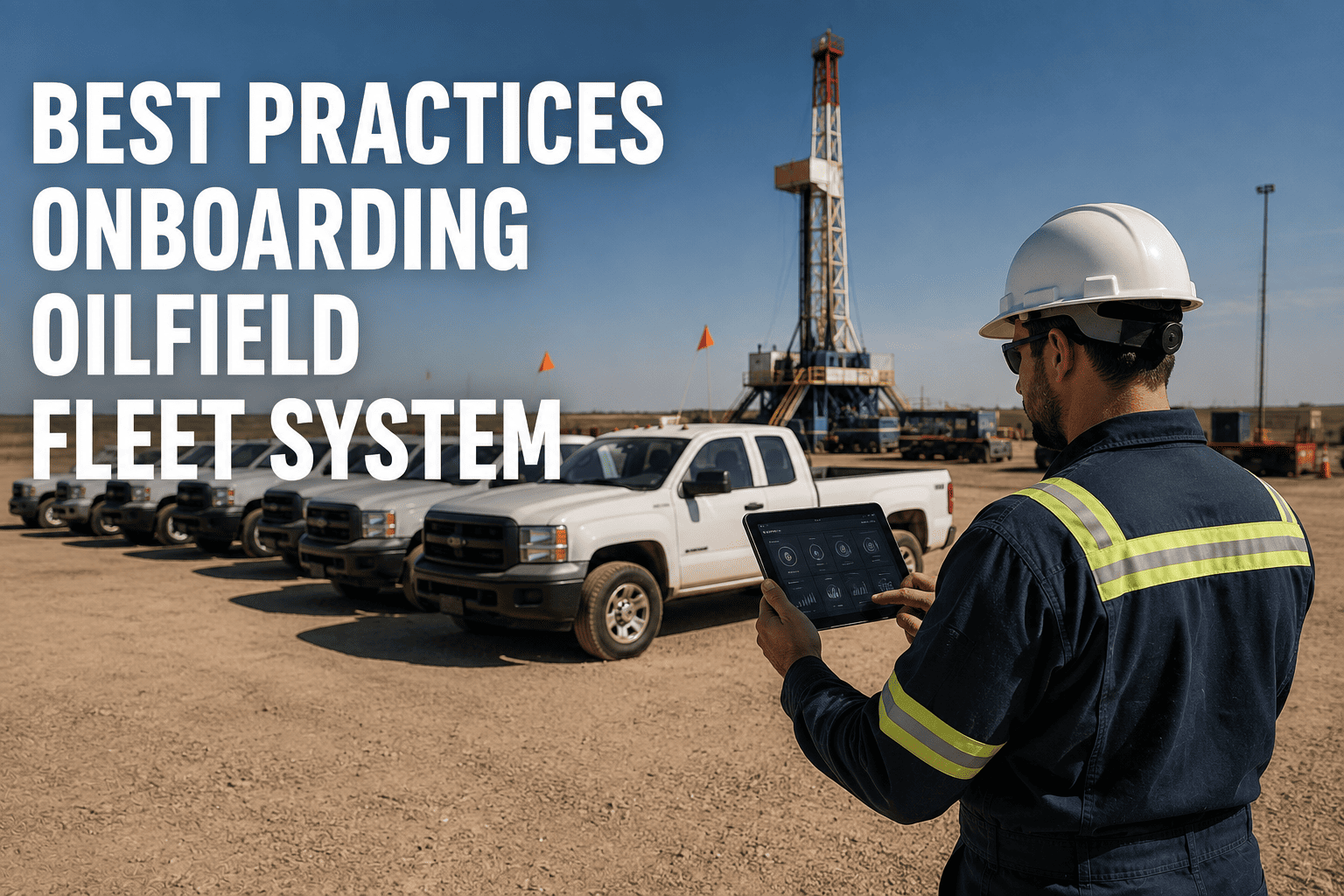
Rolling out new software in an oilfield operation is one of the most delicate projects a fleet manager will ever lead. Drivers are skeptical of change, field crews work in dead zones with no connectivity, and any disruption to trucks rolling can cost thousands per day. Yet a well-planned onboarding turns these obstacles into a smooth transition that pays for itself within months. Following proven best practices for onboarding a new oilfield fleet management system is the difference between adoption and abandonment. FleetRabbit provides structured implementation support for drivers, maintenance teams, dispatchers, and managers. You can sign up for FleetRabbit to start your rollout, or book a demo to see the platform.
Up to 70 percent of fleet software implementations fail due to poor user adoption, not bad technology. Oilfield rollouts fail when drivers reject the app, data migration breaks maintenance histories, and training happens in a conference room instead of a truck cab. A phased rollout with role-specific training achieves 90-plus percent adoption within 30 days.
Why Oilfield Software Rollouts Fail
Oilfield software rollouts fail for reasons that generic change management guides never address. The field environment itself fights adoption: no cellular coverage on remote leases, dusty screens, gloved hands, and 4 AM start times. Beyond the environment, oilfield culture prizes operational continuity above all else. Any tool that threatens to slow a truck down during a frac spread will be abandoned the first time dispatch is under pressure. Successful implementations respect both realities, choosing offline-capable tools and rolling them out in a sequence that never risks the operation.
The Conference Room Training Trap
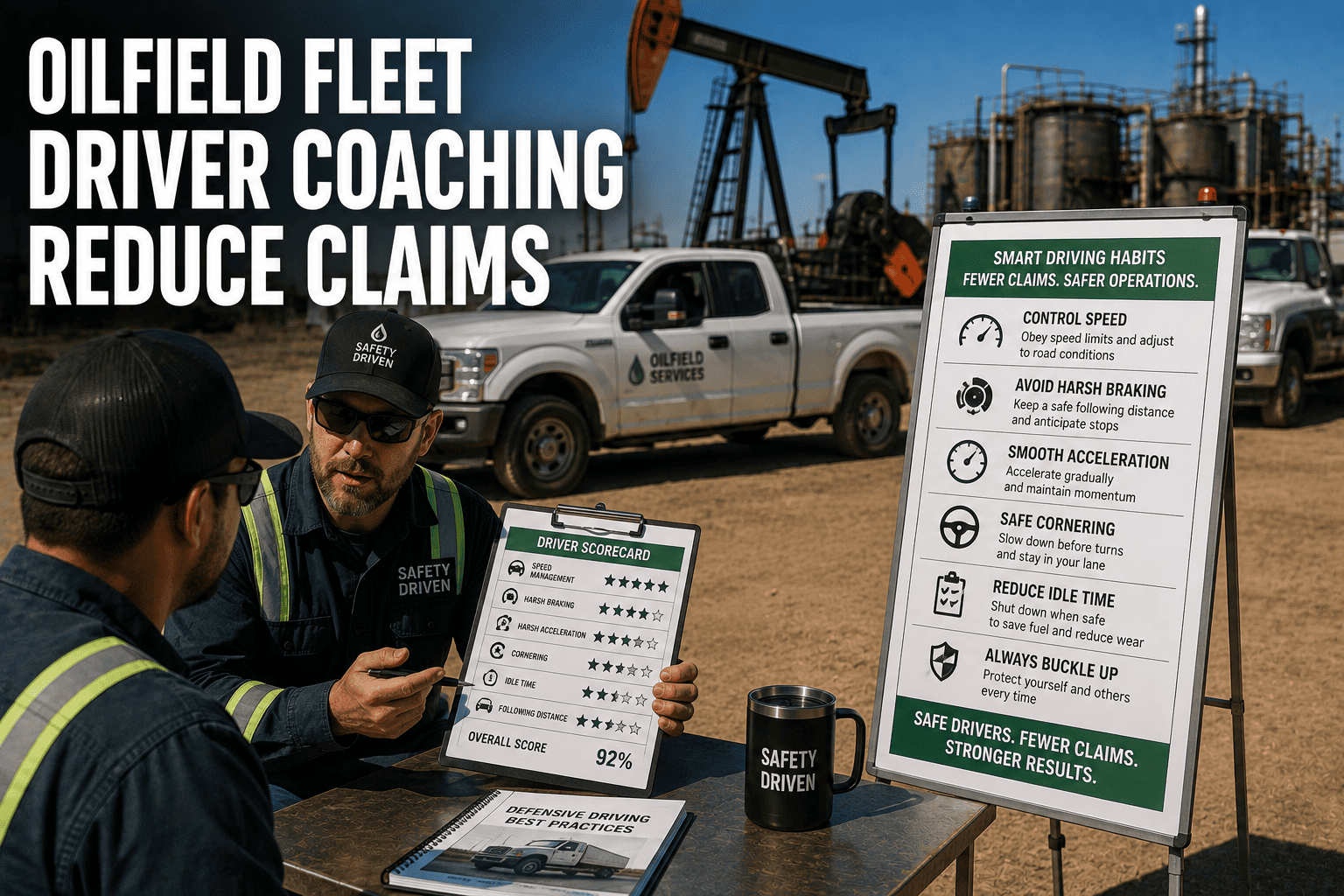
The conference room training trap kills more rollouts than any technical failure. Sitting drivers in a room for two hours watching slides teaches them nothing about using an app in a truck cab at a well site. The knowledge evaporates before the first shift ends. Effective training happens in the environment where the work occurs, with drivers completing a real DVIR on a real truck, in the yard, with their own device in hand. Fifteen minutes of cab-side training beats two hours of slides every time.
Winning Driver Buy-In From Day One
Winning driver buy-in from day one determines the entire project's fate. Drivers adopt technology when it makes their lives easier, not when it adds surveillance. Position the system around what drivers gain: no more paper logs to keep track of, instant hour calculations instead of manual math, and a digital record that protects them in disputes. Recruit one respected senior driver per yard as an early champion. When the skeptic's skeptic endorses the app, the rest follow. To start your rollout the right way, you can sign up for FleetRabbit to begin implementation, or book a demo to see the platform.
FleetRabbit's guided implementation phases your rollout yard by yard, migrates your data cleanly, and trains each role in its own environment. No big bang, no disruption, no abandoned software. Start your free trial today to begin.
The Phased Rollout Roadmap
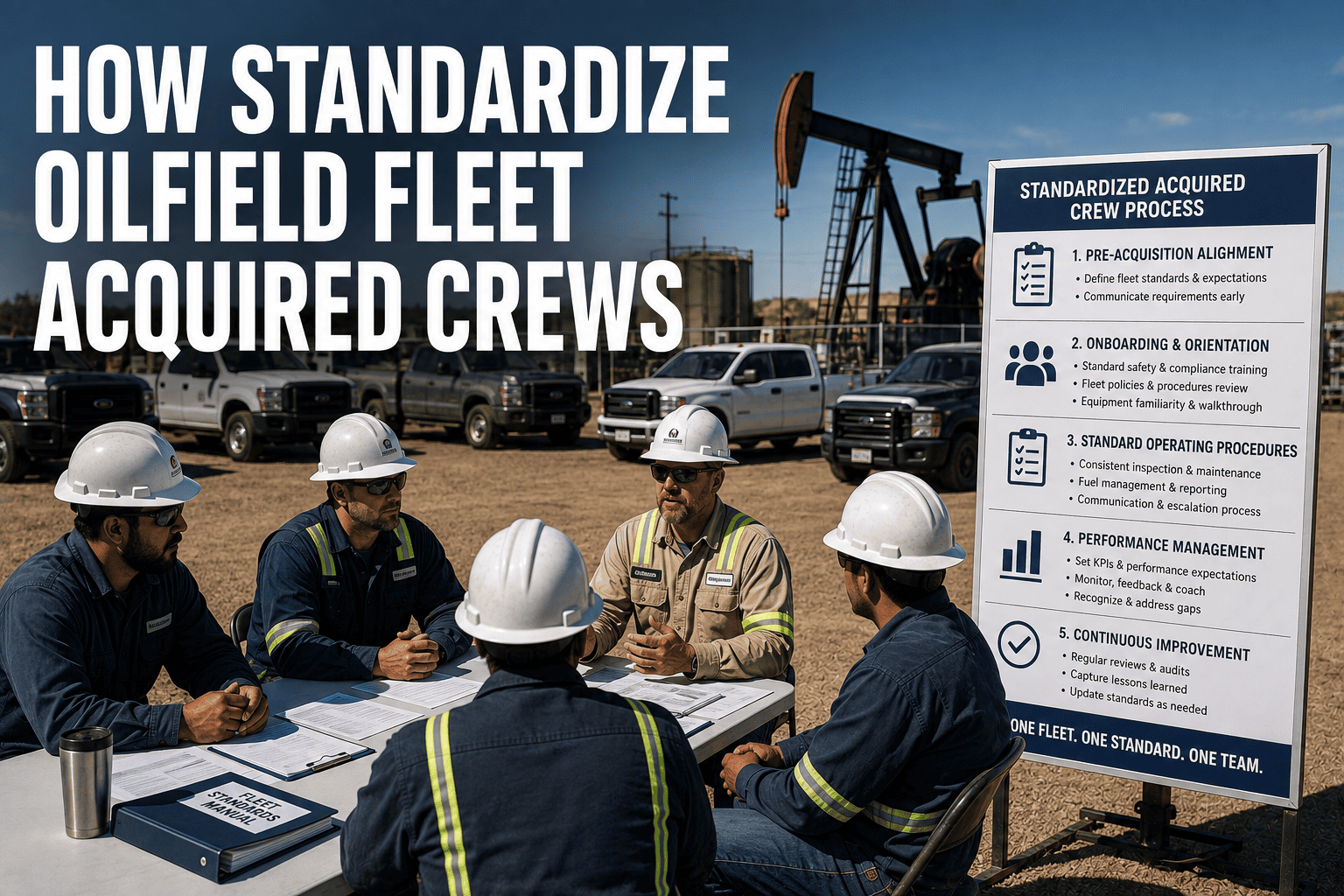
A phased rollout is the single most important best practice for oilfield implementations. Rather than launching fleet-wide, the rollout moves through controlled phases, each proving success before the next begins. This structure lets you fix problems with 10 trucks instead of 100, protects operations from any single failure, and builds internal success stories that fuel adoption in later phases. The roadmap below shows how a typical oilfield deployment progresses from preparation to full adoption.
| Rollout Phase | Duration | Key Activities | Success Signal |
|---|---|---|---|
| Phase 1: Foundation | Week 1 to 2 | Data migration, asset profiles, PM schedules, geofence setup | Clean data validated by maintenance team |
| Phase 2: Pilot Yard | Week 3 to 4 | One yard, 5 to 10 trucks, champion drivers, cab-side training | 80 percent daily app usage at pilot yard |
| Phase 3: Expansion | Week 5 to 6 | Pilot drivers train peers, remaining yards onboard in waves | Each wave hits usage targets before next launch |
| Phase 4: Full Operations | Week 7 to 8 | Paper processes retired, dashboards go live for managers | Fleet operating fully on the system |
| Phase 5: Optimization | Ongoing | Alert tuning, report refinement, coaching workflows | Measurable ROI reported to leadership |
Training Each Role the Right Way
Training each role the right way means delivering different lessons to different people. Drivers need 15-minute cab sessions focused on DVIRs and hours. Mechanics need shop-floor walkthroughs of work orders and defect logging. Dispatchers need dashboard training focused on HOS visibility and load assignment. Managers need a separate session on reports and analytics. One-size-fits-all training produces users who know features irrelevant to them while missing the ones they need daily.
Migrating Data Without Breaking Trust
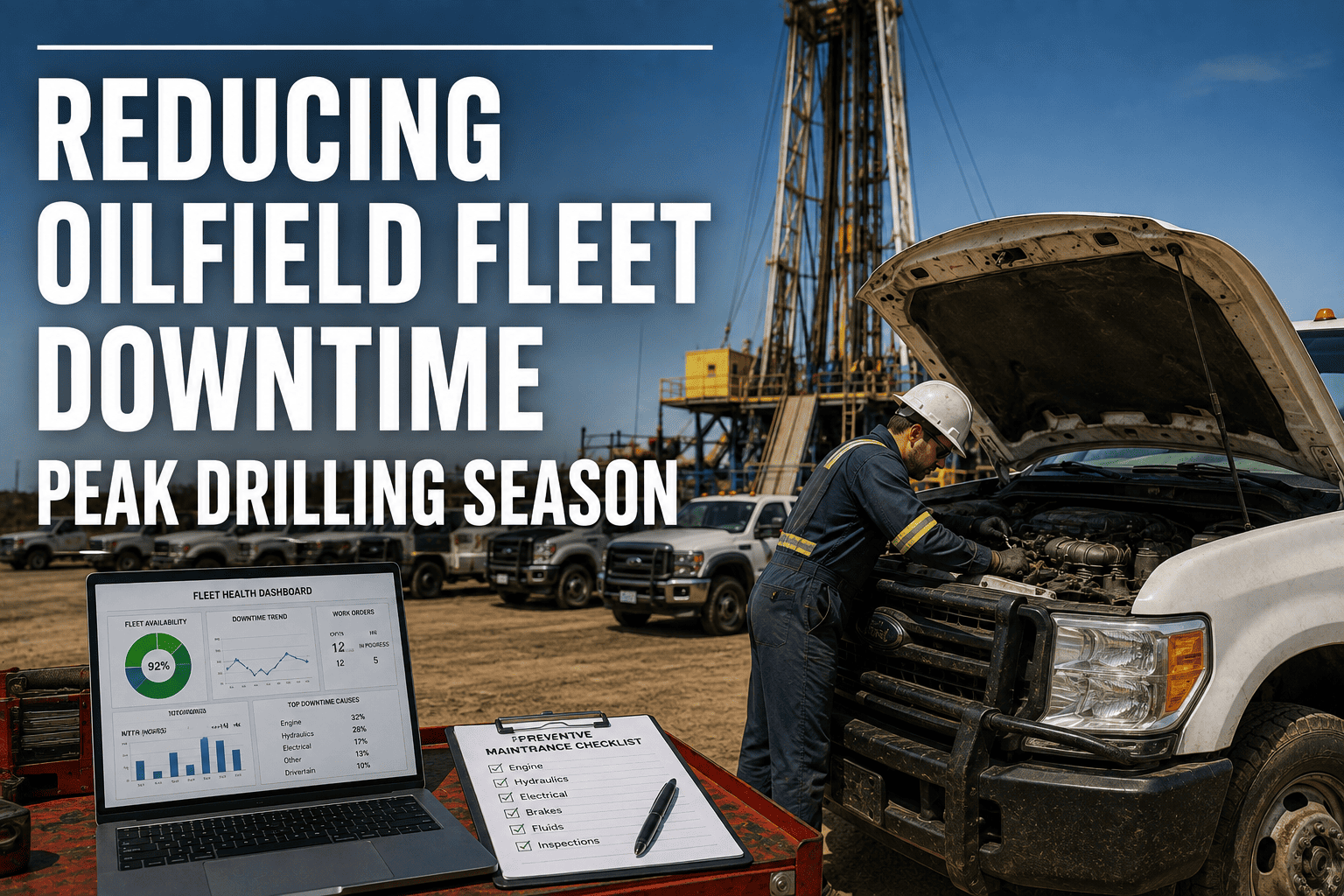
Migrating data without breaking trust is the make-or-break technical task of Phase 1. Vehicle histories, open work orders, PM intervals, and driver qualification files must arrive in the new system complete and accurate. The best practice is a validation loop: migrate, then have the maintenance team spot-check 10 random assets against old records before sign-off. When mechanics confirm the data survived the move intact, they trust the system. When they find holes, they abandon it. FleetRabbit handles migration with structured import tools and validation checkpoints, so the shop never loses a single repair history.
Retiring Paper Without a Rebellion
Retiring paper without a rebellion requires timing and ceremony. The mistake is keeping paper as a backup indefinitely, which guarantees dual systems forever. The best practice is a defined end date, announced at rollout: paper goes away the day the last yard completes Phase 3. Drivers keep paper for a transition window while the app becomes habit, then the forms physically leave the trucks. Removing the crutch forces adoption, but only after training and champion support have made the app genuinely easier than paper ever was. To plan your paper exit, you can sign up for FleetRabbit to begin implementation, or book a demo to see the platform.
How FleetRabbit Supports Your Implementation
FleetRabbit is built for the realities of oilfield rollouts rather than boardroom assumptions. Our mobile app works offline in dead zones and syncs automatically when coverage returns, removing the field's biggest objection on day one. Implementation follows the phased roadmap with dedicated support for data migration, validation checkpoints, and role-specific training materials. Driver champions get direct access to tips and walkthroughs, while managers get adoption dashboards showing exactly which yards need attention. The platform is designed so that the hardest part of onboarding, field buy-in, becomes the easiest.
Offline-First From The First Shift
Offline-first from the first shift is what separates oilfield-ready software from generic fleet apps. Drivers at remote leases complete DVIRs, log hours, and capture field tickets with zero cellular signal. Everything stores locally and syncs the moment the truck re-enters coverage. Because this capability exists from the first day of the pilot, drivers never experience the failure that sours adoption. The app simply works everywhere they work, which builds the trust that carries the rollout through every phase.
Measuring Adoption, Not Assuming It
Adoption Dashboards for Managers
Adoption dashboards for managers turn the rollout from hope into measurement. FleetRabbit shows daily active usage by driver, by yard, and by function, revealing exactly where the rollout is thriving and where it is stalling. If one yard sits at 45 percent usage while others run 90 percent, the dashboard flags it before it becomes a failure. Managers can then focus coaching and champion support on the specific location that needs it, rather than guessing whether the rollout is working. This visibility keeps the project on schedule and protects the investment.
Key Takeaways for a Successful Rollout
Onboarding a new oilfield fleet management system successfully comes down to sequencing and respect for the field. Big bang launches that disrupt operations guarantee reversion to paper. Conference room training that ignores the truck cab produces users who cannot use the app where it matters. And rollouts that skip driver buy-in fail regardless of how good the technology is. The implementations that succeed phase their rollout yard by yard, train each role in its own environment, migrate data with validation, and retire paper on a firm date.
FleetRabbit's guided implementation follows all of these best practices with offline-first technology that removes the field's biggest objection before it arises. Fleets that complete the phased rollout reach 90-plus percent adoption within 30 days and begin reporting measurable ROI in maintenance savings, faster billing, and compliance within the first quarter. The software pays for itself faster when the people using it actually use it.
The path forward is clear. Evaluate how you would launch new software across your yards tomorrow, and ask whether your plan earns driver buy-in or forces it. If your rollout strategy is a single training day and a mandate, history says it will fail. Fleet managers who implement systematically protect their investment and their operation. You can sign up for FleetRabbit to begin implementation, or book a demo to see the platform.
Frequently Asked Questions About System Onboarding
A failed implementation wastes your budget and your team's trust. FleetRabbit's phased rollout, offline-first app, and role-specific training get your fleet adopted in 30 days without disrupting operations. Start your free trial today with no credit card required.