Fleet safety culture in oil and gas is one of those organisational concepts that every operator claims to prioritise and most struggle to demonstrate with evidence. The challenge is not that oilfield fleet managers do not understand the importance of safety — it is that the tools most operations use to manage fleet safety are structurally incapable of producing the behavioural change they are intended to create. A monthly safety meeting that reviews incident statistics provides information. It does not change the driving behaviour of the wireline unit driver who hard-brakes 11 times per week on gravel lease roads because nobody has told him about it in real time — or the frac truck operator who idles at wellsite for six hours per shift because nobody has measured it against his fleet peers. Safety culture is not built by telling people that safety matters. It is built by creating the data feedback loops that make safe behaviour visible, recognised, and rewarded — and that make unsafe behaviour visible, coached, and corrected — before it produces an incident that the monthly review will note as a statistic. FleetRabbit's fleet safety culture platform provides the data infrastructure for genuine oilfield fleet safety improvement — real-time driver behaviour scoring, automated in-cab coaching alerts, near-miss reporting from the field, incident evidence generation, HSE certification tracking, and the executive-level safety performance dashboards that turn safety from a compliance exercise into a measurable operational outcome. This article details the specific steps to building an oilfield fleet safety culture that actually reduces incident rates — and the FleetRabbit capabilities that support each stage of the process. Book a demo to see FleetRabbit's fleet safety culture platform for oil and gas operations.
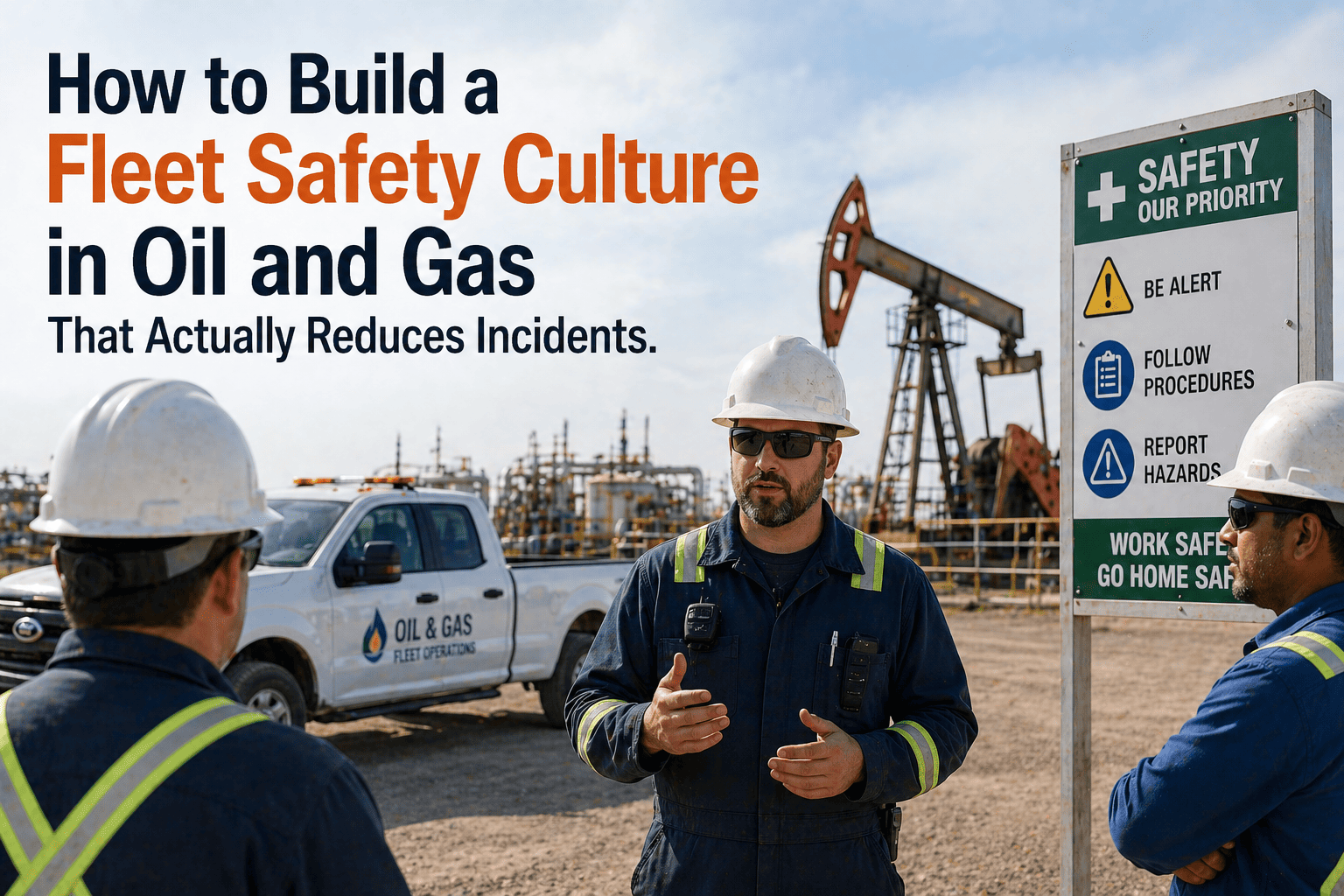
How to Build a Fleet Safety Culture in Oil and Gas That Actually Reduces Incidents
A genuine oilfield fleet safety culture requires data feedback loops that make safe behaviour visible and unsafe behaviour correctable — in real time, not at the next monthly safety meeting. FleetRabbit provides the driver scoring, coaching alerts, incident reporting, and executive safety dashboards that turn safety culture from aspiration into measurable performance.
Why Most Oilfield Fleet Safety Programmes Fail to Reduce Incident Rates
The gap between safety programme investment and incident rate reduction in oilfield fleet operations is well documented — and structurally predictable. Most safety programmes are built around the wrong feedback frequency, the wrong data granularity, and the wrong accountability structure to produce sustained behavioural change.
Monthly Review Cycles Cannot Change Daily Behaviour
A driver who hard-brakes 11 times per week has 44 hard-braking events between monthly safety reviews. Informing him that he hard-braked 44 times last month — 30 days after the first event occurred — produces a fraction of the behavioural change that an in-cab coaching alert 3 minutes after the first event would generate. Safety feedback that arrives weeks after the event it is intended to correct is not coaching. It is history.
Incident Statistics Without Behavioural Data Drive Blame, Not Improvement
Reviewing incident rates without access to the driver behaviour data that precedes incidents makes it impossible to distinguish between a systematic coaching opportunity and a one-off event. When fleet managers cannot see which drivers are accumulating the behavioural patterns that precede incidents — harsh acceleration, speed exceedances, seatbelt non-compliance — safety management defaults to reactive blame allocation rather than proactive risk reduction.
Certification Compliance as Paperwork Rather Than Safety Assurance
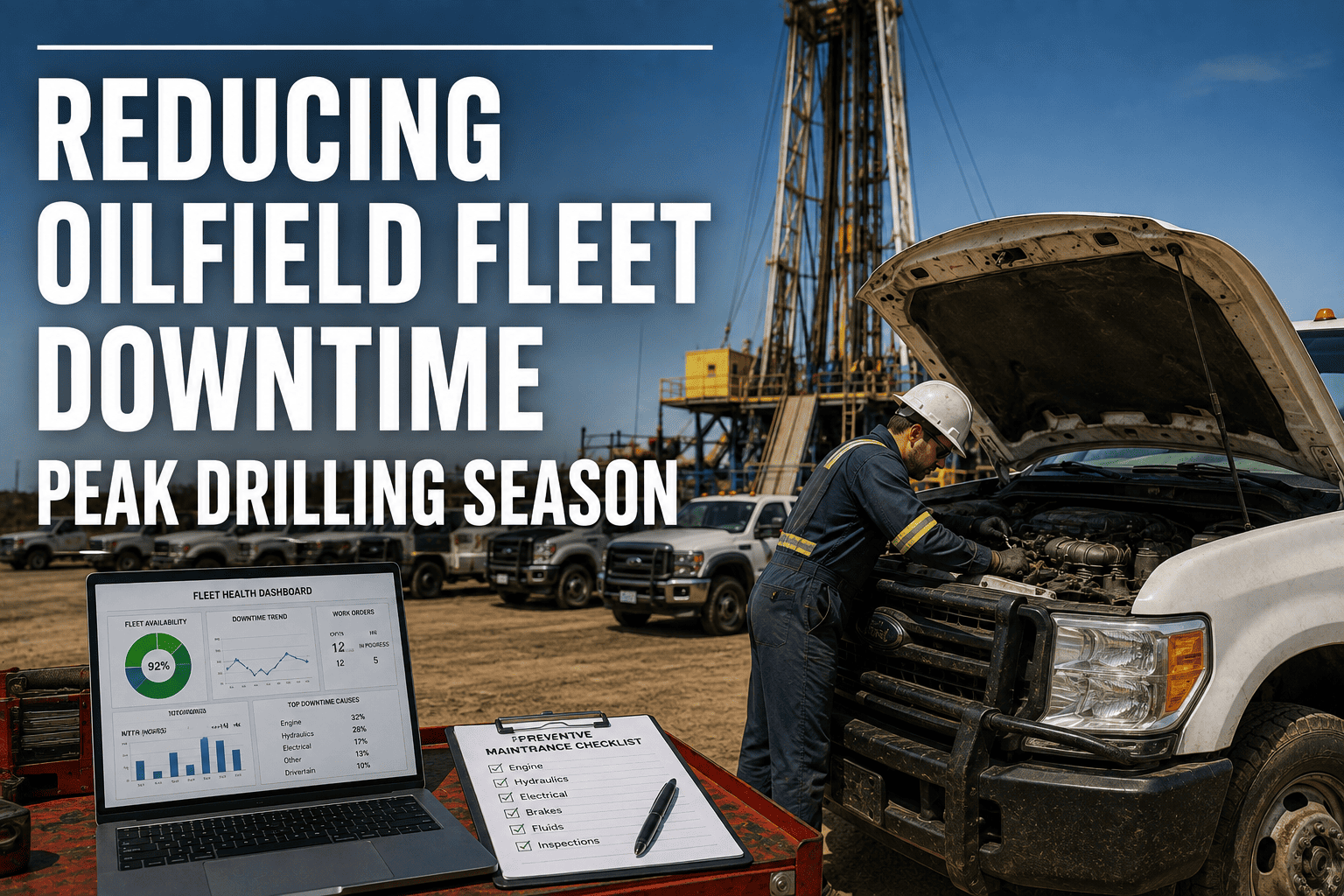
H2S awareness certification, defensive driving qualifications, and HAZMAT training exist to reduce specific categories of oilfield incident risk. When these certifications are managed as paperwork exercises — renewed when HR remembers, filed where they may or may not be retrievable, and never cross-referenced against operational assignments — they provide legal coverage without operational safety value. A driver with an expired H2S certification dispatched to a classified wellsite zone is not a paperwork failure. It is a safety failure with a paperwork symptom.
Near-Miss Under-Reporting Conceals the Real Incident Rate
Near-miss reporting rates in oilfield fleet operations are systemically suppressed by the friction of paper reporting processes, driver concerns about blame attribution, and absence of visible recognition for reporting near-miss events. When near-miss reporting drops, the apparent safety record improves while the underlying risk exposure remains constant or increases. Operations that manage fleet safety without a functioning near-miss reporting channel are making strategic decisions on a safety performance picture that is systematically incomplete.
Real-Time Driver Scoring. Automated In-Cab Coaching. Near-Miss Reporting. Executive Safety Intelligence.
FleetRabbit provides the complete data infrastructure for oilfield fleet safety culture — from in-cab coaching alerts that fire within minutes of a safety event, to executive dashboards that give operations directors the fleet-wide safety risk distribution they need to allocate coaching resources before incidents occur.
Building Oilfield Fleet Safety Culture in Five Stages — With FleetRabbit Supporting Each One
Genuine safety culture change in oilfield fleet operations follows a predictable progression through five stages — each requiring different data capabilities and different management interventions. FleetRabbit provides the platform infrastructure for all five stages simultaneously, enabling fleet managers to operate at the appropriate stage per driver while managing the overall fleet-wide safety trajectory.
Baseline Measurement — Know Where You Actually Are
Safety culture improvement cannot begin without a verified baseline of current driver behaviour across the fleet. Subjective management impressions of which drivers are safe and which are risky are consistently inaccurate — good drivers who have unsafe habits that have not yet produced incidents are systematically misclassified, and drivers who appear safe because they have not had an incident yet are indistinguishable from drivers who are genuinely performing well.
Real-Time Coaching — Intervene at the Moment of Behaviour, Not the End of the Month
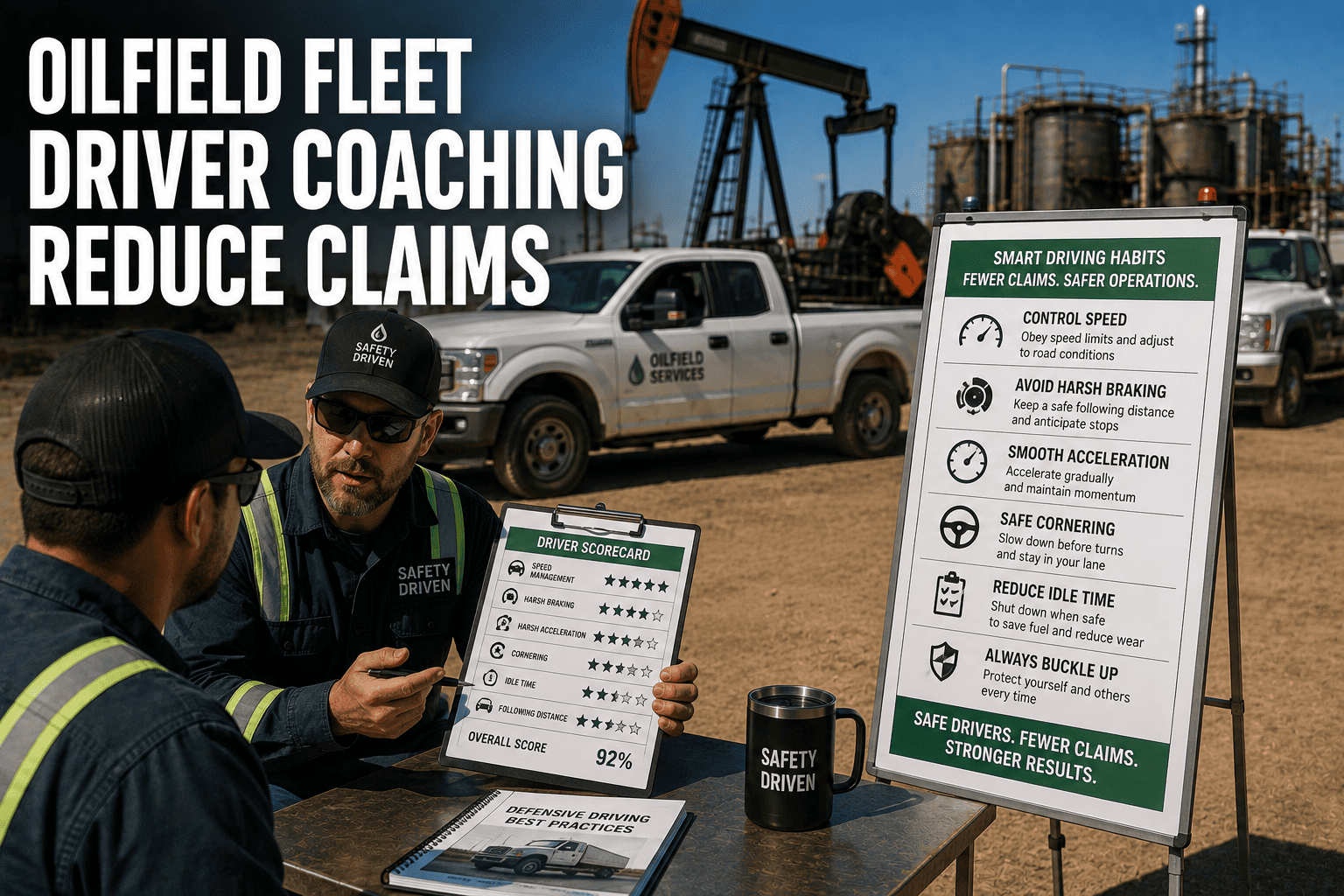
The feedback loop between unsafe driving behaviour and coaching intervention determines the effectiveness of the safety programme more than any other single variable. An in-cab coaching alert that fires 3 minutes after a hard-braking event on a Permian Basin lease road produces 8–12 times the behavioural change of a monthly review discussion about the same event. The alert is specific, immediate, and connected to the driver's physical memory of the event. The monthly review is abstract, delayed, and disconnected from the moment when the neural pathway of the unsafe behaviour was formed.
Data-Driven Coaching Conversations — Replace Subjective Reviews With Evidence
Monthly driver safety reviews on paper-based systems produce subjective conversations about general safety principles that rarely connect to the specific behaviours that precede incidents. Driver resistance to these conversations is common and rational — without specific event data, the driver has no way to verify whether the coach's characterisation of their driving behaviour is accurate. Data-driven coaching conversations with FleetRabbit driver scorecards eliminate this dynamic — the conversation is grounded in events both parties can see, measured against benchmarks that are applied consistently across the fleet, and focused on the specific dimension where improvement will have the greatest impact on the driver's composite score.
Near-Miss Culture — Make Reporting Safe and Visible
Near-miss reporting is the most powerful leading indicator of incident risk available to oilfield fleet safety managers — and the most commonly suppressed by the friction of the reporting process and driver concern about blame. A fleet with a high near-miss reporting rate is not a more dangerous fleet. It is a safer fleet — because the near-miss events that would have become incidents in a low-reporting culture are being identified, investigated, and corrected before they compound into recordable events. Building near-miss reporting culture requires making reporting frictionless, demonstrating that reported events trigger investigation rather than blame, and recognising reporting behaviour as a positive safety indicator rather than a performance deficit.
Executive Safety Intelligence — Make Safety Performance Visible at Board Level
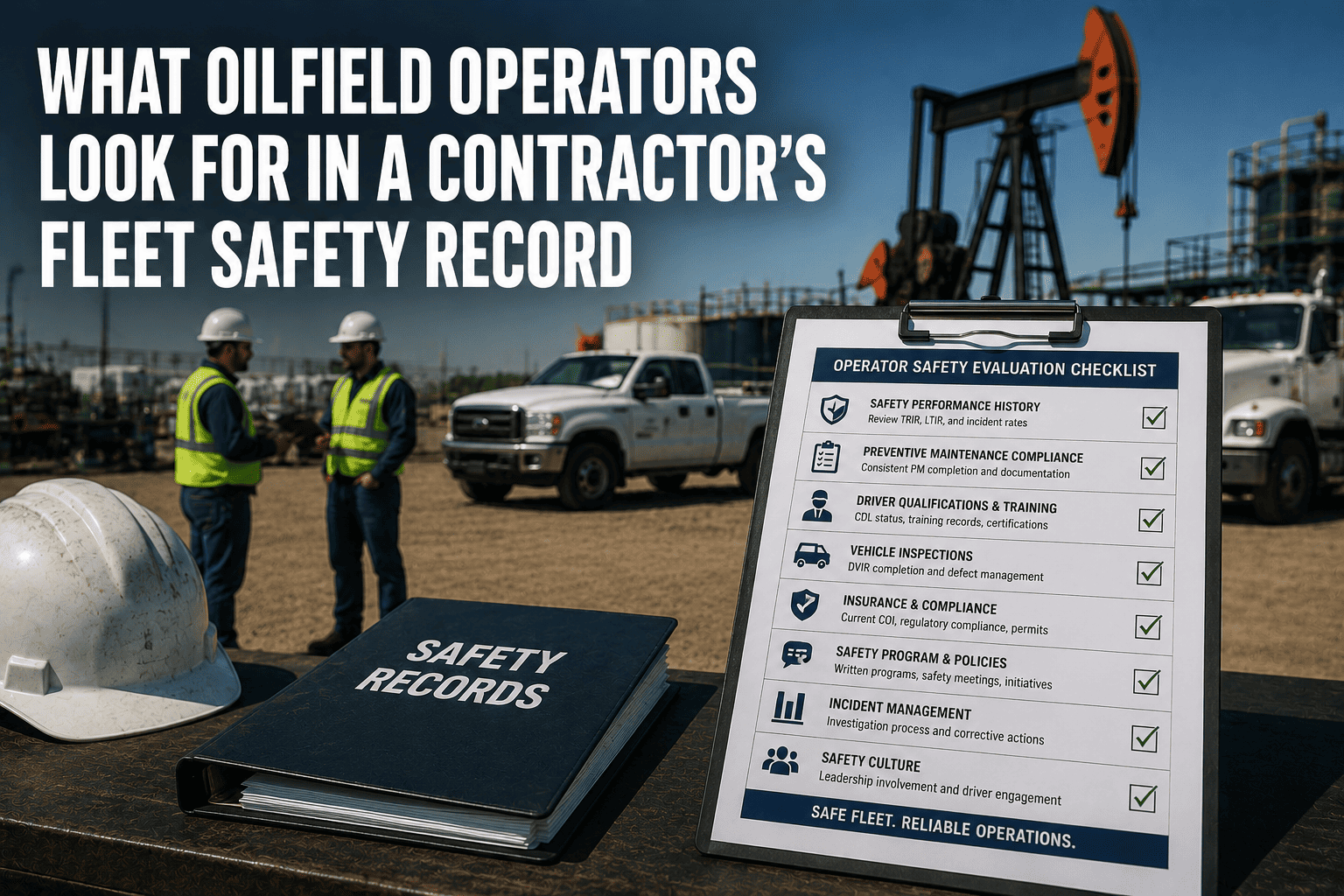
Safety culture becomes embedded in organisational behaviour when leadership prioritises it consistently — and consistent leadership prioritisation requires consistent safety performance data at the level where resource allocation decisions are made. Operations directors and CFOs who receive safety performance data in the same meeting cadence as financial and operational KPIs make different resource allocation decisions than those who receive safety performance data only when an incident triggers a review. Building board-level safety culture requires giving executives the fleet safety intelligence they need to treat safety as a strategic operational metric rather than a compliance exercise.
Measured Safety Culture Outcomes at FleetRabbit-Deployed Oilfield Fleets
Build the Data Infrastructure for Genuine Oilfield Fleet Safety Culture — Starting in 5–7 Days
FleetRabbit provides driver behaviour scoring, real-time in-cab coaching alerts, near-miss mobile reporting, certification tracking, incident evidence generation, and executive safety dashboards — everything required to move from safety compliance to safety culture in your oilfield fleet operation at $3/vehicle/month.