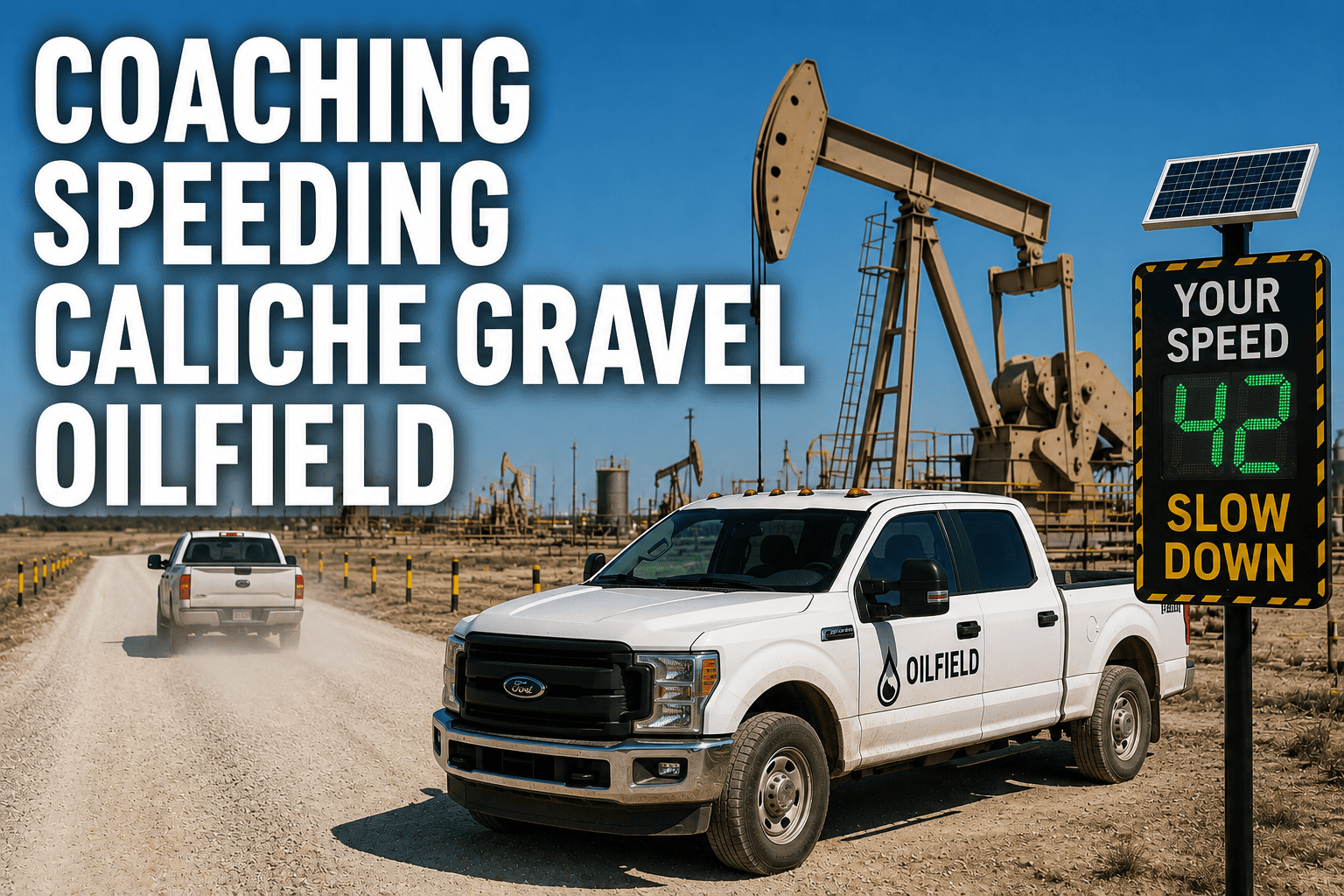
A gravel lease road doesn't look dangerous on a speedometer. Forty-five miles an hour feels routine on pavement, but on loose caliche it is a completely different physical event. The surface shifts under the tires, stopping distance stretches out, and a routine curve can turn into a rollover before a driver even registers the risk. For oilfield fleets, speeding on unpaved roads is one of the most common and most coachable causes of serious crashes, yet it rarely gets the same attention as speeding on the highway.
Standard telematics speed alerts treat every mile the same, so a truck doing 50 mph on a caliche lease road looks identical to one doing 50 mph on a paved highway. The lease road event is far riskier, but without road-surface context, fleet managers can't tell the two apart, and drivers never get coached on the behavior that actually causes rollovers.
Why Speed Behaves Differently on Caliche and Gravel
Caliche, the compacted mix of clay, silt, and calcium carbonate used to build most lease roads, has a hard crust that can hide a loose, shifting layer underneath. Add washboarding, dust that cuts visibility, or a light rain that turns the surface slick, and a truck's grip can change from one stretch of road to the next. Gravel roads carry a similar risk from loose stone that reduces traction on turns and under braking. Heavy trucks and vans already carry their weight high off the ground, and industry data consistently ties excessive speed on curves and uneven terrain to a large share of oilfield rollovers. A speed that would be unremarkable on asphalt becomes the deciding factor in whether a driver keeps control on a narrow lease road.
Why Blanket Speed Alerts Miss the Real Risk
Most fleet trackers flag speeding against a single posted limit, usually the highway number. On a lease road there often is no posted limit at all, so the alert either fires constantly or never fires, and either way the manager learns nothing useful. Coaching conversations end up built on gut feeling instead of data: a supervisor remembers seeing a truck kick up dust and has an informal word with the driver, but there's no record, no pattern, and no way to tell whether the behavior is a one-time lapse or a habit that's building toward a serious crash.
What Gets Missed Without Road-Surface Context
Three gaps show up again and again when fleets rely on generic speed reports alone.
No distinction between asphalt and lease road speed
A driver hitting 55 mph on the highway and 45 mph on caliche appear as two similar "speeding" line items, when the second is the more dangerous event.
No pattern tracking by driver or by pad
A single fast pass looks like noise. Five fast passes down the same washboard stretch over two weeks is a trend that needs a coaching conversation before it becomes an incident.
No connection between speed events and near-misses
Hard-braking and swerving events that happen right after a fast run on gravel often get reviewed separately from the speed data, so the cause and effect never gets tied together.
FleetRabbit tags speeding events with the road surface they happened on, so lease road and caliche speeding stand out from ordinary highway driving instead of blending into a generic report. Supervisors get the pattern, not just the number, and coaching conversations happen before a fast pass turns into a rollover. Sign up for FleetRabbit and start separating true risk from routine driving today.
Caliche, Gravel, and Lease Roads: How the Coaching Approach Differs
Not every unpaved surface carries the same risk profile, and coaching should reflect that. The table below breaks down the three surfaces oilfield fleets deal with most and what a manager should actually be watching for on each one.
| Road Type | Primary Risk at Speed | Warning Signs to Watch | Coaching Focus |
|---|---|---|---|
| Compacted Caliche | Hidden loose layer under a hard crust reduces grip suddenly, especially after light rain | Sudden fishtailing, wide entry into curves, dust trail spiking on straightaways | Reinforce a fixed speed ceiling regardless of how solid the surface looks |
| Loose Gravel | Reduced traction under braking and cornering, longer stopping distance | Late braking before turns, repeated hard-brake events on the same stretch | Emphasize earlier braking points and increased following distance |
| Washboard Lease Roads | Vibration at speed reduces steering control and driver fatigue accelerates | Erratic lane position, speed spikes right after crossing washboard sections | Coach a lower target speed specifically for washboard segments, not the whole route |
Building a Coaching Conversation That Actually Changes Behavior
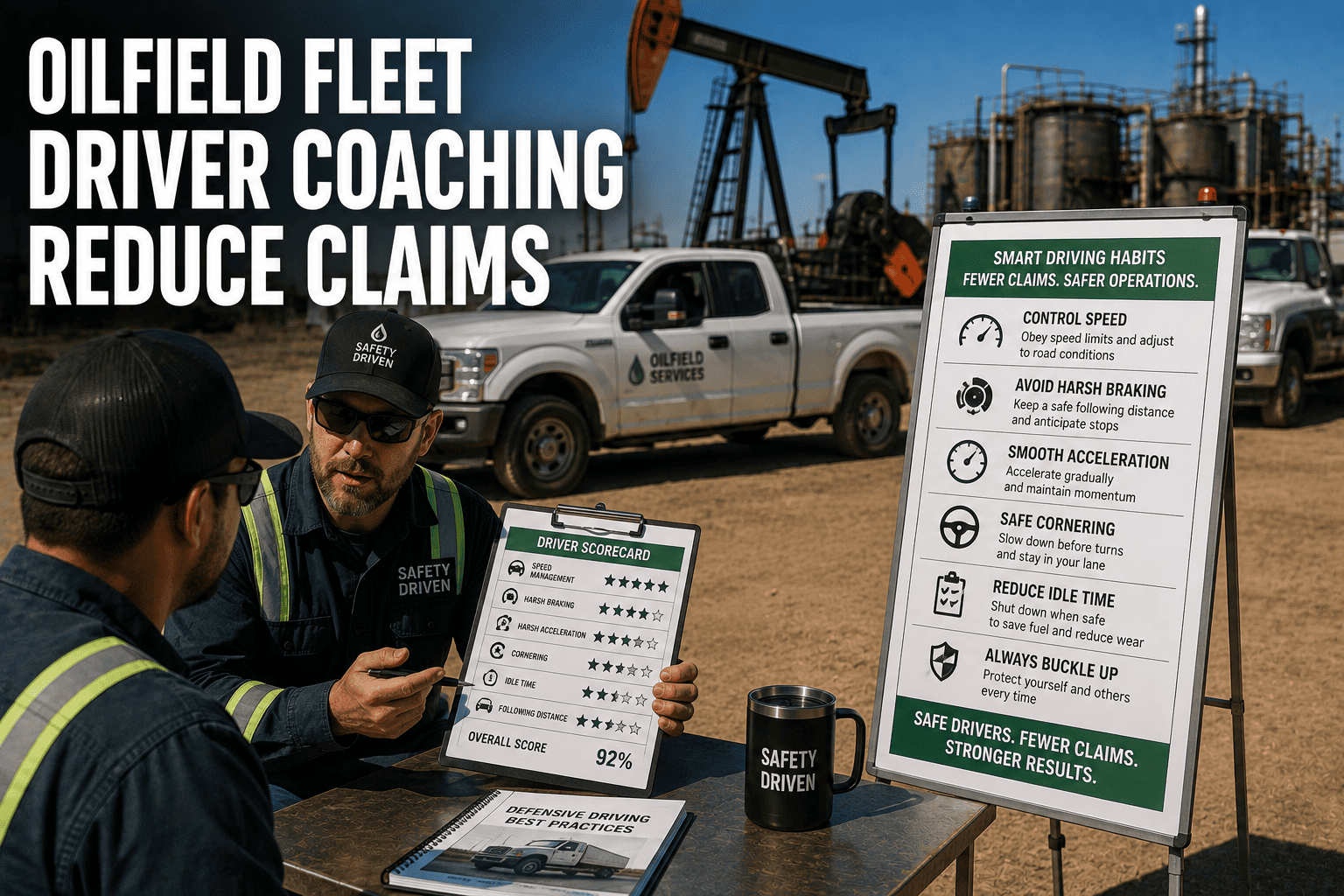
Telling a driver to slow down rarely works on its own. The conversations that change behavior are specific, backed by data, and framed around safety rather than punishment.
Four Steps That Make Speed Coaching Stick
Show the exact location and surface, not just the speed
A driver who hears "you were speeding" can dismiss it. A driver shown the specific caliche curve on their route where they hit 52 mph in a 30 zone has a harder time arguing with the data.
Connect the event to a real consequence
Pair the speed data with the physics: on loose caliche, stopping distance can run two to three times longer than on dry asphalt at the same speed. That context turns a number into a reason.
Look for the pattern before assuming intent
A driver with one fast pass on a rough week is different from a driver who does it every shift. Pattern data lets supervisors coach fairly instead of reacting to a single snapshot.
Set a follow-up checkpoint, not a one-time talk
Schedule a short review two to four weeks out to confirm the pattern actually changed. Coaching without a follow-up tends to fade within a few shifts.
What Road-Aware Coaching Delivers for the Fleet
Fleets that separate lease road speeding from highway speeding and coach it specifically tend to see the change show up in more than just the safety scorecard.
Fewer Rollover and Near-Miss Events
Targeted coaching on the roads where speed matters most directly reduces the loss-of-control incidents that drive injury claims and vehicle downtime.
Lower Maintenance and Tire Costs
Excess speed on washboard and caliche accelerates suspension wear and tire damage. Slower, controlled driving extends the service life of both.
Stronger Safety Record With Operators
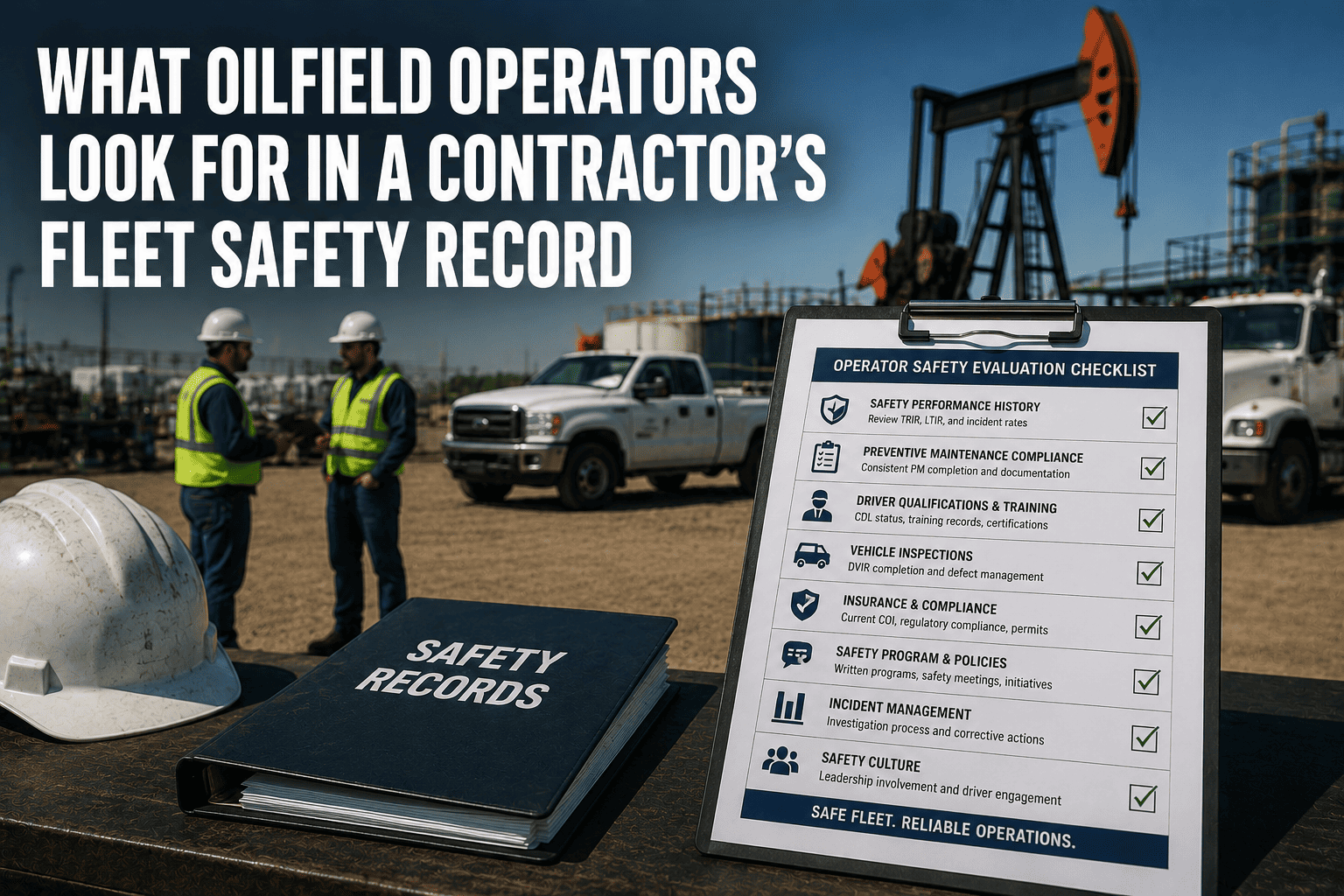
Documented coaching programs and improving speed trends support better standing during operator safety audits and site access reviews.
Fairer, More Consistent Coaching
Drivers respond better when coaching is backed by specific road-tagged data instead of a supervisor's memory of one bad pass.
Putting Road-Aware Speed Coaching to Work
FleetRabbit tags every GPS point with the road surface it was recorded on, so a lease road speed event is flagged and ranked differently from an identical speed on the highway. Supervisors get a ranked list of the riskiest speed patterns by driver and by pad, with the exact curve or stretch involved, instead of a flat list of every time a truck crossed a number. That turns a monthly safety meeting into a focused five-minute review instead of a guessing game.
Getting started takes less time than most fleets expect. You can sign up for a free trial and begin tagging routes within your first week, or book a short demo to see how the road-context speed reports look for your specific pads and routes before rolling it out fleet-wide.
Frequently Asked Questions
Generic speed alerts can't tell the difference between a paved highway and a washboard lease road, and that gap is where preventable rollovers happen. FleetRabbit adds the road context your supervisors need to coach the right drivers on the right roads before a fast pass becomes an incident report.