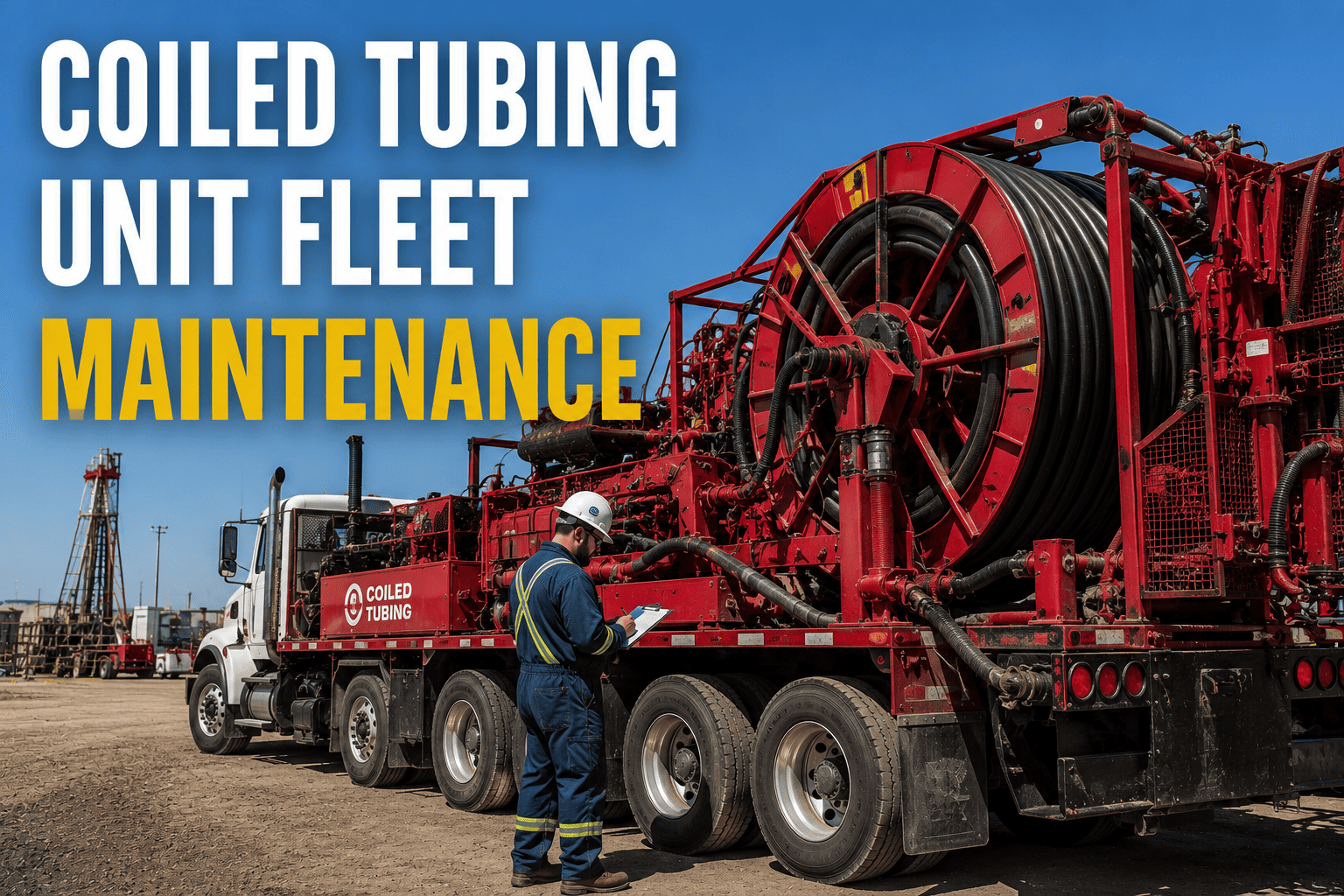
A coiled tubing unit works harder than almost anything else on a well pad. The injector head is cycling under load, the power pack is running at high hours, and the tubing string itself is quietly accumulating fatigue every time it goes in and out of the hole. Miss one worn chain or one overdue hydraulic inspection, and a CTU that was supposed to be running a job ends up parked at the shop instead. Going into 2026, the operators keeping their coiled tubing fleets field-ready aren't the ones with newer equipment, they're the ones tracking wear before it becomes a failure.
Coiled tubing units run pump-intensive duty cycles that wear the injector chain, gripper blocks, and hydraulic system far faster than standard fleet equipment. Chain elongation past 3 percent, engine hours run past service intervals, and untracked tubing fatigue cycles are the three most common causes of unplanned CTU downtime. Fleets that track engine hours and component wear digitally catch problems 2 to 3 weeks earlier than paper-based logs.
Why CTU Maintenance Doesn't Follow A Standard Fleet Playbook
Most fleet maintenance programs are built around mileage or calendar intervals, oil changes every so many miles, inspections every quarter. Coiled tubing units don't fit that model cleanly. A CTU might sit idle for two weeks and then run 40 straight hours on a multi-stage completion job, putting more wear on the injector and power pack in that one job than a standard service truck sees in a month. Maintenance intervals have to be built around actual duty cycles and component-specific wear limits, not a generic calendar.
Component-Specific Wear Limits Matter More Than Time
The injector chain, for example, has a hard wear limit around 3 percent elongation, not a time-based replacement schedule. The hydraulic system depends more on contamination control and pressure cycling than on the calendar. The tubing string itself is governed by fatigue cycle counts tied to bend radius and pressure, tracked independently of the unit it's spooled on. A maintenance program that only checks the calendar misses all three of these wear signals.
What A Duty-Cycle-Based Schedule Looks Like
In practice, this means logging engine hours and load conditions after every job, not just every month. It means recording chain condition and any abnormal noise from the injector head after high-load runs. It means tracking the coiled tubing string's fatigue cycles separately from the unit's engine hours, since a tubing string can reach the end of its service life well before the unit itself needs an overhaul.
FleetRabbit logs engine hours, injector chain condition, and hydraulic inspections against your actual CTU duty cycles, not a generic calendar. Catch chain wear and hydraulic issues before they take a unit out of service. Sign up free and start tracking your fleet today.
The CTU Maintenance Checklist By Component
Breaking maintenance down by component makes it much easier to build a checklist your crew will actually follow in the field. Here's how the core systems on a coiled tubing unit should be checked and at what frequency.
| Component | Check Frequency | What To Watch For | Risk If Missed |
|---|---|---|---|
| Injector Chain & Gripper Blocks | After every job or high-load run | Chain elongation, smooth sprocket engagement, abnormal noise | Tubing damage, slippage, or dropped string downhole |
| Power Pack & Engine | Every service interval by logged hours | Actual run hours versus manufacturer interval, fluid condition | Unplanned engine failure mid-job |
| Hydraulic System | Weekly and after high-pressure jobs | Fluid contamination, hose wear, counterbalance valve response | Loss of injector control or runaway pipe movement |
| Coiled Tubing String | Tracked continuously by cycle count | Fatigue cycles, wall thickness, corrosion signs | Downhole parting of the tubing string |
| Reel & Spooling System | Monthly and before mobilization | Brake system function, drum condition, drive alignment | Uncontrolled reel movement during transport or rig-up |
Building A Digital Maintenance Log That Crews Will Actually Use
Most CTU maintenance still lives in binders and spreadsheets scattered across crews and units, which makes it almost impossible to see a wear trend before it becomes a failure. Chain elongation creeping toward the 3 percent limit over several jobs is easy to miss on paper and easy to catch when every inspection is logged against the same unit history.
From Reactive Repairs To Predictable Service Windows
Digitizing engine hours, component inspections, and tubing cycle counts turns maintenance from a reactive scramble into a predictable schedule. Instead of discovering a power pack is 40 hours past its service interval mid-job, a digital log flags it before the unit gets dispatched. Instead of guessing when the injector chain was last measured, the history is there in seconds.
Why This Matters For Well Intervention Scheduling
Well intervention work is scheduled tightly against rig availability and completion timelines, so a CTU going down mid-job doesn't just cost repair money, it delays every well behind it. Fleets that maintain a clear digital record of engine hours and component condition can schedule service during natural gaps between jobs instead of losing an active well intervention slot to an unplanned repair.
FleetRabbit keeps a complete digital record of engine hours, chain inspections, hydraulic checks, and tubing cycle counts for every unit in your fleet. See exactly which CTU needs service before it gets dispatched to the next job. Book a demo to see it in action.
Frequently Asked Questions
Getting Ahead Of CTU Downtime In 2026
Coiled tubing units are some of the hardest-working equipment on any well site, and the maintenance approach needs to match that reality. Tracking engine hours, injector chain condition, hydraulic health, and tubing fatigue as separate, ongoing measurements rather than a single calendar checklist is what keeps a CTU fleet field-ready instead of shop-bound. The fleets making this shift in 2026 aren't spending more on maintenance, they're spending it earlier, before a worn chain or an overdue power pack turns into a lost job.
FleetRabbit tracks engine hours, injector chain wear, hydraulic checks, and tubing cycle counts for every CTU in your fleet, so service happens before a breakdown does. Stop losing well intervention jobs to preventable downtime.