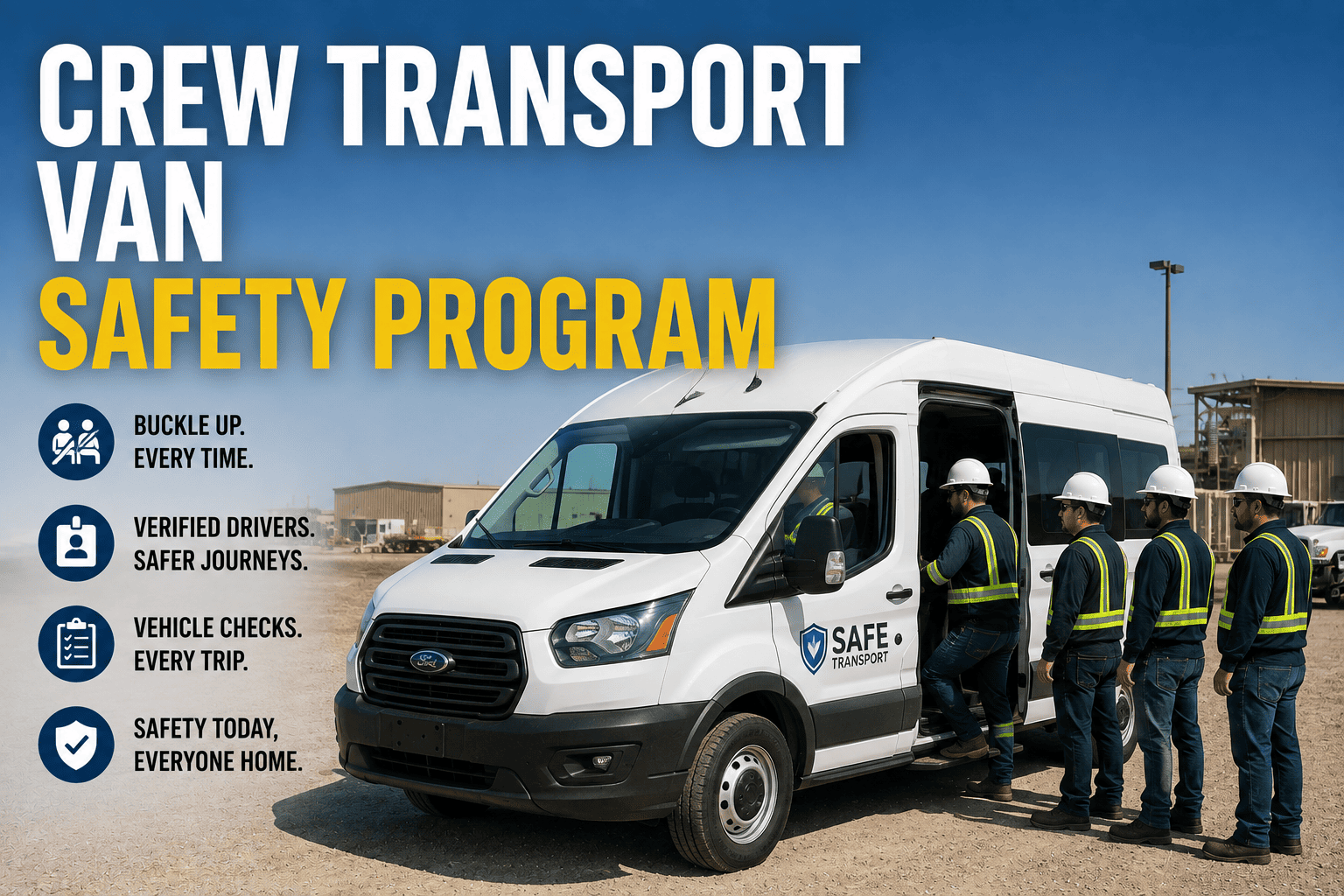
A crew van pulling out of a man camp before sunrise looks like the least dangerous vehicle on an oilfield location. There is no drilling mud, no wellhead pressure, no crane swinging over the deck. Yet motor vehicle crashes remain the leading cause of death for oil and gas workers, and van rollovers on unpaved lease roads are a recurring part of that toll. A crew van carrying eight to fifteen people at the start or end of a twelve-hour shift, on a narrow caliche road, driven by someone who has already worked a long week, is exactly the kind of ordinary-looking trip that turns catastrophic in seconds.
Oil and gas workers face a death rate roughly seven times the national average, and motor vehicle crashes are consistently the leading cause of those fatalities. Rollovers make up close to one-fifth of all fatal crashes nationally and disproportionately involve vans and other top-heavy vehicles. Fatigue, unpaved lease roads, and unrealistic scheduling are recurring contributors. A structured crew transport safety program built around driver hours, vehicle inspection, and occupant limits directly addresses each of these factors.
Why Crew Vans Carry Outsized Risk
Several conditions stack together on a typical crew transport run, and none of them exist in isolation. Understanding how they compound is the first step toward building a program that actually reduces risk instead of just checking a compliance box.
A high-clearance van carrying a full crew combines top-heavy geometry, rough terrain, and a tired driver in a single trip, which is why rollovers remain disproportionately common in this specific vehicle category.
Why This Differs From a Standard Commute
A crew van is not a passenger car commuting on a paved highway. It is frequently a high-clearance vehicle navigating caliche or dirt lease roads with soft shoulders and blind curves, often in the dark, carrying more passengers than a typical vehicle inspection ever anticipates. Every one of those factors independently raises rollover risk, and a crew van run combines all of them at once.
FleetRabbit gives safety managers a single dashboard for crew van hours-of-service, pre-trip inspection status, and passenger counts. Sign up for free and see your crew transport risk exposure today.
Core Elements of a Crew Transport Safety Program
A program that actually prevents incidents covers the driver, the vehicle, and the trip itself, rather than treating a crew van run as just another company vehicle trip.
Hours-of-Service Tracking
Drivers assigned to crew transport after a full shift are at elevated fatigue risk. Tracking cumulative hours prevents scheduling a fatigued worker behind the wheel of a full van.
Defensive Driving Certification
Specific training on unpaved surfaces, blind curves, and low-visibility dust conditions, not a generic highway driving course.
Pre-Trip Vehicle Inspection
Tires, suspension, and brakes checked before every crew run. A worn tire or soft shoulder is a leading contributor to loss of control on lease roads.
Occupant Count Limits
A hard cap on passengers per van, tied to seating and seatbelt capacity, enforced regardless of crew-change time pressure.
Seatbelt Enforcement
Unrestrained occupants face dramatically higher injury severity in a rollover. Enforcement has to happen before the van leaves the yard, not after an incident.
Lease Road Speed Governance
Speed limits specific to unpaved and narrow roads, monitored through telematics rather than left to driver judgment alone.
Setting the Right Operating Thresholds
Every crew transport program needs concrete numbers, not vague policy language. The table below outlines the thresholds that safety teams commonly build their programs around.
| Program Element | Recommended Threshold | Why It Matters |
|---|---|---|
| Consecutive Driving Hours | Flag any driver approaching hours-of-service limits before a crew run | Fatigued driving is repeatedly cited as a factor in oilfield vehicle fatalities |
| Vehicle Inspection Frequency | Documented pre-trip inspection before every crew transport run | Tire and suspension issues are common contributors to loss-of-control incidents on lease roads |
| Occupant Count | Never exceed seatbelt-equipped seating capacity, regardless of headcount pressure | Overloading increases both rollover likelihood and injury severity per incident |
| Lease Road Speed | Enforced limits below standard highway speed on unpaved or narrow roads | Excess speed on soft shoulders and blind curves is a recurring rollover trigger |
Why Documentation Matters as Much as the Rule Itself
A speed limit or inspection policy that exists only on paper offers no protection if nobody can confirm it was followed on a specific run. Digital, timestamped inspection and hours logs turn a policy into something a safety team can actually verify after the fact, and something a driver knows is being tracked before they get behind the wheel. Book a demo to see how FleetRabbit captures this data automatically from every crew van in your fleet.
What the Data Says About Rollover Risk
The figures below reflect the broader pattern behind vehicle-related fatalities in oil and gas operations, drawn from recent industry and government data.
FleetRabbit connects driver hours, vehicle inspections, and occupancy tracking into a single compliance record for every crew van in the field. Start your free trial today, no credit card required.
Frequently Asked Questions
Stop relying on driver judgment alone for hours, inspections, and occupancy. FleetRabbit gives your safety team visibility into every crew transport vehicle before a routine run turns into an incident.