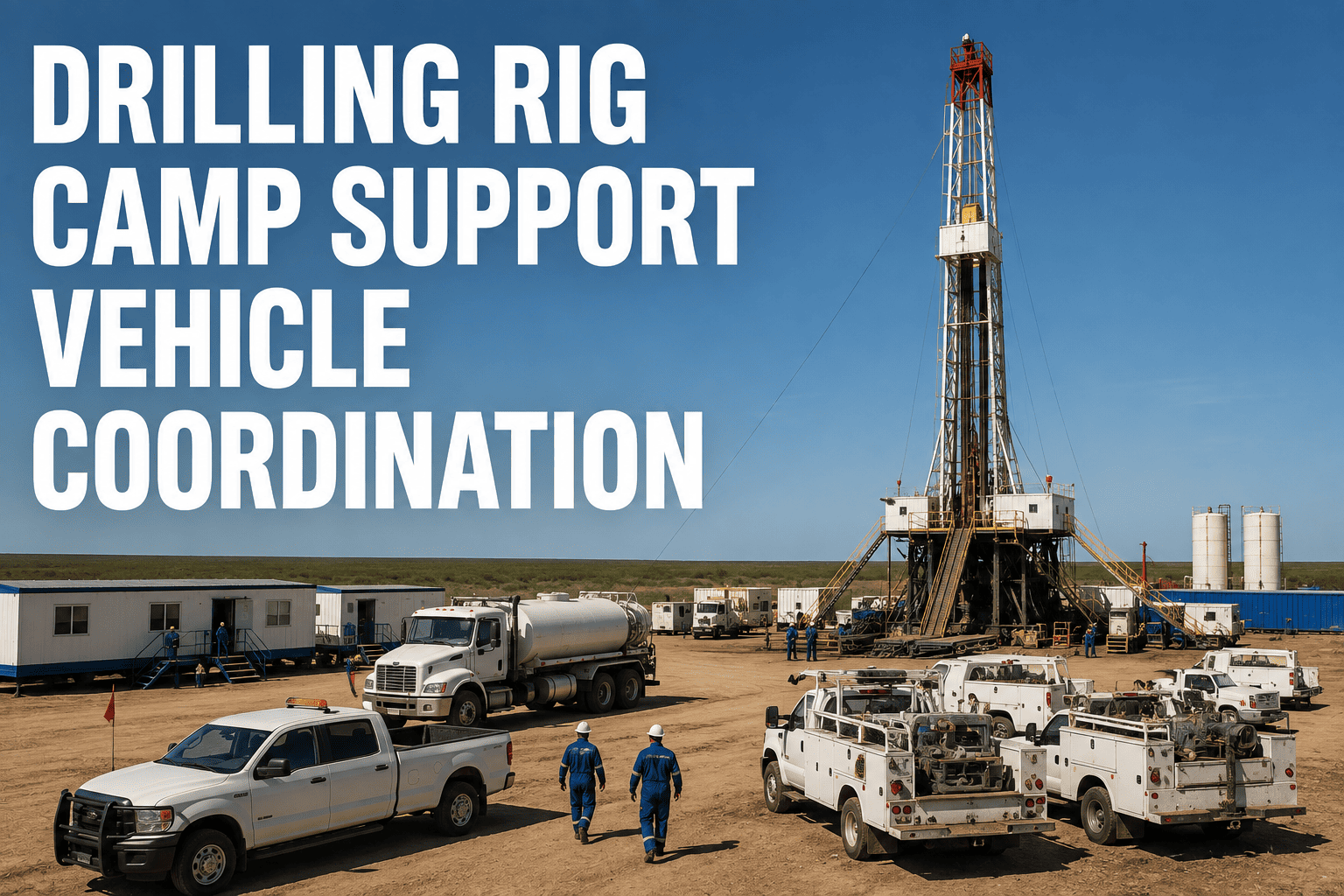
A drilling rig does not stop needing people, food, fuel, and supplies just because it sits sixty miles down a dirt road. Every camp attached to a remote rig depends on a steady stream of support vehicles: crew vans running rotation changes, box trucks hauling groceries and linens, water haulers keeping tanks full, and pickups moving parts and mail. When any one of those vehicles runs late, the effects show up fast, a crew change that slips past shift start, a kitchen that runs short before the next resupply, a camp manager fielding complaints instead of running the site. Coordinating that support fleet well is what keeps a remote drilling operation feeling less like a logistics gamble and more like a routine.
Drilling rig camps depend on a support fleet of crew vans, supply trucks, and water haulers that must run on tight rotation schedules across remote, often unpaved routes. Coordinating that fleet means knowing where every vehicle is, when it is due back, and whether the next resupply or crew change is on track, rather than relying on radio calls and guesswork. FleetRabbit gives camp and logistics managers that visibility in one place, so drilling operations stay supplied without last-minute scrambles.
Why Camp Logistics Break Down
Rig camp support looks simple from a distance, get people and supplies to a remote site on a schedule, but the conditions that make it hard are easy to underestimate until something goes wrong.
What A Support Fleet Has To Keep Moving
A rig camp is really running three separate logistics chains at once, and each one has its own schedule and its own consequences when it slips.
Crew Transport And Shift Rotation
Crew vans and buses carry workers to and from the rig on rotation days, timed tightly around shift start and driver hours-of-service limits. A late crew van does not just delay one trip, it can push shift handover late, cut into mandated rest periods, and ripple into the next rotation cycle.
Food, Water, And Camp Supplies
Kitchens, housing units, and water tanks at a remote camp only hold so much. Resupply trucks running groceries, linens, water, and consumables need predictable schedules so camp managers can plan meals and housekeeping around known delivery windows instead of guessing when the next truck will show up.
Parts, Fuel, And Emergency Runs
Beyond the routine schedule, camps regularly need unplanned runs for rig parts, fuel, or urgent supplies. Knowing which support vehicle is closest and available for one of these runs, rather than pulling a truck off its scheduled route, keeps both the emergency and the regular schedule on track.
FleetRabbit gives camp and logistics managers live visibility into crew vans, supply trucks, and water haulers, so rotation changes and resupply runs stay on schedule even on remote routes. Try it on your own fleet with a free trial or walk through your camp's setup with our team.
Manual Coordination Versus A Connected Support Fleet
The gap between running camp logistics off radio calls and a spreadsheet versus a connected system shows up directly in how often something catches a camp manager by surprise.
| Coordination Task | Manual Coordination | Connected Support Fleet |
|---|---|---|
| Crew Rotation Tracking | Radio check-ins and phone calls to confirm van location and timing | Live location and ETA visible for every crew vehicle on the route |
| Resupply Scheduling | Camp staff guess at delivery timing based on past routines | Scheduled routes with confirmed delivery windows for every run |
| Emergency Runs | Whichever vehicle is reachable gets pulled, disrupting its own route | Nearest available vehicle identified without derailing the schedule |
| Driver Hours And Safety | Tracked on paper logs, difficult to verify in real time | Hours and route data logged automatically for compliance and safety |
How FleetRabbit Supports Camp Coordination
FleetRabbit connects every vehicle supporting a drilling camp, crew vans, supply trucks, water haulers, and light-duty runners, into one system that logistics and camp managers can see at a glance.
Live Location And Schedule Tracking
Every support vehicle reports its location and route progress in real time, so managers know exactly when a crew van or supply truck is due back without needing a radio call to confirm it.
Rotation-Aware Scheduling
Crew transport can be planned directly around each camp's rotation calendar, so vehicle assignments line up with shift start times and driver rest requirements instead of being managed separately from the schedule.
Resupply Route Planning
Recurring supply runs for food, water, and camp materials can be set on repeating schedules, with alerts if a delivery is running behind, giving camp staff time to adjust rather than discovering a shortage after the fact.
Driver Hours And Safety Records
Because transport carries real safety stakes on remote oilfield routes, FleetRabbit logs driver hours and vehicle activity automatically, giving safety teams a clear, verifiable record instead of relying on paper logs. Camps that sign up for FleetRabbit get this visibility across their entire support fleet from the first day.
What Better Coordination Delivers
Camps that move from radio-based coordination to real vehicle visibility tend to see the impact directly in how smoothly rotations and resupply runs go, week after week.
Getting Your Support Fleet Connected
You do not need to connect every vehicle at once. Many logistics teams start with crew transport vehicles, since rotation timing carries the biggest impact, then add supply trucks and water haulers as they see the visibility in action. You can start a free trial with FleetRabbit to try it on your own fleet, or if you would rather talk through your camp's specific routes and rotation schedule first, you can book a short demo with our team.
A late crew van or a missed resupply run can throw off an entire rotation cycle at a remote drilling camp. FleetRabbit gives logistics and camp managers live visibility into every support vehicle, so crew changes, deliveries, and emergency runs all stay on track. Start your free trial today or book a short demo to see it on your fleet.