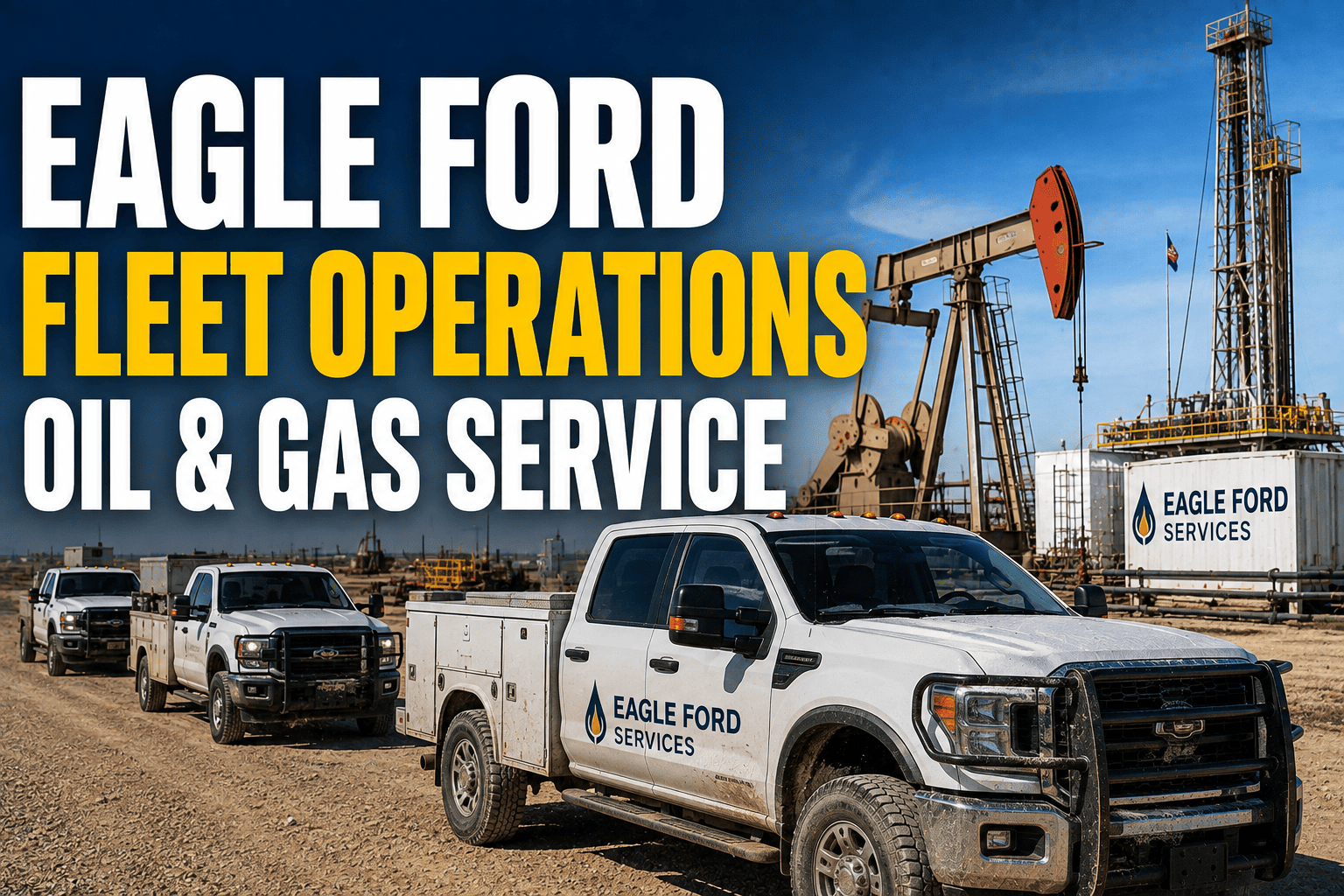
Few shale plays test a service fleet's flexibility the way the Eagle Ford does. The formation stretches roughly 400 miles across South Texas and produces everything from black oil to condensate to dry gas depending on which county a crew is working in that week. A fleet built to serve an oil-heavy pad in Karnes County needs a completely different mix of equipment than one supporting a gas-focused location further northwest, and most operators run both at the same time. Getting that balance wrong means trucks sitting idle in one region while another is short on capacity.
The Eagle Ford is a mature, mixed-phase basin producing oil, condensate, and dry gas across a formation nearly 400 miles long, and drilling activity has picked back up with permits rising roughly 15 percent from 2025 lows. Operators are also leaning harder into refracs and enhanced recovery on existing wells rather than pure new drilling, which changes what a service fleet needs to show up with. Fleets that track real-time asset utilization can shift trucks and equipment toward whichever hydrocarbon phase and county is generating demand that week, instead of guessing.
Why the Eagle Ford Demands a More Flexible Fleet
Most shale plays are dominated by a single hydrocarbon type, which lets a service fleet standardize around one kind of demand. The Eagle Ford doesn't offer that luxury. Its geology shifts from oil-rich zones near the coast to increasingly gas-heavy sections further northwest, and a fleet supporting multiple operators across that range has to be ready to pivot equipment allocation on short notice.
That variability is compounded by the basin's maturity. As Tier 1 acreage becomes harder to find, operators are increasingly turning to refracs and enhanced oil recovery on wells that were completed years ago, alongside new drilling in reactivated areas. A fleet manager planning routes and equipment purely around new-well activity misses a growing share of the actual work happening across the play.
The Cost of Guessing Wrong on Equipment Mix
Sending an oil-service configuration to a location that actually needs gas-handling equipment costs more than a wasted trip. It delays the job, forces a second dispatch, and leaves other locations waiting on trucks that are now out of position. Across a footprint as large as the Eagle Ford, one bad allocation decision can ripple through a full day of scheduling.
FleetRabbit gives Eagle Ford fleets live visibility into vehicle location, utilization, and status across the entire South Texas footprint, so dispatchers can match the right equipment to the right job without guesswork. Start a free trial and track your first three vehicles today.
Matching Fleet Assets to Eagle Ford Service Demand
Balancing oil and gas service work across the Eagle Ford starts with understanding how differently each phase behaves operationally. What looks like a single basin on a map is really several distinct service environments running side by side.
| Service Demand | Typical Zone | Fleet Requirement | Allocation Strategy |
|---|---|---|---|
| Oil-Heavy Wells | Southeastern counties closer to the coast | Crude hauling, water disposal support | Dedicate core trucks to high-frequency haul routes |
| Condensate and Volatile Oil | Central play, mixed-phase counties | Specialized tank trucks, pressure handling | Flex assets that can shift between oil and condensate loads |
| Dry Gas Zones | Northwestern edge of the formation | Gas gathering support, compression logistics | Regional crews positioned closer to gas-heavy acreage |
| Refrac and EOR Work | Mature acreage across the basin | Water transfer, chemical delivery, standby support | Schedule around existing-well workover calendars |
| New Drilling Reactivation | Areas with rising permit activity | Rig support, sand and water logistics | Track permit trends to pre-position equipment |
Building a Utilization Strategy That Actually Works
A fleet spread across 400 miles of South Texas can't be managed effectively from a whiteboard or a weekly spreadsheet update. The operators getting the most out of their equipment are the ones treating utilization as a live, continuously updated picture rather than a monthly review.
Real-Time Utilization Instead of Static Planning
Knowing which trucks are idle, which are en route, and which are tied up on a job lets dispatch reallocate assets the moment demand shifts from one county to another. That kind of responsiveness is what separates a fleet that keeps up with Eagle Ford's uneven activity from one that's always a step behind it.
What Live Data Changes on the Ground
A dispatcher watching utilization in real time can see a truck finishing an oil-haul job in Karnes County and redirect it toward a nearby condensate location instead of sending it back to a yard. Over a full week, those small redirections add up to meaningfully fewer idle hours across the fleet.
Coordinating Multi-Operator Work Across a Wide Territory
Service fleets in the Eagle Ford often support several operators at once, each with different well types and schedules. Digital dispatch tools that show live vehicle status make it far easier to sequence jobs efficiently instead of running trucks back and forth across the basin unnecessarily.
Fleets that book a demo with FleetRabbit typically start by mapping their busiest oil and gas service zones, then layering in live utilization tracking to see exactly where equipment sits idle during a normal week. That visibility usually reveals allocation fixes that pay for themselves within the first few weeks.
FleetRabbit's utilization tracking shows exactly which assets are idle, active, or in transit across your entire Eagle Ford footprint. Book your demo and see how it fits your current oil and gas service mix.
Frequently Asked Questions
The Eagle Ford's mixed oil and gas demand rewards fleets that can move fast and reposition smart. FleetRabbit gives South Texas fleets the live visibility needed to match the right equipment to the right job, basin-wide. Start your free trial today, no credit card required.