Selecting fleet management software for an oil and gas operation is a procurement decision that carries multi-year financial and operational consequences — because the wrong platform does not just fail to solve the problems it was purchased to address; it creates new ones. A telematics platform that cannot maintain GPS contact at remote wellsite locations beyond cellular coverage is worse than no tracking at all, because it creates an illusion of visibility that fleet managers rely on until a breakdown or compliance event reveals the gap. A HAZMAT documentation module that generates generic shipping papers without UN number and hazard class mapping for oilfield cargo classifications will fail the first FMCSA roadside inspection it encounters. A compliance tracking system that monitors mileage-based PM schedules for vehicles that accumulate 70% of their engine hours at idle on wellsite locations will systematically miss every maintenance interval on those assets. Asking the right questions before selecting a fleet management platform for oil and gas operations is not due diligence — it is operational insurance. This checklist provides 30 critical questions across six evaluation domains, structured to expose the specific capability gaps that matter in oilfield fleet management and that generic fleet software vendors reliably obscure in sales demonstrations. Each section includes FleetRabbit capability guidance showing how the platform addresses the specific requirement being evaluated. Book a demo to evaluate FleetRabbit against this checklist for your oilfield fleet operation.
Fleet Software Evaluation Checklist for Oil and Gas: 30 Questions to Ask Every Vendor
Before committing to a fleet management platform for your oilfield, pipeline, or midstream operation, ask these 30 questions. They expose the capability gaps that generic fleet software demonstrations reliably conceal — and that only surface after contract signature when field operations begin revealing the platform's actual limitations in oilfield conditions.
Domain 01 — Connectivity and Remote Coverage
The majority of generic fleet platforms are designed for urban or highway commercial vehicle operations — where cellular connectivity is continuous and GPS tracking never gaps. Oilfield fleet operations are defined by the opposite condition: remote basin locations, wellsite terrain that blocks cellular signal, and pipeline patrol corridors that traverse hundreds of kilometres without a cell tower. Ask every vendor these questions and require demonstration of satellite fallback capability under simulated connectivity loss — not a promise that it exists.
Domain 02 — HAZMAT and Dangerous Goods Documentation
HAZMAT documentation capability is the area where generic fleet platforms most consistently overrepresent their oilfield suitability during demonstrations. Every platform claims to support HAZMAT transport documentation. Very few have pre-configured UN number databases, cargo-specific routing restriction libraries, and ADR/DOT PHMSA compliant document generation templates that work without custom development. Oilfield HAZMAT operations cannot afford to discover these gaps during a roadside inspection or EPA audit.
Evaluate FleetRabbit Against Every Question on This Checklist
FleetRabbit answers yes with demonstration evidence to all 30 questions in this evaluation framework — including satellite connectivity, offline mobile inspections, oilfield-specific HAZMAT documentation, engine-hour PM scheduling, multi-jurisdiction compliance record generation, and 24/7 technical support with oilfield operations experience. Book a 30-minute demo and bring this checklist.
Domain 03 — Maintenance Scheduling and Predictive Intelligence
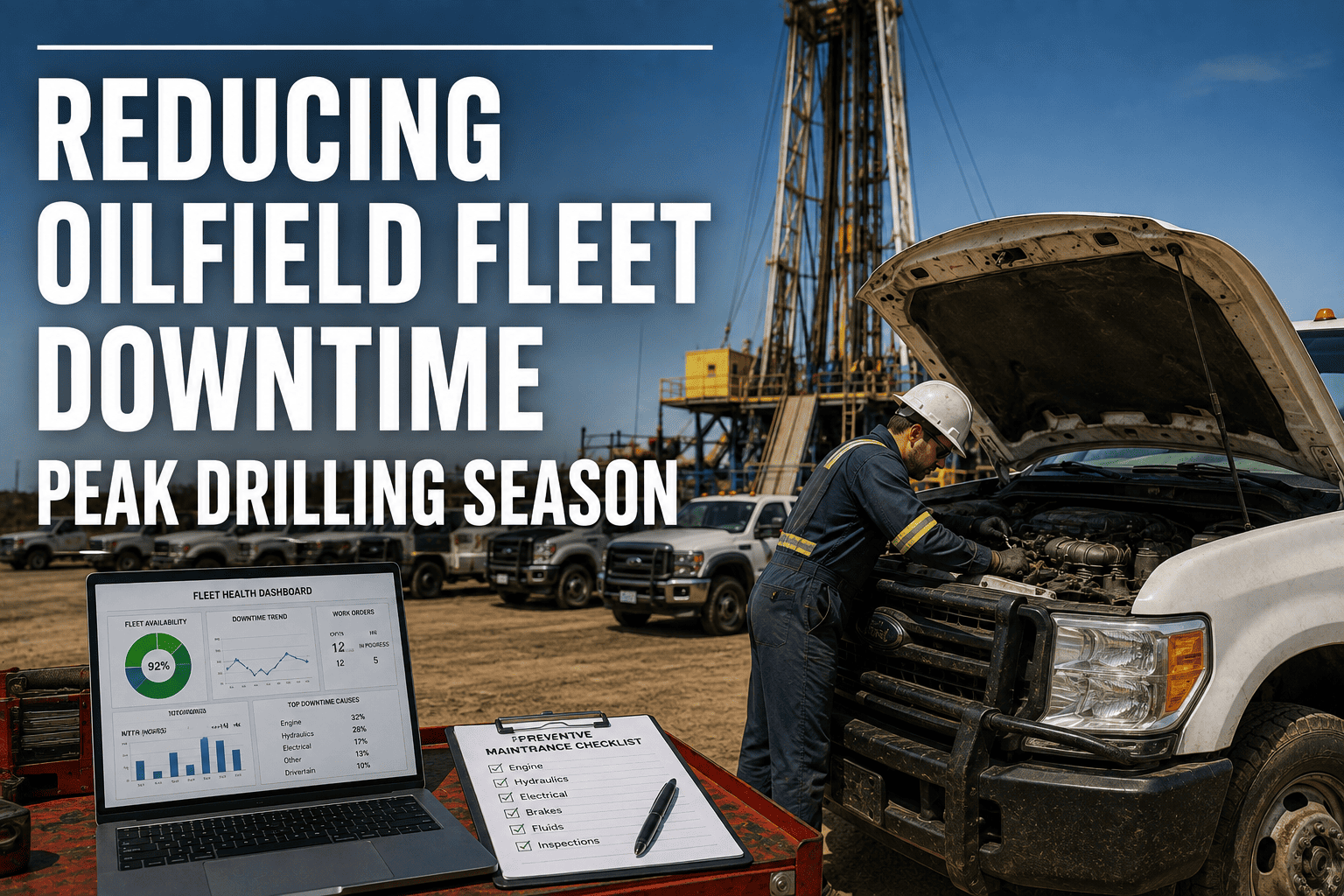
Maintenance scheduling is the domain where the mismatch between generic fleet platforms and oilfield operational requirements is most consequential. A frac truck accumulating engine hours at 4–5x the rate assumed by the manufacturer's mileage-based PM schedule will reach every service interval 300–400% faster than that schedule predicts. A platform that cannot configure engine-hour PM triggers will systematically miss every maintenance interval for high-duty-cycle oilfield assets — producing a maintenance record that looks complete and is functionally worthless.
Domain 04 — Regulatory Compliance and Audit Record Generation
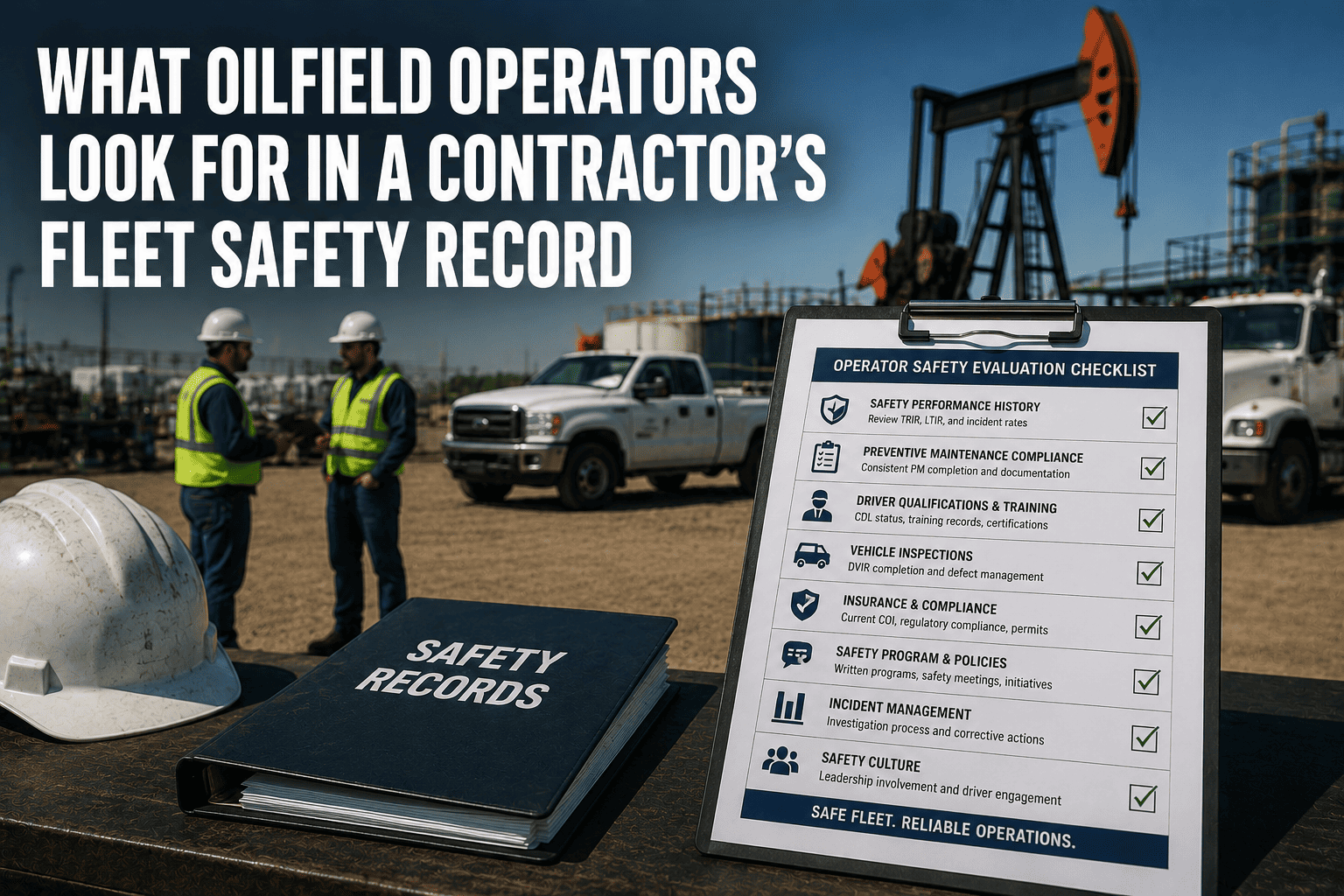
The compliance capability of a fleet management platform determines its value during the one scenario that matters most: a PHMSA, FMCSA, DVSA, or ADNOC audit request for records covering a specific period, specific assets, or specific events. A platform that stores compliance data but cannot generate regulator-formatted audit packs within the regulatory response window provides compliance theatre — the appearance of documentation without the substance that protects the organisation during enforcement proceedings.
Domain 05 — Integration, Pricing, and Deployment
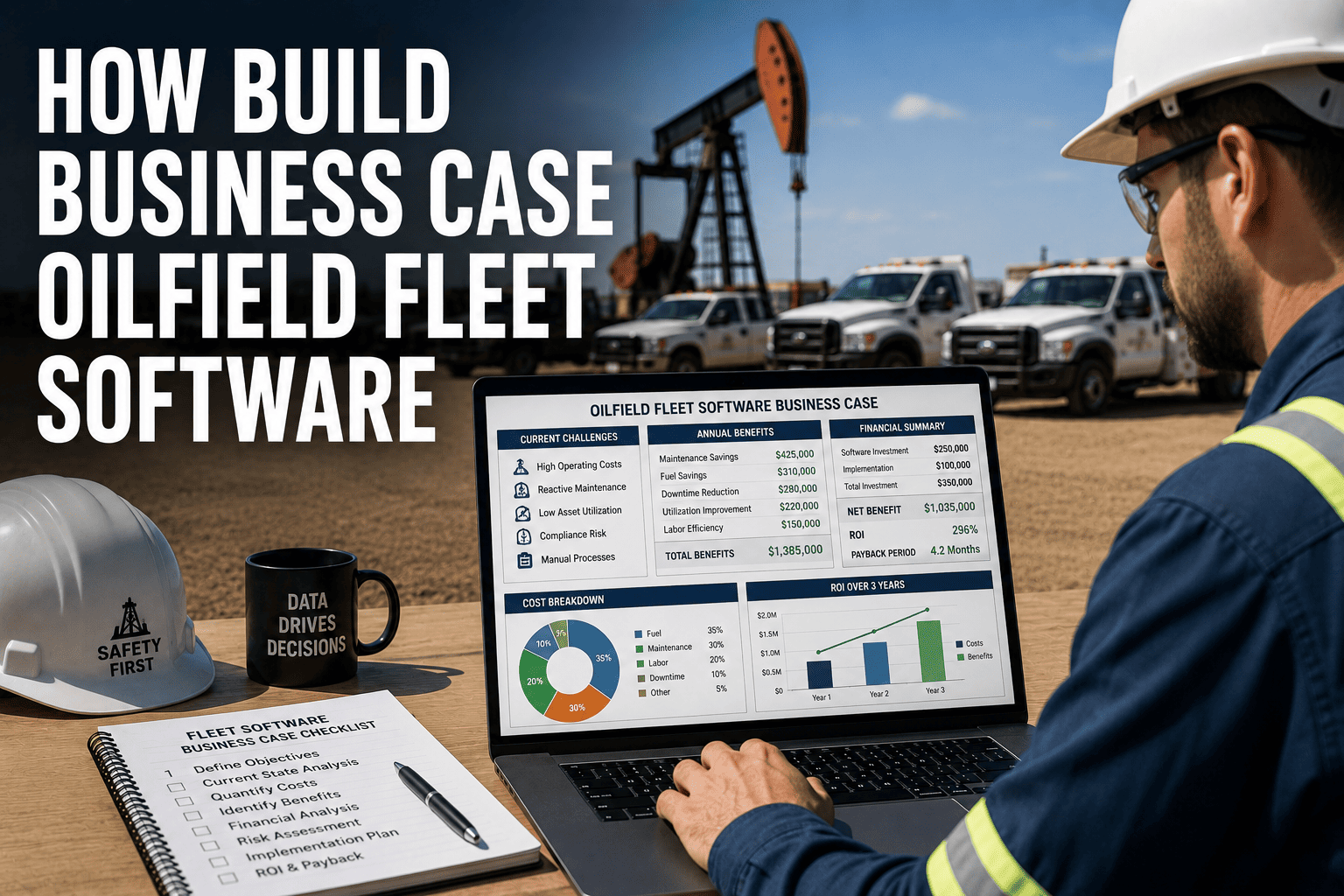
Integration capability and pricing transparency are the two areas of fleet software procurement where gap discovery is most likely to occur post-signature. A platform that integrates with your existing telematics hardware via API eliminates hardware replacement costs that can reach $2,000 per vehicle on a 300-vehicle fleet. A platform that prices core oilfield capabilities as separate modules produces a total cost of ownership significantly above the headline per-vehicle figure. Ask these questions before reviewing the contract.
Domain 06 — Support Quality and Oilfield Operational Experience
Technical support quality for an oilfield fleet management platform is evaluated at 02:00 when a frac truck 95 miles from the nearest depot has a GPS outage during a remote breakdown, or when a PHMSA auditor arrives on site requesting patrol records for the last 90 days with a 4-hour response window. Generic fleet software support teams familiar with urban logistics operations are not equipped to respond to these scenarios. Ask these questions before accepting a support SLA.
Multi-Region Oilfield Fleet Software Evaluation: Regulatory Frameworks to Verify
DVSA operator licence compliance, ADR dangerous goods, PUWER 1998, LOLER 1998, DSEAR 2002, RIDDOR 2013, GDPR data residency
FMCSA 49 CFR Part 396, DOT PHMSA, ELD mandate, HOS logging, OSHA PSM, provincial MTO inspection standards
ADNOC HSE Standards, UAE AD EHSMS, Saudi Aramco SHEM, Civil Defence permit conditions, UAE RTA fleet registration
MV Act 1988, CMVR 1989, DGMS inspection directives, OISD standards, ONGC contractor fleet requirements
Evaluate FleetRabbit Against All 30 Questions — In a 30-Minute Live Demo
FleetRabbit was purpose-built for oil and gas fleet operations across upstream, midstream, and downstream environments. Every question in this checklist was designed to expose the gaps that generic fleet platforms conceal in sales demonstrations. Bring this checklist to your FleetRabbit demo and ask every question. We answer all 30 with live demonstration evidence — not described capability.
Frequently Asked Questions
Oilfield fleet operations face specific requirements — satellite connectivity at remote sites, engine-hour PM scheduling, oilfield HAZMAT documentation, PHMSA pipeline patrol records — that generic fleet platforms do not address. These questions expose those specific gaps before contract signature rather than after deployment when field operations reveal the platform's actual limitations.
Ask the vendor to complete a mobile inspection on their demonstration device while in flight mode — with all network connectivity disabled. Verify that the inspection form functions normally, photos can be attached, GPS coordinates are captured from the device sensor, and data syncs automatically when connectivity is restored with the correct collection timestamp preserved.
Module-based pricing — where core oilfield capabilities like satellite connectivity, HAZMAT documentation, and compliance tracking are priced separately from the base per-vehicle fee. A platform at $2/vehicle/month can reach $8–$12/vehicle/month when oilfield-required modules are added. Require a total-cost-of-ownership breakdown inclusive of all modules required before evaluating headline pricing.
FleetRabbit configures geofenced patrol routes for every regulated pipeline segment with GPS-tracked route verification, mandatory mobile inspection form completion with photo evidence at designated observation points, and automatic PHMSA audit documentation generation per completed patrol — exportable within 2 hours for any segment and date range.
No. FleetRabbit integrates via open API with existing telematics hardware from all major oilfield vendors — ingesting GPS, engine data, and fault code streams without requiring proprietary device installation. This eliminates hardware replacement costs that can reach $400,000–$600,000 on a 300-vehicle fleet using competing platforms.
5–7 working days from contract signature to live fleet management — including asset hierarchy configuration, telematics API integration, certification record import, inspection checklist setup, and driver onboarding. Multi-site deployments of 200+ vehicles typically complete in 3–4 weeks with dedicated implementation support included in the standard deployment package.
FleetRabbit Answers Yes — With Evidence — to All 30 Questions on This Checklist
Every capability tested by this evaluation checklist is deployed as standard in FleetRabbit for oil and gas fleet operations — satellite connectivity, offline mobile inspections, oilfield HAZMAT documentation, engine-hour PM scheduling, multi-jurisdiction compliance record generation, and 24/7 oilfield-experienced support. Start a free trial and test FleetRabbit against every question before making any commitment.
Start Free Trial — No Credit Card