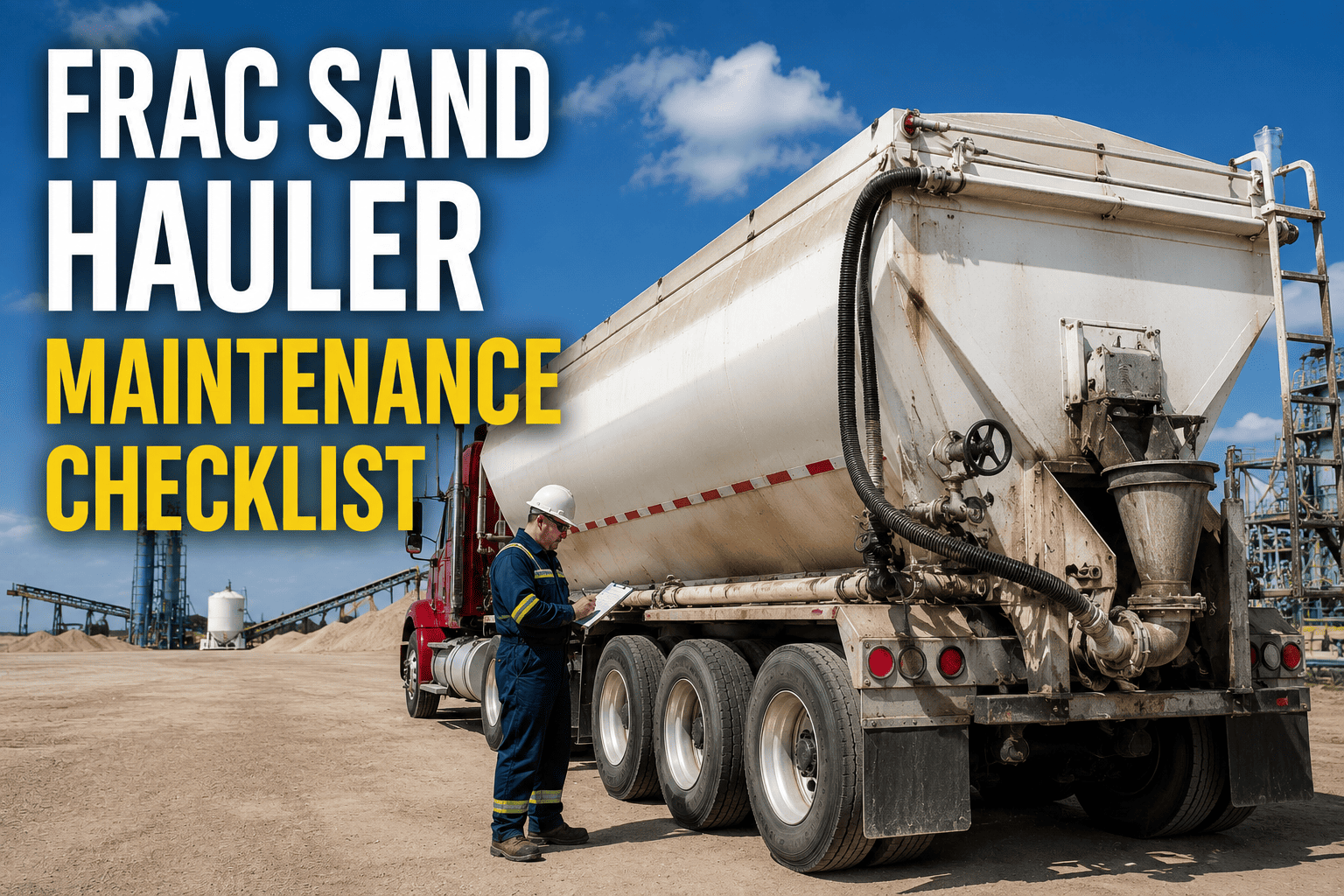
A frac sand hauler doesn't get an easy life. Between loading terminals and the wellsite, these trucks run loaded to near-maximum weight over lease roads that were never built for daily heavy traffic, then cycle through a pneumatic unload that pushes sand through blower systems at high pressure, dozens of times a week. Add in the sheer abrasiveness of proppant itself grinding against steel surfaces on every load, and it's easy to see why frac sand haulers wear out components that a standard dry van or reefer trailer might run for years without touching. A maintenance program built for general trucking simply doesn't hold up here. This checklist covers the three stress points that define frac sand hauler wear, abrasive surfaces, pneumatic systems, and brakes, plus the maintenance intervals that actually extend a high-mileage hauler's working life. Sign up for FleetRabbit to start tracking your frac sand fleet's wear patterns, or book a demo to see preventive maintenance built for proppant transport.
Frac sand haulers face three concentrated stress points that generic truck maintenance schedules miss: abrasive wear on hopper steel and liners from constant proppant contact, pneumatic blower and hose system strain from frequent high-pressure unloads, and accelerated brake wear from running near-maximum loaded weight on unpaved lease roads. A single blower failure can cost 5,000 to 20,000 dollars and sideline a hauler for one to two weeks. Fleets that track abrasive wear points, pneumatic system hours, and brake condition separately from standard mileage-based service intervals catch these failures before they become multi-week downtime events.
Three Stress Points That Define Frac Sand Hauler Wear
Most trucking maintenance programs are built around mileage and calendar intervals designed for general freight. Frac sand haulers break that model because their wear isn't driven by miles alone, it's driven by load cycles, unload pressure, and constant contact with an abrasive material. Understanding these three areas separately is the first step toward a maintenance program that actually matches how these trucks are used.
Why Load Cycles Matter More Than Mileage Here
A frac sand hauler might log fewer highway miles in a week than a long-haul dry van, but complete more load and unload cycles in that same period. Each cycle means a full pneumatic discharge, a return trip over rough lease roads, and repeated exposure of hopper surfaces to abrasive sand. Tracking cycles rather than mileage alone gives a much more accurate picture of where a specific truck sits in its wear curve.
FleetRabbit tracks load cycles, pneumatic system hours, and brake condition separately from standard mileage service, so a hauler approaching failure gets flagged before it strands a load at the wellsite. Sign up free and connect your first three haulers today.
The Maintenance Checklist for High-Mileage Frac Sand Haulers
Beyond a general DOT inspection, frac sand haulers need targeted checks addressing the specific stress points above. The table below breaks down what to inspect, how often, and what happens when the item gets missed.
| Component | Recommended Check Interval | Risk if Missed |
|---|---|---|
| Hopper Steel and Liner | Visual inspection every load cycle, thickness check monthly | Thin spots progress to breaches, leaking sand and risking structural failure under load |
| Blower and Pneumatic Motor | Operating hours logged per unload, service every 200 to 300 hours | Blower failure costing 5,000 to 20,000 dollars and 1 to 2 weeks of downtime |
| Discharge Hoses and Fittings | Inspect before every unload for cracking, wear, or loose couplings | Hose failure during high-pressure discharge, sand spillage at the wellsite |
| Brake Pads, Drums, and Air System | Inspect every trip on lease roads, full service on shortened intervals versus highway-only trucks | Accelerated brake failure risk given consistently heavy loaded weight over rough terrain |
| Suspension and Chassis | Inspect monthly or after any unusually rough route | Cracked welds or bent components from repeated impact loading on unpaved roads |
Why Blower Failures Deserve Their Own Tracking Category
Pneumatic blowers are one of the most expensive single-component failures a frac sand hauler faces, with repair or replacement commonly running 5,000 to 20,000 dollars and sidelining the truck for one to two weeks while parts are sourced. Because blowers wear based on operating hours and pressure cycles rather than truck mileage, they need their own logging separate from the odometer, ideally tracked per unload event so a developing issue shows up as a trend rather than a surprise.
Reading the Early Warning Signs
A blower that's starting to fail often shows subtle signs before it stops completely: longer unload times, unusual noise or vibration, or inconsistent pressure readings during discharge. Logging unload duration over time turns these subtle signs into a visible trend rather than something a driver notices only after the fact.
Brake Stress From Lease Road Operations
Frac sand haulers spend a disproportionate share of their driving time on unpaved, rutted lease roads while carrying loads near the trailer's rated capacity. That combination, heavy weight plus rough, uneven surfaces, accelerates brake pad and drum wear well beyond what the same truck would experience running highway routes at similar weight. Air system components also see more strain from constant braking over uneven terrain, making brake system checks one of the highest-value inspection points on a frac sand hauler's schedule.
Adjusting Service Intervals for Lease Road Duty
Fleets that keep highway-standard brake service intervals for trucks running mostly lease roads are, in effect, under-maintaining those trucks relative to their actual wear rate. Shortening brake inspection and service intervals for lease-road-heavy routes, and tracking route type per truck, helps match maintenance frequency to real-world wear rather than a generic schedule.
FleetRabbit tracks route type and load weight per truck, helping fleets adjust brake and suspension service intervals to match actual lease road wear instead of a one-size-fits-all schedule. Book a 30-minute demo to see it applied to your routes.
Extending Working Life Across a High-Mileage Fleet
A single well-maintained hauler is one thing, a fleet of them running multiple basins is another. Fleet managers overseeing frac sand haulers across the Permian, Eagle Ford, or other high-activity basins need visibility into which trucks are approaching wear thresholds on hopper steel, blowers, or brakes without waiting for a driver to report a problem after the fact. That visibility is what separates a fleet that plans repairs during scheduled downtime from one that scrambles every time a truck fails at the wellsite.
What FleetRabbit Adds for Proppant Transport Fleets
FleetRabbit logs load cycles, pneumatic operating hours, and route type per truck, translating raw usage data into wear indicators that are actually relevant to how frac sand haulers work. Instead of a generic mileage-based service reminder, fleet managers see which trucks are approaching a blower service threshold, which hoppers are due for a thickness check, and which trucks running heavy lease-road routes need brake service sooner than the fleet average. That turns unplanned wellsite breakdowns into scheduled shop visits.
Keeping High-Mileage Haulers Running Basin After Basin
Frac sand haulers earn their keep through relentless load cycles, and that same intensity is exactly what wears them down faster than almost any other truck in an oilfield fleet. A maintenance program built around abrasive wear points, pneumatic system hours, and lease-road brake stress catches problems while they're still a scheduled repair, not a stranded truck at the wellsite costing a week of downtime.
If you're ready to build that kind of program for your fleet, sign up for FleetRabbit and start tracking your haulers today, or book a demo to walk through your specific basin and route conditions with our team.
FleetRabbit tracks load cycles, pneumatic system hours, and lease-road brake stress across your frac sand fleet, turning wellsite breakdowns into scheduled shop visits before they cost you a week of downtime.