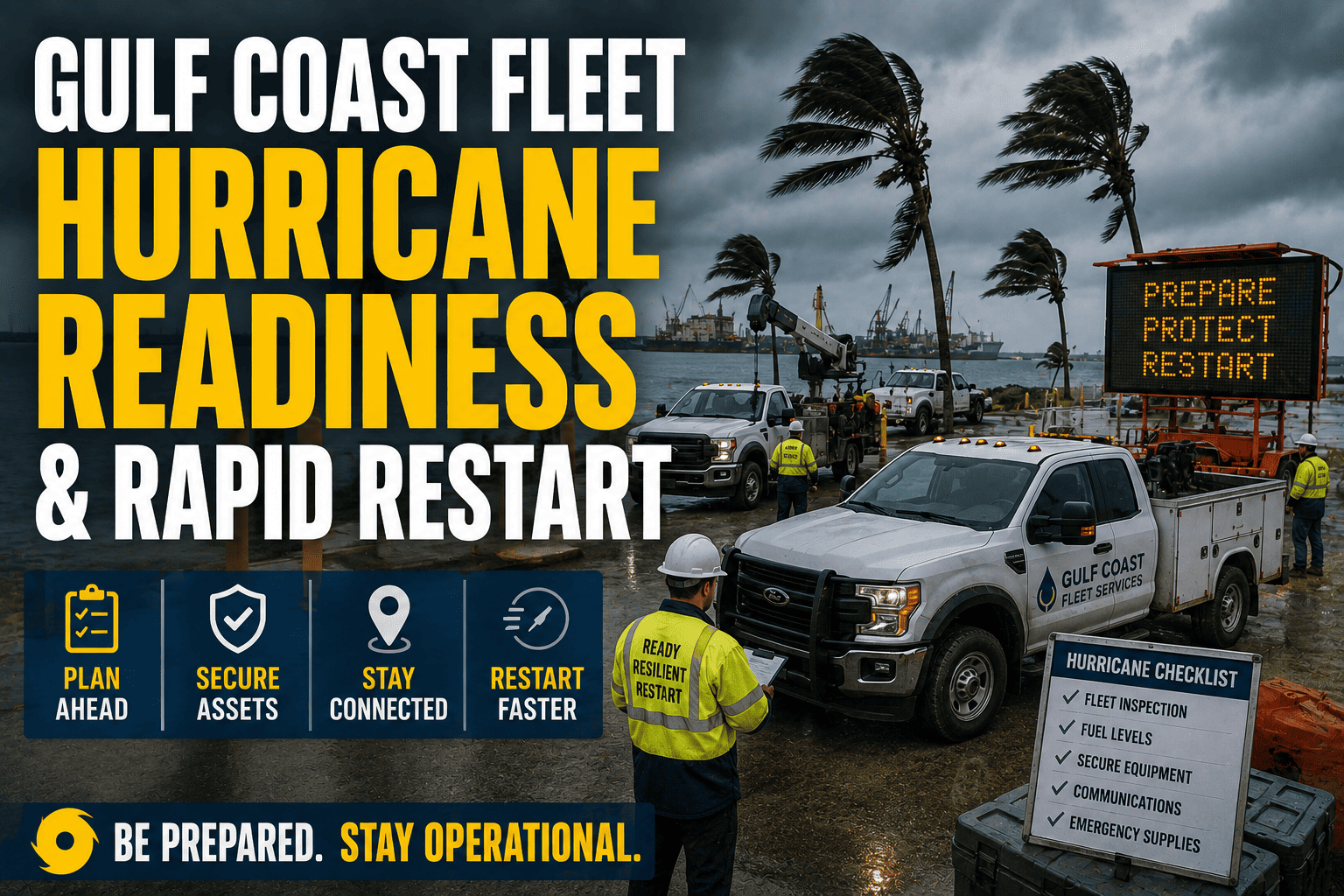
Operating a commercial or oilfield fleet along the Gulf Coast means living with the annual reality of hurricane season. From June through November, logistics directors and fleet managers face the daunting task of protecting millions of dollars in mobile assets while ensuring the safety of their drivers. When a storm enters the Gulf, the window to act closes rapidly. Without a structured hurricane readiness and rapid restart plan, operators face devastating equipment losses, prolonged downtime, and severe contractual penalties. FleetRabbit provides the visibility and control necessary to stage assets securely and resume operations safely after the storm passes.
A single hurricane event can halt Gulf Coast fleet operations for up to three weeks, costing operators over fifty thousand dollars per day in lost revenue. Implementing a structured staging, evacuation, and rapid restart protocol reduces post-storm downtime by forty percent. You can sign up for FleetRabbit to safeguard your assets and streamline your weather emergency response.
Pre-Storm Evacuation and Staging Strategies
The key to surviving a Gulf Coast hurricane is executing the evacuation plan before regional panic sets in. Traffic congestion and fuel shortages compound rapidly as a storm approaches. Fleet managers must identify staging areas on high ground, ideally fifty to one hundred miles inland, and route vehicles there systematically. Relying on driver memory or standard highway routes often leads to trucks being stranded in low-lying areas.
Building Your Evacuation Route Map
Effective staging requires predetermined routes that avoid known flood zones and low-clearance bridges. Fleet managers must account for vehicle height, weight, and cargo type when selecting evacuation paths. Heavy haulers and tankers cannot take the same routes as standard delivery vans. To build custom evacuation routes for your specific assets, you can book a demo with our logistics team.
Geofencing Safe Zones
FleetRabbit allows managers to draw digital boundaries around designated safe zones. As drivers evacuate, the system logs their arrival automatically. This eliminates the need for constant check-in calls, which often fail due to downed cellular networks. If a vehicle fails to arrive at the geofence within the expected timeframe, dispatchers are alerted immediately to initiate emergency contact protocols.
| Storm Phase | Fleet Action | Manager Responsibility |
|---|---|---|
| Tropical Storm Watch | Review evacuation routes and confirm fuel levels across all vehicles | Identify high-ground staging areas and notify drivers of the potential activation |
| Hurricane Warning | Execute evacuation to designated inland safe zones | Monitor live GPS tracking to ensure all assets clear the flood zone before landfall |
| Storm Impact | Shelter in place and maintain communication silence | Track storm path and assess regional infrastructure damage remotely |
| Post-Storm Restart | Conduct digital pre-trip inspections and clear debris | Verify safe routes back to facilities and dispatch recovery teams |
Do not leave your fleet vulnerable to storm surges and high winds. FleetRabbit provides the geofencing, live tracking, and rapid restart tools necessary to survive hurricane season. You can sign up now or book a demo to prepare your operation today.
Asset Protection During the Storm
Once vehicles are staged in safe zones, the focus shifts to physical asset protection. High-profile vehicles are extremely susceptible to wind damage. Trailers should be parked facing the direction of the prevailing winds to minimize surface area exposure. For oilfield fleets, securing frac tanks, generators, and specialized pumping equipment requires moving them to designated laydown yards far inland.
FleetRabbit maintains continuous tracking even during power outages. Our hardware operates on internal backup batteries, transmitting location pings as long as cellular service remains available. When cellular infrastructure goes down, the devices cache location data and transmit it the moment a signal is reestablished. This ensures you always know the final resting place of your equipment.
The Rapid Restart Protocol
The aftermath of a hurricane is chaotic. Roads are flooded, debris blocks highways, and power lines are down. Resuming operations requires a disciplined rapid restart protocol. The first step is verifying that the routes back to your operational bases are passable. FleetRabbit integrates live traffic and weather overlays, allowing dispatchers to identify safe return paths.
Post-Storm Vehicle Inspections
Every vehicle must undergo a rigorous post-storm inspection before returning to service. Saltwater flooding destroys electrical systems and accelerates rust. Wind-blown debris can puncture fuel tanks or damage brake lines. FleetRabbit digitizes this entire process. Drivers complete electronic Driver Vehicle Inspection Reports (DVIRs) on their mobile devices, documenting any damage with photos. This information flows instantly to maintenance teams, who can prioritize repairs and order parts immediately. To streamline your post-storm inspections, sign up for FleetRabbit.
Prioritizing Recovery Dispatches
Not all routes open at the same time. Fleet managers must prioritize dispatches based on road conditions and customer urgency. By utilizing FleetRabbit's live mapping, you can direct your trucks to the most critical job sites first, maximizing revenue recovery in the crucial days following a storm. If you want to see how our dispatch tools handle emergency scenarios, book a demo today.
Hurricane season leaves no room for error. FleetRabbit equips your Gulf Coast operation with the staging, tracking, and rapid restart tools needed to protect assets and resume production faster. Sign up today or book a demo to fortify your hurricane readiness plan.