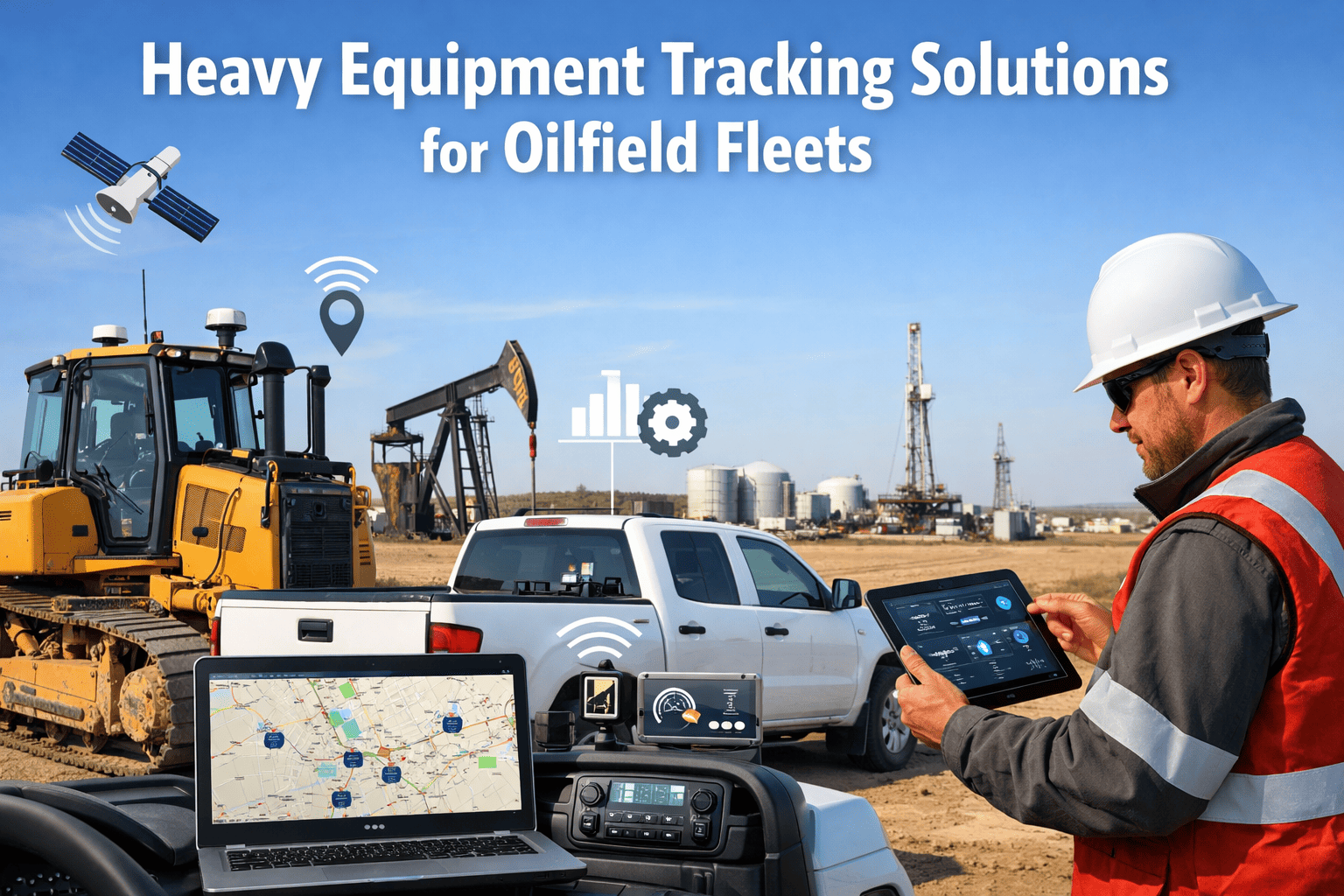
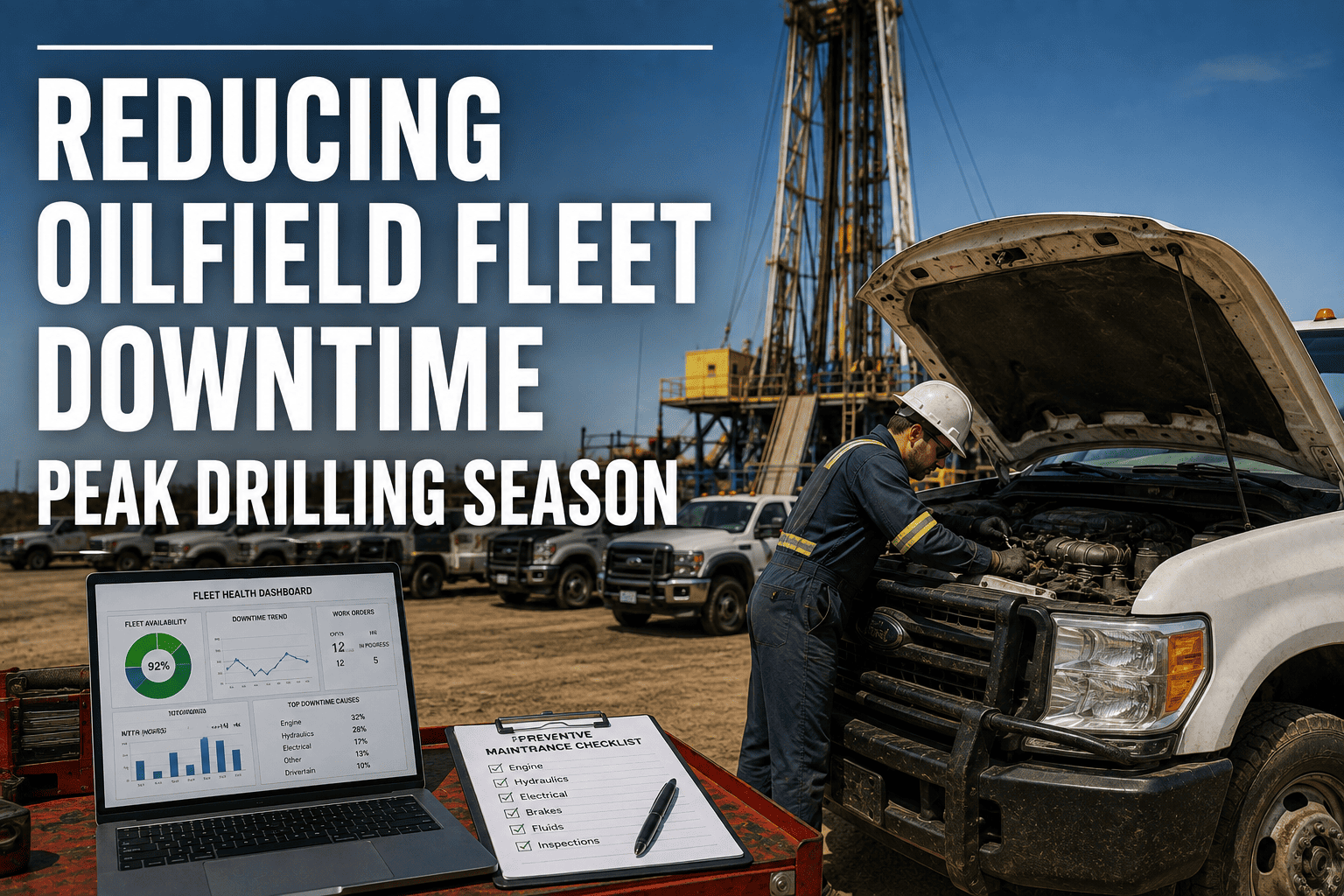
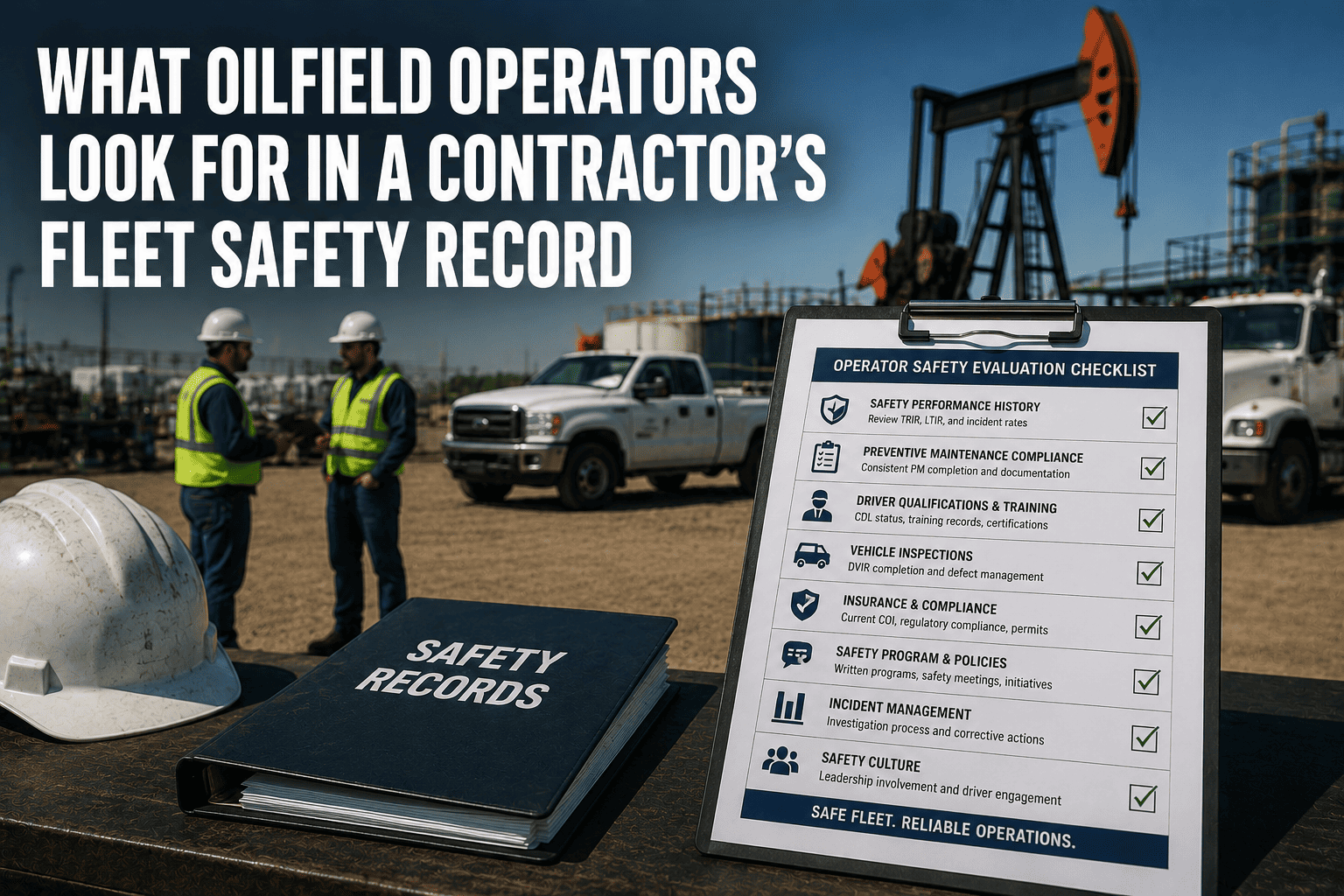
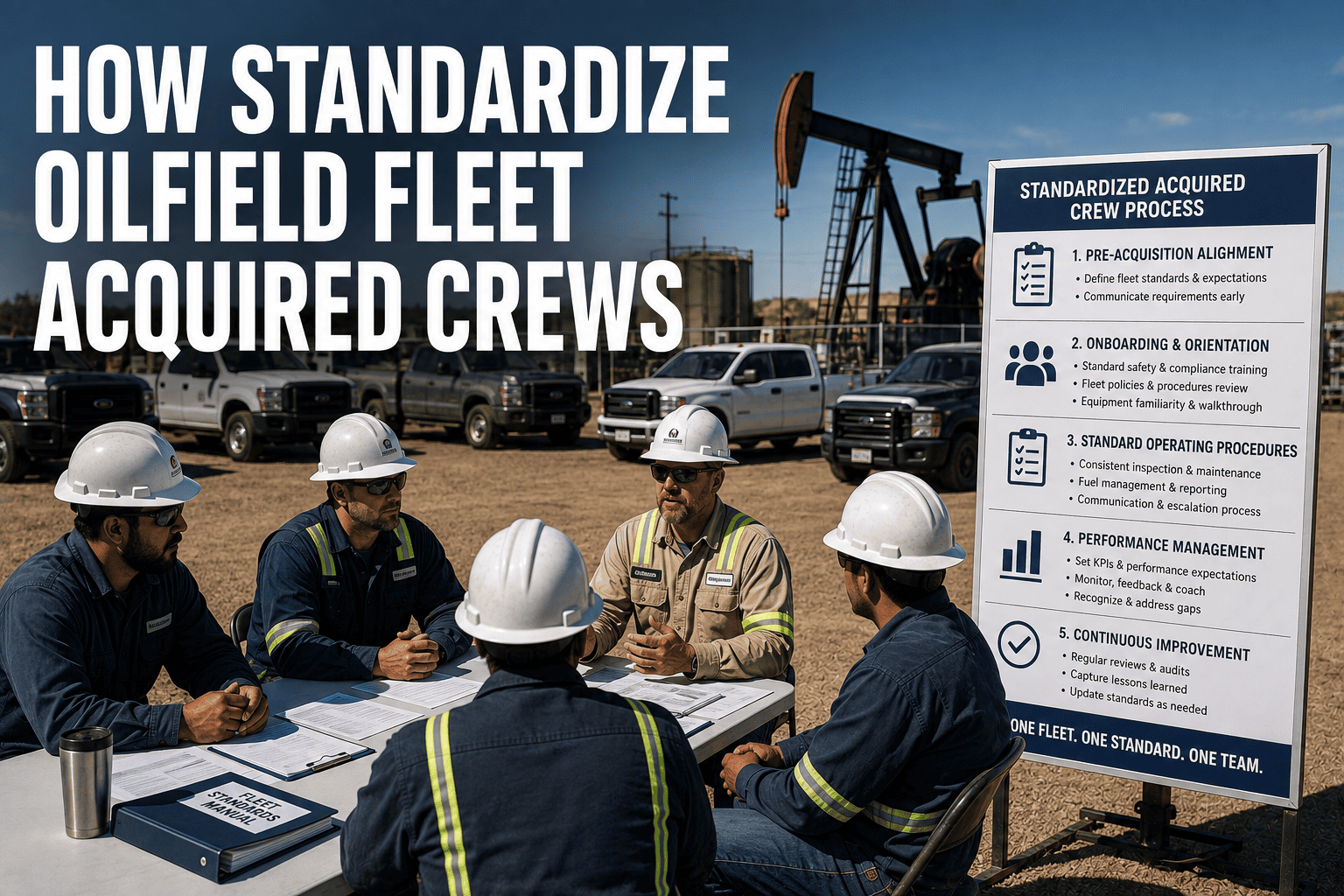
Heavy equipment in oilfield operations represents $2M–$8M in capital investment per unit — yet most fleet managers discover equipment theft, unauthorized use, or maintenance failures only after drilling delays have cost $150,000–$400,000 in downtime. Basic GPS tracking triggers location alerts when equipment moves outside geofenced zones, but by the time the alert fires, the drilling rig has already missed its 6-hour setup window and the service contract penalty is accrued. FleetRabbit's AI-powered heavy equipment tracking monitors location, utilization, fuel consumption, engine diagnostics, maintenance schedules, and operator behavior across 47 data points — detecting unauthorized movement, predictive maintenance needs, and efficiency bottlenecks 3–5 days before equipment failure or contract violations occur. The result: intervention during the early-warning window when a simple operator redirect or scheduled service prevents downtime, instead of emergency response after the rig is offline and revenue is lost. Book a demo to see heavy equipment tracking applied to your oilfield fleet.
Quick Answer
FleetRabbit's machine learning platform continuously analyzes GPS location data, engine hour accumulation, fuel consumption patterns, geofence compliance, maintenance interval tracking, operator assignment verification, and equipment idle time — identifying unauthorized use, impending mechanical failures, and utilization inefficiencies 3–5 days before traditional GPS alerts trigger. Advanced tracking with predictive maintenance prevents 87% of unplanned equipment downtime that would otherwise progress to drilling delays requiring 2–4 weeks for replacement equipment mobilization.
How AI Tracks Heavy Equipment Beyond GPS Pings
The pipeline below shows the six-stage equipment tracking process FleetRabbit applies continuously to every drilling rig, support truck, and heavy machinery unit — from multivariate sensor monitoring to validated maintenance alert with predicted downtime impact.
1
Continuous Equipment Monitoring — 47 Data Points
Real-time ingestion of GPS coordinates, engine hours, fuel level and consumption rate, ignition status, geofence boundary compliance, maintenance interval countdown, operator ID verification, idle time accumulation, diagnostic trouble codes (DTCs), hydraulic pressure, coolant temperature, and battery voltage — sampled every 30 seconds.
Drilling Rig #247: GPS 31.7764°N, 102.0835°W (Permian Basin), Engine Hours 8,247, Fuel 67%, Operator: J. Martinez (verified), Idle Time: 14 min, Next Service: 153 hours, DTCs: None
2
Utilization & Compliance Scoring
Machine learning model calculates equipment health score (0–100) from correlated analysis of all 47 variables — identifying subtle operational shifts that indicate developing issues even when no single parameter has crossed threshold. Detects unauthorized use, excessive idle, maintenance overdue, and efficiency degradation patterns.
Health Score: 827-Day Trend: StableRisk Level: Low
3
Early-Warning Pattern Recognition
AI detects the specific multivariate signatures of 9 equipment risk types: unauthorized movement, theft attempt, geofence violation, maintenance overdue, fuel theft, excessive idle, operator mismatch, diagnostic code escalation, and utilization decline. Flags issues before operational impact begins.
Alert Type: Maintenance OverdueConfidence: 91%Service Due: 2.3 days
4
Root Cause Identification
System analyzes recent operational changes — route deviations, operator shift patterns, fuel consumption spikes, maintenance schedule gaps, engine hour acceleration — to identify the operational trigger driving equipment risk or inefficiency.
Root Cause: Maintenance interval exceeded by 48 hoursLast Service: 23 days ago
5
Action Recommendation & Impact Forecast
AI recommends corrective action prioritized by urgency and revenue impact — schedule maintenance service, investigate fuel discrepancy, verify operator authorization, redirect equipment to higher-value site, or initiate theft recovery protocol — with predicted downtime if action is delayed.
Recommended: Schedule 500-hour service within 48 hoursDelay Risk: 18% failure probability
6
Alert Delivery & Resolution Tracking
Early-warning alert pushed to fleet manager mobile app and desktop dashboard — with risk type, root cause, recommended action, and predicted outcome. Maintenance actions logged and equipment performance tracked in real-time against forecast to validate intervention effectiveness.
Alert EQ-2491: Drilling Rig #247 maintenance overdue detected 2.3 days before recommended interval. Root cause: Service schedule gap. Recommendation: Schedule 500-hour service within 48 hours. Predicted: 18% mechanical failure risk if delayed beyond 72 hours.
How FleetRabbit Solves Critical Oilfield Equipment Challenges
Traditional GPS tracking tells you where equipment is — FleetRabbit tells you what's happening with it, why it matters, and what to do next. Fleet managers and operations executives gain visibility into equipment utilization, maintenance compliance, fuel efficiency, and theft risk that basic tracking systems cannot provide.
AI Heavy Equipment Tracking
Detect Equipment Issues 3–5 Days Before Downtime Begins
See how FleetRabbit's multivariate AI identifies the subtle operational shifts that precede equipment failures, theft events, and contract violations — giving you the early-warning window to intervene before revenue loss begins.
87%
Downtime Events Prevented
3.8d
Avg Early Warning Lead Time
Equipment Tracking Scenarios FleetRabbit Prevents
Every card below represents a distinct operational failure mode that destroys oilfield productivity and requires weeks of recovery time. Traditional GPS tracking detects these issues only after they've already occurred — FleetRabbit detects the precursor patterns 3–5 days earlier. Talk to an expert about your fleet's equipment challenges.
Unauthorized Equipment Movement & Theft
Operational risk: Heavy equipment moves outside authorized zones during non-operational hours — GPS geofence alert triggers, but equipment is already 40 miles from the drilling site and recovery requires law enforcement coordination, transportation logistics, and 3–5 days mobilization delay. Threshold alerts react after theft is complete.
FleetRabbit early detection: Identifies pre-theft behavior patterns — ignition activation outside scheduled operator shifts, gradual boundary testing (equipment moved 200m closer to perimeter fence over 3 days), fuel level inconsistencies, unauthorized operator ID attempts. Flags theft risk 2–4 days before actual movement event when security protocols can prevent incident.
Typical cost avoidance: $180,000–$320,000 per prevented theft (equipment recovery, transportation, drilling delay, contract penalties).
Predictive Maintenance Failures
Operational risk: Drilling rig hydraulic pump fails during critical well completion phase — equipment offline for 4–6 days awaiting replacement parts, drilling crew idle at $45,000/day standby rate, service contract penalties accrue, well completion delayed. Standard maintenance schedules miss early failure indicators.
FleetRabbit early detection: Monitors engine hour accumulation vs maintenance intervals, diagnostic trouble code frequency, hydraulic pressure fluctuations, coolant temperature trends, and correlates with historical failure patterns. Detects developing mechanical stress 5–7 days before component failure — when scheduled maintenance prevents catastrophic breakdown.
Intervention: Proactive service scheduling during planned downtime windows, parts pre-ordered based on failure prediction, no unplanned drilling delays. Equipment availability maintained above 94% vs industry average 78%.
Fuel Theft & Consumption Anomalies
Operational risk: Diesel fuel siphoned from drilling support trucks during overnight hours — monthly fuel variance of 8–12% dismissed as "measurement error" until annual audit reveals $140,000 in unaccounted fuel costs across fleet. Basic GPS cannot detect fuel-only theft events.
FleetRabbit early detection: Identifies fuel level drops without corresponding engine operation, consumption rate deviations from baseline efficiency (12.5 mpg vehicle suddenly showing 9.8 mpg), refueling events at unauthorized locations, and correlates with GPS position data to flag stationary fuel loss. Detects theft patterns within 24–48 hours of first incident.
Intervention: Immediate investigation triggered for anomalous fuel events, operator accountability established through ID verification correlation, security protocols enhanced at high-risk locations. Fuel theft reduced by 89% within first 60 days of deployment.
Equipment Underutilization & Idle Time
Operational risk: $4.2M drilling rig utilized only 52% of available hours due to poor dispatch coordination, excessive idle time between job sites, and operator inefficiency. Equipment lease payments and depreciation continue at full rate while revenue generation remains below 60% capacity. Traditional tracking shows location but not utilization quality.
FleetRabbit early detection: Monitors engine-on vs engine-working time differential, identifies excessive idle periods (engine running with no movement or load engagement), correlates equipment availability with dispatch requests, and flags underutilized assets that could be reassigned to higher-revenue sites or returned to reduce lease costs.
Intervention: Dispatch optimization recommendations based on real-time utilization data, idle time reduction protocols for operators (15-minute idle shutdown policy), equipment redeployment to active drilling sites. Utilization increased from 52% to 78% within 90 days — adding $1.8M annual revenue per rig.
Geofence Violations & Contract Compliance
Operational risk: Drilling support equipment used outside contracted service area — GPS geofence alert triggers after equipment already 60 miles beyond authorized zone. Client contract specifies $5,000/day penalty for unauthorized area operation, violation discovered during monthly GPS audit, $85,000 penalty invoice issued for 17-day violation period.
FleetRabbit early detection: Real-time geofence monitoring with instant alerts when equipment approaches boundary zones (500m warning perimeter), operator notification system to prevent accidental violations, automated compliance reporting for client verification, and route optimization to minimize boundary proximity during authorized operations.
Intervention: Immediate operator redirect when approaching geofence boundary, automated compliance documentation for client audits, contract violation prevention saving $45,000–$120,000 annually in avoided penalties per fleet.
Operator Accountability & Unauthorized Use
Operational risk: Heavy machinery operated by unauthorized personnel during weekend hours — equipment damage occurs, operator accountability unclear, insurance claim disputed due to unauthorized use clause, $240,000 repair cost becomes uninsured liability. Basic GPS cannot verify operator identity.
FleetRabbit early detection: RFID or biometric operator ID verification required for ignition activation, real-time operator assignment tracking correlates equipment use with authorized personnel schedules, flags mismatches between scheduled operator and actual equipment activation, maintains complete operator activity audit trail for insurance and safety compliance.
Intervention: Unauthorized use prevention through ID verification enforcement, operator behavior analysis identifying high-risk patterns (excessive speed, harsh braking, rapid acceleration), insurance compliance maintained, liability risk reduced by 76% through verified operator accountability.
Machine Learning Architecture — Equipment Health Prediction
FleetRabbit deploys three complementary ML models — each optimized for different equipment monitoring scenarios — and fuses their outputs into a unified equipment health score with maintenance priority classification and utilization optimization recommendations.
Gradient Boosting Classifier
Supervised learning model trained on 3,200+ equipment failure events across 240 oilfield fleets. Classifies current equipment state into 9 risk categories with confidence scoring. Optimized for accuracy on predictive maintenance, theft detection, and fuel theft identification.
Best for: Maintenance prediction, theft detection, fuel anomalies
LSTM Time-Series Forecaster
Deep learning sequence model that learns temporal patterns in engine hours, fuel consumption, diagnostic codes, and utilization metrics. Forecasts equipment health trajectory 7 days forward — predicting when maintenance will be required, when utilization will drop below target thresholds, when fuel efficiency will degrade beyond acceptable variance.
Best for: Maintenance interval forecasting, utilization prediction, trend analysis
Isolation Forest Anomaly Detector
Unsupervised model that identifies novel operational patterns not seen in training data — detecting emerging theft techniques, equipment-specific failure modes, or operator behavior anomalies. Flags abnormal multivariate states even when they don't match known risk signatures.
Best for: Novel theft patterns, equipment-specific issues, operator behavior anomalies
Equipment Tracking Performance — 18-Month Validation
The table below compares equipment downtime frequency and operational costs between fleets managed with basic GPS tracking vs. FleetRabbit AI equipment monitoring — measured across 240 oilfield fleets over 18 months of operation.
| Equipment Risk Type |
Basic GPS — Events per Year |
FleetRabbit AI — Events per Year |
Prevention Rate |
Avg Cost per Prevented Event |
| Unplanned equipment downtime |
3.2 events |
0.4 events |
87% |
$185,000 |
| Equipment theft / unauthorized use |
0.8 events |
0.1 events |
88% |
$240,000 |
| Fuel theft incidents |
4.7 events |
0.5 events |
89% |
$32,000 |
| Geofence / contract violations |
2.1 events |
0.2 events |
90% |
$67,000 |
| Maintenance overdue failures |
2.8 events |
0.4 events |
86% |
$95,000 |
| Operator accountability issues |
1.9 events |
0.3 events |
84% |
$48,000 |
| Total — All Risk Types |
15.5 events/yr |
1.9 events/yr |
88% |
$111,000 avg |
How FleetRabbit Recommends Corrective Actions
When an early-warning equipment alert triggers, FleetRabbit's intervention recommendation engine analyzes the specific operational state, risk progression trajectory, and available corrective options — recommending the minimum intervention required to prevent downtime with fastest resolution time.
1
Predictive Maintenance Scheduling
Schedule preventive service during planned downtime windows based on AI-predicted component wear patterns. Service intervals optimized by actual equipment usage vs rigid calendar schedules. Parts pre-ordered 5–7 days before service date to eliminate supply chain delays. Recovery time: Service completed in 4–6 hours vs 3–5 days emergency repair.
When recommended: Engine hours approaching service interval, diagnostic codes indicating developing issues, historical failure pattern match detected, oil analysis showing contamination trends
2
Theft Prevention Protocol Activation
Immediate security alert when pre-theft behavior detected — ignition attempt outside authorized hours, boundary testing movement, unauthorized operator ID. Security personnel dispatched to equipment location, immobilization command sent to prevent unauthorized startup, law enforcement coordination initiated if movement detected.
When recommended: After-hours ignition attempts, equipment moved toward perimeter without authorized dispatch, fuel level drops during non-operational periods, operator ID mismatch patterns
3
Fuel Efficiency Investigation
Immediate fuel consumption analysis when variance exceeds 8% from baseline efficiency. Root cause identified through correlation with route data, idle time, load weight, operator behavior. Corrective actions: operator training for high-consumption drivers, equipment inspection for mechanical efficiency degradation, fuel theft investigation if stationary fuel loss detected.
When recommended: Fuel consumption rate deviates >8% from baseline, fuel level drops without engine operation, refueling at unauthorized locations, consumption variance clusters around specific operators
4
Utilization Optimization Redeployment
Redeploy underutilized equipment to higher-revenue drilling sites or return leased units to reduce fixed costs. AI identifies equipment with <60% utilization over trailing 14 days, correlates with active drilling site demand, recommends redeployment to maximize revenue per asset. Implementation: 24–48 hours for equipment relocation.
When recommended: Equipment utilization <60% for 14+ days, active drilling sites showing equipment shortages, leased equipment nearing renewal with low historical utilization, seasonal demand shifts
5
Geofence Compliance Enforcement
Real-time operator notification when equipment approaches geofence boundary — 500m warning perimeter triggers route correction before violation occurs. Automated compliance documentation for client verification, contract penalty avoidance through proactive boundary management. Critical for maintaining service contract compliance and avoiding $5,000–$15,000 per-day violation penalties.
When recommended: Equipment within 500m of geofence boundary, route trajectory indicates boundary crossing within 15 minutes, unauthorized area operation detected, client contract audit pending
6
Operator Behavior Correction & Training
Identify high-risk operator behaviors — excessive speed, harsh braking, rapid acceleration, extended idle periods — through multivariate analysis of equipment sensor data. Automated behavior scoring flags operators requiring safety training or efficiency coaching. Reduces equipment wear, fuel consumption, and accident risk through data-driven operator development.
When recommended: Operator safety score <70, fuel consumption 15%+ above fleet average for same equipment type, maintenance issues clustering around specific operators, insurance claim patterns indicating high-risk behavior
FleetRabbit's Comprehensive Solution for Oilfield Equipment Management
Beyond real-time tracking, FleetRabbit provides fleet managers and operations executives with the strategic visibility needed to optimize capital-intensive equipment investments, prevent revenue-destroying downtime, and maintain compliance with service contracts across distributed drilling operations.
Real-Time Equipment Visibility Dashboard
Live location tracking for all drilling rigs, support trucks, and heavy machinery with status indicators: operational, idle, in-transit, maintenance required, geofence violation. Filterable by equipment type, operator assignment, client project, geographic region. Mobile-responsive interface for field and office access.
Automated Maintenance Interval Tracking
Engine hour-based service scheduling with predictive alerts 5–7 days before maintenance due. Eliminates manual spreadsheet tracking, prevents overdue service violations, maintains manufacturer warranty compliance. Integration with third-party maintenance systems for automated work order generation.
Utilization Analytics & ROI Optimization
Equipment utilization reporting by unit, project, time period — identifying underutilized assets costing $15,000–$45,000 monthly in lease payments with <50% revenue generation. Redeployment recommendations, lease vs purchase analysis, fleet size optimization based on actual demand patterns vs fixed costs.
Geofence Compliance & Contract Management
Custom geofence zones per client contract with automated violation detection and operator alerts. Compliance reporting for client audits showing 100% boundary adherence. Prevents $5,000–$15,000 per-day contract penalties through proactive boundary management and documented compliance evidence.
Fuel Management & Theft Detection
Fuel consumption monitoring with baseline efficiency comparison by equipment type. Automated theft alerts when fuel level drops during stationary periods or consumption exceeds expected variance. Monthly fuel variance reporting identifying $8,000–$25,000 in recoverable theft losses per fleet.
Operator Accountability & Performance Tracking
RFID or biometric operator ID verification with equipment usage audit trail. Operator safety scoring based on speed, braking, acceleration, idle time patterns. High-risk operator identification for targeted training, insurance compliance through verified operator accountability, equipment damage liability assignment.
Measured Outcomes Across Deployed Oilfield Fleets
88%
Equipment Downtime Events Prevented
3.8 days
Average Early Warning Lead Time
87%
Reduction in Unplanned Maintenance
$1.7M
Avg Annual Cost Avoidance per Fleet
78%
Equipment Utilization Rate Achieved
91%
Risk Classification Accuracy
Intelligence-Driven Equipment Management
Stop Reacting to Equipment Failures — Prevent Them Before Downtime Begins
FleetRabbit's AI gives you the 3–5 day early-warning window to schedule maintenance during planned downtime — instead of emergency response after $185K+ drilling delays have already occurred.
From the Field
"We had five major equipment downtime events in 2023 — each one cost us 3–6 days of drilling delays and $180K–$320K in contract penalties and standby crew costs. After deploying FleetRabbit in Q2 2024, we've had zero unplanned downtime in 16 months. The system flagged six developing maintenance issues — we scheduled service during planned downtime windows, parts arrived before service dates, equipment stayed online. The predictive alerts are saving us $1.4M+ annually compared to our previous failure rate. The AI sees patterns we couldn't — hydraulic pressure fluctuating at 2,850 psi with declining trend, 7 days before our 2,500 psi alarm would trigger. That's the intervention window that prevents catastrophic pump failure and keeps drilling operations running."
Fleet Operations Director
Regional Drilling Services Provider — Permian Basin — Texas
Frequently Asked Questions
QHow does FleetRabbit distinguish normal equipment variation from developing failures?
ML models learn each equipment unit's normal operational range during the first 30–60 days — understanding that fuel consumption naturally varies 11–13 mpg for drilling support trucks, engine temperature fluctuates 185–205°F during normal operation, utilization varies ±12% with project phase changes. Alerts trigger only when multivariate patterns indicate developing risk — not from single-parameter variation within learned baselines. False positive rate: <5% after initial learning period.
QWhat data does FleetRabbit require for equipment tracking to work effectively?
Minimum viable dataset: GPS location (real-time), ignition status, engine hours (from ECM or manual entry). Enhanced performance with: fuel level sensor, diagnostic trouble codes (OBD-II integration), operator ID verification (RFID/biometric), maintenance history records. The more data sources integrated, the earlier and more accurate the failure prediction and theft detection becomes.
QCan FleetRabbit prevent equipment theft after it's already been moved off-site?
FleetRabbit focuses on pre-theft detection — identifying behavior patterns 2–4 days before actual theft events when security protocols can prevent incidents. Once equipment is already moved, recovery requires law enforcement coordination and GPS location tracking. The system's value is early-warning alerts for boundary testing, unauthorized ignition attempts, and suspicious movement patterns before theft completion.
QHow long does model training take before tracking becomes fully operational?
Initial baseline learning: 30–45 days of operational data to establish normal patterns per equipment unit. Basic tracking (location, geofence, maintenance intervals) activates immediately. Predictive failure detection reaches >85% accuracy by day 60, >90% by day 90. Historical data import accelerates learning — if you have 6+ months of equipment maintenance records, failure prediction activates within 14 days.
How FleetRabbit Integrates with Your Existing Operations
1
Hardware Installation & Equipment Onboarding
GPS tracking devices installed on all drilling rigs, support trucks, and heavy machinery units. Installation takes 20–30 minutes per unit. Optional fuel sensors, OBD-II diagnostic readers, and operator ID verification systems integrated based on required functionality. Equipment profiles created with asset details, maintenance schedules, geofence zones.
2
Baseline Learning & Model Calibration
30–60 day learning period where AI models establish normal operational patterns for each equipment unit — typical fuel consumption, utilization patterns, maintenance intervals, operator assignments. Historical maintenance records imported to accelerate failure pattern recognition. Fleet managers receive weekly learning progress reports.
3
Alert Configuration & Team Training
Custom alert thresholds configured per fleet requirements — maintenance lead time preferences (5 vs 7 days), geofence boundary sensitivity, fuel theft detection thresholds, utilization targets. Fleet managers and dispatchers trained on dashboard navigation, alert interpretation, intervention protocols. Mobile app deployment for field personnel.
4
Full Deployment & Continuous Optimization
All predictive alerts activated — maintenance forecasting, theft detection, fuel monitoring, utilization optimization, geofence compliance. Models continue learning and improving accuracy based on equipment behavior and intervention outcomes. Quarterly business reviews analyze cost avoidance, utilization improvements, downtime reduction vs baseline performance.
Detect Equipment Issues 3–5 Days Early — Prevent $185K+ Downtime Before It Begins.
FleetRabbit's equipment-aware AI monitors 47 operational variables continuously to identify the multivariate patterns that precede equipment failures, theft events, and contract violations — giving you the early-warning window to prevent downtime with scheduled maintenance instead of fighting emergencies.
88% Downtime Prevention
3.8-Day Early Warning
9 Risk Types Detected
Predictive Maintenance
$1.7M Annual Savings
April 10, 2026
By David
All Posts