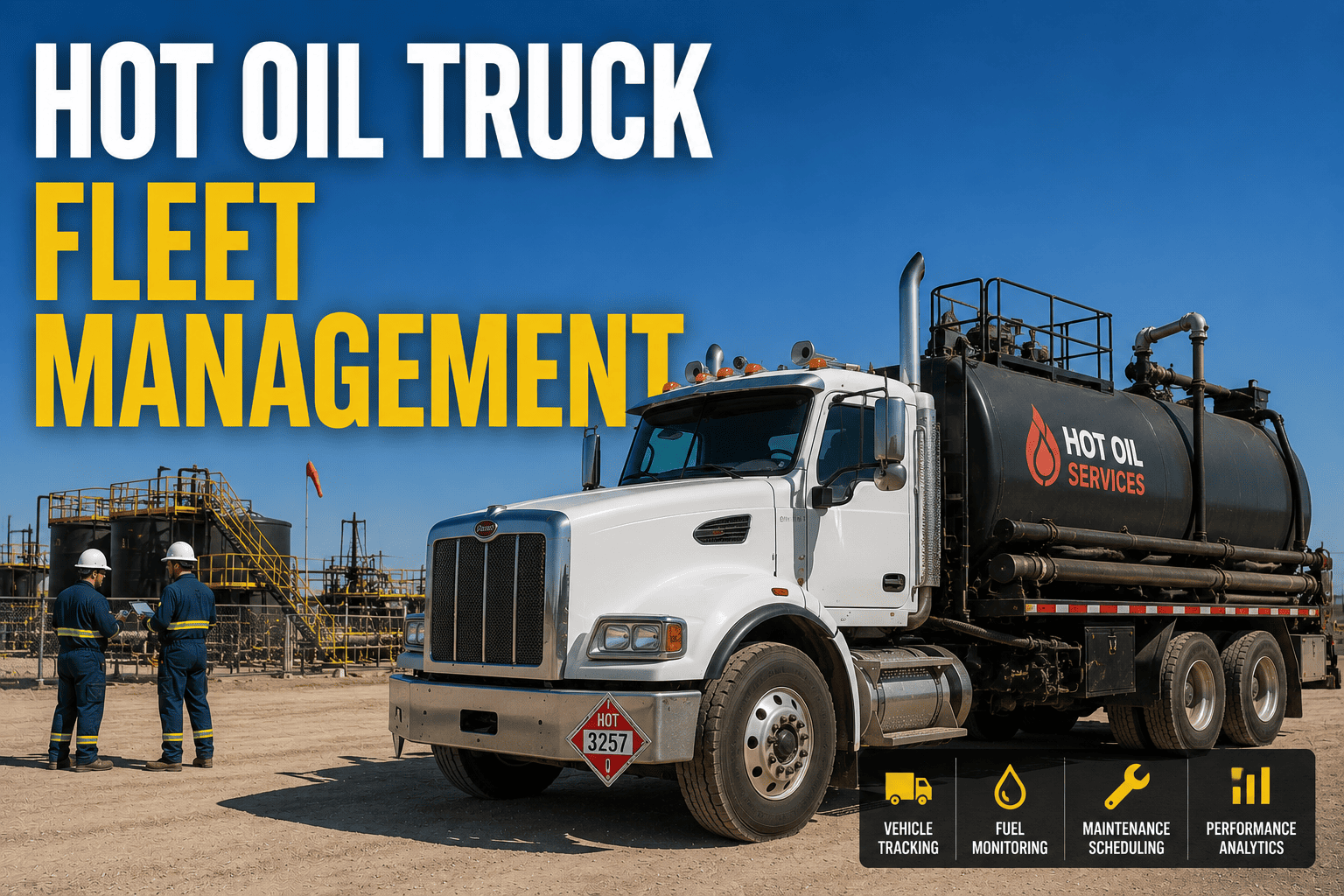
A hot oil truck only does one job, but it has to do it perfectly every single time. Roll onto location with a burner that can't hold temperature, a heat exchanger coil fouled from the last job, or a pump that loses pressure halfway through the circulation cycle, and the well doesn't get treated, it just gets a truck visit. Paraffin wax that should have melted stays put, production stays choked, and the same well ends up back on the treatment schedule within days instead of weeks. For fleets running hot oilers across paraffin-prone leases, keeping every unit genuinely job-ready is the difference between flow assurance and a very expensive repeat trip.
Hot oil units operate at 160 to 280 degrees Fahrenheit and rely on burner performance, heat exchanger condition, and pump pressure staying in sync for the full treatment cycle. A truck that under-delivers heat typically triggers a repeat job within 5 to 10 days, while fleets tracking burner hours and coil condition report 25 to 35 percent fewer incomplete treatments and meaningfully longer intervals between well visits.
What Actually Happens Inside a Hot Oil Job
A hot oil truck pulls crude from a storage tank, runs it through a burner-heated exchanger coil, and circulates it down the annulus or tubing to melt paraffin deposits that have built up on the walls of the wellbore. It sounds simple, but the equipment doing the work is under constant thermal and mechanical stress, and the systems below are where most field problems start.
The fuel nozzle, ignition components, and firebox generate the heat that does the actual work. A dirty nozzle or weak ignition means the truck can't reach target temperature, no matter how long the job runs.
Oil passes through this coil to absorb heat before injection. Scale and residue buildup inside the coil reduces heat transfer efficiency, so the truck reports a good temperature reading while the oil going downhole is actually cooler than it should be.
Digital sensors and safety cutoffs confirm the job is running within spec and protect the crew if pressure builds unexpectedly. Miscalibrated sensors can mask a job that never reached melting temperature.
The pump keeps hot oil moving at the flow rate needed for adequate contact time with the paraffin deposit. A pump losing pressure mid-cycle cuts contact time short, leaving hard wax behind at the lower end of the treated interval.
FleetRabbit tracks burner hours, coil service history, and pump condition across your hot oil fleet, so dispatch knows exactly which truck can deliver a full treatment before it ever leaves the yard. Sign up for a free trial and see it running against your own fleet.
Why an Incomplete Treatment Costs More Than the Job Itself
A hot oil job that falls short of melting temperature doesn't fail loudly. The truck runs its cycle, the crew packs up, and everyone assumes the well is clear. The real cost shows up days later when production hasn't recovered and the same well needs another visit, another truck dispatch, and another round of lost runtime on a unit that could have been treating a different well.
| Impact Area | What Goes Wrong | Downstream Effect |
|---|---|---|
| Repeat Dispatch | Well needs a second treatment within 5 to 10 days | Truck hours spent re-treating instead of covering new wells on the route |
| Production Loss | Paraffin restriction continues limiting flow after an inadequate job | Extended output decline until the well is properly treated |
| Oil Loss in Transit | Volatile light ends evaporate during heating and handling | Measurable crude volume loss per job, higher with longer burner run times |
| Formation Risk | Tank-bottom oil with solids gets pumped downhole during treatment | Potential formation damage that complicates future well servicing |
The Route Efficiency Problem
Most hot oil fleets run fixed routes covering wells on a rotating treatment schedule. Every repeat job caused by an under-performing truck pulls that unit off its route and pushes other wells past their optimal treatment window, which compounds the paraffin buildup problem across the whole lease instead of just one well.
Why Burner Condition Is Easy to Miss
Unlike a mechanical breakdown, a burner running below full efficiency doesn't necessarily stop the truck from completing its cycle. The job looks finished on paper. Without tracking actual heat output against burner hours and fuel consumption, a fleet has no reliable way to tell a fully effective treatment from a partial one until the well's production numbers tell the story.
A Practical Maintenance Rhythm for Hot Oil Fleets
Keeping hot oil trucks genuinely field-ready comes down to a short list of checks performed consistently rather than a long list performed occasionally.
Inspect and Clean the Heat Exchanger Coil on a Fixed Interval
Scale and wax residue reduce heat transfer gradually, so schedule coil cleaning by hours of use rather than waiting for a visible temperature problem.
Verify Burner Output Against Target Temperature
Confirm the burner reaches and holds target temperature under load, not just at startup, since output can drop once the coil and oil volume are fully engaged.
Calibrate Temperature and Pressure Sensors Regularly
A sensor reading a few degrees high can mask a treatment that never reached the melting point needed for the hardest wax deposits.
Track Pump Pressure Consistency Through Full Cycles
A pump that starts strong but loses pressure partway through a job cuts contact time short exactly where it matters most, at the lower end of the treated interval.
Log Every Job's Source Oil and Tank Condition
Oil drawn from tank bottoms carries more solids and prior wax content. Recording source conditions helps explain why some jobs need longer cycles than others.
Turning Job History Into a Smarter Treatment Schedule
The most useful thing a hot oil fleet can build isn't a longer maintenance checklist, it's a job history that connects truck condition to treatment outcomes. When you can see that a specific unit's coil efficiency has been trending down for three weeks, or that a particular well keeps needing repeat visits regardless of which truck shows up, the maintenance conversation and the scheduling conversation start informing each other instead of running separately. That's the kind of visibility a fleet management platform is built to deliver. You can start a free trial to connect burner hours, coil service, and job outcomes in one view, or book a demo to walk through it with our team first.
A treatment that falls short doesn't just waste a truck's time, it leaves the well right back where it started. FleetRabbit gives hot oil fleets the burner tracking, coil service history, and job outcome data they need to send the right truck, ready to finish the job, every time. Start your free trial with no credit card required, or book a short demo to see it against your own fleet.