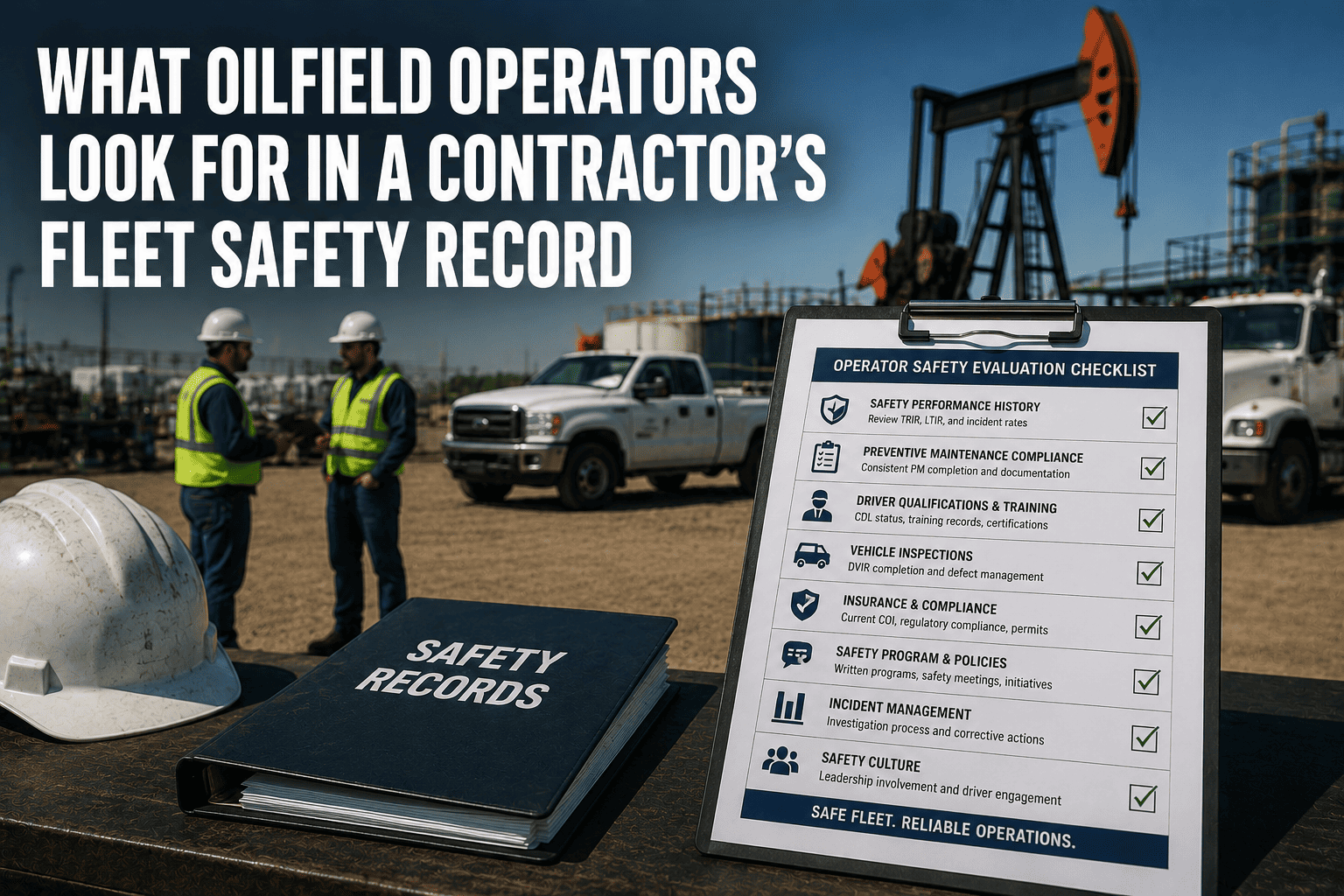
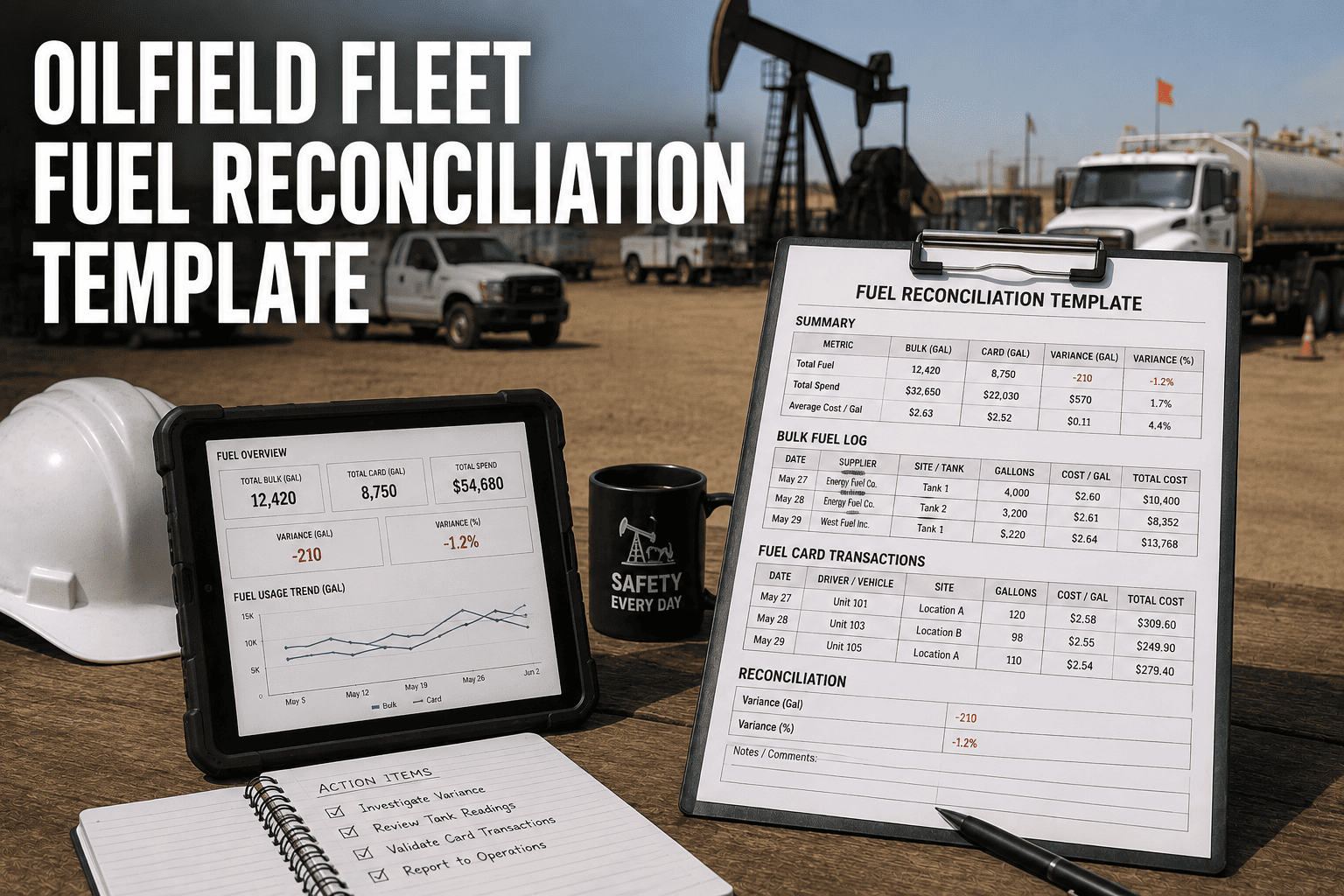
HSE Compliance Audit Preparation for Oil and Gas Fleets
FleetRabbit's HSE Compliance Audit Preparation guide delivers the complete digital inspection record framework, audit-ready documentation protocols, and standardisation tools that oil and gas fleet managers need to pass HSE, API, OSHA, EPA, and DOT audits without scrambling through paper binders or patchwork spreadsheets. This guide covers 84 audit preparation checkpoints across six compliance domains — inspection record integrity, driver and operator certification, vehicle technical documentation, environmental compliance, site-specific HSE requirements, and emergency response readiness — with a structured methodology for digitising every domain inside FleetRabbit's fleet management platform for automatic audit pack generation. Book a demo to see how FleetRabbit prepares your oilfield fleet for any HSE audit, any time.
Guide Scope & Usage
This guide addresses six audit domains: digital inspection record integrity, driver and operator certification management, vehicle technical compliance documentation, environmental and waste compliance, site-specific HSE requirements, and emergency response preparedness. Each checkpoint is rated Critical — audit failure risk if absent; Monitor — requires active management and defined renewal dates; or Routine — documented and trending for continuous improvement. All gaps identified during preparation must be raised as corrective actions in FleetRabbit before the audit window opens.
68%
of oilfield HSE audit findings relate to documentation gaps, not physical defects
84
audit preparation checkpoints across six compliance domains
5–7
working days to full audit-ready digital records in FleetRabbit
100%
automated audit pack generation — no manual report assembly
Domain 01
Digital Inspection Record Integrity
Inspection records are the foundation of every oilfield HSE audit. Auditors from HSE, OSHA, API, and operator clients require inspection evidence that is timestamped, attributable to a named inspector, and continuous — with no gaps in the inspection schedule that cannot be explained by documented equipment downtime. Paper records fail all three tests. Digital inspection records in FleetRabbit provide the unbroken, auditable evidence chain that passes scrutiny.
Inspection Record Completeness and Chain of Custody
Domain 02
Driver & Operator Certification Management
Driver and operator certification failures are the second most common HSE audit finding in oilfield fleet operations, and the most likely to result in immediate prohibition of vehicle operations. Certification gaps are not arguable — an expired licence, lapsed medical, or missing ADR certificate represents a legal breach that no documentation or management system can mitigate after the fact.
Driving Licence and Vehicle Category Authorisation
Medical Fitness and Drug and Alcohol Compliance
Specialist Certifications and Competency Records
FleetRabbit Certification Intelligence
Never Fail an Audit on an Expired Certificate Again
FleetRabbit's certification tracking engine monitors every licence, medical, ADR certificate, site induction, and specialist competency across your entire driver and vehicle fleet. Automated multi-stage alerts fire at 90, 60, 30, and 7 days before expiry — giving fleet managers and operations directors the time to act, not react.
Centralised driver compliance dashboard — every certification status visible in one view
Automatic grounding flag when a critical certification expires — driver cannot be dispatched until renewed
Audit-ready certification export — full driver compliance record pack generated in minutes
Multi-jurisdiction support — UK/EU, USA, GCC, and India certification frameworks all configured
Vehicle technical compliance documentation encompasses every certificate, permit, test record, and maintenance history that proves a vehicle is fit for its operating purpose and compliant with the legal framework it operates within.
Roadworthiness and Statutory Testing
Maintenance History and Planned Maintenance Compliance
How FleetRabbit Solves It
Six Ways FleetRabbit Transforms HSE Audit Readiness
01
Automated Audit Pack Generation
FleetRabbit generates structured audit documentation packs for HSE, OSHA, API, DOT, ADNOC, and DGMS frameworks — vehicle inspection histories, certification registers, corrective action logs, and maintenance records assembled automatically. No manual report preparation. No missed documents.
02
Standardisation Across All Sites
FleetRabbit enforces a single inspection standard across every site, every asset class, and every crew — eliminating the documentation inconsistency that causes audit findings when multi-site operations are reviewed against a common compliance benchmark. Every inspector sees the same checklist. Every record looks the same.
03
Digital Inspection Records with Full Integrity
Every inspection in FleetRabbit is timestamped, geo-tagged, and attributed to a named inspector at the point of completion. The record cannot be backdated, altered, or anonymised — meeting the evidence integrity requirements of every major HSE audit framework from the moment of capture.
04
Accurate Documentation Maintained Continuously
FleetRabbit's certification engine maintains accurate documentation status for every vehicle and every driver in real time — not at the point of audit, when it is too late to correct gaps. Certification expiry alerts and inspection schedule compliance monitoring ensure documentation remains audit-ready every day, not just the week before an audit.
05
Executive Compliance Dashboard
Operations directors and fleet managers view live compliance health across every site and every vehicle class from a single dashboard. Open defects, overdue inspections, expiring certifications, and corrective action backlogs are visible in one place — giving leadership the visibility to intervene before an audit finding occurs.
06
Offline Mobile Inspection Capability
Inspection records are created at the vehicle, in the field — not reconstructed at a desk. FleetRabbit's mobile app completes and stores inspections without a data connection, syncing automatically when connectivity returns. Remote wellpad, offshore support base, or active pipeline corridor — the record is always complete.
Domain 04
Environmental & Waste Compliance
Environmental compliance has become the fastest-growing audit domain in oilfield fleet operations. Regulatory enforcement of fluid leakage, waste carrier licensing, spill response, and emissions is intensifying across every major operating jurisdiction. Fleet managers who cannot demonstrate active environmental controls — not just incident absence — are increasingly exposed to enforcement action and operator contract risk.
Waste Carrier and Environmental Licensing
Spill Prevention and Environmental Incident Records
Domain 05
Site-Specific HSE Requirements
Site-specific HSE requirements are the audit domain most frequently underestimated by fleet contractors operating across multiple operator client sites. Each operator — Shell, BP, TotalEnergies, ADNOC, Saudi Aramco — applies its own contractor fleet standard over and above the statutory minimum. Meeting the statutory minimum while failing a client-specific requirement is still an audit failure, with the added risk of contract termination.
Operator Client Vehicle Standards
Domain 06
Emergency Response Preparedness
Emergency response preparedness is the audit domain where paper-based fleet management systems consistently fail. Auditors do not only check whether emergency equipment is present — they verify that it is inspected, that personnel are trained, and that the emergency response plan is current, tested, and accessible to the people who will need to execute it. Documentation of preparedness is as important as preparedness itself.
Emergency Equipment Inspection Records
Emergency Response Training and Drill Records
Domain Summary: Audit Checkpoint Distribution
Compliance Domain
Critical Items
Monitor Items
Routine Items
Total
Domain 1 — Inspection Record Integrity
5
3
5
13
Domain 2 — Driver & Operator Certifications
7
7
4
16
Domain 3 — Vehicle Technical Documentation
4
6
3
13
Domain 4 — Environmental Compliance
4
5
2
11
Domain 5 — Site HSE Requirements
4
8
2
16
Domain 6 — Emergency Preparedness
3
5
7
15
Total Audit Checkpoints
27
34
23
84
Frequently Asked Questions
QHow far in advance should an oilfield fleet operation begin audit preparation using this framework?
The practical answer is that audit preparation should be continuous — not a periodic exercise triggered by an upcoming audit date. HSE, OSHA, and API RP 54 audits are conducted with and without advance notice, and the most rigorous operator client audits arrive on short timescales. That said, a structured pre-audit preparation review using this framework should begin no later than 60 days before a known audit. The 60-day window allows time to identify documentation gaps, obtain replacement certificates, close overdue corrective actions, and generate a test audit pack in FleetRabbit to verify record completeness.
QWhich domain produces the highest volume of audit findings in oilfield fleet operations?
Domain 5 — Site-Specific HSE Requirements — consistently produces the highest volume of findings in contractor fleet audits conducted by major operator clients, for two reasons. First, contractor fleets operating across multiple client sites often apply a single standard that meets the minimum regulatory requirement but fails the higher client-specific standard — a gap that is only discovered at audit. Second, client requirements evolve across contract cycles and are not always formally communicated as amendments; contractors who do not actively verify current client standards against their operational practices are exposed to findings for requirements they were unaware had changed. FleetRabbit addresses this by allowing site-specific inspection standards to be configured per asset, per site, ensuring the correct standard is applied regardless of which client a vehicle is supporting on any given day.
QHow does FleetRabbit handle the transition from paper-based inspection records to a digital audit trail without creating a gap in the documentation history?
The most critical step in this transition is importing historical paper inspection data as structured records against each vehicle asset in FleetRabbit before digital inspections go live — not archiving paper records in binders and starting fresh. If the first six months of that period exist only as paper and the remainder as digital records in a different system, the documentation story is broken. FleetRabbit's implementation team provides structured data import from paper and spreadsheet records as part of standard fleet onboarding. For most oilfield fleets of 20 to 100 vehicles, the full migration including asset hierarchy build, historical data import, checklist configuration, and crew onboarding is completed within five to seven working days.
QWhat is the difference between this audit preparation guide and the operational DVIR inspection checklist, and should both be deployed?
These are complementary tools addressing different layers of the compliance framework. The DVIR and pre-trip inspection checklist is an operational document — it is the daily or per-journey mechanism by which drivers and maintenance technicians identify, record, and escalate vehicle defects. This HSE audit preparation guide is a management document — it is the periodic framework by which fleet managers verify that the operational inspection programme is producing the documentation evidence required to satisfy external regulatory and client audit requirements. Both should be deployed. The operational inspection checklist generates the raw compliance evidence. In FleetRabbit, both layers operate simultaneously — operational inspection records feed directly into the audit pack export without any intermediate manual step.
QHow do fleet executives maintain visibility of HSE compliance across multi-site oilfield operations without visiting each site?
FleetRabbit's executive dashboard consolidates inspection completion rates, open defect counts, certification health, corrective action backlogs, and environmental incident records across every site and every vehicle class in a single view. Automated exception alerts flag sites where inspection completion rates fall below threshold, certification expiry windows open, or corrective action backlogs exceed defined limits — allowing executive intervention before a compliance gap reaches audit significance. Scheduled digest reports are configurable for weekly and monthly distribution to senior stakeholders without manual assembly. See the executive dashboard in a live demo.
Audit-Ready in 5–7 Working Days
Deploy Complete HSE Audit Readiness Across Your Oilfield Fleet in FleetRabbit
Every domain and every checkpoint in this guide is available as a structured digital compliance record in FleetRabbit — assigned to your fleet asset hierarchy, tracked in real time, and exportable as a complete audit pack for HSE, OSHA, API, DOT, ADNOC, and DGMS audit frameworks without manual preparation.