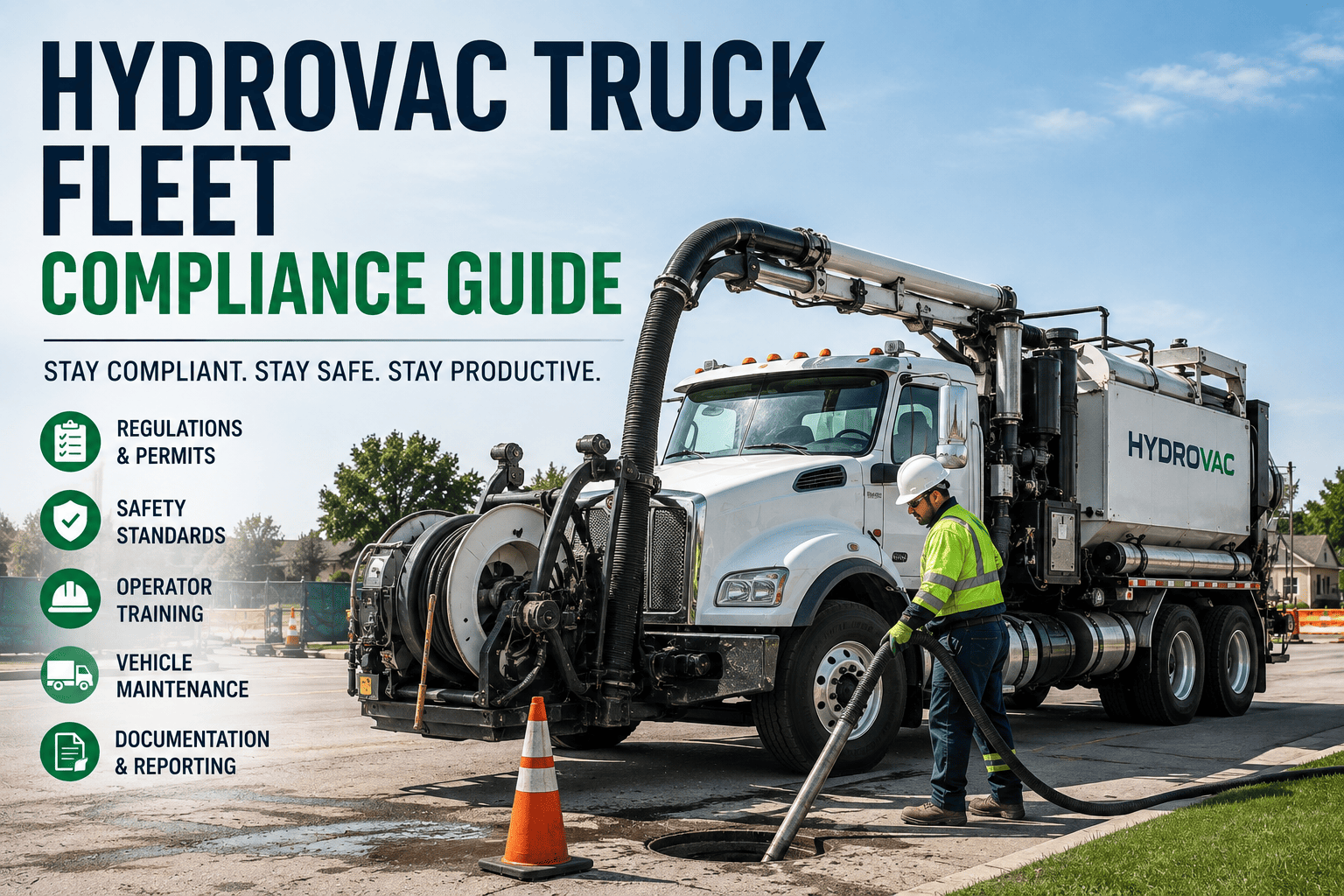
Every hydrovac crew on a pipeline daylighting job is carrying more paperwork risk than most people realize. The truck itself is straightforward: pressurized water breaks up soil, a vacuum system pulls the slurry into a debris tank, and a buried pipeline gets exposed without a single strike from a steel bucket. The compliance side is where things get complicated. A single potholing job touches a one-call locate ticket with a state-specific notice window, federal pipeline damage prevention rules, and a waste characterization decision on every load of spoil that leaves the site. Miss any one of those threads and a routine daylighting job turns into a citation, a delayed project, or worse, a struck line.
Most states require 48 hours of advance notice through 811 before any excavation, including hydrovac potholing, though some states such as Pennsylvania require three full business days. Federal rules under 49 CFR 192.613 and 195.401 make excavation damage prevention a required part of pipeline operator surveillance, and excavation damage remains a leading cause of pipeline incidents nationwide. Every load of hydrovac spoil must be characterized as hazardous or non-hazardous before disposal, with the generator, not the disposal site, bearing that responsibility.
Why Daylighting Carries Its Own Compliance Layer
Potholing exists specifically to prevent the kind of excavation damage that federal regulators treat as a top-tier pipeline safety concern. Exposing a line with pressurized water rather than mechanical digging equipment sharply reduces strike risk, but it does not remove the paperwork obligations around locating, ticket validity, and disposal that come with any excavation near a buried utility.
811 Ticket Filed
Locate request submitted with required advance notice, typically 48 hours or more depending on the state.
Utilities Marked
Underground facility operators respond and mark approximate line locations before excavation can begin.
Ticket Validity Confirmed
Crew verifies the ticket is still active before breaking ground, since expired tickets require a fresh locate request.
Hydro Excavation Performed
Pressurized water and vacuum extraction expose the pipeline without mechanical contact.
Spoil Characterized and Disposed
Slurry is classified hazardous or non-hazardous and routed to an approved disposal or solidification facility.
Where Crews Fall Out of Compliance
The most common failure point is not the excavation itself but the administrative steps around it: a ticket that expired before the crew arrived on site, a locate that was never confirmed against the actual dig area, or spoil that got dumped before anyone checked whether it needed testing. Each of those gaps is exactly what a digital ticket and disposal tracking system is built to close.
FleetRabbit centralizes ticket status, locate confirmations, and job assignments so no crew ever breaks ground on an expired or unconfirmed ticket. Sign up for free and bring your fleet's ticket compliance into one view.
One-Call Notice Requirements Vary More Than You Think
Hydrovac fleets working across multiple states cannot rely on a single notice-period assumption. A ticket rule that is correct in one state can put a crew out of compliance in the next.
| State or Region | Minimum Advance Notice | Typical Potholing Rate |
|---|---|---|
| Texas | 48 hours via Texas 811 | 180 to 550 dollars per hour |
| Pennsylvania | 3 business days via PA One Call | 225 to 550 dollars per hour |
| Arizona | 48 hours via Arizona 811 | 180 to 550 dollars per hour |
| Louisiana | 48 hours via Louisiana One Call | 203 to 523 dollars per hour |
| Missouri | 48 hours via Missouri One Call | 225 to 550 dollars per hour |
Rates shift with truck size, water volume required, and disposal logistics, but the notice-period gap between states is the detail that actually determines whether a crew can legally start digging on the day a job is scheduled. Book a demo to see how FleetRabbit flags jobs scheduled before a ticket's required notice window has elapsed.
Spoil Disposal Is Its Own Compliance Category
Every debris tank that leaves a jobsite carries a decision that has to be made correctly: is this load non-hazardous, or does it need testing and a manifest. The default assumption should be that a load is non-hazardous, not that it is automatically clean. Those are two different claims, and the generator, meaning the hydrovac contractor, carries the duty to characterize the waste correctly, not the disposal facility receiving it.
Debris Tank Capacity
Tanks typically hold 6 to 15 cubic yards. Capacity directly drives how often a crew must leave the job site to dump, affecting both productivity and disposal record volume.
Characterization Duty
The contractor generating the spoil is responsible for classifying it as hazardous or non-hazardous before it leaves the site, regardless of what the receiving facility assumes.
Contaminated Spoil Handling
Suspected contamination requires lab testing and disposal at a licensed facility, at a materially higher cost than clean spoil disposal.
Manifest and Record Retention
Once a load is classified, the paperwork follows that classification. Retaining disposal records protects the fleet if a site's history is questioned later.
Why This Data Belongs in One System
A hydrovac fleet running dozens of jobs a month generates a matching number of disposal decisions, and reconstructing that history from paper tickets after the fact is exactly how compliance gaps get missed. Centralizing ticket status, locate confirmations, and disposal records in one place turns a scattered paper trail into a searchable compliance record.
FleetRabbit connects 811 ticket status, vehicle inspection records, and spoil disposal documentation into a single dashboard built for hydrovac fleets. Start your free trial today, no credit card required.
Frequently Asked Questions
Stop reconstructing compliance history from paper tickets after the fact. FleetRabbit gives hydrovac fleets a single, searchable record of every 811 ticket, inspection, and spoil disposal decision.