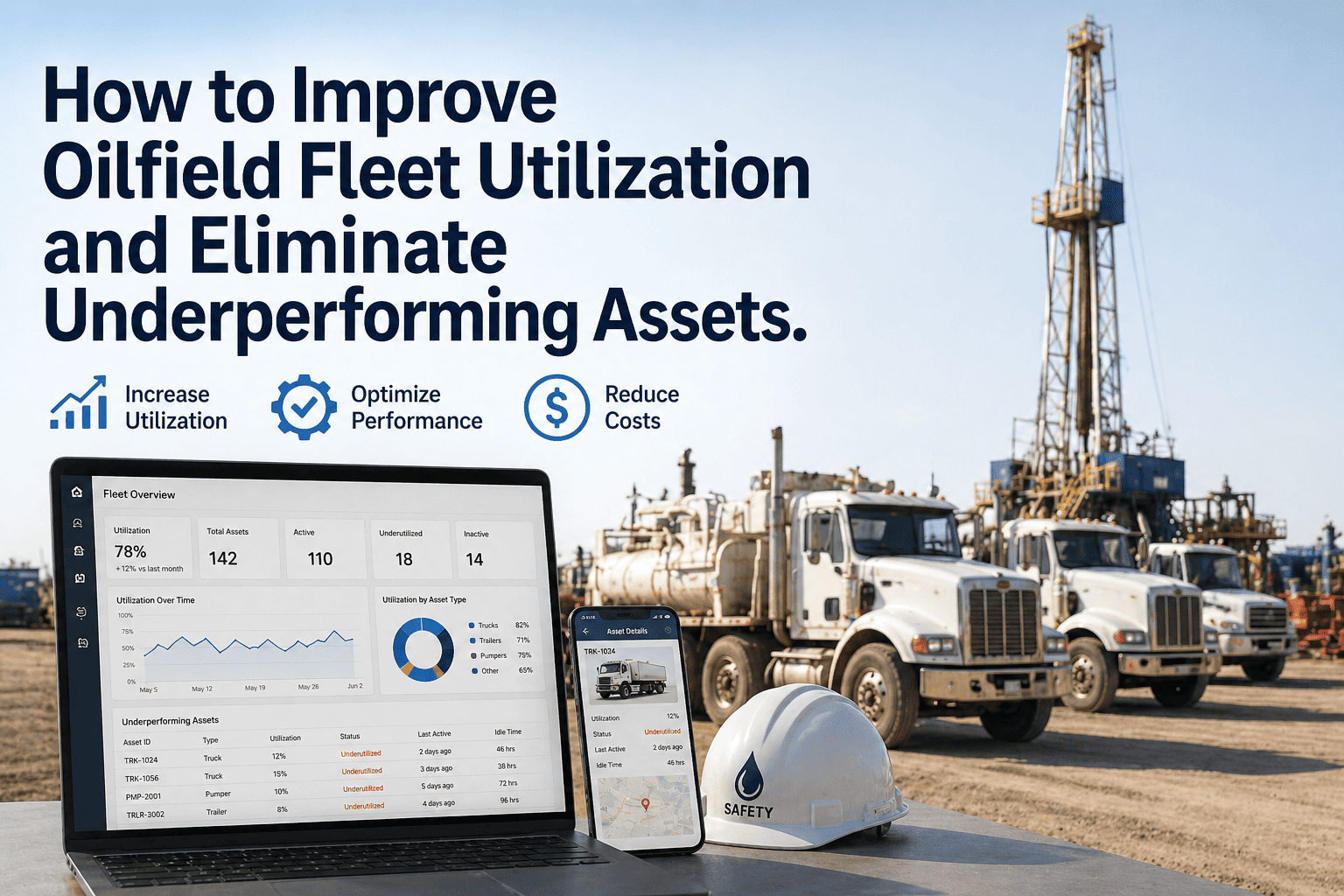
Oilfield fleet utilization is not just a metric — it is the primary indicator of operational efficiency and financial health. In upstream operations, where every vehicle represents a significant capital investment and daily operating cost, underutilized assets drain budgets while failing to support critical drilling schedules. The average oil and gas operator loses 15–25% of their fleet capacity to idle time, inefficient routing, poor dispatch coordination, and lack of visibility into asset status. Traditional manual tracking methods cannot identify which vehicles are underperforming, why they are sitting idle, or how to redeploy them effectively across dynamic well-site demands. FleetRabbit’s utilization analytics platform transforms raw telematics data into actionable intelligence — surfacing idle assets, identifying usage patterns, enabling smart redeployment, and helping fleet managers eliminate waste to maximize ROI. This guide explores how leading operators use FleetRabbit to improve fleet utilization by 20–30%, reduce unnecessary rentals, and ensure every asset contributes to production goals.
Improve Oilfield Fleet Utilization: Eliminate Idle Assets and Maximize ROI
FleetRabbit’s utilization analytics identify underperforming vehicles, track idle time, and enable smart redeployment — helping operators boost asset efficiency by 20–30% and cut unnecessary rental costs.
Every idle vehicle costs $50–$150 daily in depreciation and maintenance. Deploy FleetRabbit’s utilization analytics in 48 hours — stop paying for unused assets →
Why Oilfield Fleets Struggle with Low Asset Utilization
Invisible Idle Time
Without real-time monitoring, managers cannot see which vehicles are sitting idle at yards, waiting at well sites, or parked overnight. This "hidden" idle time accumulates into thousands of wasted hours annually, driving up costs without supporting operations.
Poor Redeployment Visibility
When one well site finishes early, assets often sit unused because dispatchers lack visibility into nearby sites needing support. This leads to unnecessary rentals elsewhere while owned assets gather dust, doubling costs for the same work.
Mismatched Asset Allocation
Sending oversized or specialized equipment to simple jobs ties up high-value assets unnecessarily. Without utilization data, managers cannot right-size deployments, leading to inefficiencies and accelerated wear on expensive machinery.
Unnecessary Rental Spend
Operators frequently rent additional vehicles due to perceived shortages, unaware that existing fleet members are underutilized. This reactive spending adds $100K+ annually to budgets for capacity that already exists within the owned fleet.
How FleetRabbit Maximizes Oilfield Asset Efficiency
Comprehensive Asset Performance Tracking
FleetRabbit aggregates data from GPS, ELDs, and sensors to provide a holistic view of asset usage. Managers can filter by vehicle type, location, or project to see exactly which assets are working, idling, or parked. Customizable dashboards highlight trends over time, helping leaders make informed decisions about fleet sizing and composition.
Smart Redeployment
Identify available assets near active job sites and reassign them instantly. Reduce travel time and fuel costs by matching nearby idle vehicles with new work orders instead of dispatching from distant yards.
Rental Reduction
Verify internal capacity before approving rental requests. FleetRabbit’s availability dashboard shows which owned assets are free, preventing duplicate spending and keeping rental budgets in check.
Right-Sizing Maintenance
Align maintenance schedules with actual usage. Low-utilization assets may need less frequent service, while high-use vehicles get priority attention, optimizing maintenance spend and extending asset life.
Stop guessing which assets are busy. See utilization analytics in action — book a 30-minute demo →
Daily Tools to Monitor and Improve Asset Usage
Live Utilization Dashboard
View real-time status of all fleet assets on a single screen. Color-coded indicators show working, idle, or offline status. Click any vehicle to see detailed metrics: engine hours today, idle percentage, last movement time, and current location.
Idle Alert Management
Receive instant notifications when vehicles exceed configured idle limits. Investigate causes immediately — whether it’s driver behavior, mechanical issues, or scheduling gaps — and take corrective action to minimize waste.
Asset History & Trends
Analyze historical utilization data to identify seasonal patterns or chronic underuse. Use these insights to adjust fleet composition, sell off rarely used assets, or negotiate better terms for long-term rentals.
Project-Based Reporting
Track asset allocation by well site or project code. Generate reports showing which jobs are over-resourced or under-supported, enabling balanced distribution of equipment across the entire operation.
Strategic Value of Optimized Fleet Utilization
ROI: Capital Efficiency
Improving utilization by 20% means you can do more work with fewer vehicles. This defers capital expenditure on new purchases, reduces depreciation expenses, and lowers insurance and registration costs across the fleet.
Operational Agility
High utilization ensures assets are always ready for deployment. When unexpected opportunities arise, managers know exactly what is available and where, enabling rapid response without disrupting ongoing work.
Sustainability Impact
Reducing idle time directly cuts fuel consumption and emissions. Optimized utilization supports ESG goals by minimizing the carbon footprint of fleet operations while maintaining productivity levels.
Vendor Negotiation Leverage
Accurate utilization data provides leverage in rental negotiations. Prove that internal capacity exists to avoid premium rush rates, or demonstrate consistent usage to secure volume discounts from suppliers.
Turn Idle Assets into Productive Revenue Drivers
FleetRabbit’s utilization analytics help you identify waste, redeploy assets intelligently, and cut rental costs. Achieve 20–30% better efficiency and maximize ROI on every vehicle in your fleet.
Deploy Utilization Analytics in 48 Hours
Data Integration & Baseline Setup
Connect FleetRabbit to existing GPS/ELD systems. Import asset registry and configure utilization thresholds (e.g., alert if idle >2 hours). Establish baseline metrics for current fleet performance.
Manager Training & Alert Configuration
Train fleet managers on interpreting utilization dashboards and responding to idle alerts. Customize notification rules for different vehicle classes (e.g., stricter limits for high-cost frac equipment).
Active Monitoring & Optimization
Begin live monitoring. Review initial findings to identify quick wins — such as recalling idle vehicles from remote yards or canceling pending rentals. Adjust workflows based on real-world data.
Verified Results from Utilization Optimization
Frequently Asked Questions About Fleet Utilization
How does FleetRabbit define "idle time"?
Idle time is defined as periods when the engine is running but the vehicle is stationary (speed = 0) for more than a configurable threshold (default 5 minutes). This excludes brief stops at traffic lights or loading zones.
Can we track utilization for non-powered assets like trailers?
Yes. By integrating with trailer tracking devices or using GPS tags, FleetRabbit monitors movement and location of non-powered assets. Utilization is calculated based on movement events and geofence entries/exits.
How quickly can we see ROI from utilization improvements?
Most fleets identify immediate opportunities to cancel rentals or redeploy idle assets within the first week. Measurable financial impact from reduced rental spend and fuel savings typically appears within 30–60 days.
Does this require new hardware installation?
No. FleetRabbit integrates with existing GPS and ELD hardware. If some assets lack tracking, low-cost plug-and-play devices can be added, but no complex wiring or professional installation is needed.
Can we export utilization reports for executive reviews?
Yes. All utilization data can be exported to Excel or PDF formats. Pre-built executive summaries highlight key metrics like total idle hours, top underutilized assets, and potential cost savings.
How does this help with sustainability goals?
Reducing idle time directly lowers fuel consumption and CO2 emissions. Better utilization means fewer vehicles are needed to do the same work, reducing the overall carbon footprint of fleet operations.
Stop paying for assets that aren’t working. Start your free trial today — optimize utilization in 48 hours →
Maximize Every Asset’s Potential with Data-Driven Utilization
FleetRabbit helps you eliminate idle time, reduce rentals, and right-size your fleet. Achieve 20–30% better utilization and turn underperforming assets into profit centers at $3/vehicle/month.