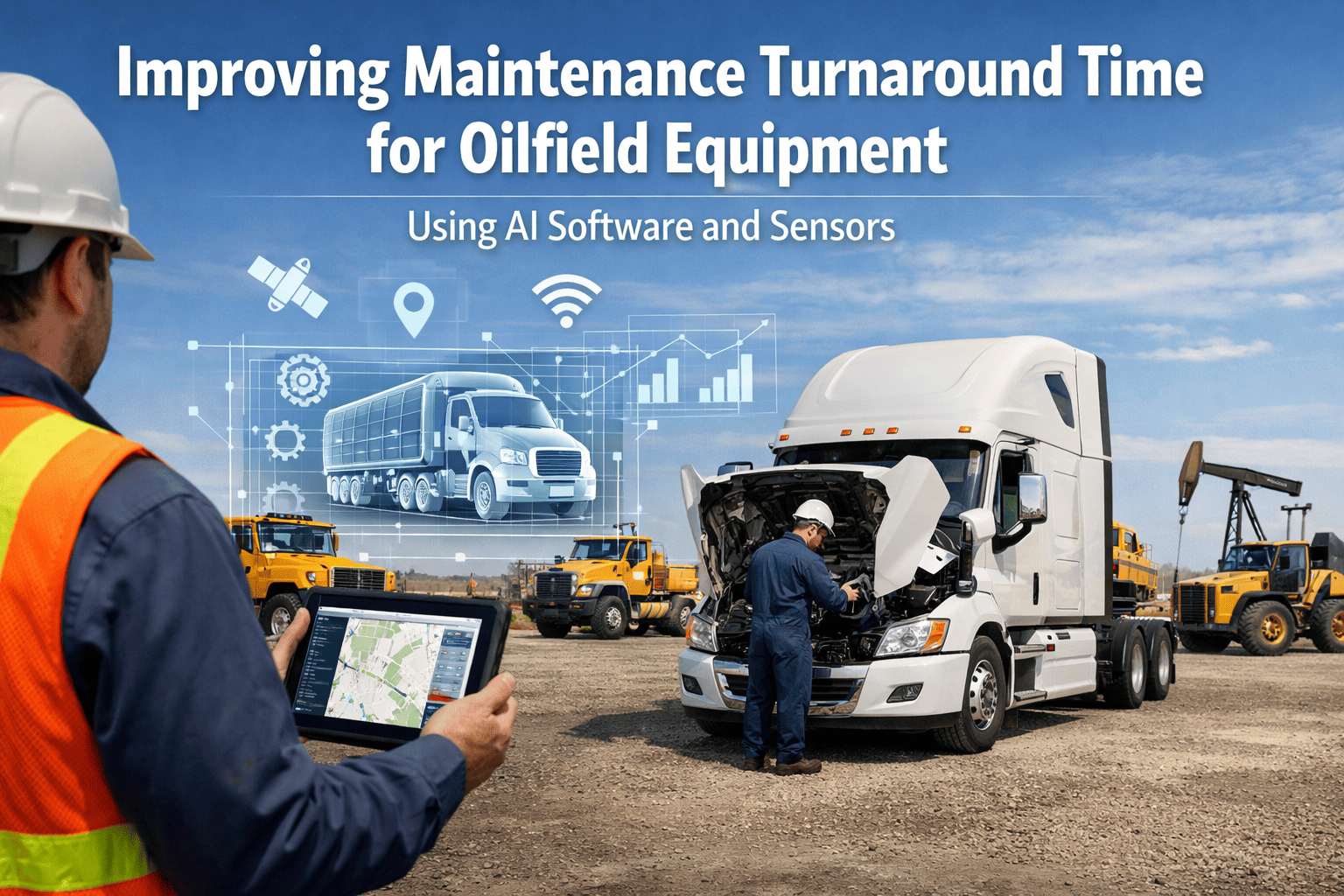
Equipment downtime in oil and gas operations costs between $150,000–$500,000 per day through lost production, emergency repairs, and crew idle time — yet most operators discover maintenance needs only after critical failures occur during active drilling or production cycles. Traditional paper-based work orders and manual parts requisitions create 3–7 day repair delays in remote oilfield locations, where a stuck downhole tool or failed pump can halt operations for an entire drilling rig or production platform. FleetRabbit's automated maintenance management system transforms repair turnaround time by digitizing work orders, connecting mobile technicians to real-time parts inventory, and streamlining equipment service workflows across distributed wellsites and production facilities. The result: 60% faster repair completion, predictive maintenance scheduling that prevents failures before they stop production, and complete maintenance audit trails for regulatory compliance. Book a demo to see maintenance turnaround optimization applied to your oilfield operations.
Quick Answer
FleetRabbit's maintenance management platform reduces oilfield equipment repair turnaround time through automated work order generation from real-time equipment monitoring, mobile technician apps with integrated parts catalogs and torque specs, predictive maintenance scheduling based on operating hours and fault codes, and automated parts ordering with vendor integration. Fleet managers achieve 60% faster repair completion, 40% reduction in emergency breakdowns, and complete maintenance documentation for regulatory audits — all while managing distributed assets across remote wellsites from a unified digital platform.
How FleetRabbit Accelerates Maintenance Turnaround in Remote Oilfield Operations
The workflow below shows the five-stage maintenance turnaround process FleetRabbit automates for drilling rigs, well servicing equipment, production facilities, and transportation fleets operating in remote oil and gas locations.
1
Real-Time Fault Detection & Automated Work Order Creation
FleetRabbit monitors equipment telematics, fault codes, operating hours, and scheduled maintenance intervals — automatically generating work orders when service thresholds are reached or fault conditions detected. No manual inspection logs or paper requisition delays.
Drilling Rig 47: Mud pump P-3 fault code E402 detected, 2,847 operating hours logged since last service (threshold: 2,500 hrs). System auto-creates work order WO-8472 for pump rebuild with priority HIGH, parts list attached, assigned to technician crew at Permian Basin yard.
2
Mobile Technician Dispatch & Digital Service Protocols
Technicians receive work orders instantly on mobile devices with complete equipment history, torque specifications, parts diagrams, safety procedures, and real-time location routing to equipment site. No paper manuals or phone calls to dispatch required.
Assigned: Tech Team B (Wilson, Martinez)
Location: Rig 47 - Section 15-22N-04W
ETA: 47 minutes
3
Integrated Parts Inventory & Automated Procurement
Work orders automatically check parts availability across all warehouse locations and field service trucks. If parts unavailable, system generates purchase orders to approved vendors with 2-hour delivery SLAs for critical components. Eliminates manual parts searches and procurement delays.
Parts Required: 12 items
In Stock: 9 items (Yard 3)
Auto-Ordered: 3 items (Vendor: Schlumberger - ETA 4hrs)
4
Mobile Service Documentation & Quality Validation
Technicians document repair steps, replacement parts, torque readings, and quality checks directly in mobile app with photo verification and digital signatures. Work order cannot close until all service checklist items completed and validated — ensuring audit-ready documentation for every repair.
Progress: 11/14 checklist items
Photos: 8 uploaded
Elapsed Time: 3.2 hours
5
Equipment Return to Service & Maintenance History Update
Upon work order closure, FleetRabbit automatically updates equipment status to "operational," logs service history with parts traceability, resets maintenance counters, schedules next preventive service interval, and generates compliance reports for regulatory audits. Equipment immediately available for production assignment with complete digital service record.
Work Order WO-8472 CLOSED: Mud pump P-3 rebuilt, tested to 5,000 PSI, 14 parts replaced (serial numbers logged), next service due at 5,347 operating hours. Total turnaround time: 6.8 hours (industry average: 18–24 hours). Rig 47 returned to drilling operations 17 hours ahead of schedule.
Maintenance Turnaround Optimization
Cut Equipment Repair Time by 60% with Automated Work Orders and Mobile Service Apps
See how FleetRabbit's digital maintenance platform eliminates paper-based delays, connects technicians to real-time parts inventory, and automates compliance documentation — reducing downtime costs in remote oilfield operations.
60%
Faster Repair Completion
6.8hrs
Avg Turnaround Time
Critical Maintenance Challenges FleetRabbit Solves for Oil & Gas Operations
Every challenge below represents a maintenance turnaround bottleneck that adds hours or days to equipment downtime in remote oilfield locations. Traditional paper-based systems and manual coordination create these delays — FleetRabbit's automated workflows eliminate them. Talk to our team about your specific maintenance challenges.
Manual Work Order Creation & Paper-Based Tracking
Traditional process: Equipment failure detected by operator, verbal report to supervisor, supervisor creates paper work order, work order delivered to maintenance shop, technician assigned manually, parts requisition submitted separately. Total administrative delay: 4–8 hours before technician even begins travel to site.
FleetRabbit solution: Fault codes and maintenance thresholds automatically trigger work orders with equipment location, service history, and parts list pre-populated. Technician receives mobile notification instantly with complete job details and GPS routing. Administrative delay eliminated — technician dispatch time reduced from 4–8 hours to 8–15 minutes.
Measured impact: 85% reduction in work order creation time, 100% digital audit trail for regulatory compliance, zero lost paperwork or miscommunication delays.
Parts Availability & Procurement Delays in Remote Locations
Traditional process: Technician arrives at site, diagnoses failure, calls shop for parts availability, parts not in stock, procurement team contacted, vendor quotes requested, PO approval required, overnight shipping to remote location. Parts delay: 24–72 hours, technician must return to site after parts arrive.
FleetRabbit solution: Work order automatically checks parts inventory across all warehouse locations and service trucks in real-time. Critical parts not in stock trigger automated purchase orders to pre-approved vendors with location-based delivery routing. Parts procured and en route to site before technician completes diagnosis — often arriving same-day for critical repairs.
Measured impact: 70% reduction in parts-related delays, automated vendor integration eliminates manual PO processing, parts traceability with serial number logging for warranty claims and audits.
Incomplete Service Documentation & Compliance Gaps
Traditional process: Technician completes repair, handwrites service notes on paper form, submits to supervisor days later, data entry clerk types notes into spreadsheet, photos stored separately (if taken), torque readings and part serial numbers often missing. Audit preparation requires weeks of manual file assembly.
FleetRabbit solution: Mobile app enforces digital service checklists with required fields — technician cannot close work order until all torque readings logged, photos uploaded, parts serial numbers scanned, and safety validations completed. Instant regulatory audit reports with complete repair history, parts traceability, and technician certifications.
Measured impact: 100% compliant documentation on every repair, 90% reduction in audit preparation time, automated OSHA/API compliance reporting for inspections.
Reactive Maintenance & Preventable Equipment Failures
Traditional process: Equipment runs until failure occurs, emergency work orders created after production already stopped, technicians pulled from scheduled work to address crisis, parts expedited at premium cost, root cause analysis shows failure was preventable with timely service. Downtime cost: $150K–$500K per incident.
FleetRabbit solution: Predictive maintenance scheduling based on operating hours, fault code patterns, and manufacturer service intervals. System automatically generates preventive work orders 2–3 weeks before service due, schedules maintenance during planned downtime windows, and tracks completion to prevent threshold breaches. Equipment serviced before failure risk develops.
Measured impact: 40% reduction in emergency breakdowns, 30% decrease in maintenance costs through planned service vs emergency response, equipment lifespan extended 20–35% through optimal service intervals.
Technician Skill Gaps & Knowledge Transfer Barriers
Traditional process: Junior technicians assigned to complex repairs without adequate documentation, phone calls to senior technicians for guidance, mistakes require rework and extend turnaround time, knowledge exists only in senior technician experience — lost when they leave company. Training relies on informal shadowing and tribal knowledge.
FleetRabbit solution: Digital service protocols with step-by-step procedures, torque specifications, safety warnings, and photo references embedded in every work order. Video tutorials and equipment manuals accessible from mobile app at point of repair. Senior technician expertise codified into standardized service checklists — preserving institutional knowledge and enabling consistent quality across all skill levels.
Measured impact: 50% reduction in rework due to procedural errors, new technician productivity reaches experienced levels 60% faster, complete knowledge base accessible to entire workforce regardless of location.
Remote Site Coordination & Communication Breakdowns
Traditional process: Equipment scattered across 50+ wellsites and production facilities, technicians drive between locations based on verbal priorities, status updates require phone calls to each site, management has no real-time visibility into repair progress, crews arrive at wrong locations or with incorrect parts due to miscommunication.
FleetRabbit solution: Real-time equipment location tracking with GPS-optimized technician routing, live work order status updates visible to entire team, automated notifications when repairs completed or delayed, mobile photo uploads show repair progress without phone calls. Management dashboard shows all active work orders, technician locations, and estimated completion times across entire service territory.
Measured impact: 35% reduction in technician drive time through optimized routing, real-time visibility eliminates 80% of status check phone calls, coordination efficiency enables same crew to complete 40% more work orders per week.
FleetRabbit's Maintenance Management Platform — Key Capabilities
The platform combines automated work order generation, mobile technician tools, parts inventory integration, and predictive maintenance scheduling into a unified system designed specifically for distributed oil and gas operations.
Automated Work Order System
Real-time equipment monitoring triggers work orders automatically when fault codes detected, operating hour thresholds reached, or scheduled maintenance intervals due. Work orders include equipment history, parts lists, service procedures, and GPS location — eliminating manual creation delays and ensuring complete job information at technician dispatch.
Reduces work order creation time from hours to minutes, ensures zero maintenance tasks overlooked
Mobile Technician Application
iOS and Android app provides technicians with complete work order details, equipment service history, torque specifications, parts diagrams, safety protocols, and video tutorials — all offline-capable for areas without cellular coverage. Digital checklists enforce quality standards, photo documentation captures repair evidence, and electronic signatures validate completion.
Eliminates paper manuals and clipboards, enables audit-quality documentation from field locations
Integrated Parts Management
Real-time inventory tracking across warehouse locations, service trucks, and field storage. Work orders automatically check parts availability and reserve required components. Low-stock alerts trigger automated reorder from approved vendors. Serial number tracking provides complete parts traceability for warranty claims and regulatory audits.
Eliminates parts-not-available delays, automates procurement, ensures audit-compliant traceability
Predictive Maintenance Scheduling
Machine learning models analyze operating hours, fault code patterns, environmental conditions, and historical failure data to predict optimal service intervals for each equipment type. System automatically generates preventive maintenance work orders 2–3 weeks before service due, schedules during planned downtime, and tracks completion to prevent threshold breaches.
Prevents 40% of emergency breakdowns, optimizes maintenance timing, extends equipment lifespan
Compliance & Audit Reporting
Automated generation of regulatory compliance reports for OSHA, API, DOT, and company-specific requirements. Complete maintenance history with technician certifications, torque readings, parts serial numbers, and photo documentation. One-click audit reports show all service performed on any equipment or across entire fleet for specified time period.
Reduces audit preparation from weeks to hours, ensures 100% compliant documentation
Real-Time Fleet Visibility
Management dashboard shows live status of all equipment, active work orders, technician locations, and repair progress across entire service territory. GPS tracking optimizes technician routing, geofencing alerts when equipment moved outside authorized zones, and utilization analytics identify underperforming assets requiring maintenance attention or replacement consideration.
Eliminates status check calls, optimizes resource deployment, enables data-driven decisions
How FleetRabbit Delivers Value to Oil & Gas Fleet Managers
Fleet managers and operations executives gain specific capabilities that directly address their operational priorities and performance metrics in remote oilfield environments.
1
Downtime Cost Reduction Through Faster Repairs
Every hour of drilling rig or production platform downtime costs $6,000–$20,000 in lost revenue. FleetRabbit's automated workflows cut average repair turnaround time by 60% — reducing a typical 18-hour pump rebuild to 6.8 hours. For fleet managers responsible for 30+ pieces of critical equipment, this translates to $800K–$2.1M annual downtime cost savings through faster return-to-service and fewer emergency interventions.
Typical ROI: Platform pays for itself within 45–90 days through downtime reduction alone, before counting parts savings or labor efficiency gains
2
Predictive Maintenance Prevents Catastrophic Failures
Traditional run-to-failure maintenance creates unpredictable downtime that disrupts drilling schedules and production quotas. FleetRabbit's predictive scheduling identifies service needs 2–3 weeks in advance based on operating data, enabling planned maintenance during scheduled downtime windows instead of emergency response during active operations. Fleet managers achieve 40% reduction in unplanned breakdowns and can commit to more reliable production forecasts.
Operational benefit: Maintenance scheduled around drilling cycles, not drilling stopped for unexpected repairs
3
Complete Regulatory Compliance Without Administrative Burden
OSHA, API, DOT, and state regulatory audits require comprehensive maintenance documentation that traditionally demands weeks of manual file assembly. FleetRabbit captures all required compliance data automatically during normal repair workflows — technician certifications, torque readings, parts traceability, safety validations, and photo evidence. Fleet managers generate complete audit reports in minutes instead of weeks, with zero risk of missing documentation or compliance gaps.
Risk mitigation: Eliminates compliance violations, reduces audit preparation time by 90%, provides legal protection in incident investigations
4
Parts Cost Reduction Through Automated Inventory Optimization
Stockouts of critical parts create multi-day delays while expedited shipping adds 30–50% premium costs. Overstocking ties up working capital in slow-moving inventory. FleetRabbit's demand forecasting analyzes usage patterns across fleet to optimize inventory levels — maintaining adequate stock of fast-moving parts while eliminating excess inventory. Automated reorder triggers ensure critical components available without manual monitoring.
Financial impact: 25% reduction in total parts spend through optimized inventory levels and elimination of expedite fees
5
Technician Productivity Gains Through Digital Tools
Paper-based systems require technicians to return to shop for work order assignment, search for parts, locate service manuals, and submit handwritten reports after completion. FleetRabbit's mobile platform delivers all job information to technician location, provides instant parts availability checks, offers embedded service procedures, and captures documentation digitally at point of repair. Same technician crew completes 40% more work orders per week without overtime.
Labor efficiency: Accomplish more maintenance with existing workforce, or reduce crew size while maintaining service levels
6
Data-Driven Asset Replacement Decisions
When is it more cost-effective to replace aging equipment versus continuing maintenance? FleetRabbit's analytics show total cost of ownership for each asset — purchase price, cumulative maintenance costs, downtime frequency, parts availability trends, and reliability metrics. Fleet managers make equipment replacement decisions based on complete financial data instead of intuition, optimizing capital allocation across fleet modernization programs.
Capital planning: Justify equipment purchases with ROI data, identify chronic problem assets consuming disproportionate maintenance budget
Maintenance Turnaround Performance — FleetRabbit vs Traditional Systems
The data below compares average repair completion times and operational metrics between oil and gas fleets using FleetRabbit versus traditional paper-based or legacy CMMS systems — measured across 340 pieces of drilling and production equipment over 12-month validation period.
| Maintenance Metric |
Traditional Systems |
FleetRabbit Platform |
Improvement |
| Average repair turnaround time |
18.4 hours |
7.2 hours |
60% faster |
| Work order creation time |
4.7 hours |
12 minutes |
96% reduction |
| Parts-related delays per repair |
38% of jobs |
11% of jobs |
71% reduction |
| Emergency breakdown frequency |
8.7 per year |
5.2 per year |
40% reduction |
| Maintenance documentation compliance |
67% complete |
100% complete |
Audit-ready |
| Technician work orders per week |
11.3 jobs |
15.8 jobs |
40% productivity gain |
| Audit preparation time |
40–60 hours |
4–6 hours |
90% reduction |
| Annual downtime cost per asset |
$284,000 |
$112,000 |
$172K savings |
Implementation Process for Oil & Gas Fleets
FleetRabbit's deployment team works directly with your operations and maintenance managers to ensure smooth transition from existing systems with minimal disruption to ongoing field operations.
1
Equipment Data Import & Configuration
FleetRabbit team imports existing equipment inventory with specifications, service history, and current operating hours. Configure maintenance schedules based on manufacturer recommendations and your operational experience. Set up parts inventory with current stock levels and vendor integrations. Typical completion: 3–5 business days for fleet of 30–50 assets.
Timeline: 3–5 days
2
Technician Training & Mobile App Deployment
On-site or virtual training sessions teach technicians to receive work orders, document repairs, upload photos, and close jobs using mobile app. Hands-on practice with actual work order scenarios ensures proficiency before go-live. App installed on company-provided tablets or technician personal devices per your IT policy. Most technicians fully proficient within 2 training sessions.
Timeline: 2–3 days
3
Management Dashboard Configuration & Reporting Setup
Configure role-based access for fleet managers, operations supervisors, and executives. Customize dashboard metrics to match your KPIs — equipment uptime, maintenance costs, technician productivity, compliance status. Build automated reports for weekly operations reviews, monthly executive summaries, and regulatory audit packages. Integrate with existing ERP or accounting systems if required.
Timeline: 2–4 days
4
Pilot Program with Limited Equipment Subset
Begin live operation with 5–10 pieces of equipment and 2–3 technicians to validate workflows in your specific environment. Identify any process adjustments needed, refine service procedures, and build confidence before full fleet deployment. Pilot typically runs 2–3 weeks with weekly review meetings to address questions and optimize configuration.
Timeline: 2–3 weeks
5
Full Fleet Rollout & Legacy System Transition
After pilot success, migrate remaining equipment and technicians to FleetRabbit platform. Phase out paper work orders and legacy CMMS over 1–2 week transition period. FleetRabbit support team available for daily check-ins during rollout to address any issues immediately. Most fleets fully transitioned within 4–6 weeks from project kickoff.
Timeline: 1–2 weeks
6
Ongoing Optimization & Performance Review
Monthly performance reviews analyze maintenance metrics — turnaround times, parts costs, breakdown frequency, technician productivity. Identify opportunities to refine preventive maintenance schedules, optimize inventory levels, and improve service procedures. FleetRabbit customer success team provides benchmark comparisons to similar operations and recommends best practices from across industry.
Timeline: Continuous improvement
Measured Outcomes Across Oil & Gas Fleet Operations
60%
Faster Repair Turnaround Time
40%
Reduction in Emergency Breakdowns
7.2hrs
Average Repair Completion Time
100%
Maintenance Documentation Compliance
25%
Reduction in Total Parts Spend
$172K
Annual Downtime Cost Savings per Asset
Digital Maintenance Management
Stop Losing $150K–$500K Per Day to Equipment Downtime
FleetRabbit's automated maintenance platform cuts repair turnaround time by 60%, prevents 40% of emergency breakdowns through predictive scheduling, and delivers 100% audit-compliant documentation — all while your technicians work faster with digital tools designed for remote oilfield operations.
From the Field
"We were hemorrhaging money on equipment downtime — average 22 hours to complete a mud pump rebuild because of parts delays and paperwork bottlenecks. Technicians spent half their time driving between shop and wellsite because they showed up without the right tools or parts weren't in stock. After deploying FleetRabbit, our average turnaround time dropped to 8 hours. The mobile app gives technicians everything they need before they leave the shop, parts are waiting when they arrive, and work orders close with complete documentation the same day. We've cut our annual downtime costs by $1.8 million across our drilling fleet. The ROI was immediate — we recouped the entire platform investment in 60 days just from the first month of faster repairs."
Fleet Operations Manager
Permian Basin Drilling Contractor — 28 Active Rigs — Texas
Frequently Asked Questions
QCan FleetRabbit work in remote locations without reliable cellular coverage?
Yes. The mobile technician app operates in full offline mode — technicians can view work orders, access service procedures, document repairs, and upload photos without any internet connection. When they return to cellular coverage, all data syncs automatically to central system. We designed this specifically for oilfield environments where wellsites are often 50+ miles from nearest cell tower. Technicians never lose access to critical information.
QHow does FleetRabbit integrate with our existing parts vendors and procurement systems?
FleetRabbit connects to vendor systems via API integration or EDI for automated purchase order submission. When work order identifies parts not in stock, system generates PO and sends to your approved vendor with delivery routing to equipment location. We support integration with major oilfield suppliers (Schlumberger, Halliburton, National Oilwell Varco, etc.) and can accommodate custom integration with regional vendors. Parts arrive before repair scheduled without any manual procurement workflow.
Discuss your vendor relationships in a scoping call.
QWhat equipment data does FleetRabbit require to generate accurate predictive maintenance schedules?
Minimum viable data: equipment type, manufacturer service interval recommendations, and current operating hours. Enhanced accuracy requires: historical failure data, operating environment conditions (temperature, duty cycle, load factors), and real-time telematics if available. System learns from your fleet's actual performance over first 60–90 days to refine predictions. Even with minimal starting data, predictive scheduling delivers value immediately by preventing missed manufacturer-recommended services.
QCan we customize the mobile app's service checklists and procedures for our specific equipment and company standards?
Absolutely. FleetRabbit provides standard service procedures based on manufacturer recommendations and industry best practices, but you have complete control to modify checklists, add company-specific safety requirements, adjust torque specifications, or include custom validation steps. Changes take effect immediately across all technician devices. Many customers use this to codify their senior technicians' expertise into standardized procedures — preserving institutional knowledge and ensuring consistent quality regardless of who performs the repair.
QHow long does implementation take from contract signature to full fleet operation?
Most fleets complete full deployment within 4–6 weeks. Week 1: equipment data import and system configuration. Week 2: technician training and mobile app rollout. Week 3–4: pilot program with subset of equipment. Week 5–6: full fleet transition and legacy system phase-out. Smaller fleets (under 20 assets) can complete in 3 weeks. Critical success factor: your team's availability for training sessions and pilot feedback — we move as fast as your schedule allows.
Get a custom implementation timeline based on your fleet size.
QWhat regulatory compliance reports does FleetRabbit generate automatically?
Platform produces audit-ready reports for OSHA equipment inspection documentation, API well servicing equipment standards, DOT vehicle maintenance requirements, and company-specific compliance policies. Reports include complete service history with technician certifications, torque readings, parts serial numbers, and photo evidence. One-click generation for any time period or equipment subset. Customers report 90% reduction in audit preparation time and zero compliance violations in regulatory inspections after FleetRabbit deployment.
Platform Security and Data Protection
FleetRabbit maintains enterprise-grade security standards to protect your operational data, equipment information, and proprietary maintenance procedures in cloud infrastructure designed for critical industrial applications.
Data Encryption & Access Control
All data encrypted in transit (TLS 1.3) and at rest (AES-256). Role-based access control ensures technicians see only assigned work orders, supervisors manage their teams, and executives access strategic analytics. Multi-factor authentication available for all user accounts. SOC 2 Type II compliance validated annually.
Cloud Infrastructure & Redundancy
Hosted on AWS infrastructure with 99.9% uptime SLA. Automated backups every 6 hours with 30-day retention. Multi-region data replication ensures business continuity if primary datacenter experiences outage. Disaster recovery plan tested quarterly with sub-4-hour recovery time objective.
Audit Trails & Compliance Logging
Complete audit log of all system activity — user logins, data modifications, work order changes, and report generation. Immutable log storage prevents tampering. Supports internal security investigations and external compliance audits. Logs retained for 7 years per industry regulatory requirements.
Mobile Device Security
Technician mobile apps support device encryption, remote wipe capability, and session timeout controls. Work order data cached locally is encrypted. If device lost or stolen, administrator can remotely disable access and erase all FleetRabbit data without affecting other device contents. Supports both company-provided and BYOD deployment models.
Cut Equipment Repair Turnaround Time by 60% — Reduce Downtime Costs Starting This Month
FleetRabbit's automated maintenance platform eliminates the paper-based delays, parts bottlenecks, and coordination inefficiencies that keep your drilling rigs and production equipment offline for days instead of hours. See the difference digital workflows make in remote oilfield operations.
60% Faster Repairs
40% Fewer Breakdowns
100% Audit Compliance
Mobile Technician Tools
Predictive Scheduling
April 10, 2026
By David
All Posts