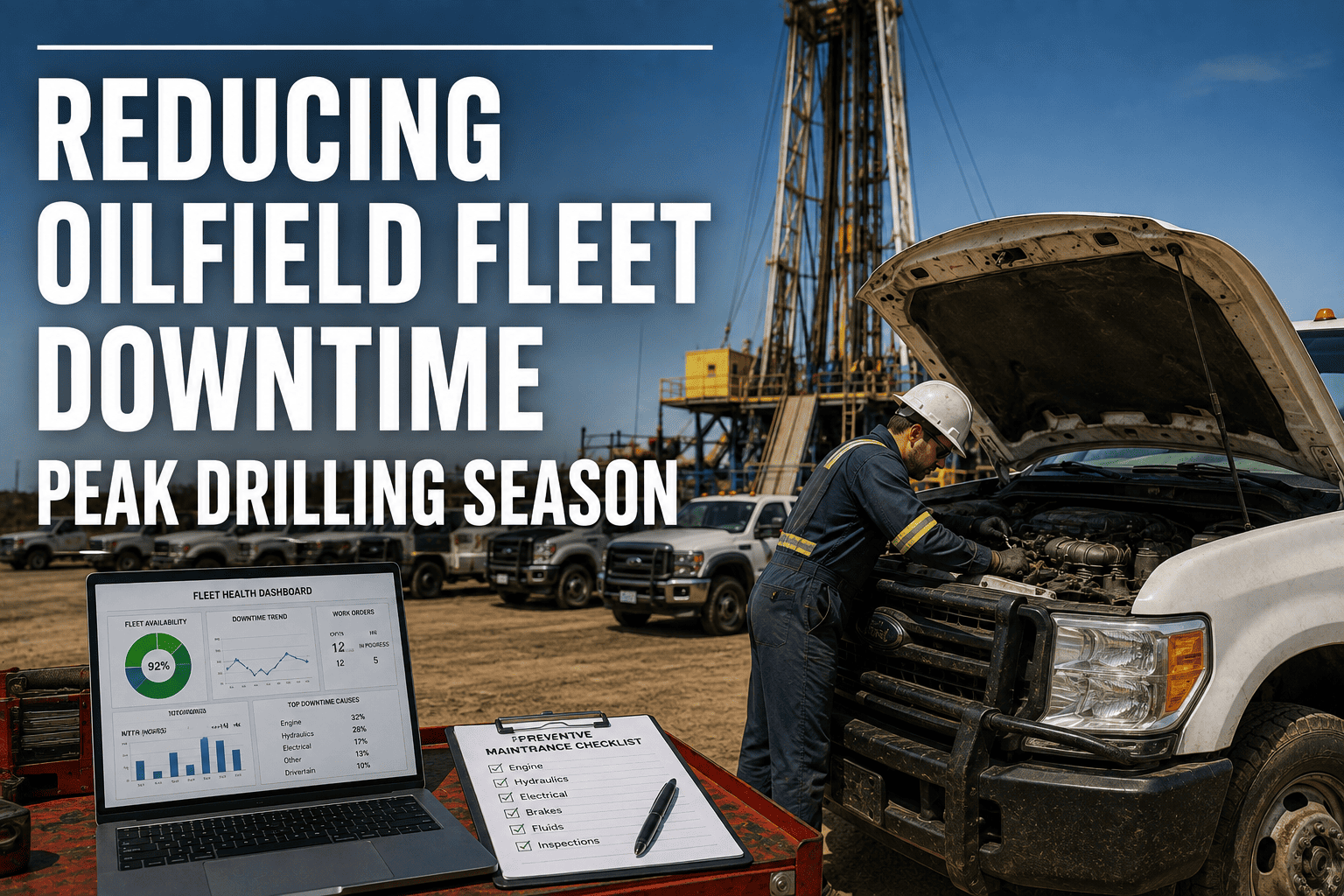
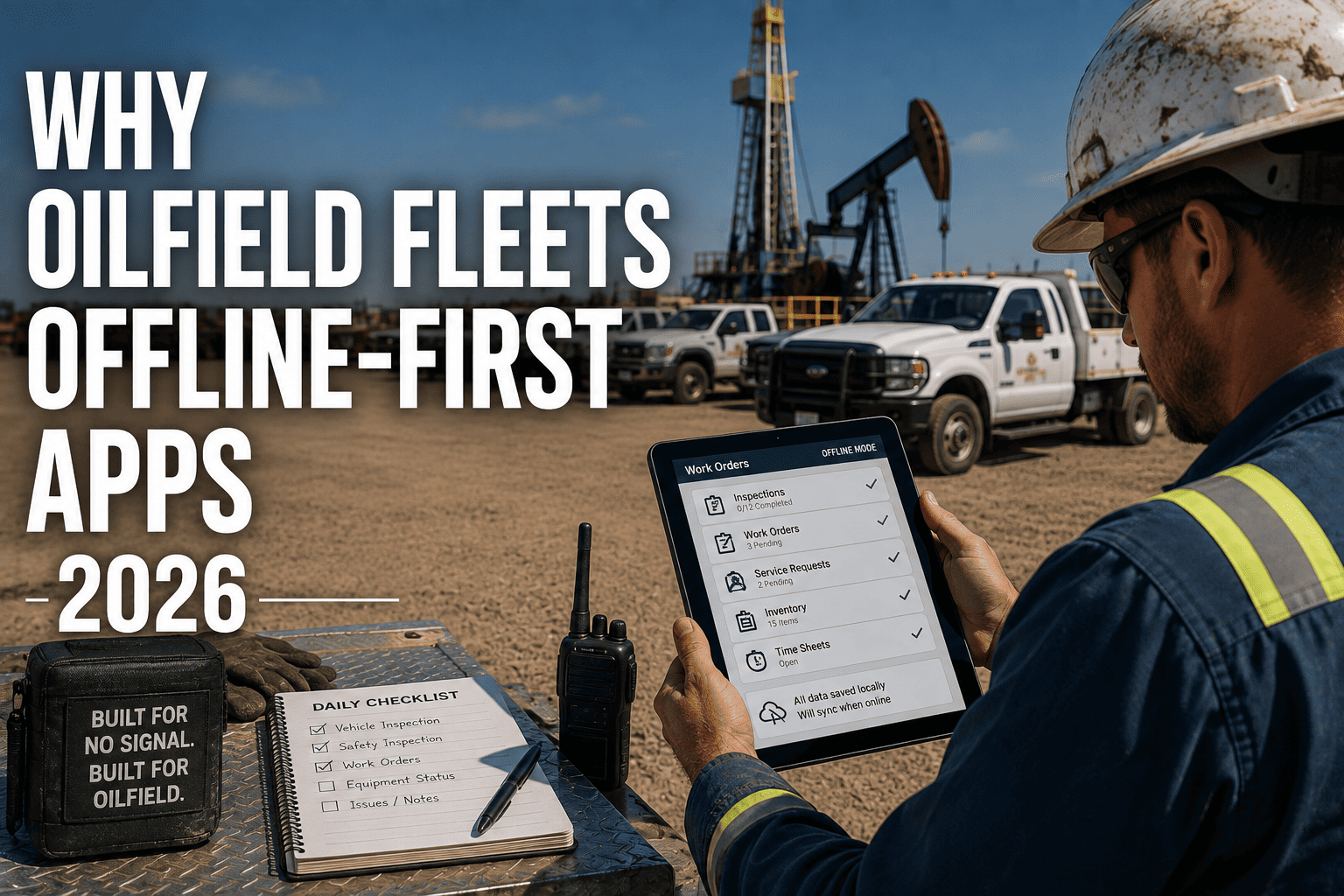
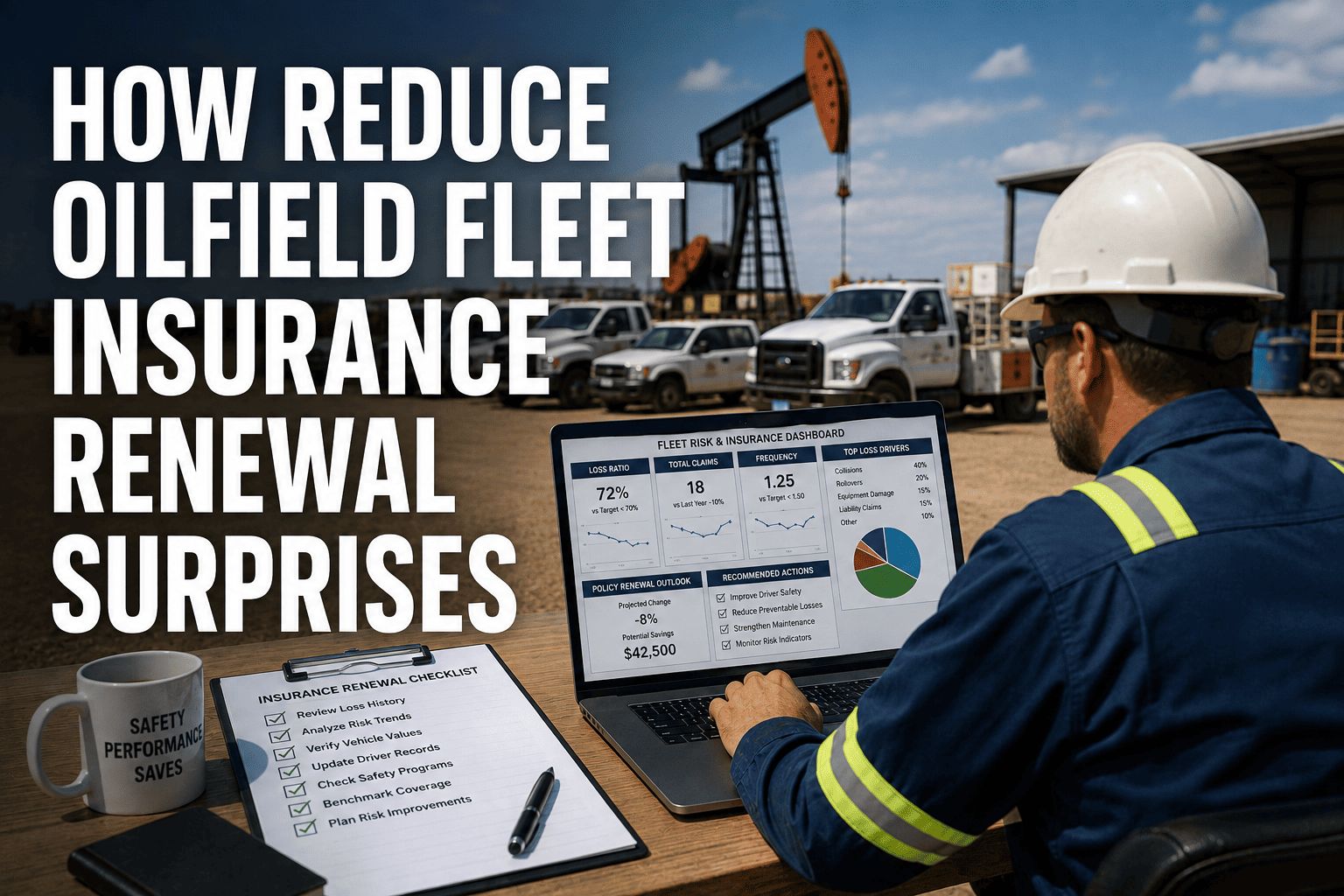
IoT-powered fleet monitoring in oil and gas transforms the fundamental economics of oilfield fleet management — converting raw equipment data from thousands of sensors across hundreds of mobile assets into actionable intelligence that reaches fleet managers and operations executives in real time, not at the end of a shift cycle or after a breakdown event has already happened. The oilfield environment generates more fleet-relevant sensor data per vehicle per hour than any other commercial transport application: engine diagnostic parameters, fuel tank levels, tyre pressure readings, hydraulic system temperatures, PTO engagement status, GPS position, atmospheric gas concentrations, and load weight measurements are all simultaneously available from a properly equipped oilfield vehicle. The problem is not the volume of data — it is that without an IoT fleet management platform purpose-built for oil and gas, that data arrives in incompatible formats from different hardware vendors, is stored in separate systems that cannot be cross-referenced, and is reviewed by maintenance teams days after the fault event that the data was signalling. FleetRabbit's IoT fleet monitoring platform ingests data from every sensor category across your oilfield fleet, cross-references it against AI-driven baseline models and compliance frameworks, and delivers equipment intelligence from wellsite to headquarters in real time — giving fleet managers the intervention window they need before a sensor reading becomes a breakdown, a compliance gap, or a regulatory enforcement action. Book a demo to see FleetRabbit's IoT fleet monitoring for oil and gas operations.
HERO BANDIoT Fleet Monitoring for Oil & Gas: Real-Time Equipment Intelligence from Well Site to HQ
FleetRabbit's IoT platform ingests data from engine diagnostics, fuel sensors, tyre monitors, hydraulic gauges, GPS, and atmospheric detectors across your entire oilfield fleet — cross-referencing 36+ variables in real time to deliver equipment intelligence that prevents breakdowns, catches compliance gaps, and reaches executives before problems compound.
Why Raw Sensor Data Without IoT Intelligence Fails Oilfield Fleet Operations
Most oilfield fleets generate enormous volumes of vehicle and equipment sensor data. Almost none of it is acted on in time to prevent the incidents, breakdowns, and compliance failures it was signalling days or weeks before they occurred. The gap between data generation and actionable intelligence is where oilfield fleet management costs accumulate.
OBD-II fault codes downloaded at scheduled maintenance visits. By then, the fault they were flagging has either resolved spontaneously or caused the failure it was predicting.
A fuel consumption anomaly alone looks like driver behaviour. Combined with a coolant temperature gradient and an engine RPM deviation, it looks like injector failure developing. Single-sensor monitoring cannot see the pattern.
Without an established operating baseline per vehicle and duty cycle, a sensor reading cannot be evaluated as normal or abnormal. A frac truck's normal coolant temperature profile is different from a service truck's — generic alerts produce false positives and miss real faults.
Cellular-only IoT systems lose contact the moment a vehicle enters a remote basin location. The data stops arriving. Fleet managers assume silence means normal operation — it means the monitoring stopped working.
FleetRabbit's AI engine monitors every sensor stream in real time — surfacing anomalies within minutes of occurrence and routing alerts to fleet managers before the fault progresses to failure stage.
FleetRabbit correlates fuel consumption, temperature, RPM, tyre pressure, hydraulic pressure, and GPS data simultaneously — identifying the multi-variable fault signatures that single-sensor monitoring cannot see.
FleetRabbit establishes a personalised operating baseline for each vehicle within 14 days, calibrated to vehicle type, duty cycle, load class, and basin environment — enabling accurate anomaly detection with under 3% false positive rate.
FleetRabbit uses dual-mode connectivity — cellular primary, satellite fallback — maintaining continuous IoT data transmission at remote wellsites beyond cellular coverage. No monitoring gap in basin interiors where equipment failures most commonly occur.
The Six IoT Sensor Categories FleetRabbit Monitors for Oilfield Fleets
FleetRabbit's IoT architecture ingests data from six sensor categories simultaneously — each contributing a distinct data stream to the composite equipment intelligence picture that fleet managers and executives receive in real time.
Engine & Drivetrain IoT
OBD-II port integration delivers 47 simultaneous engine parameters — coolant temperature, oil pressure, fuel trim, transmission temperature, turbo boost, RPM, load percentage, and fault code status — transmitted in real time over cellular or satellite to the FleetRabbit AI engine for baseline comparison and anomaly detection.
Fuel & Tank Level IoT
Ultrasonic, capacitive, or float-type fuel sensors provide continuous tank level telemetry — cross-referenced with engine status, GPS position, and shift schedules to distinguish legitimate consumption from unauthorised removal events in under 8 minutes of occurrence.
Tyre Pressure & Temperature IoT
Wheel-mounted TPMS sensors transmit real-time tyre pressure and temperature data for all axles — enabling AI-driven tyre failure prediction from developing pressure loss trends and abnormal heat signatures before blowout events occur on remote lease roads.
Hydraulic System IoT
Hydraulic pressure transducers, temperature sensors, and flow meters on tipper, crane, and PTO-driven equipment monitor system health in real time — detecting developing seal failures, contamination events, and pressure anomalies before they cause field hydraulic system failures during load operations.
Atmospheric & Gas Detection IoT
Vehicle-mounted and portable gas detection units transmit H₂S concentration, LEL readings, and O₂ levels to the FleetRabbit platform — providing fleet managers with atmospheric hazard data at every vehicle location to support zone classification decisions and driver evacuation triggers.
Load, Weight & Impact IoT
Axle load sensors and accelerometers monitor vehicle loading, weight distribution, and impact events — flagging overloading conditions before vehicles enter weight-restricted routes, and detecting collision-characteristic impact events that trigger automatic incident evidence capture in the FleetRabbit platform.
36 Variables. Real-Time. Well Site to Executive Dashboard.
FleetRabbit is the only IoT fleet monitoring platform purpose-built for oil and gas — ingesting data from all six sensor categories simultaneously and delivering cross-referenced equipment intelligence to fleet managers and operations executives in real time, including at remote locations beyond cellular coverage.
How FleetRabbit Converts Oilfield IoT Data Into Equipment Intelligence
Raw sensor readings from oilfield vehicles are not intelligence — they are numbers. FleetRabbit's IoT processing architecture converts those numbers into equipment intelligence through a four-stage pipeline that runs continuously across every connected asset in your fleet.
Multi-Source IoT Data Ingestion
FleetRabbit ingests simultaneous data streams from OBD-II ports, dedicated IoT sensors, mobile app inspection inputs, satellite telemetry, and integrated third-party hardware — normalising diverse data formats into a unified asset data model per vehicle.
AI Vehicle Baseline Establishment
Within 14 days of first data collection, FleetRabbit's AI engine establishes a personalised operating baseline for each vehicle — learning normal parameter ranges for the specific vehicle type, duty cycle, load class, terrain profile, and basin operating environment.
Multi-Variable Anomaly Detection
Every incoming sensor reading is compared against the vehicle's baseline across 36 simultaneous variables. Multi-variable correlation identifies fault signature patterns that single-sensor monitoring misses — generating a probability score that distinguishes genuine equipment anomalies from normal operational variance.
Automated Intelligence Routing
When anomaly probability exceeds the configured threshold, FleetRabbit automatically routes the finding to the correct recipient — fleet manager push notification, maintenance team work order, dispatch blocking, executive dashboard flag, or regulatory compliance escalation — with full evidence attached.
What IoT Fleet Intelligence Delivers to Operations Executives
For VP-level and C-suite operations leaders, IoT fleet monitoring is not a technology investment — it is a risk management and cost avoidance instrument with measurable returns that appear directly on operational P&L.
Live Equipment Health Across All Sites and Basins
Every vehicle across every basin and site displays a real-time health score on the FleetRabbit executive dashboard — composite of OBD-II anomaly status, open maintenance alerts, certification health, and IoT sensor deviation flags. Operations directors see the complete fleet equipment picture without requiring manual status reports from field supervisors. Data refreshes every 60 seconds.
Predictive Failure Intelligence — Before Drilling Delays Occur
FleetRabbit's AI risk engine identifies vehicles trending toward high-failure-probability status — combining rising OBD-II anomaly frequency, IoT sensor deviations, increasing driver defect reports, and approaching service interval overrun into a composite risk score. Operations executives receive automated alerts when a vehicle crosses the configured risk threshold, enabling scheduled grounding and servicing before field failure occurs and drilling programme downtime is triggered.
Insurance and Audit Evidence — IoT-Verified, On Demand
Every IoT-generated equipment event is stored in FleetRabbit's tamper-evident, timestamped record system. When a vehicle incident occurs, fleet executives can generate a complete evidence package — sensor readings at time of event, vehicle health history, driver behaviour data, GPS track, and inspection records — within minutes. Insurance carriers accept IoT-backed maintenance records for premium reduction negotiations, averaging 22% reduction at policy renewal.
ROI Quantification: IoT Investment vs. Downtime Avoided
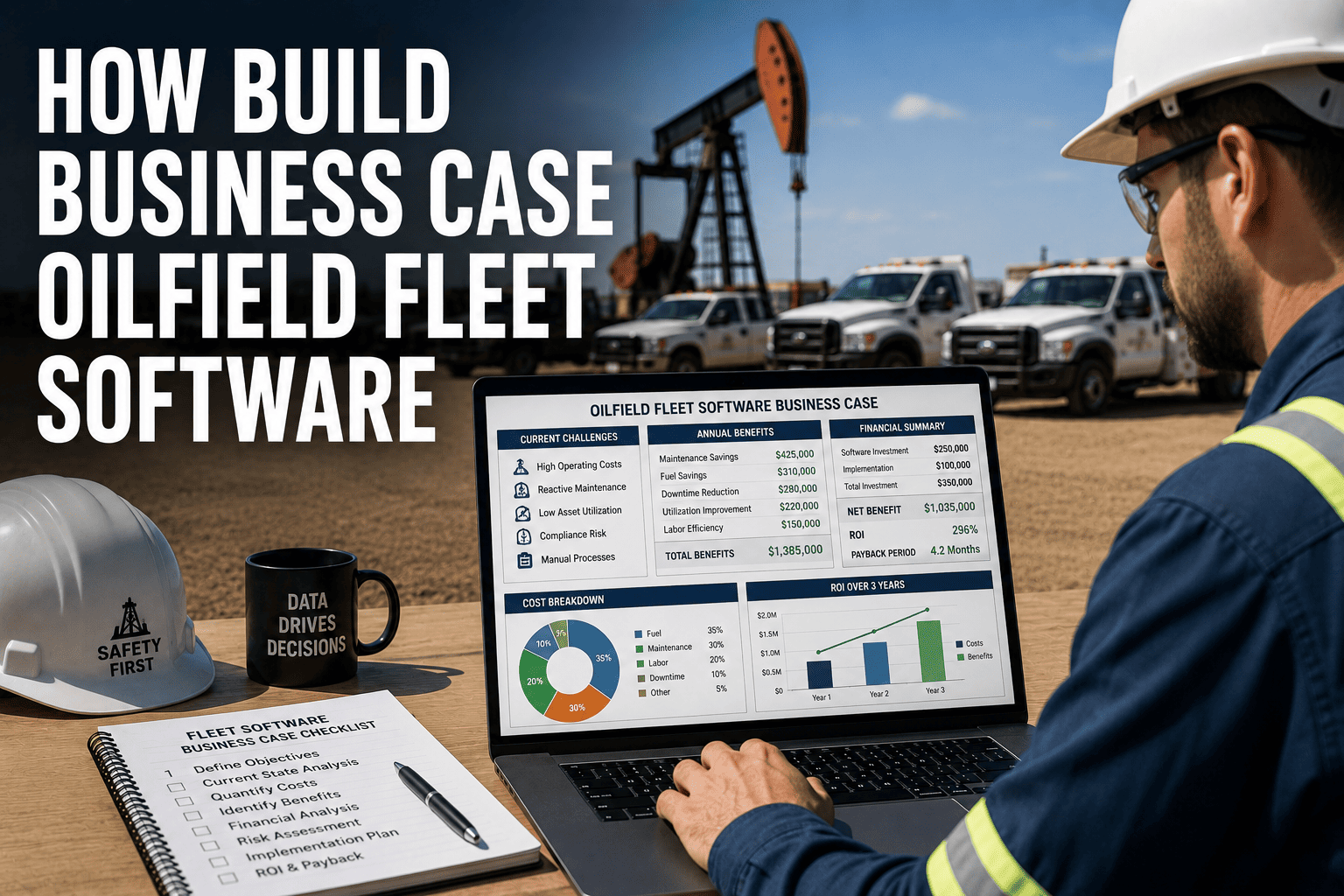
FleetRabbit's executive reporting module quantifies IoT-prevented breakdown events — each logged with estimated downtime cost, fleet manager alert timestamp, intervention taken, and outcome — enabling finance directors to calculate direct return on IoT monitoring investment. At $3/vehicle/month on a 100-vehicle fleet, the annual platform cost is $3,600. A single prevented drilling delay at $500,000/hour makes the ROI case in under 2 minutes of downtime avoided.
IoT Fleet Intelligence That Pays for Itself the First Time It Prevents a Remote Breakdown
FleetRabbit deploys IoT fleet monitoring on your oilfield fleet in 5–7 working days — hardware installation, AI baseline configuration, executive dashboard setup, and alert routing all included. At $3/vehicle/month, the platform pays for a 100-vehicle fleet in under 2 minutes of prevented drilling downtime per year.
Frequently Asked Questions
Connect Your Oilfield Fleet to Real-Time IoT Intelligence That Prevents Breakdowns Before They Happen
FleetRabbit's IoT fleet monitoring platform ingests data from all six sensor categories simultaneously — delivering 36-variable AI equipment intelligence to fleet managers and operations executives in under 8 minutes of any anomaly event, at any location, including remote wellsites beyond cellular coverage. Deployed on your oilfield fleet in 5–7 working days at $3/vehicle/month.