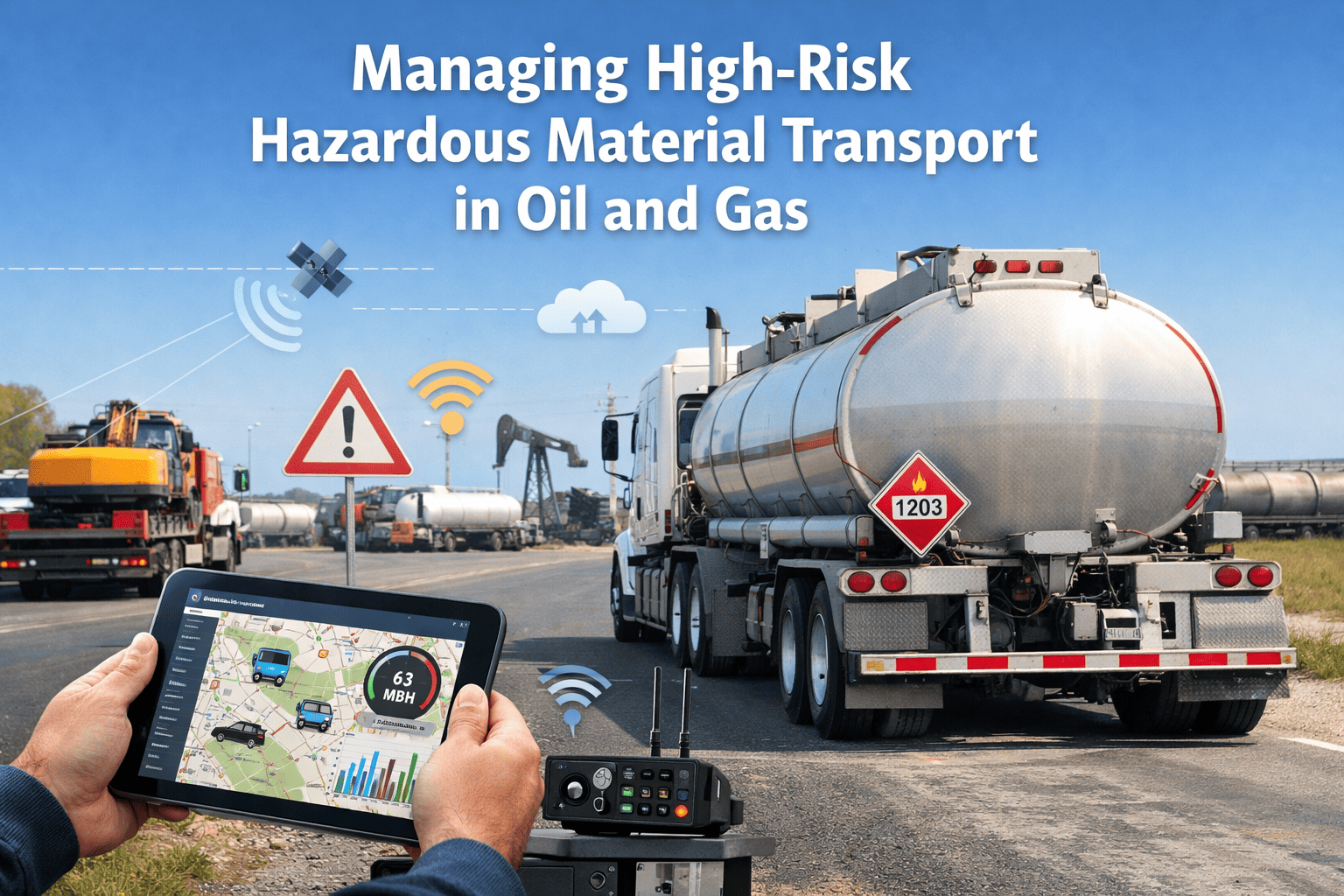
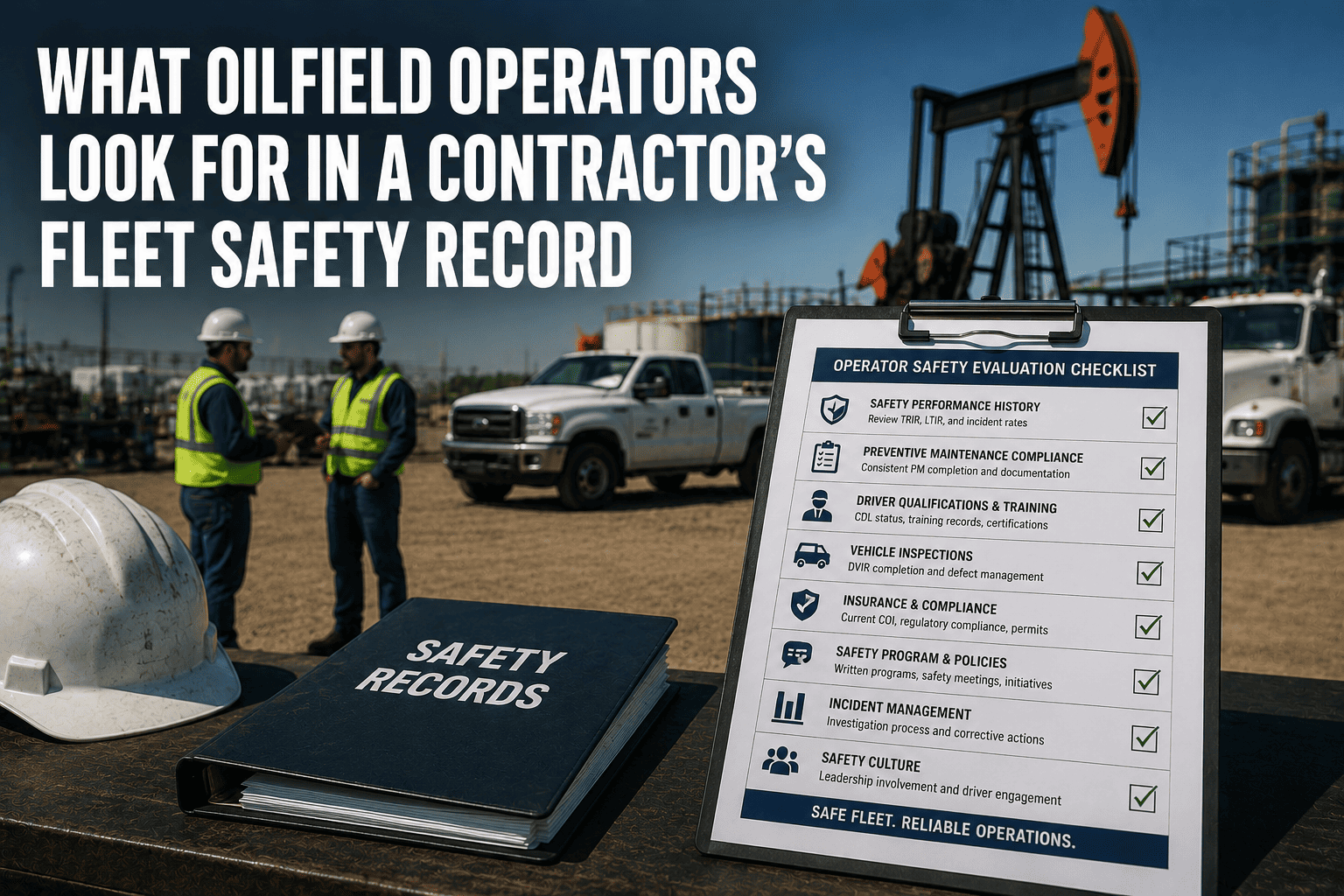
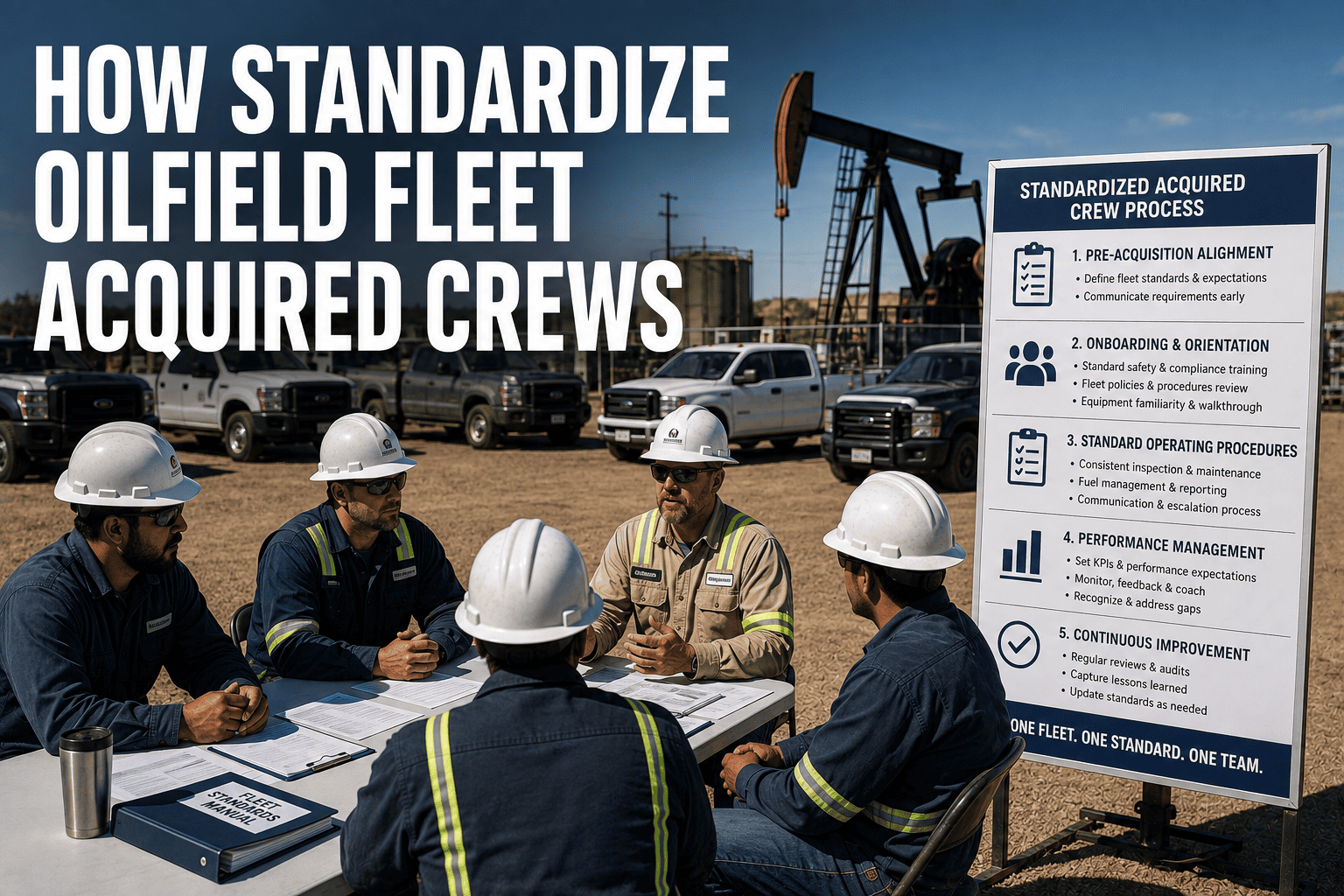
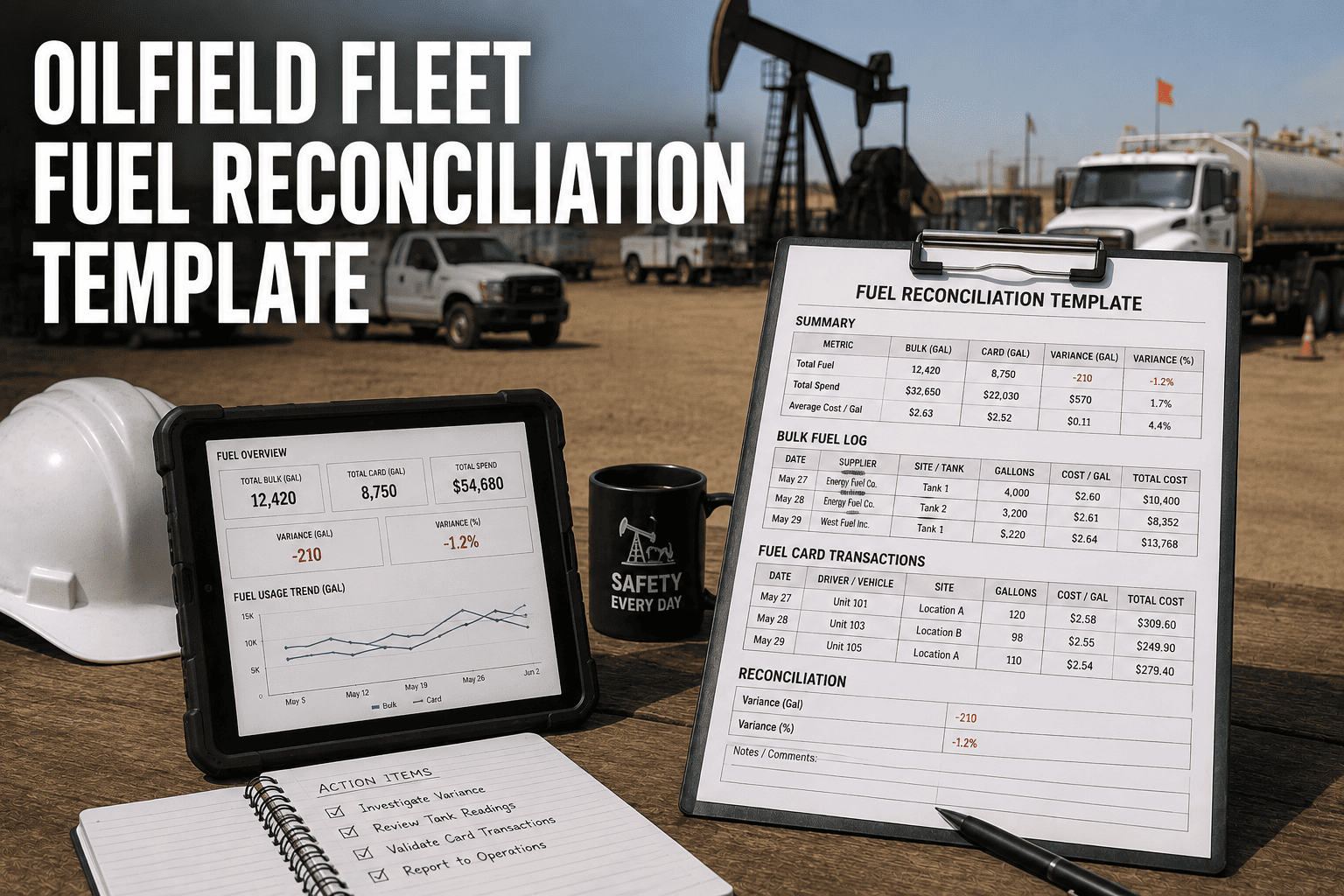
Oil and gas operations transport 2.4 million tons of hazardous materials annually across wellhead sites, refineries, and pipeline corridors — including Class 3 flammables (crude oil, diesel, methanol), Class 8 corrosives (hydrochloric acid, sodium hydroxide), Class 2 compressed gases (hydrogen sulfide, propane), and produced water containing NORM (Naturally Occurring Radioactive Material). A single non-compliant hazmat transport incident can trigger $250,000–$2.5M in penalties, operational shutdowns spanning 30–90 days, and criminal liability for fleet managers under DOT/ADR regulations that hold individuals personally accountable for compliance failures. Yet 68% of oilfield fleet operators manage hazmat transport through paper manifests, verbal driver briefings, and hope — creating catastrophic regulatory exposure when incidents occur and investigators discover systematic non-compliance spanning months or years. Book a demo to see how FleetRabbit's hazmat compliance platform eliminates regulatory risk while maintaining operational velocity.
Critical Compliance Framework
FleetRabbit's hazmat transport management system automates UN number classification, generates DOT-compliant shipping papers, enforces route restriction compliance, tracks driver certification expiry, monitors load segregation rules, and maintains complete audit trails — ensuring every chemical tanker, produced water haul, and compressed gas cylinder transport meets 49 CFR Part 172-177 (US), ADR/RID (Europe), or TDG (Canada) requirements. Real-time compliance validation prevents non-compliant shipments from departing facilities, while automated documentation ensures regulatory investigators find zero violations during unannounced inspections.
What Makes Hazardous Material Transport in Oil & Gas Uniquely High-Risk
Hazmat transport in oilfield operations differs fundamentally from general industrial chemical logistics. Remote wellhead locations lack emergency response infrastructure. Multi-jurisdictional routes cross varying regulatory frameworks. Equipment operates in extreme temperature conditions affecting chemical stability. Drivers handle multiple hazard classes in single journeys. These operational realities create compliance complexity that generic hazmat training cannot address.
Crude Oil (UN 1267): Flashpoint typically 0°C–60°C depending on API gravity. Requires Type I or II tank construction. Vapor accumulation creates explosion risk in confined spaces.
Diesel Fuel (UN 1202): Flashpoint >38°C. Lower fire risk than gasoline but still regulated. Common wellsite fuel delivery requiring placarding and shipping papers.
Methanol (UN 1230): Packing Group II. Used in hydrate inhibition and gas processing. Highly toxic — skin absorption causes blindness and death. Requires specific PPE and spill response equipment.
Compliance requirement: Emergency response info, 24-hour emergency contact number, approved tank construction, driver training on Class 3 fire suppression
Hydrochloric Acid 37% (UN 1789): Packing Group II. Used in well acidizing treatments. Vapors cause severe respiratory damage. Tank vents require scrubbing systems. Incompatible with oxidizers — segregation critical.
Sodium Hydroxide 50% (UN 1824): Packing Group II. Used in pH adjustment and drilling fluid treatment. Exothermic reaction with water. Causes severe chemical burns — full-face protection required during loading/unloading.
Sulfuric Acid >51% (UN 1830): Packing Group II. Extremely corrosive. Tank materials must resist acid attack. Spill neutralization requires specific procedures — water addition causes violent exothermic reaction.
Compliance requirement: Corrosion-resistant tanks (DOT 412), load segregation from oxidizers, spill containment minimum 110% of largest tank capacity, neutralization materials on vehicle
Hydrogen Sulfide (UN 1053): Division 2.3 (Toxic Gas). Immediately fatal at concentrations >700 ppm. Heavier than air — accumulates in low areas. Cylinder integrity monitoring critical. Detector equipment required during transport and handling.
Propane (UN 1978): Division 2.1 (Flammable Gas). Used for wellsite power generation and heating. Pressure relief valve testing required every 5 years. Overfilling creates rupture risk in hot weather — 80% fill limit enforced.
Nitrogen (UN 1066): Division 2.2 (Non-flammable compressed gas). Used in well servicing and pressure testing. Asphyxiation hazard in confined spaces despite non-toxic classification. Oxygen monitoring required when handling.
Compliance requirement: Cylinder inspection current (DOT 3AA/3AAX), pressure relief valve functional, proper securing (no rolling/shifting), gas detector equipment on vehicle for toxic gases
Produced Water Scale (NORM): Contains Radium-226 and Radium-228 from formation geology. Not classified as high-level waste but requires specific handling. Disposal only at licensed NORM facilities — cannot be sent to standard wastewater treatment.
Contaminated Equipment: Pipe scale, tank bottoms, filter housings from produced water handling. Radiation survey required before transport. Packaging must prevent contamination spread. Driver training on radiation safety mandatory.
Drilling Mud Residues: May contain elevated NORM from shale formations. Testing required to determine if radioactive material classification applies. Threshold: >70 Bq/g (2000 pCi/g) triggers Class 7 requirements.
Compliance requirement: Radiation survey before loading, shipping papers showing Bq/g or Ci, White-I or Yellow-II labels based on surface dose rate, driver NORM awareness training, manifest to licensed disposal facility
The Catastrophic Cost of Hazmat Non-Compliance in Oilfield Operations
Regulatory enforcement agencies — PHMSA (Pipeline and Hazardous Materials Safety Administration), FMCSA, EPA, state environmental regulators — conduct unannounced roadside inspections and facility audits with zero-tolerance policies for hazmat violations. Discovery of systematic non-compliance triggers cascading consequences that destroy operational continuity and create personal liability for fleet managers.
Day 0
Unannounced Roadside Inspection
PHMSA inspector stops chemical tanker at weigh station. Driver cannot produce current hazmat certification. Shipping papers missing UN number and emergency response info. Placard incorrect for load type. Inspector issues out-of-service order — vehicle impounded immediately. Driver prohibited from continuing. Cargo unloading required at shipper expense.
Immediate impact: $50K–$85K in violation fines, $12K impound fees, critical chemical delivery delayed 48+ hours affecting wellsite operations
Day 3–7
Facility Compliance Audit Triggered
Single roadside violation triggers unannounced compliance audit at company's operating facility. Investigators review: hazmat training records for all drivers, shipping paper archive for past 3 years, vehicle inspection documentation, load segregation procedures, emergency response plans. Discover systematic non-compliance across 40% of hazmat shipments over 18-month period.
Escalation impact: $380K–$840K in additional violations (each non-compliant shipment = separate violation), safety rating downgrade to "conditional" or "unsatisfactory"
Day 10–15
Operations Shutdown Order
PHMSA issues Compliance Order requiring immediate cessation of all hazmat transport pending corrective action plan approval. Company cannot transport crude oil, chemicals, compressed gases, or produced water — core business activities halted. Clients invoke force majeure clauses, moving contracts to compliant competitors. Revenue loss: $180K–$420K per week during shutdown.
Business continuity impact: 30–90 day operational shutdown, permanent loss of 3–5 major client contracts, $2.4M–$8.5M in lost revenue
Day 20–45
Criminal Referral to DOJ
Egregious or willful violations referred to Department of Justice for criminal prosecution under 49 USC §5124. Fleet manager and company executives personally charged with "knowing violation of hazmat regulations." Conviction carries prison sentence up to 5 years plus personal fines up to $500K. Corporate entity faces criminal fines up to $500K per violation count.
Personal liability impact: Criminal record, imprisonment, personal financial ruin, industry-wide unemployability. Corporate impact: business closure, asset liquidation, permanent industry ban
Month 3–12
Civil Litigation and Insurance Consequences
Commercial insurance carriers cancel liability coverage citing "material misrepresentation of hazmat compliance status" during policy underwriting. Securing replacement coverage requires 300–400% premium increase plus $2M deductible. Clients file breach-of-contract lawsuits for service failures during shutdown. Legal defense costs: $180K–$340K before settlement/judgment.
Long-term impact: Uninsurable in commercial market, settlement payments $450K–$1.2M, reputation damage prevents contract renewals, business viability destroyed
Regulatory Compliance Protection
Eliminate Personal Liability and Operational Risk Through Systematic Hazmat Compliance
Automate hazmat compliance and eliminate legal risks with FleetRabbit.
0
Compliance Violations Post-Implementation
100%
Audit-Ready Documentation
FleetRabbit's Six-Layer Hazmat Compliance Framework
Manual hazmat compliance fails because it relies on driver memory, supervisor diligence, and retrospective documentation. FleetRabbit automates compliance enforcement at every stage — from load planning through final delivery — ensuring regulatory requirements are met proactively rather than discovered missing during post-incident investigations.
Automated Material Classification and UN Number Assignment
Chemical inventory database pre-configured with UN numbers, hazard classes, packing groups, and segregation rules for all materials transported in your operations. Dispatcher selects material from dropdown (e.g., "Hydrochloric Acid 37%") — system automatically populates UN 1789, Class 8, Packing Group II, and generates proper shipping description per 49 CFR 172.202. Eliminates manual lookup errors that cause 42% of shipping paper violations.
Validation: System cross-references material against DOT Hazmat Table automatically. Invalid combinations blocked before shipment created.
Real-Time Driver Certification Verification
Hazmat driver training certificates tracked with expiry dates (49 CFR 172.704 requires renewal every 3 years). System prevents dispatch assignment to drivers with expired certifications. Automated alerts fire 90/60/30 days before expiry to schedule refresher training. During roadside inspection, driver produces certification from FleetRabbit mobile app — digital copy with QR code linking to company training records for inspector verification.
Validation: Attempted shipment assignment to non-certified driver triggers automatic block with notification to fleet manager. No override capability — compliance absolute.
Load Segregation Rule Enforcement
Dangerous goods segregation table (49 CFR 177.848) encoded into platform logic. Attempt to load incompatible materials on same vehicle (e.g., Class 8 acids + Class 5.1 oxidizers) triggers automatic rejection with explanation: "Segregation violation: Corrosives incompatible with Oxidizers per Table 1." Prevents chemical reactions during transport that cause 18% of serious hazmat incidents. Multi-compartment tankers: system validates each compartment's load against others.
Validation: Incompatible load combinations cannot be manifested in system. Physical loading prevented through mobile app verification at loading rack.
DOT-Compliant Shipping Paper Generation
Every required element per 49 CFR 172.202-203 auto-populated: proper shipping name, UN number, hazard class, packing group, total quantity, emergency response contact (24-hour number), special provisions, reportable quantity (RQ) notation if applicable. Shipping papers available digitally in driver mobile app plus printed copy at dispatch. Format meets DOT requirements — first item or highlighted in contrasting color. Emergency responders access shipping info via QR code even if driver incapacitated.
Validation: Incomplete shipping papers cannot be finalized. System checklist ensures all required elements present before "Release for Transport" button activates.
Route Planning with Hazmat Restriction Compliance
Hazmat route restrictions encoded by jurisdiction: tunnel prohibitions (Class 2.3 toxic gases banned from many tunnels), bridge weight limits, populated area restrictions for certain materials, time-of-day restrictions in urban zones. GPS routing suggests compliant paths automatically. Driver deviation from approved route triggers alert to dispatcher with automatic incident report generation. Prevents violations that occur when drivers choose "faster" routes through restricted areas.
Validation: Planned route analyzed against FMCSA hazmat restriction database. Non-compliant route flagged before dispatch. Alternative compliant route suggested automatically.
Complete Audit Trail and Regulatory Reporting
Every shipment logged with: material type, quantity, UN number, driver certification status at time of dispatch, route taken (GPS verified), delivery confirmation, any incidents or delays. Data retention exceeds regulatory minimums (3 years for shipping papers, 5 years for training records). Regulatory audit request: "Provide all hazmat shipments for past 18 months" — generated in 8 minutes via automated report. Export formats match agency requirements (PHMSA, FMCSA, state regulators). Incident investigation: complete timeline reconstruction from system records rather than driver recollection.
Validation: All compliance checkpoints timestamped and logged immutably. Regulatory investigators find complete, consistent documentation demonstrating systematic compliance rather than ad hoc processes.
Critical Hazmat Compliance Metrics FleetRabbit Tracks Automatically
Driver Certification Compliance Rate
Target: 100% of hazmat drivers hold current certification
Tracks number of certified drivers vs total hazmat driver pool. Automated alerts prevent assignment to non-certified drivers. Expiry tracking ensures renewals completed 30+ days before certification lapses. Non-compliance discovered during roadside inspection results in immediate out-of-service order plus $15K–$75K penalty per violation.
Shipping Paper Accuracy Rate
Target: 100% of shipments with complete, accurate documentation
Measures percentage of shipments with all required elements per 49 CFR 172.202: proper shipping name, UN number, hazard class, packing group, total quantity, emergency contact. Incomplete shipping papers are #1 violation type discovered in roadside inspections — 67% of all hazmat citations. Automated generation eliminates human error that creates documentation gaps.
Route Compliance Percentage
Target: 100% of shipments follow approved hazmat routes
GPS tracking validates actual route taken vs planned compliant route. Deviations flagged and investigated — was it legitimate detour (road closure, accident) or driver shortcuts through restricted area? Route violations create liability when incidents occur in prohibited zones. System prevents "I didn't know" defense by documenting compliant route was provided to driver before departure.
Segregation Violation Prevention Rate
Target: Zero incompatible material combinations loaded
Tracks attempted incompatible loads blocked by system vs total multi-material shipments. Segregation violations cause chemical reactions during transport — mixing acids with oxidizers can trigger fires or explosions. Manual checking by dispatchers catches 78% of violations (when they remember to check). Automated validation catches 100% because system cannot be overridden.
Incident Reporting Timeliness
Target: 100% of reportable incidents reported within regulatory timeframes
DOT requires immediate notification (within 24 hours) for serious incidents: death, injury requiring hospitalization, >$50K property damage, evacuation >1 hour, fire/explosion, radioactive contamination. Late reporting or non-reporting adds $25K–$175K in penalties on top of incident consequences. Automated incident logging ensures compliance team notified immediately when reportable thresholds exceeded.
Audit Readiness Score
Target: 95%+ compliance across all regulatory checkpoints
Composite metric covering: training records completeness, shipping paper archive completeness, vehicle inspection documentation, emergency response plan currency, hazmat security plan (if required). Score predicts outcome of unannounced compliance audit. Below 90%: high risk of violations and penalties. Above 95%: audit likely results in zero findings. Monthly audit simulation identifies gaps before regulators do.
Real-World Hazmat Compliance Outcomes
0
Hazmat Violations in 24 Months Post-Implementation
Across 340-vehicle oilfield service fleet transporting Class 3, 8, and 2 materials daily. Pre-implementation baseline: 18 violations over prior 24 months totaling $420K in penalties. Post-implementation: zero violations discovered during 3 unannounced PHMSA audits and 47 roadside inspections.
8 minutes
Regulatory Audit Response Time
Average time to produce complete compliance documentation when regulators request "all hazmat shipments for past 18 months plus driver training records." Pre-implementation: 12–18 days of manual file searching. Post-implementation: 8 minutes via automated report export. Rapid response demonstrates systematic compliance rather than scrambling to assemble missing documentation.
$680K
Penalty Avoidance in Year 1
Estimated violation penalties prevented through: driver certification compliance ($180K avoided), complete shipping papers ($240K avoided), route compliance ($95K avoided), segregation violation prevention ($85K avoided), timely incident reporting ($80K avoided). ROI calculation: $680K penalties avoided vs $120K platform investment = 5.7x return in first year.
100%
Insurance Compliance Verification
Commercial liability carrier requires annual hazmat compliance audit as policy condition. FleetRabbit compliance dashboard provides instant verification — reducing annual insurance audit from 3-day process to 45-minute review. Maintained "excellent" safety rating enabling 22% lower premium vs industry average for hazmat operations.
"We transport 850 loads of Class 8 acids and Class 3 crude oil monthly across Texas, New Mexico, and Oklahoma — each state has different routing restrictions, each material has specific segregation rules, and every driver must hold current hazmat certification. Before FleetRabbit, we managed it all through Excel spreadsheets and paper manifests. We had 4 serious violations in 18 months totaling $280K in fines. After PHMSA's last violation, they told us bluntly: 'Fix your compliance system or we'll shut you down.' FleetRabbit implementation took 3 weeks. System automatically validates every shipment against DOT requirements before it leaves the yard. Drivers can't be assigned to hazmat loads if their certification expired. Shipping papers generate automatically with all required elements. We've had zero violations in 2 years despite 6 unannounced roadside inspections. When PHMSA auditor came last month, we generated 18 months of compliance documentation in 9 minutes — he said it was the cleanest audit he'd conducted that quarter. This platform saved our business and probably kept me out of prison for criminal non-compliance."
Fleet Compliance Director
Regional Oilfield Chemical Transport — Permian Basin Operations
Frequently Asked Questions
QDoes FleetRabbit's hazmat compliance platform satisfy DOT, ADR, and TDG requirements simultaneously for multi-jurisdictional operations?
Platform includes regulatory frameworks for US (49 CFR Parts 172-177), Europe (ADR/RID), and Canada (TDG). Companies operating across jurisdictions configure which framework applies to each route. System enforces jurisdiction-specific requirements automatically — no manual switching. Example: shipment from US to Canada uses 49 CFR requirements for US portion, transitions to TDG requirements at border crossing. Shipping papers include both frameworks' required elements to satisfy inspectors in either jurisdiction.
QWhat happens if driver encounters emergency requiring deviation from approved hazmat route?
Driver uses mobile app to document emergency route deviation in real-time: road closure, accident, severe weather, or other legitimate cause. GPS tracking records actual path taken. Documentation created contemporaneously protects against violation claims. Regulators accept emergency deviations when properly documented — problem occurs when deviations are undocumented or discovered only during post-incident investigation. FleetRabbit ensures every deviation has timestamped justification rather than relying on driver recollection weeks later.
QHow does system handle materials requiring both hazmat compliance AND environmental waste manifests?
Produced water containing NORM, drilling waste, contaminated soil — these materials require both DOT hazmat shipping papers AND EPA/state waste manifests. FleetRabbit integrates both documentation requirements. Single load entry triggers both: DOT-compliant shipping paper with UN number/hazard class AND waste manifest with EPA ID numbers, waste codes, generator certification. Prevents common error where driver has shipping papers but missing waste manifest (or vice versa), causing rejection at disposal facility after 3-hour drive to remote location.
Book demo to review integrated waste+hazmat workflows.
QCan FleetRabbit generate hazmat employee training certificates that satisfy 49 CFR 172.704 requirements?
Platform tracks training completion dates and generates certificates documenting: employee name, training completion date, trainer name/title, training topics covered (general awareness, function-specific, safety, security awareness, in-depth security if applicable), certification period (3 years from completion). Certificates meet regulatory requirements for content and format. During roadside inspection or compliance audit, digital certificates produced from driver mobile app or manager dashboard. Eliminates "certificate lost" or "not sure when training expires" situations that trigger violations.
QHow quickly can FleetRabbit be deployed for operations currently managing hazmat through manual processes?
Typical implementation: Week 1-2 = configure material database with your transported chemicals (UN numbers, hazard classes, segregation rules), upload driver training records, define approved routes. Week 3 = train dispatchers and drivers on platform. Week 4 = parallel operation (FleetRabbit + legacy manual system) to validate accuracy. Week 5+ = full transition, legacy manual processes discontinued. Most oilfield operations achieve full compliance platform deployment in 4–6 weeks from contract signature. Critical factor: completeness of existing training and vehicle inspection records — more complete records = faster migration.
Protect Your Business and Personal Freedom — Eliminate Hazmat Compliance Risk
FleetRabbit's automated hazmat compliance platform prevents the violations that trigger operational shutdowns, criminal prosecution, and business destruction — ensuring every chemical transport meets DOT/ADR requirements before leaving your facility.
Zero Compliance Violations
Automated Shipping Papers
Driver Certification Tracking
Route Compliance
Audit-Ready Documentation
Load Segregation Rules
April 14, 2026
By David
All Posts