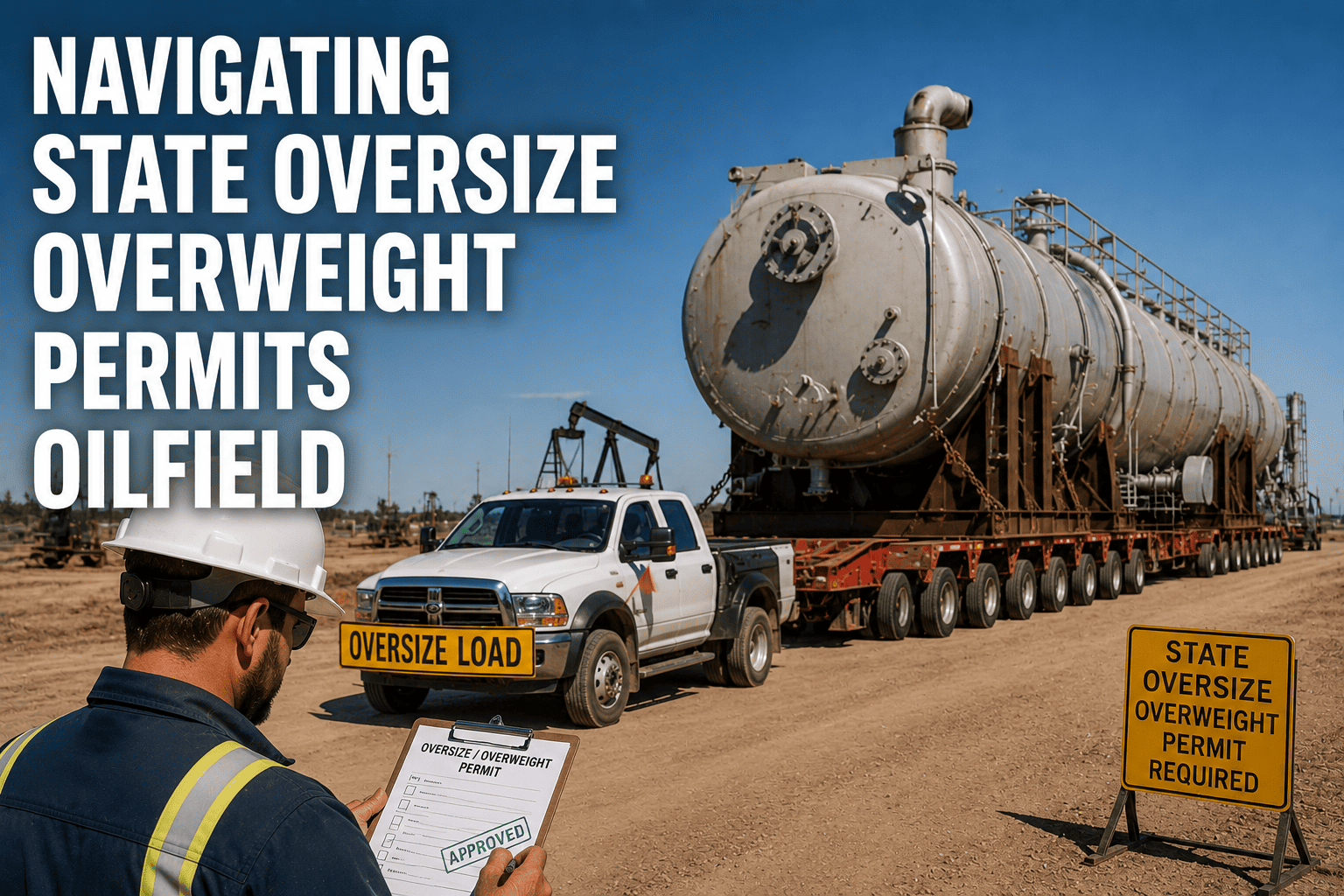
A rig move crosses three states to reach the next pad, and the load looks identical to the one that made the same trip two months ago. It is not. A different mast configuration adds eight inches of width, and that eight inches is enough to push the load from a routine permit into escort territory in the second state on the route. Nobody catches it until a weigh station does. Oversize and overweight rules do not care that the load is oilfield equipment moving between two wells the crew has worked before. Each state, each dimension, and each route gets checked against its own rulebook every time.
Oversize and overweight permits are issued by individual states, not the federal government, and requirements for width, height, weight, escort vehicles, and travel windows vary from state to state along the same route. Most states set the legal width around 8 feet 6 inches and height near 13 to 14 feet, with escort requirements typically starting between 10 and 12 feet wide. Oilfield loads add complexity because equipment dimensions vary by job and routes often cross multiple states in a single move. See how permit and route tracking works across your fleet with a free FleetRabbit trial.
What Triggers an Oversize or Overweight Permit
Every state sets its own legal size and weight limits, but the categories that trigger a permit follow a consistent pattern across nearly all of them.
Why Oilfield Loads Are Uniquely Complicated
Oversize and overweight rules apply the same way to every industry, but oilfield hauling creates a pattern of complexity that standard freight rarely faces.
Multi-State Rig Moves
A single rig relocation can cross two or three states in one trip, and each state issues its own permit with its own dimension limits, route restrictions, and travel windows for the exact same load.
Variable Equipment Dimensions
Unlike standardized freight, oilfield equipment configurations change job to job. A mast, substructure, or generator package that fit under one state's routine permit threshold last month can exceed it on the next move with a different configuration.
Oil and Gas Road-Use Exemptions
Some states grant specific weight exemptions or road-use agreements for oil and gas equipment on designated routes, which can work in an operator's favor, but only if the crew knows which roads the exemption actually covers.
| Factor | Standard Oversize Freight | Oilfield Heavy Haul |
|---|---|---|
| Load Consistency | Same dimensions across repeat shipments | Configuration changes by job, altering dimensions each move |
| Route Pattern | Often a single state or fixed corridor | Frequently crosses two or more states per rig move |
| Permit Duration | Matched to a scheduled delivery window | Often single-trip permits valid only 4 to 5 days |
| Weight Exemptions | Rarely applicable | Some states offer oil and gas specific road-use exemptions |
FleetRabbit organizes permit status, expiration windows, and route documentation for every state your oilfield loads cross, so nothing gets missed between the yard and the next pad. Try it free with your current fleet, or walk through your own route permits with our team.
Reading a Permit Correctly Before the Load Moves
A permit in hand is not the same as a permit that has actually been read and understood. Every issued permit sets specific conditions, and missing any one of them turns a legal move into a violation.
Route Restrictions
Permits typically specify the exact approved route, including any bridges, tunnels, or local roads that are excluded. Deviating from that route, even for a shorter path, can invalidate the permit.
Time-of-Day Travel Windows
Most states restrict oversize travel to daylight hours, with some allowing weekend movement and others limiting or prohibiting it, particularly for wider or heavier configurations.
Escort Vehicle Requirements
The permit specifies how many escort vehicles are required and where they must be positioned, front, rear, or both, based on the load's exact width and height.
Expiration Windows
Single-trip oilfield permits are often valid for only a matter of days. A rig move delayed by weather or a mechanical issue can outlast its own permit before it ever reaches the new location.
The Cost of Getting It Wrong
A load moving without a current, correctly matched permit faces fines, detention at a weigh station, and in some cases a full route rejection that forces a rig crew to turn back and wait for a corrected permit before continuing. Because oilfield equipment dimensions shift from job to job and routes frequently span multiple states, the same rig can be fully compliant on one move and technically in violation on the next without a single change in how the crew operates. If you want to see how permit tracking works across a multi-state route your fleet actually runs, it is worth taking a few minutes to book a demo with the FleetRabbit team.
An oilfield fleet moving heavy equipment across state lines is really managing dozens of small, shifting rulebooks at once, not one fixed standard. Staying ahead of that means tracking dimensions, permits, and expiration windows together, not reacting to whichever one a weigh station flags first. If your fleet is ready to organize oversize and overweight compliance across every route it runs, start a free trial with FleetRabbit or book a short demo to see your own routes mapped against current permit rules.
FleetRabbit organizes oversize and overweight permit status, escort requirements, and expiration windows across every state your oilfield loads travel through. Get started today, no credit card required.