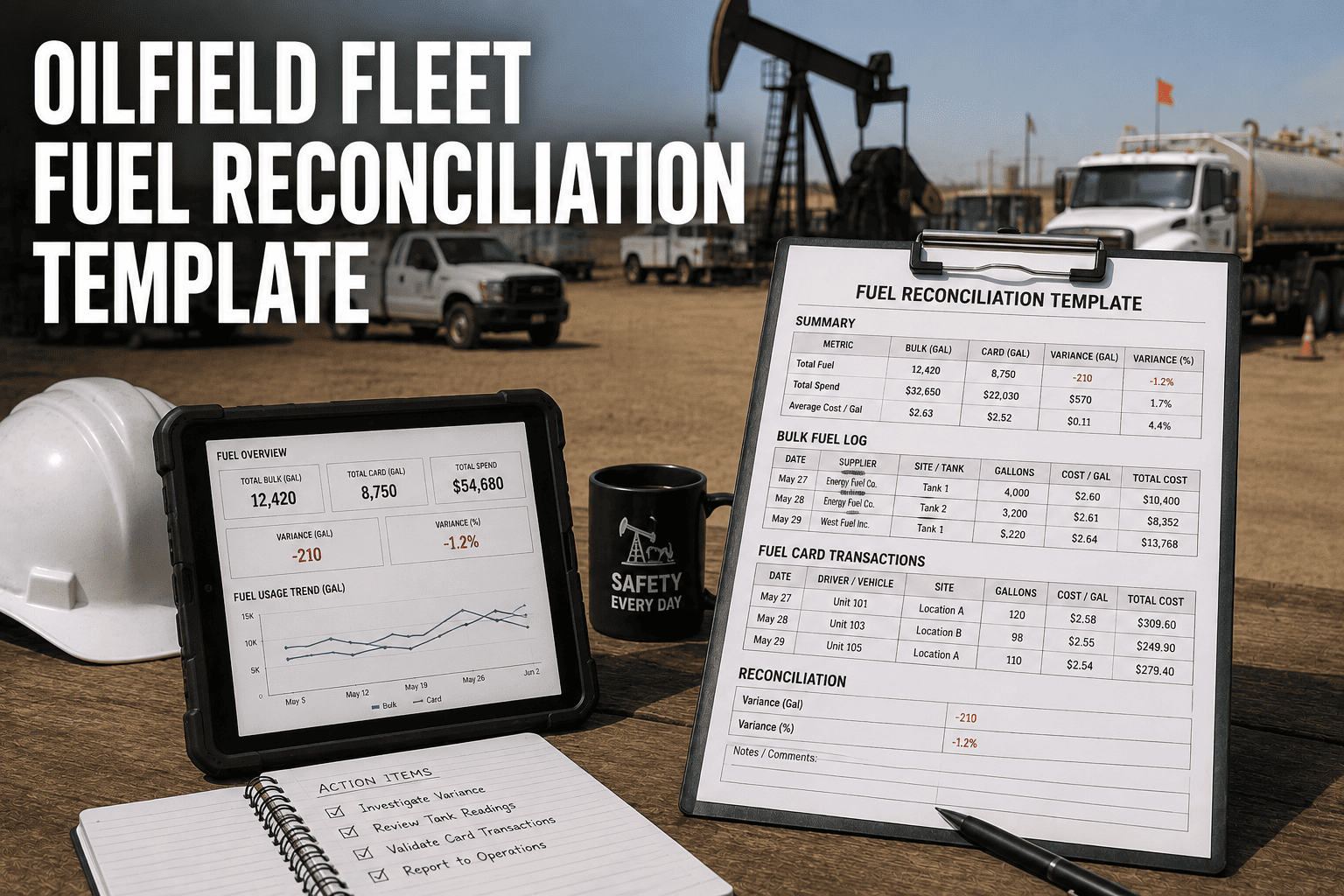
Oilfield fleet operators face unique maintenance challenges: remote well sites, harsh operating conditions, and equipment that runs on engine hours rather than mileage. When preventive maintenance is missed or scheduled incorrectly, unplanned downtime can halt production and cost thousands per hour. Fleet Rabbit's preventive maintenance platform for oil and gas fleets automates service scheduling based on engine hours, operating conditions, and manufacturer intervals — keeping critical equipment running where it matters most. Book a Demo to see Fleet Rabbit in action.
3–5 days
Average deployment time for preventive maintenance workflows across oilfield fleets
96%
Preventive maintenance compliance achieved with automated engine-hours scheduling
$5/vehicle/mo
Starting price for full preventive maintenance, scheduling, and compliance features
40%
Reduction in unplanned maintenance events reported by oilfield fleet customers
Preventive Maintenance That Works Where Your Fleet Operates.
Fleet Rabbit automates oilfield PM scheduling using engine hours, operating conditions, and manufacturer intervals — not just mileage. Technicians receive assignments on mobile devices with offline support, parts usage is tracked in real time, and compliance documentation generates automatically for FMCSA, API, and state-level audits.
The Hidden Cost of Manual Preventive Maintenance in Oilfield Operations
Before exploring solutions, understand the root causes of maintenance gaps in energy fleets. Paper-based schedules, mileage-only triggers, and disconnected inspection reports introduce systemic risks that compound in remote, high-stakes environments.
Mileage-Only Scheduling Misses Engine-Hour Reality
Oilfield equipment often idles or operates at low speeds for extended periods. Scheduling maintenance by mileage alone leads to overdue services and premature component wear.
PM Compliance Drops Without Automated Tracking
Manual spreadsheets and calendar reminders miss services when vehicles operate across multiple sites. Overdue PMs increase breakdown risk and compliance exposure.
Parts and Labor Data Is Fragmented
Without digital tracking, parts usage and technician hours are estimated or recorded after the fact. This leads to inaccurate cost analysis and missed opportunities for preventive optimization.
Compliance Documentation Requires Manual Compilation
FMCSA, API, and state audits require detailed maintenance records. Manual systems make it difficult to produce complete, accurate documentation when inspectors request it.
How Fleet Rabbit Solves Oilfield Preventive Maintenance Challenges
Fleet Rabbit replaces disconnected paper processes with a unified maintenance platform built for energy operations. PM schedules auto-generate based on engine hours or operating conditions, technicians receive assignments on mobile devices, and compliance records generate automatically. See a live demo of oilfield preventive maintenance workflows.
01
Engine Hours-Based PM Scheduling
Schedule maintenance based on engine hours, mileage, calendar intervals, or custom operating conditions. Critical for oilfield equipment that operates under variable duty cycles.
02
Mobile Technician App with Offline Support
Technicians receive PM assignments, log labor hours, record parts used, and mark completions from iOS or Android devices. Works offline in remote locations with auto-sync when connected.
03
Custom PM Task Templates with SOPs
Create equipment-specific maintenance programs with your own standard operating procedures, photos, conditional checklists, and task requirements. No more generic templates.
04
Real-Time Sensor Monitoring Integration
Access odometer readings, engine hours, fuel levels, and diagnostic codes directly from the dashboard. Use sensor data to trigger condition-based maintenance before failures occur.
05
Automated Compliance Documentation
Every completed PM captures required FMCSA 396.3 documentation: date, vehicle ID, work performed, technician name, and supervisor authorization. Export audit-ready reports with one click.
06
Multi-Location Fleet Oversight
Manage PM schedules across well sites, maintenance yards, and regional offices from a single dashboard. Filter by location, assign tasks, and monitor completion status in real time.
Regulatory Framework Support: Built for Energy Sector Compliance
Compliance reporting is pre-configured for oil and gas operations. No custom templates, no manual compilation.
FMCSA 396.3 Maintenance Records
Complete preventive maintenance history with technician signatures, parts used, and service documentation formatted for DOT audits and roadside inspections.
API & PHMSA Standards
Track equipment certifications, inspection deadlines, and integrity management requirements across operating jurisdictions with proactive renewal alerts.
HSE Documentation Standards
Link safety observations from field inspections to corrective action PM tasks. Maintain auditable trails for incident investigations and regulatory reviews.
EPA Emissions Reporting
Capture engine hours, fuel consumption, and maintenance events that support emissions calculations for federal and state environmental submissions.
Fleet Rabbit Deployment Roadmap for Oilfield Fleets
Fleet Rabbit follows a practical 4-stage deployment methodology designed for energy operations — delivering pilot results within the first week and full fleet rollout by day 14. No open-ended implementations. No operational disruption. No mandatory hardware purchases.
01
Fleet Audit
Map assets, PM workflows, and compliance requirements
02
System Integration
Connect telematics, fuel cards, and dispatch systems
03
Pilot Configuration
Configure engine-hours PM triggers for high-priority vehicle groups
04
Training & Validation
Train field technicians and validate PM workflows with real data
05
Full Production
Expand to entire fleet with ongoing support
14-Day Deployment and Realistic ROI Expectations
Every Fleet Rabbit engagement follows a structured 14-day program with defined deliverables per phase. ROI indicators typically emerge within the first 30–60 days of full production, depending on fleet size and operational complexity. Request the full deployment scope document tailored to your fleet size and operational profile.
Days 1–3
Discovery & Integration
Asset audit covering vehicle types, current PM workflows, and compliance requirements across well sites
API connection to existing telematics, fuel card providers (WEX, Fleetcor), and dispatch systems — no hardware replacement required
Historical maintenance and inspection data ingestion to establish baseline PM intervals
Days 4–10
Pilot Configuration
Configure engine-hours-based PM scheduling for highest-priority vehicle groups (e.g., wellhead service trucks, pipeline inspection units)
Train field technicians on mobile app usage, including offline workflows for remote locations
Validate automated PM generation with real engine hour data from pilot vehicles
Days 11–14
Scale & Optimize
Expand PM workflows to full fleet with location-based filtering and role-based access
Activate automated compliance reporting for FMCSA, API, and state oil & gas regulations
Deliver baseline metrics report: current PM compliance rate, unplanned maintenance frequency, and maintenance cost per vehicle
REALISTIC OUTCOMES: MEASURABLE IMPROVEMENTS WITHIN 30–60 DAYS
Fleets completing the 14-day deployment program typically see measurable improvements in preventive maintenance compliance within the first 30–60 days. One operator with 450 oilfield service vehicles reported a 35% reduction in maintenance costs and 45% improvement in equipment uptime after implementing Fleet Rabbit's preventive maintenance and scheduling modules. Results vary based on fleet size, existing processes, and adoption rates.
40%
Fewer Unplanned Repairs
3–5 days
Avg. Deployment Time
Automate Oilfield Preventive Maintenance. Reduce Downtime. Stay Compliant.
Fleet Rabbit's fixed-scope deployment means no open timelines, no mandatory hardware installation, and no months of customization before you see workflow improvements. Start at $5/vehicle/month with the first 3 vehicles free forever.
Use Cases and Documented Results from Energy Fleet Deployments
These outcomes are drawn from Fleet Rabbit deployments at operating oil and gas fleets. Each use case reflects post-deployment performance data shared by customers. Request the full case study for the fleet type most relevant to your operations.
A regional operator managing 45 wellhead service vehicles was relying on mileage-based scheduling that didn't account for variable engine hours in field operations. Fleet Rabbit's engine hours-based PM scheduling shifted maintenance to condition-based triggers, reducing missed services and improving equipment availability.
A midstream operator with 120 pipeline inspection vehicles needed better visibility into field maintenance across remote locations. Fleet Rabbit's mobile app with offline support allowed technicians to receive PM assignments, log labor and parts, and mark completions without returning to base stations.
An upstream operator managing 85 drilling support trucks needed audit-ready maintenance records for FMCSA and state regulators. Fleet Rabbit's PM system automatically captured required documentation fields and generated compliance reports on demand, reducing audit preparation time.
What Oilfield Fleet Teams Say About Fleet Rabbit
Switching to engine hours-based PM scheduling was a game changer. Our wellhead service trucks often idle for hours at remote sites — mileage-based scheduling was missing critical services. With Fleet Rabbit, we now trigger maintenance based on actual engine runtime. PM compliance went from 78% to 96% in three months.
Fleet Maintenance Supervisor
Regional Oilfield Services Operator, Permian Basin
Frequently Asked Questions
Does Fleet Rabbit support engine hours-based preventive maintenance?
Yes. Fleet Rabbit allows you to schedule preventive maintenance based on engine hours, mileage, calendar intervals, or custom operating conditions. This is critical for oilfield equipment that operates under variable duty cycles where mileage alone doesn't reflect actual wear.
Which telematics and fleet systems does Fleet Rabbit integrate with?
Natively integrates with Samsara, Verizon Connect, Geotab, Motive, SAP, Oracle Fleet, and custom dispatch platforms via REST API. Fuel card support includes WEX and Fleetcor. Integration scope is confirmed during the Day 1 audit.
How does Fleet Rabbit handle mixed vehicle types in oilfield operations?
Separate PM schedules and task templates can be configured per vehicle category — Class 8 trucks, light-duty service vehicles, heavy equipment, and specialty assets. Full mixed-fleet support in a single deployment, configured during pilot setup (Days 4–10).
What compliance frameworks are supported for oil and gas?
FMCSA 396.3 maintenance records, API standards, PHMSA documentation, HSE reporting, and EPA emissions compliance. Report templates are pre-configured and auto-generated at event close.
Does the mobile app work offline in remote locations?
Yes. The Fleet Rabbit mobile app for iOS and Android supports offline operation. Technicians can view PM assignments, log labor and parts, and mark completions without connectivity. Changes sync automatically when the device reconnects.
What does Fleet Rabbit cost for oilfield fleets?
Fleet Rabbit starts at $5 per vehicle per month for the Professional plan, with the first 3 vehicles free forever. Business Plan is $50/vehicle/year billed annually. Enterprise plans with custom integrations and dedicated support are available upon request. No setup fees, no long-term contracts required.
Stop Missing Preventive Maintenance. Deploy Engine-Hours PM in 14 Days.
Fleet Rabbit gives oilfield maintenance teams real-time PM visibility, mobile technician tools with offline support, automated compliance documentation, and engine hours-based scheduling — fully integrated with your existing telematics in 14 days, starting at $5/vehicle/month, with zero mandatory hardware required.
Engine hours, mileage, or time-based PM triggers
Mobile app works offline in remote well sites
Custom PM templates with SOPs and conditional checklists
FMCSA and API compliance reports generated automatically
May 23, 2026
By Jason
All Posts