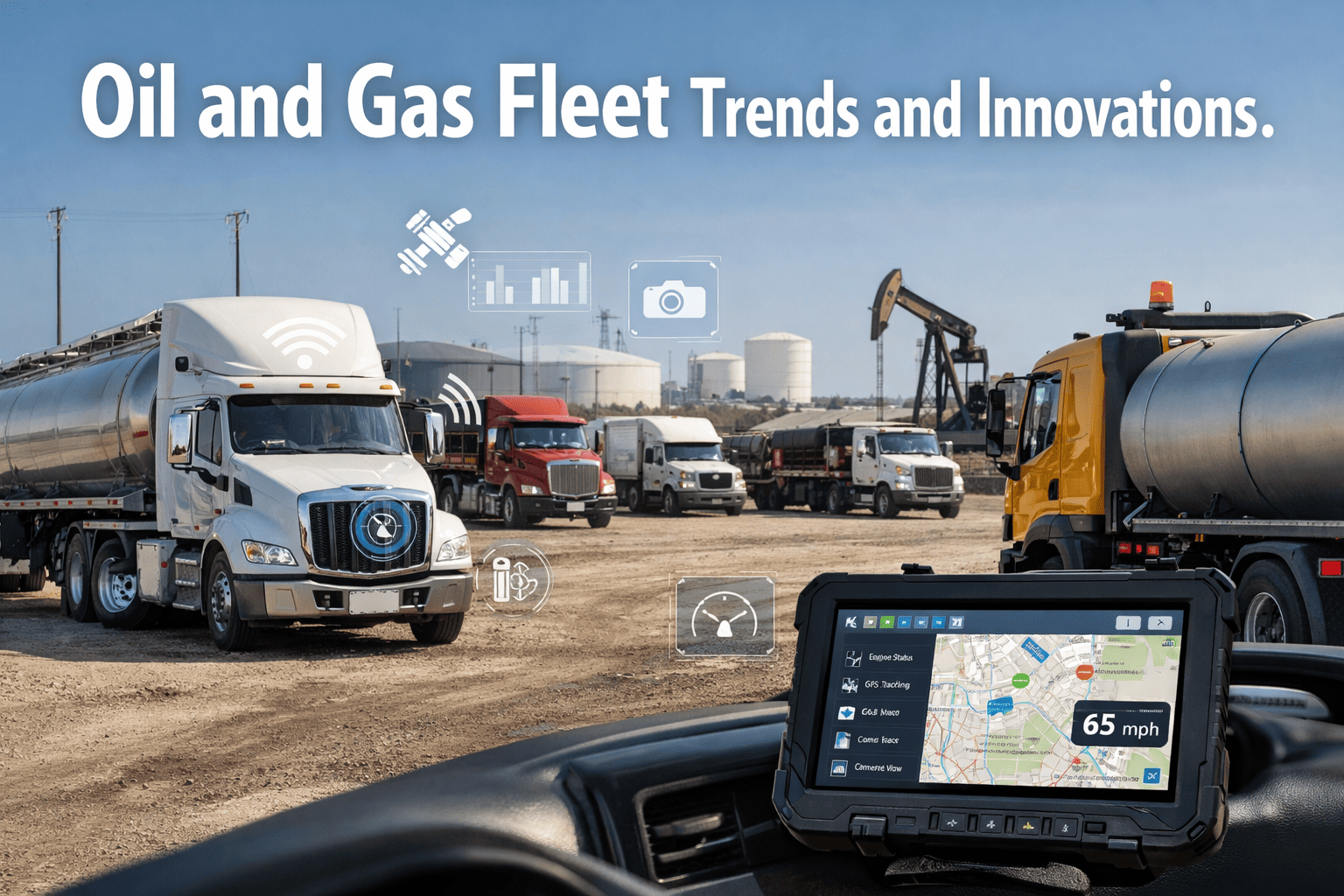
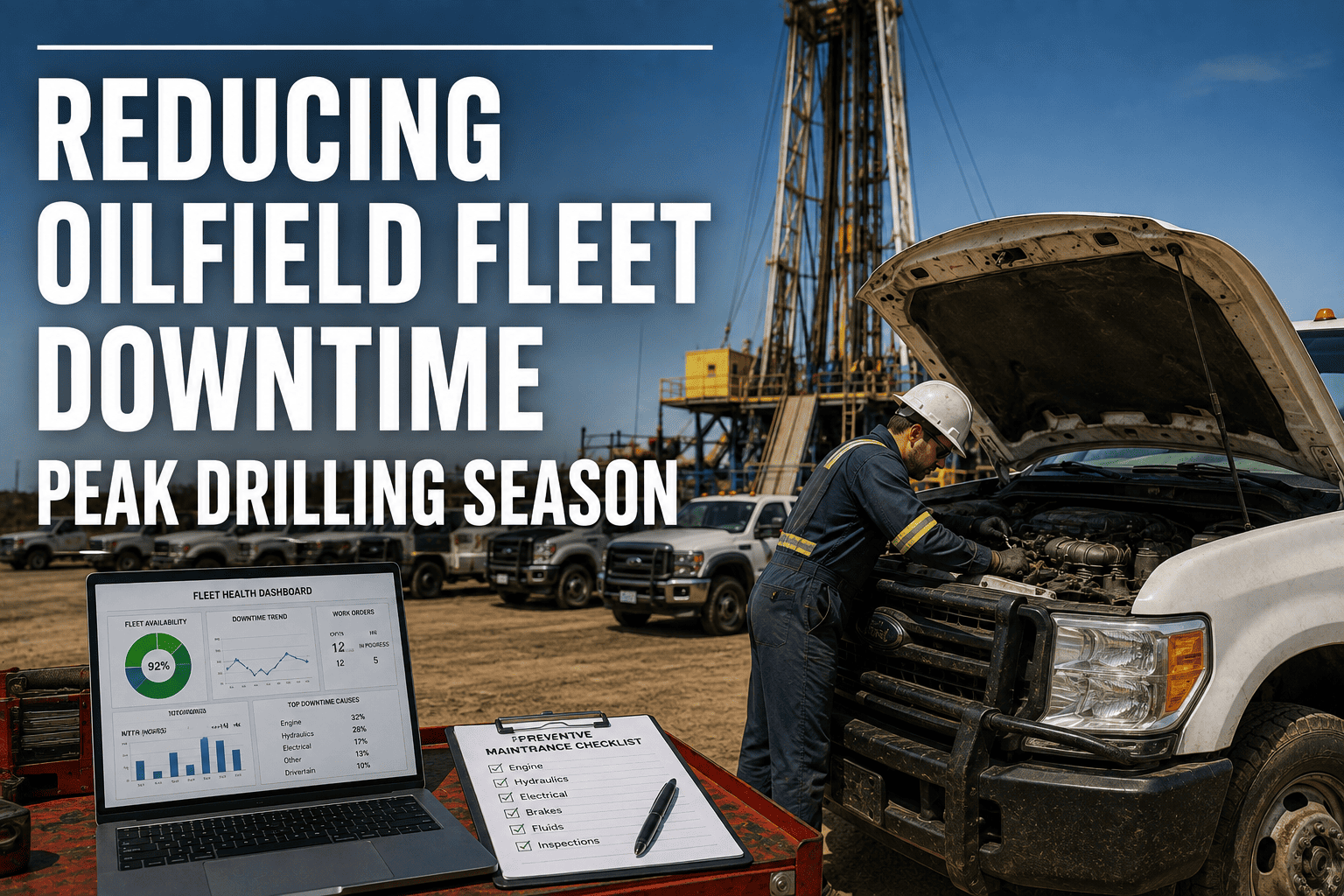
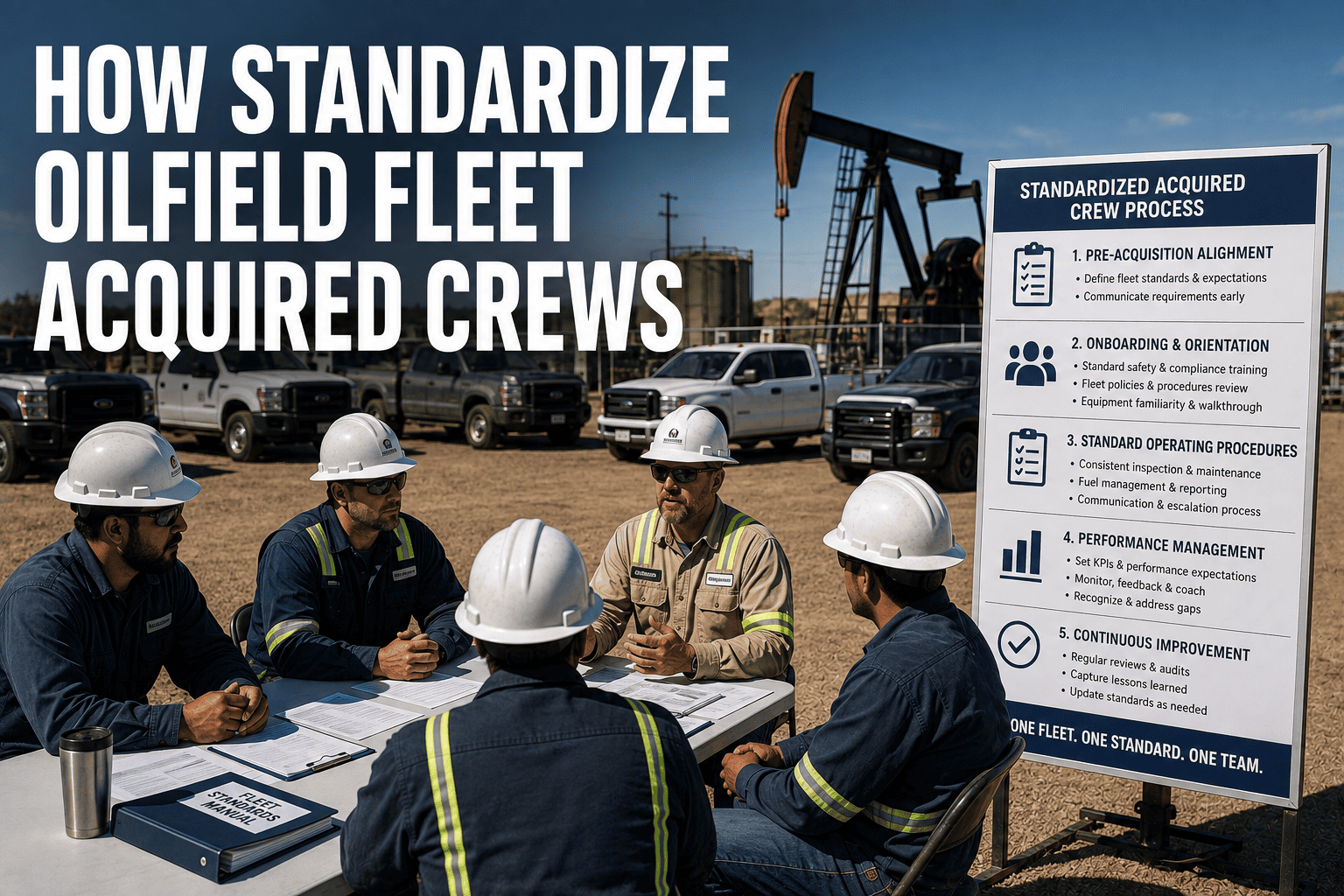
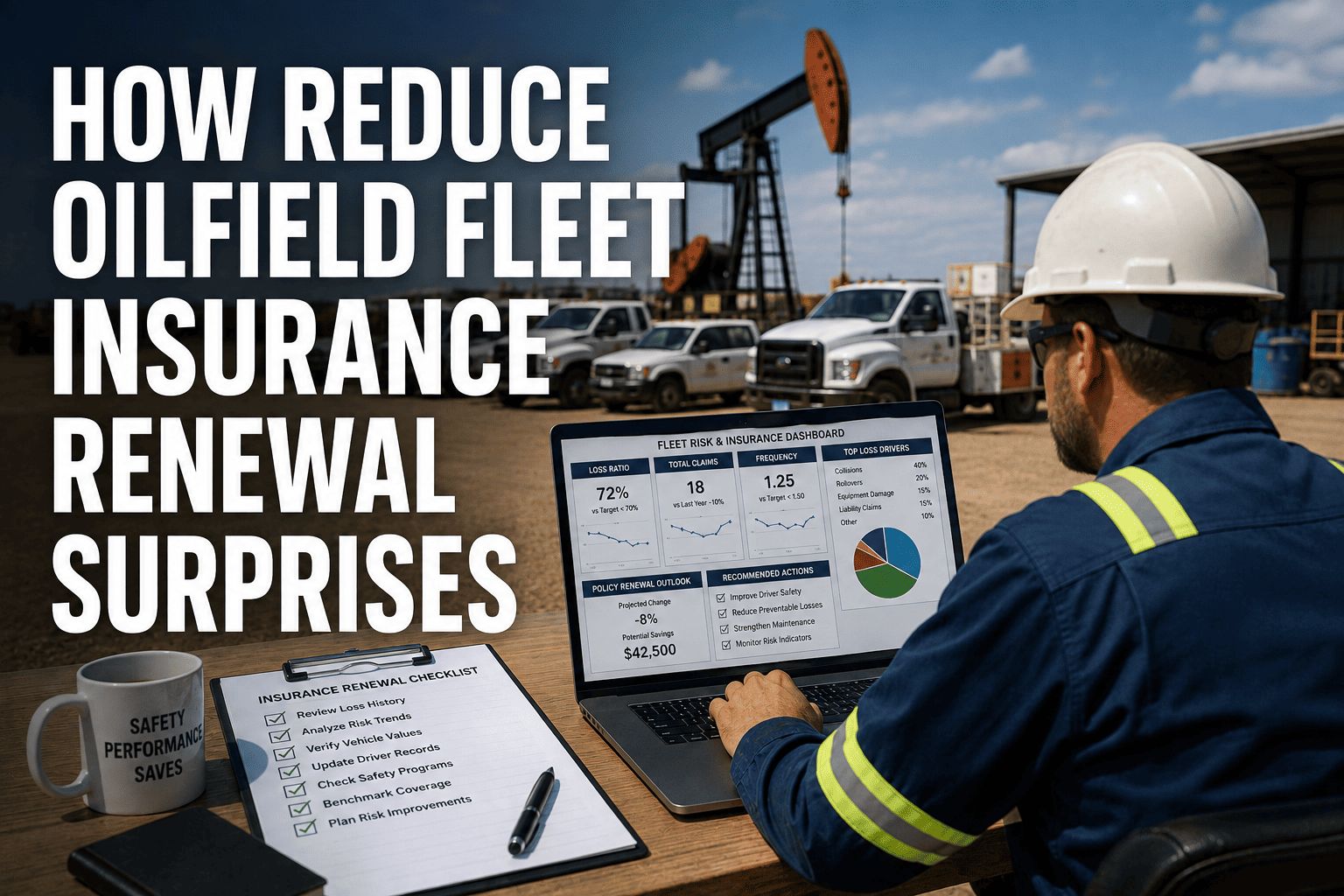
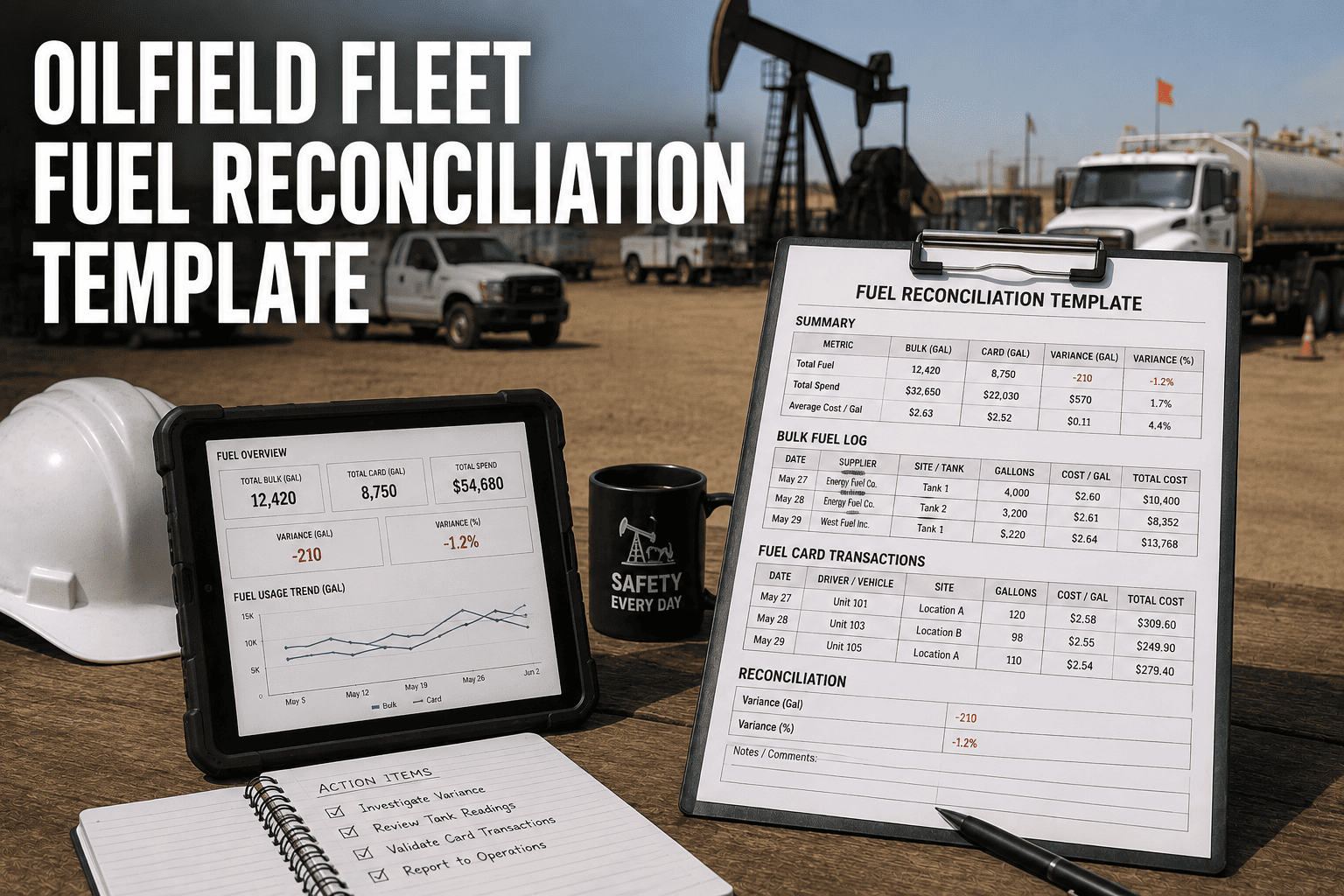
The oil and gas fleet management landscape is undergoing its most significant transformation in a generation — driven by AI-powered predictive intelligence, offline-capable mobile technology, and automated HSE compliance systems that are fundamentally changing how fleet managers and operations executives manage vehicles, assets, and people across some of the world's most demanding operating environments. Remote wellpads, pipeline corridors, and fracking sites that once operated with paper inspection sheets and reactive maintenance schedules are now running on real-time data platforms that predict failures before they happen, complete compliance inspections without cellular coverage, and deliver executive performance dashboards automatically every Monday morning. FleetRabbit sits at the centre of this transformation — built specifically for oil and gas fleets that can no longer afford the cost of unplanned downtime, compliance gaps, or fuel waste. Book a demo to see how FleetRabbit is leading the next generation of oilfield fleet management.
Quick Answer
The five defining trends reshaping oil and gas fleet management in 2025 are: AI-driven predictive maintenance replacing reactive breakdown response, offline mobile inspection apps eliminating paper in dead-zone wellpad operations, automated HSE and DOT compliance reducing regulatory exposure, real-time fuel analytics cutting consumption by 15–22%, and executive-level fleet intelligence dashboards giving operations directors and CFOs the data needed to make strategic fleet decisions. FleetRabbit delivers all five capabilities in a single purpose-built platform for upstream and midstream oil and gas fleets.
Why 2025 Is the Inflection Point for Oil & Gas Fleet Technology
Three converging forces are accelerating technology adoption in oilfield fleet management: the rising cost of remote location breakdowns (now averaging $48,000–$92,000 per event when production deferral is included), tightening HSE enforcement across all major producing regions, and the availability of AI platforms purpose-built for field operations rather than adapted from urban logistics software. Fleet managers who invested in purpose-built technology in 2023–2024 are now reporting measurably better outcomes across every key metric. Those still operating on spreadsheets and paper inspection sheets are facing an widening performance gap.
1
The Old Model: Reactive, Paper-Based, Disconnected
Breakdowns discovered after the vehicle stops on location. Inspections completed on paper in the cab. Compliance status unknown until an auditor asks. Fuel costs reconciled monthly with no anomaly detection. Management reporting assembled manually once a quarter.
Status quo: 11 unplanned breakdowns per year, 3 remote location events, £90,000 in combined recovery and deferred production costs, 2-day HSE audit preparation, fuel variance of 12% unaccounted.
2
The New Model: Predictive, Digital, Intelligence-Led
Failures predicted 7–14 days before breakdown. Inspections completed offline on mobile with mandatory photo evidence. Compliance tracked automatically with expiry alerts. Fuel anomalies flagged in real time. Executive dashboards compiled and delivered automatically every week.
2 unplanned breakdowns per year — zero remote location events£284,000 estimated annual cost avoidance
3
FleetRabbit: The Platform Enabling the Transition
FleetRabbit bridges the gap between the old model and the new — delivering all five trend capabilities in a single platform deployable in 5–10 days across a 50-vehicle oilfield fleet, with no specialist technicians required for hardware installation and full offline capability from day one.
Deployment outcome — 58-vehicle oilfield services fleet, UK: Unplanned breakdowns reduced from 11 to 2 in 14 months. Zero remote location failures. Fuel spend down 18.3%. HSE compliance score 97.4%. Operations director receives automated weekly report. Estimated cost avoidance year one: £284,000.
2025 Fleet Intelligence Platform
Five Trends. One Platform. Built for Oil & Gas.
FleetRabbit delivers all five defining fleet technology trends in a single purpose-built platform — predictive maintenance, offline inspections, HSE automation, fuel analytics, and executive reporting.
73%
Fewer Unplanned Breakdowns
18%
Avg Fuel Cost Reduction
Trend 1 — AI-Powered Predictive Maintenance Replacing Reactive Breakdown Response
The most financially significant trend in oilfield fleet management is the shift from reactive, schedule-based maintenance to AI-driven predictive intervention. For oil and gas fleets operating in remote locations, a single unplanned breakdown has always been disproportionately expensive — not because the repair itself costs more, but because recovery logistics, crew standby, and deferred production multiply the total impact by 4–6 times the direct repair cost.
Engine-Hour Intelligence Replacing Mileage-Based Scheduling
The trend: Oilfield vehicles accumulate wear through engine hours and PTO cycles, not mileage — a vacuum tanker idling on location for 6 hours a day is destroying its engine on a schedule that odometer-based servicing completely misses. Leading oilfield fleets are shifting to engine-hour-based maintenance triggers configured per asset type.
FleetRabbit solution: Real-time engine-hour tracking with configurable service intervals per asset — engine hours, PTO hours, mileage, or calendar days, whichever threshold is reached first. Auto-generated work orders with parts lists and labour estimates sent to workshop scheduler before the vehicle is next dispatched to a remote location.
OBD-II Continuous Health Monitoring with Predictive Fault Detection
The trend: The availability of OBD-II telematics hardware that continuously monitors engine diagnostics, fault codes, coolant temperature, oil pressure, and transmission data has made 24/7 vehicle health monitoring accessible to fleets of any size — including owner-operator oilfield contractors with 5–10 vehicles.
FleetRabbit solution: 60-second OBD-II data ingestion with fault code classification (informational, advisory, critical-stop). AI pattern analysis predicts developing component failures 7–14 days before breakdown — generating prioritised risk registers for fleet managers each morning before dispatch scheduling begins.
Total Cost of Ownership Analytics Driving Fleet Renewal Decisions
The trend: Operations directors and CFOs are increasingly demanding data-driven fleet renewal decisions — replacing gut-feel or age-based replacement schedules with MTBF analysis, total cost of ownership per asset, and reliability scoring that objectively identifies which vehicles are becoming a financial burden.
FleetRabbit solution: Automated TCO tracking aggregates every maintenance spend, downtime event, fuel cost, and utilisation hour per vehicle. MTBF calculation and reliability scoring identify assets with deteriorating performance profiles. Board-ready fleet renewal reports generated automatically for procurement planning and CapEx justification.
Idle-Time Intelligence: The Hidden Maintenance Cost Driver
The trend: Oilfield fleet managers are increasingly recognising that excessive idling is not just a fuel cost issue — it is an accelerated wear issue that brings maintenance intervals forward without productive output. Fleets operating wellpad vehicles with 4–6 hours of daily idle time are consuming service intervals at 2–3 times the rate their mileage figures suggest.
FleetRabbit solution: Per-vehicle idle time tracking with cost attribution, fleet benchmarking, and configurable threshold alerts. Weekly idle-time cost reports identify highest-offending assets and drivers. Driver coaching prompts delivered via mobile app. Average 22% idle reduction within 60 days, extending asset service intervals measurably.
Trend 2 — Offline Mobile Inspection Apps Eliminating Paper in Dead-Zone Operations
The digitisation of vehicle inspection records is the single fastest-moving trend in oilfield fleet compliance — driven by the combination of regulatory pressure for verifiable inspection records and the practical reality that paper-based inspection systems are routinely bypassed under operational pressure. The critical innovation is not the digital form itself, but offline capability that ensures completion even without cellular coverage on remote wellpads.
Offline-First Mobile Architecture
FleetRabbit's mobile app stores inspection records, GPS tracks, and photo evidence locally on the device — synchronising automatically when connectivity is restored. No data gaps, no lost records, no excuses for incomplete inspections in dead zones.
Impact: 100% inspection completion rate regardless of cellular coverage on remote wellpads
Mandatory Photo Evidence with Vehicle Holds
Every defect requires a photograph before the inspection can be submitted. Critical defects automatically apply a vehicle hold — preventing dispatch until the fleet manager explicitly reviews the evidence and approves return to service. Eliminates the paper inspection bypass entirely.
Impact: Defect-to-resolution timeline fully documented — zero uninspected vehicles dispatched to remote locations
Instant Audit Trail for HSE Investigations
Every inspection record is timestamped, GPS-tagged, and linked to the vehicle asset record — creating an indisputable audit trail for HSE investigations, insurance claims, and regulatory audits. Inspection history retrievable in seconds rather than hours of manual archive searching.
Impact: HSE audit preparation time reduced from 2–3 days to under 2 hours across deployed oilfield fleets
Trend 3 — Automated HSE Compliance Reducing Regulatory Exposure
HSE compliance management is transitioning from a manual, calendar-driven process to an automated, real-time system — driven by the increasing personal liability exposure of fleet managers and operations directors in jurisdictions where non-compliance with vehicle certification, driver documentation, and inspection record requirements can result in prosecution of individuals, not just company fines.
1
Automated Certification Expiry Management
FleetRabbit tracks every driver licence, medical certificate, vehicle roadworthiness certificate, ADR permit, and site access credential — sending escalating alerts at 30, 14, and 7 days before expiry across owned and contractor fleet vehicles.
Trend driver: Increasing personal liability for fleet managers in UK, US, and GCC jurisdictions — expired certifications invalidating insurance and triggering regulatory enforcement
2
Digital Inspection Records with Regulatory Audit Packs
Zone-based digital inspection records structured for FMCSA DVIR, DVSA operator licence, ADNOC contractor, and ONGC compliance requirements — with timestamped photo evidence and corrective action linkage. Regulatory audit packs compiled in minutes rather than days.
Trend driver: Regulatory bodies across all major producing regions increasingly requiring electronic inspection records with photo evidence — paper records no longer sufficient for audit defence
3
Multi-Contractor Compliance on a Single Dashboard
Oilfield operations increasingly involve mixed fleets of owned vehicles and contractor assets operating simultaneously on the same site. FleetRabbit applies the same HSE inspection standards across all vehicle types regardless of ownership — with role-based access ensuring contractors manage only their assigned assets.
Trend driver: Major oil companies (ADNOC, Saudi Aramco, BP, Shell) tightening contractor vehicle compliance requirements, shifting liability to operating companies for contractor fleet standards
4
Incident Reporting Linked to Telematics Data
Vehicle incident reports automatically linked to GPS position history, speed data, driver behaviour scores, and pre-trip inspection records at the time of the incident — providing HSE investigators with complete contextual data rather than driver self-reporting alone.
Trend driver: Growing use of fleet telematics data in HSE investigations and insurance claims — operators without linked data at a systematic disadvantage in liability disputes
5
Driver Hours and Fatigue Risk Monitoring
Hours-of-service tracking and fatigue risk alerts for drivers approaching legal driving limits — particularly critical in 24/7 oilfield operations with rotating shift crews. Automated flag when accumulated driving hours create elevated fatigue risk before the next shift begins.
Trend driver: Fatigued driving enforcement increasing across oilfield jurisdictions — post-incident analysis increasingly citing hours-of-service records as primary evidence in prosecution
6
Geofencing for Wellpad Access Control and Security
Custom geofences around well sites, restricted areas, and lease boundaries trigger automatic entry/exit alerts — enabling real-time wellpad access control, lone-worker welfare monitoring, and after-hours movement detection without manual security checks.
Trend driver: Wellpad security and lone-worker requirements tightening under OSHA, UK HSE, and UAE Civil Defence — geofencing providing automated compliance without additional headcount
Trend 4 — Real-Time Fuel Analytics Cutting Oilfield Fleet Operating Costs
Fuel represents 25–35% of total fleet operating costs in oilfield service operations — making it the highest-impact variable cost that fleet managers and operations directors can influence directly. The shift from monthly fuel bill reconciliation to real-time per-vehicle analytics is delivering measurable results for fleets that have made the transition.
Idle-Time Cost Attribution — The Largest Recoverable Fuel Cost in Oilfield Operations
The trend: Oilfield vehicle idling costs are now quantifiable in real time — a 50-vehicle fleet with average 4-hour daily idle per vehicle is burning £4,000–£8,000 per month in unproductive fuel consumption. Real-time idle identification with cost attribution is the fastest route to measurable fuel savings.
FleetRabbit solution: Per-vehicle idle time tracking with £/$ cost attribution. Daily idle reports identify worst offenders. Driver coaching targets individual behaviour. 22% average idle reduction within 60 days across deployed oilfield fleets.
Fuel Card Reconciliation and Theft Detection
The trend: Fuel card transaction reconciliation against GPS movement data is now achievable in real time — automatically flagging transactions where fuel was purchased without corresponding vehicle movement, or where consumption significantly exceeds baseline for vehicle type and route.
FleetRabbit solution: Automatic fuel card integration reconciles every transaction against vehicle position, odometer, and journey data. Anomaly detection flags stationary fuel purchases, over-quota fills, and consumption deviations exceeding 15% from vehicle baseline. Average 12% reduction in unaccounted fuel variance within 90 days.
Fuel Intelligence for Oilfield Fleets
Stop Guessing Where Your Fuel Budget Is Going
FleetRabbit's real-time fuel analytics identifies idle burn, theft anomalies, and routing inefficiencies automatically — delivering an average 18% fuel cost reduction within 90 days of deployment.
18%
Avg Fuel Cost Reduction
Trend 5 — Executive Fleet Intelligence Replacing Quarterly Spreadsheet Reviews
Perhaps the most consequential shift in oil and gas fleet management is happening not on the wellpad but in the boardroom — operations directors, CFOs, and asset managers are increasingly demanding real-time fleet performance data rather than quarterly spreadsheet summaries assembled manually by fleet managers. The organisations leading this transition are making better fleet investment decisions, identifying underperforming assets earlier, and justifying fleet technology budgets with hard financial evidence.
Automated Weekly Executive Reporting — No Manual Compilation
The trend: Operations directors and CFOs in leading oilfield service companies are receiving automated weekly fleet performance reports delivered directly to their inbox — covering fleet uptime, MTBF trends, maintenance cost vs budget, fuel performance, HSE compliance score, and downtime financial impact without any manual effort from fleet managers.
FleetRabbit solution: Scheduled executive reports compiled automatically from live platform data — delivered weekly, monthly, or on demand. Custom KPI selection, branded PDF export, and comparative period analysis. Operations directors gain strategic fleet oversight; fleet managers regain 8–12 hours per week previously spent on manual reporting.
Utilisation Visibility Reducing Unnecessary Fleet Hire Costs
The trend: Asset utilisation analytics are enabling oilfield fleet managers to identify underutilised hire vehicles that can be returned to reduce costs — a capability that is typically delivering 11–17% reductions in total fleet hire spend within 60 days of deployment as the data reveals vehicles sitting idle while equivalent hire vehicles remain on the books.
FleetRabbit solution: Real-time utilisation tracking for owned and hire vehicles — engine hours, productive operating time, and idle time per asset. Utilisation reports flag assets consistently below threshold. Hire vehicle return recommendations with financial impact calculation delivered automatically to operations managers.
How FleetRabbit Delivers All Five Trends in a Single Platform
These five trends are not independent — they work together as an integrated intelligence system. Predictive maintenance data informs executive reporting. Inspection records feed compliance dashboards. Fuel analytics link to driver behaviour scoring. FleetRabbit's platform architecture was designed to deliver all five capabilities from a single data source, eliminating the integration complexity and data quality issues that plague multi-system approaches.
73%
Reduction in Unplanned Breakdown Events
18%
Average Fuel Cost Reduction
97.4%
Average HSE Compliance Score
14 days
Avg Predictive Failure Warning
$520K
Average Annual Value Delivered
5–10 days
Deployment Time — 50-Vehicle Fleet
Purpose-Built for Oil & Gas
Lead the Fleet Technology Transition — Not Catch Up to It
FleetRabbit gives oil and gas fleet managers and operations executives the platform to implement all five defining fleet technology trends simultaneously — without multiple systems, complex integration, or extended deployment timelines.
5
Trend Capabilities in One Platform
96%
Driver & Tech Adoption Rate
From the Field
"Before FleetRabbit, our fleet manager was spending two days a week chasing inspection records and assembling reports. We had no visibility of fuel anomalies until month-end, and our predictive maintenance was just the manufacturer service schedule — which completely missed the way our wellpad trucks actually accumulate wear. In 14 months with FleetRabbit we've gone from 11 unplanned breakdowns to 2, fuel spend is down 18%, and the operations director gets a fleet performance report every Monday morning without anyone having to produce it. The technology is not complicated — it just works the way oilfield fleet management actually needs to work."
Head of Fleet Operations
58-Vehicle Oilfield Services Fleet — Upstream Operations, North Sea & Onshore UK
Frequently Asked Questions
QWhich of these five trends delivers the fastest ROI for an oil and gas fleet?
For most oilfield fleets, predictive maintenance delivers the fastest and highest ROI — preventing a single remote location breakdown typically recovers 3–6 months of platform cost in avoided recovery, deferred production, and emergency contractor fees. Fuel analytics typically delivers the most consistent monthly savings. For compliance-heavy operations (ADNOC, Aramco, or DOT-regulated fleets), HSE automation delivers the fastest risk reduction.
Book a scoping call to model the ROI for your specific fleet and operating environment.
QDoes FleetRabbit work in areas with no cellular connectivity — remote wellpads and pipeline corridors?
Yes. The FleetRabbit mobile app operates fully offline — storing GPS tracks, inspection records, and defect photographs locally and synchronising automatically when connectivity is restored, with no data gaps. For continuous live tracking in cellular dead zones, satellite tracking units are available as an add-on, providing position updates globally with no cellular dependency.
QHow long does FleetRabbit take to deploy across a 50-vehicle oilfield fleet?
Standard deployment for 20–100 vehicles takes 5–10 working days from hardware dispatch to full platform activation. Plug-and-play OBD-II units install in under 10 minutes per vehicle — no specialist technician required. For remote fleets, hardware ships with video-guided self-installation instructions for site crews.
Discuss your deployment timeline in a scoping call.
QCan FleetRabbit manage contractor and owner-operator vehicles alongside owned fleet?
Yes. FleetRabbit's multi-contractor architecture supports owned vehicles, long-term hire, and contractor assets from a single dashboard — with role-based access ensuring contractors see only their assigned assets. The same HSE inspection standards apply across all vehicle types regardless of ownership, ensuring contractor vehicles meet the same compliance requirements as owned fleet.
QWhat executive reports does FleetRabbit generate automatically for operations directors and CFOs?
Automated reports cover fleet uptime percentage, MTBF trends, total cost of ownership per asset, maintenance spend vs budget, fuel cost performance, HSE compliance score, driver behaviour KPIs, and downtime financial impact — delivered weekly, monthly, or quarterly. Custom KPI selection and branded PDF export are included. Reports compile automatically from live platform data with no manual preparation required.
Implement All Five Fleet Technology Trends — Not One at a Time, But Together.
FleetRabbit gives oil and gas fleet managers and operations executives a single platform that delivers predictive maintenance, offline mobile inspections, automated HSE compliance, real-time fuel analytics, and executive intelligence — purpose-built for the demands of upstream and midstream oil and gas operations.
Predictive Maintenance AI
Offline Mobile Inspections
HSE Compliance Automation
Fuel Analytics
Executive Reporting
April 10, 2026
By David
All Posts