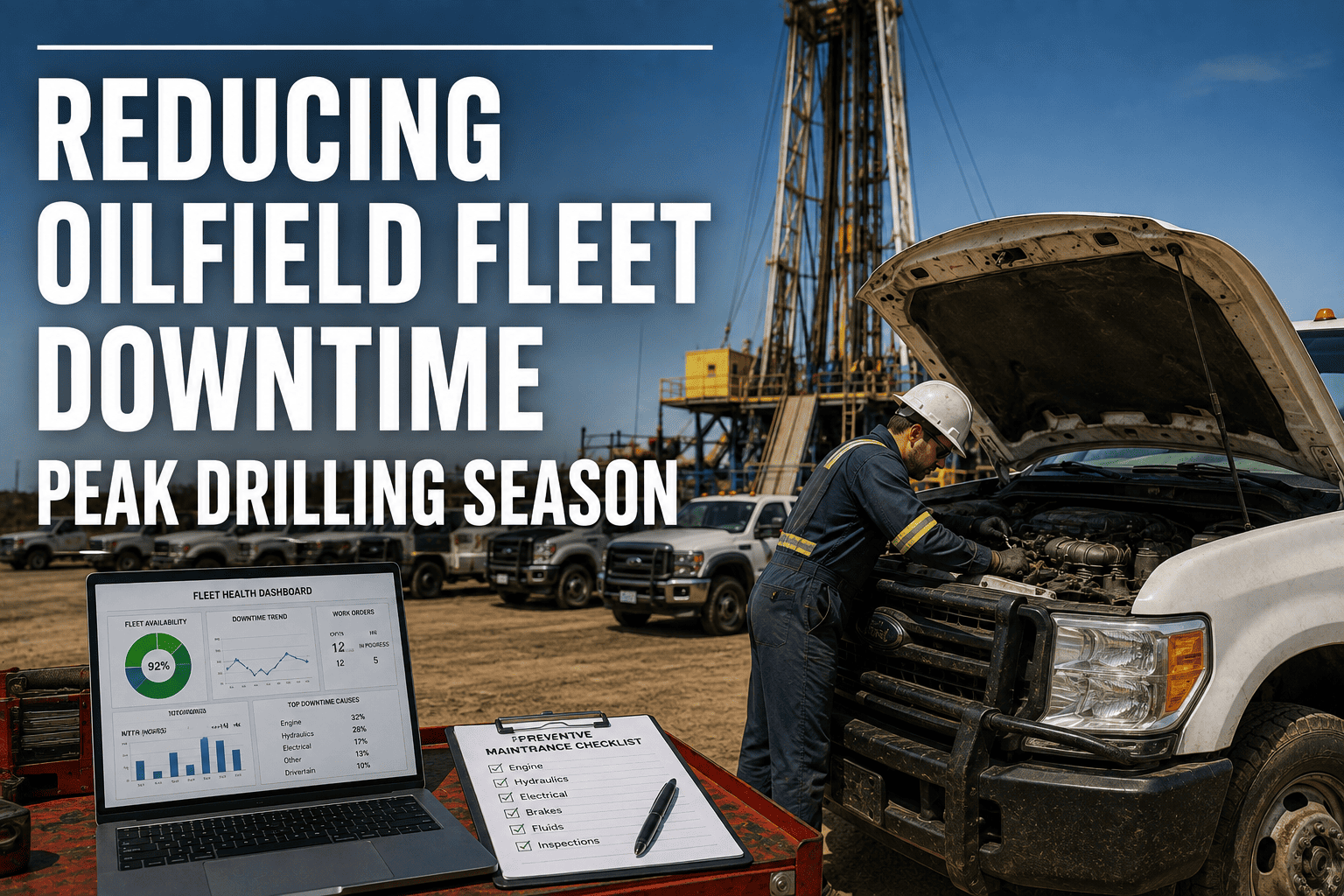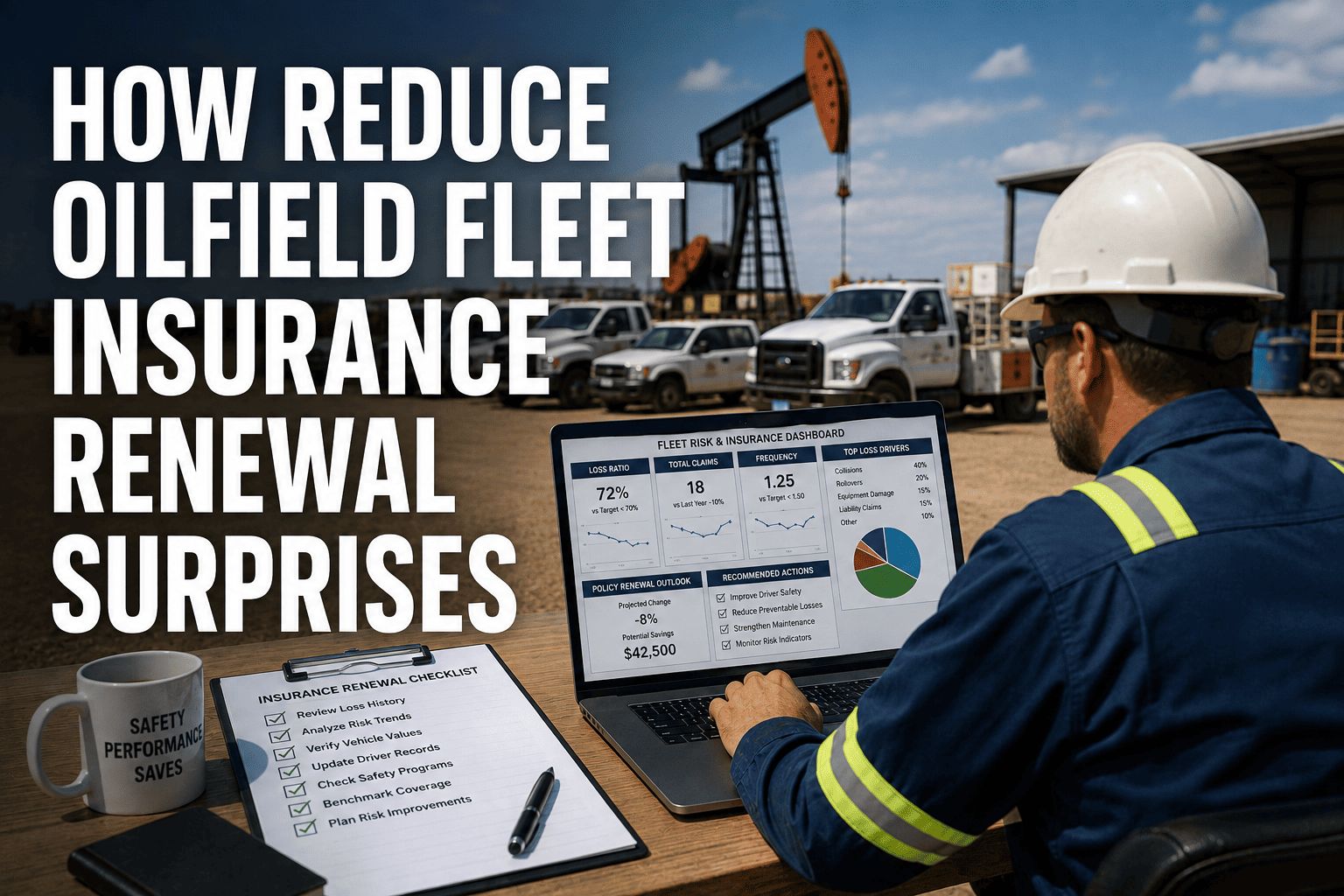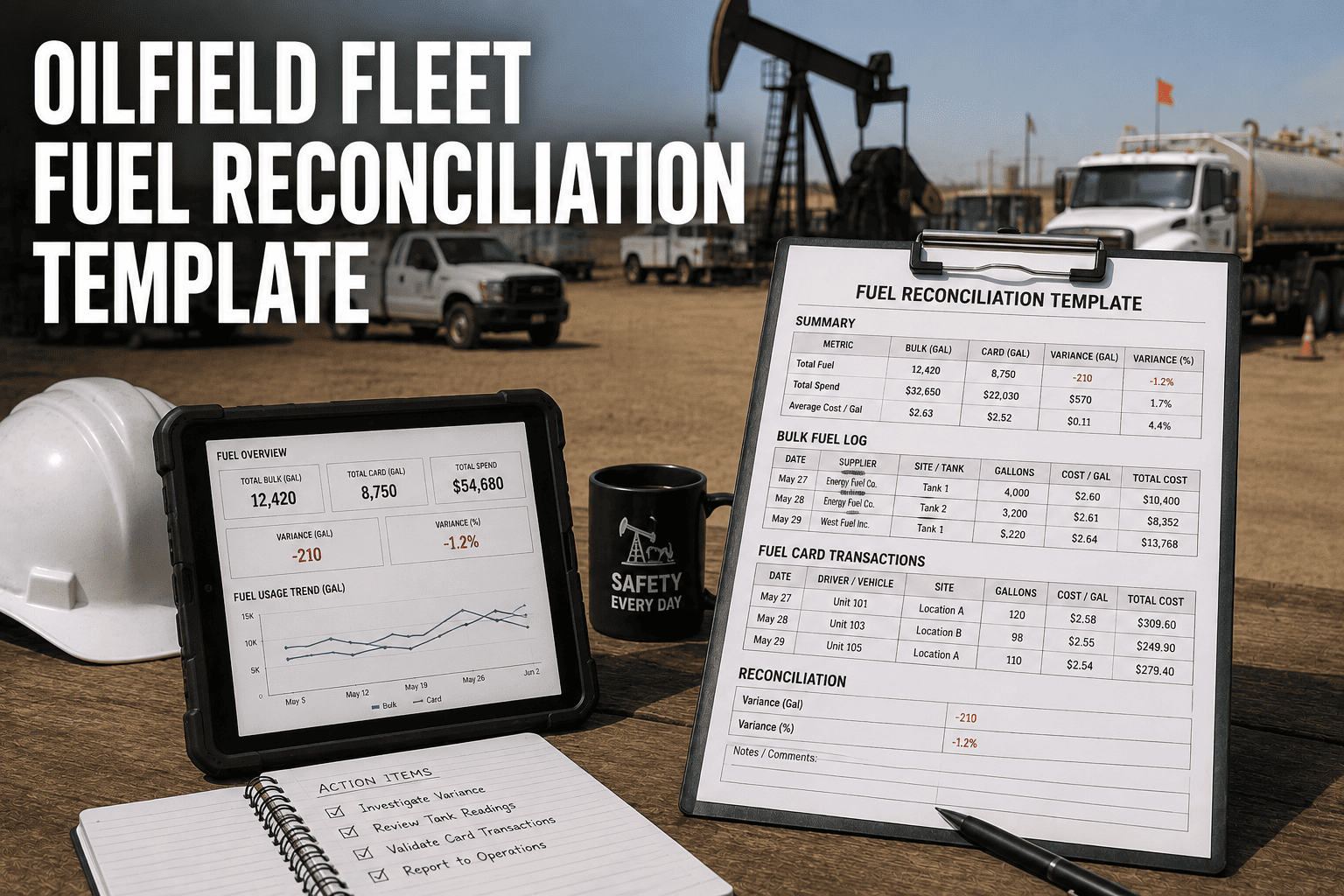
Digital fleet management in oilfield operations represents the transition from the information state that paper-based fleet programmes produce — where management learns what happened to the fleet from reports assembled days or weeks after the events occurred — to the operational intelligence state that digital platforms provide — where management sees what is happening to the fleet as it happens, enabling decisions that prevent operational failures rather than documenting them retrospectively. The magnitude of this transition is not primarily a technology upgrade in the conventional sense. It is a decision quality upgrade: every fleet management decision made with real-time GPS positions, live vehicle health scores, current driver certification status, and actual engine-hour maintenance intervals is a categorically superior decision to the equivalent decision made with estimated positions, unknown vehicle health, spreadsheet-tracked certifications of unknown currency, and mileage-based maintenance schedules that misrepresent Basin duty cycle wear accumulation by 35–40%. The financial consequences of the decision quality gap — upstream at the dispatch level, midstream at the maintenance scheduling level, and downstream at the compliance management level — accumulate to the $840,000–$3.84M annual differential that documented deployments consistently show between paper-managed and FleetRabbit-managed oilfield fleets of equivalent size. Digital fleet management for oilfield operations is not a single technology implementation — it is a capability stack that addresses GPS tracking and fleet visibility, predictive maintenance and PM scheduling, driver safety monitoring and coaching, compliance documentation and audit management, fuel intelligence and cost control, and executive performance reporting simultaneously through a unified data architecture. FleetRabbit provides this capability stack from a single platform at $3/vehicle/month — deployed in 5–7 working days for oilfield fleets of any size from 15 to 350 vehicles without specialist consultants, hardware replacement requirements, or implementation fees that price out the growing operators who need the technology most. Schedule a demonstration to see FleetRabbit's complete digital fleet management capability stack for your oilfield operation.
Oilfield Digital Fleet Management Solutions and Technologies
FleetRabbit delivers the complete digital fleet management capability stack for oilfield operations — satellite GPS visibility, AI predictive maintenance, driver safety monitoring, compliance documentation, fuel intelligence, and executive analytics — from a single platform at $3/vehicle/month deployed in 5–7 days for any fleet size from 15 to 350 vehicles.
Six Digital Fleet Management Capabilities That Oilfield Operations Require and FleetRabbit Delivers
Satellite GPS Fleet Visibility — Real-Time Position at All Remote Basin Locations
Satellite-first GPS connectivity maintains 30-second position updates for all fleet vehicles at remote wellsite and lease road locations where 60–70% of Basin vehicle hours accumulate — beyond the cellular coverage boundary where standard fleet GPS tracking loses contact and produces the 2–6 hour position history gaps that make real-time dispatch, emergency response, and compliance verification impossible. Coordinate-based wellpad configuration enables routing, geofencing, and ETA calculation for unmapped lease road destinations. HAZMAT route restriction validation applies cargo-specific restrictions. GPS-verified inspection records satisfy FMCSA and PHMSA evidentiary standards.
AI Predictive Maintenance — 36+ OBD-II Parameters, Per-Vehicle Baselines, 3–6 Week Advance Alerts
Per-vehicle AI baselines calibrated within 14 days from 36+ OBD-II parameters detect developing fault patterns 3–6 weeks before breakdown threshold — enabling planned maintenance interventions at $3,000–$6,000 that prevent remote wellsite emergency responses at $150,000–$500,000. Engine-hour PM scheduling aligned to actual Basin duty cycles replaces mileage-based intervals that miss oilfield service points by 35–40%. Frac truck dual maintenance clocks — vehicle drivetrain and process equipment on separate hour meters — managed independently without manual tracking. Planned-to-reactive maintenance ratio tracked as live performance KPI from automatic work order classification.
Digital DVIR and Inspection Automation — Offline at Wellsites, GPS-Verified, Defect-Escalating
Mobile DVIR app operating fully offline at remote wellsites captures inspection records, defect photographs, GPS coordinates, and electronic signatures without cellular connectivity — syncing when connectivity returns with original timestamp preserved. Critical defects escalate to maintenance in under 60 seconds, work orders generate automatically, and dispatch blocking activates until return-to-service certification completes. Vehicle-type-specific checklists — frac trucks, HAZMAT tankers, service vehicles — configured per asset category. 96% completion rate achieved vs. 61% paper baseline. GPS-timestamped records satisfy FMCSA 49 CFR Part 396.11 evidentiary standards.
Driver Safety Monitoring and Coaching — Six-Dimension Scoring, In-Cab Alerts, Insurance Evidence
Continuous telematics monitoring across six safety dimensions — hard braking, harsh acceleration, speeding by zone, seatbelt compliance, HOS approaching-limit frequency, and DVIR completion — produces a per-driver daily composite safety score with Red/Amber/Green band classification. GPS-timestamped specific event records enable data-based coaching that produces genuine behaviour change — reducing driver pushback rates from 60%+ to under 8% within 90 days. Monthly scorecard publication with recognition programmes drives safety engagement from 34% paper baseline to 91%+. Telematics-verified safety records produce 18–24% insurance premium reduction at policy renewal.
Fuel Intelligence and Cost Control — Drain Detection, Idle Reduction, ESG Carbon Reporting
Tank telemetry cross-referenced with GPS engine status, shift schedule, and route data detects fuel drain anomalies within 8 minutes — versus 30-day discovery lag from monthly fuel card statements. Engine-hour consumption baselines per vehicle replace mileage assumptions that produce 25–40% systematic budget variance for Basin-duty assets. In-cab idle reduction alerts at per-vehicle-class thresholds produce 25–35% idle reduction within 60 days. Fuel card GPS cross-reference identifies off-route fill events. Scope 1 fleet carbon report from engine-hour consumption data with audit-trail linkage satisfies SEC climate disclosure, CDP, GRESB, and investor ESG covenant requirements.
Compliance Management and Audit Documentation — Certifications, HAZMAT, Multi-Jurisdiction Records
Unlimited driver certification tracking — CDL, DOT medical, HAZMAT, H2S, TWIC, BOSIET, site-specific inductions — with automated 60/30/7-day renewal alerts and dispatch blocking on expiry. HAZMAT shipping paper generation from cargo classification database at dispatch. PHMSA shipping document and SDS offline on driver device. ISNetworld and Avetta prequalification packages generated automatically from operational data. Complete FMCSA Part 396 maintenance audit packs for any vehicle and any period in under 2 hours. Multi-jurisdiction export — FMCSA, ADNOC, DVSA — from single record set without separate documentation processes.
All Six Digital Fleet Management Capabilities From One Platform — Not Six Disconnected Systems
The digital fleet management value for oilfield operations comes not from any individual capability but from their integration in a unified data architecture — where GPS position informs dispatch decisions, maintenance alerts inform route planning, driver safety scores inform HR management, and fuel anomalies trigger investigation workflows, all without requiring data transfer between disconnected vendor systems or manual consolidation from separate platforms.
What Digital Fleet Management Delivers at Each Level of Oilfield Operations Leadership
From Reactive Incident Management to Proactive Intelligence Operations
Digital fleet management eliminates the 18–22 hours of weekly manual data consolidation that leaves fleet managers perpetually behind the operational events they are attempting to manage. Real-time GPS positions, AI maintenance alerts, DVIR defect escalations, driver safety score updates, fuel anomaly notifications, and certification expiry warnings — all processed automatically and presented as prioritised intervention queues — enable the proactive operational management that transforms fleet managers from incident responders into performance engineers.
Drilling Programme Reliability Through Managed Fleet Availability
Operations VPs managing drilling programme timelines need fleet availability that is predictable rather than variable — and digital fleet management converts fleet availability from a reactive variable that disrupts programme scheduling into a managed performance dimension with measurable outcomes. Automated executive weekly performance digests deliver fleet health across all six dimensions without requiring field supervisor data collection or fleet manager report preparation, enabling portfolio-level strategic decision-making from operational intelligence.
Fleet Cost Accountability With Asset-Level Financial Attribution
Digital fleet management converts fleet operating cost from a category-level aggregate into a vehicle-level financial data set — enabling maintenance cost per engine hour by vehicle class, fuel consumption attribution by route and by site, insurance premium reduction quantification from safety programme evidence, and compliance penalty avoidance documentation. Finance directors see the financial impact of fleet management quality at the granularity required for capital replacement timing decisions, fleet composition analysis, and ROI reporting to investment stakeholders.
Digital Fleet as Competitive Differentiation in E&P Contractor Markets
Major E&P operators evaluating service contractors for preferred vendor panels increasingly examine digital fleet management capability as evidence of operational maturity — examining GPS-verified service completion records, maintenance programme documentation quality, driver certification compliance history, and safety performance data through ISNetworld and Avetta submissions. FleetRabbit-deployed contractors produce the operational evidence that competitors operating from paper systems cannot provide, creating differentiation that supports contract retention and expansion beyond price and equipment capability.