Oilfield transportation presents the most demanding driver risk environment in any commercial fleet sector — remote lease roads with unpredictable surface conditions, heavy loaded vehicles navigating narrow caliche paths, fatigued crews operating after extended shift rotations, and time pressure from drilling schedule commitments that creates the behavioral incentive to speed, skip pre-trip inspections, and push Hours of Service limits. For fleet managers overseeing 50 to 300 vehicles dispersed across Permian, Eagle Ford, Bakken, or Appalachian basin operations, driver behavior is the variable that separates fleets achieving sub-2% accident frequency rates from those experiencing chronic incidents consuming insurance budgets and threatening operating contracts with major E&P operators. FleetRabbit's driver behavior monitoring platform gives fleet managers and executives the real-time visibility to identify behavioral risk before it becomes an incident cost — through GPS-integrated safety tracking, automated scorecard programs, targeted coaching workflows, and documented safety analytics that satisfy both internal HSE requirements and external contractor prequalification standards. Schedule a consultation to see FleetRabbit driver safety analytics demonstrated with actual oilfield fleet data.
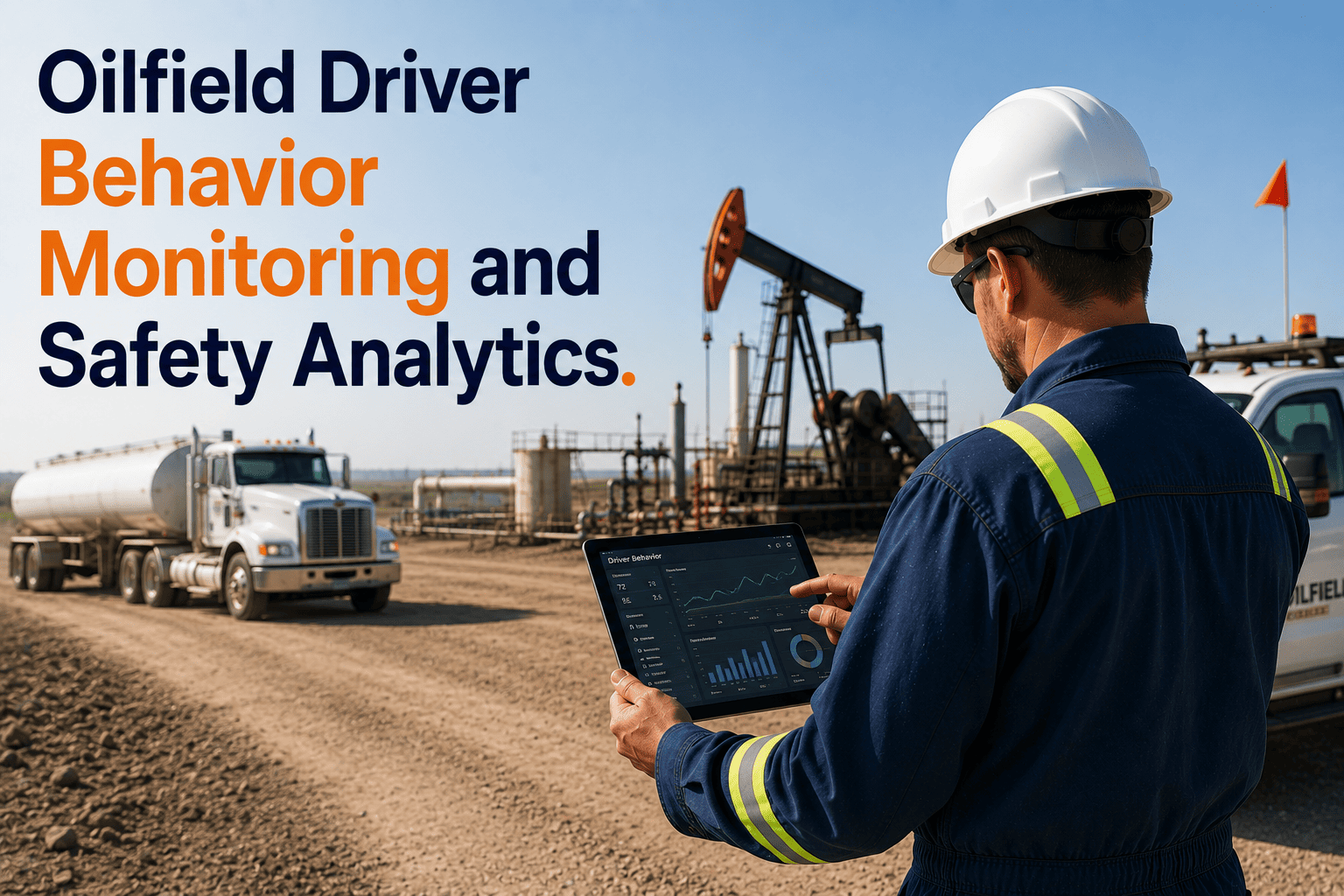
Oilfield Driver Behavior Monitoring and Safety Analytics
FleetRabbit transforms driver safety management from reactive incident response into proactive behavioral risk prevention — tracking speeding, harsh driving, HOS compliance, and idling patterns in real time, ranking driver performance through automated scorecards, and enabling targeted coaching interventions that reduce accident frequency 15–25% within six months of program activation.
Why Driver Behavior Monitoring Is Non-Negotiable for Oilfield Fleet Managers
Oilfield transportation risk compounds through five simultaneous behavioral factors that manual supervision cannot systematically detect or prevent across dispersed basin operations.
Lease Road Speeding on Unmarked Terrain
Drivers unfamiliar with evolving lease road conditions — washboard surfaces, sharp grade changes, blind corners — default to highway driving habits creating rollover and collision risk that posted speed signs and verbal policy cannot reliably prevent across geographically dispersed operations.
Fatigue-Driven HOS Violations on Extended Rotations
12-hour shift rotations, multi-week hitch schedules, and operational urgency pressure create Hours of Service violation patterns that paper logbooks conceal through driver self-reporting. Fatigued CMV operation on remote two-lane state highways represents the highest-severity risk profile in oilfield transportation.
Harsh Acceleration and Braking on Heavy Loaded Vehicles
Service trucks loaded with tubulars, chemicals, and equipment require significantly extended stopping distances that aggressive braking events cannot accommodate. Harsh acceleration with heavy payloads accelerates drivetrain wear, increases fuel consumption 15–30%, and creates rollover conditions on graded terrain that smooth driving behavior eliminates entirely.
Excessive Idling Consuming Fuel Without Productive Output
Oilfield drivers idle at pad sites, during loading operations, and through weather events in patterns that accumulate 38–42% idle time ratios on unmonitored fleets — consuming fuel at 0.6–1.0 gallons per hour, advancing maintenance intervals without productive mileage, and contributing to $180,000–$340,000 annual fuel waste across 100-vehicle operations.
After-Hours and Unauthorized Vehicle Usage
Fleet vehicles used outside approved operational windows for personal transportation, unauthorized site access, and off-route travel consume fuel, accumulate unauthorized mileage, and operate without the oversight and accountability that shift-based monitoring provides — creating both direct cost exposure and liability risk from incidents occurring during unauthorized use periods.
How FleetRabbit Tracks, Scores, and Improves Driver Behavior Across Dispersed Oilfield Operations
Real-Time Speeding Detection and Threshold Alerts
GPS map-matching continuously compares vehicle speed against posted limits on public roads and operator-defined lease road thresholds — generating real-time alerts when drivers exceed speed parameters. Fleet managers receive immediate notification enabling radio or phone intervention before road conditions escalate marginal speeding into an incident situation. Weekly speeding frequency rankings identify chronic offenders requiring formal coaching versus occasional threshold crossings addressable through automated driver notifications.
Harsh Event Detection — Acceleration, Braking, and Cornering
Accelerometer-based harsh event logging captures sudden acceleration, hard braking, and aggressive cornering events with GPS location, timestamp, and severity classification — creating an objective behavioral record that driver self-reporting cannot provide. Events are categorized by severity enabling prioritized coaching that addresses highest-risk behaviors first. Monthly harsh event frequency per driver reveals behavioral trend lines that distinguish improving drivers from those requiring formal intervention.
Hours of Service Compliance Monitoring and Violation Prevention
ELD-integrated HOS tracking automatically records driving time, duty status, and rest periods for CMV-classified vehicles — replacing paper logbooks that conceal violations through incomplete recording. Proactive alerts notify dispatchers when drivers approach the 11-hour daily driving limit or 60/70-hour weekly maximum, enabling schedule adjustments before violations occur rather than discovering compliance failures during roadside inspections.
Idle Time Monitoring and Fuel Efficiency Behavioral Tracking
Real-time idle alerts push to driver mobile devices when stationary engine operation exceeds configurable thresholds — typically 5–10 minutes for standard operations. Weekly idle time reports rank drivers by idle percentage enabling fleet managers to identify whether idling patterns reflect operational necessity (loading operations, weather) or behavioral habits addressable through coaching. Monthly fuel consumption per driver correlated with behavior scores reveals the direct financial impact of driver efficiency improvement programs.
After-Hours and Geofence Alert Management
Geofence boundaries around approved operational zones generate immediate alerts when vehicles enter or exit designated areas outside approved shift windows — detecting unauthorized usage as it occurs rather than discovering it through monthly fuel card reconciliation. After-hours movement alerts enable same-shift intervention before unauthorized usage accumulates cost exposure. Alert history provides documentation supporting progressive disciplinary processes for repeat violations.
Automated Driver Scorecards and Coaching Workflow Integration
FleetRabbit automatically compiles individual driver performance scores across all monitored behavioral dimensions — speeding frequency, harsh event rate, HOS compliance percentage, idle time ratio, and inspection completion rate — into ranked monthly scorecards accessible to supervisors without manual compilation. Scorecards identify specific deficiency areas enabling targeted behavioral coaching rather than generic safety training that produces minimal measurable change in experienced driver populations.
Five Dimensions FleetRabbit Scores Across Every Oilfield Driver Monthly
Individual driver performance visibility is the foundation of measurable safety improvement. FleetRabbit's automated scoring eliminates the subjectivity and time burden of manual supervisor assessment across large dispersed driver populations.
Permian Basin Operator: 34% Accident Reduction and $184,000 Annual Safety Cost Savings
How FleetRabbit Turns Safety Data Into Measurable Behavioral Improvement
Behavioral Baseline Establishment
Within 30 days of GPS activation, FleetRabbit establishes individual behavioral baselines for every driver — creating the objective starting point that coaching programs require for measurable progress tracking. Baseline data reveals fleet-wide behavioral distribution enabling prioritization of highest-risk drivers for immediate intervention attention.
Scorecard-Based Priority Coaching Targeting
Monthly scorecard rankings identify the bottom 10–15% of performers across each behavioral dimension — speeding, harsh events, idle time, and HOS compliance — directing supervisory coaching attention toward the specific behaviors generating the highest risk and cost exposure rather than conducting uniform training across all drivers regardless of individual performance.
Specific Behavioral Evidence in Coaching Conversations
Supervisors access GPS route playback, speed graphs, and event logs during coaching conversations — presenting drivers with objective evidence of specific incidents rather than general performance assessments that drivers can dispute. Event-specific coaching produces measurable behavioral change because it addresses concrete situations with documented context rather than subjective supervisor recollection.
Recognition Programs for Top Safety Performers
Monthly top-performer recognition using objective scorecard rankings creates positive behavioral incentive alongside consequence-based coaching — establishing safety improvement as a professional achievement rather than purely a compliance obligation. Recognition programs sustain behavioral improvement beyond initial compliance response by embedding safety performance into driver professional identity and crew culture.
Trend Tracking and Progress Documentation
Rolling 90-day behavioral trend analysis measures coaching program effectiveness for individual drivers and fleet segments — identifying which interventions produce durable improvement versus temporary compliance that reverts when supervisor attention shifts. Documented improvement records support HR decisions, contract prequalification submissions, and insurance program certifications requiring evidence of proactive safety management.
Reduce Accident Frequency 15–25% and Recover $180K–$340K in Annual Safety Costs Through Systematic Driver Behavior Management
FleetRabbit's integrated driver behavior platform delivers real-time speeding and harsh event alerts, automated HOS compliance tracking, idle time monitoring with fuel accountability, after-hours geofence alerts, monthly driver scorecards enabling targeted coaching, and GPS incident reconstruction evidence — all at $3 per vehicle per month with 48-hour deployment and no long-term contract requirements.