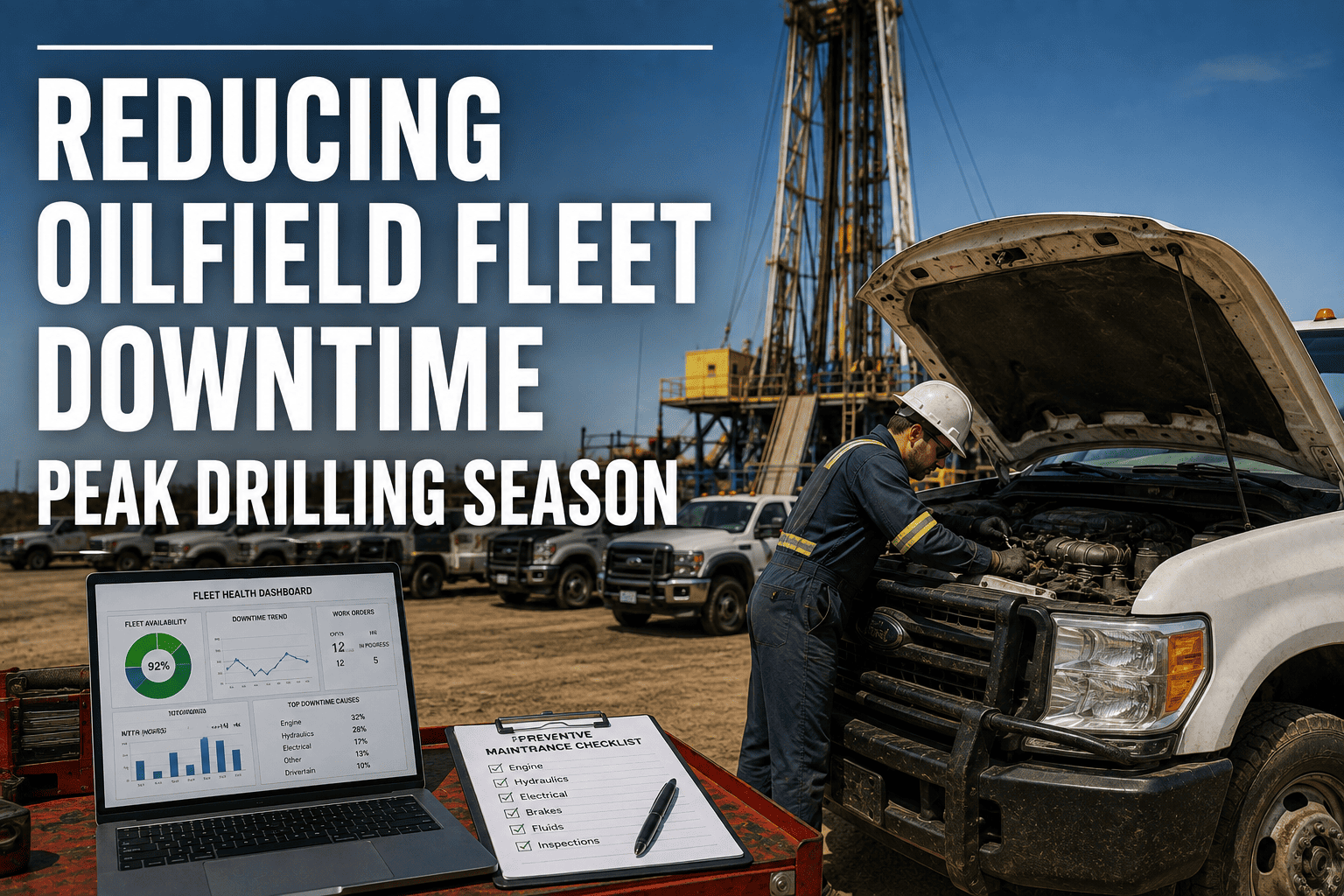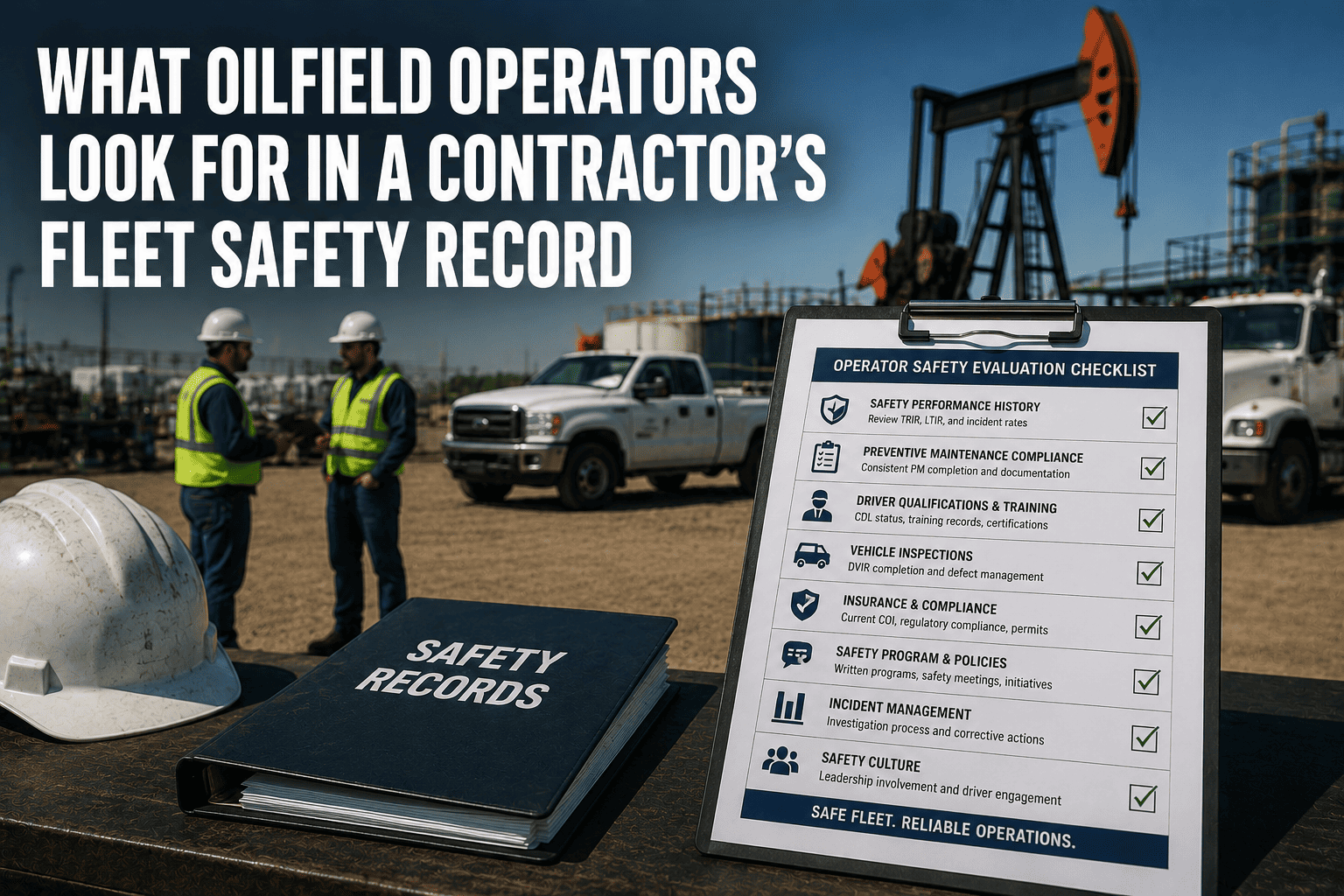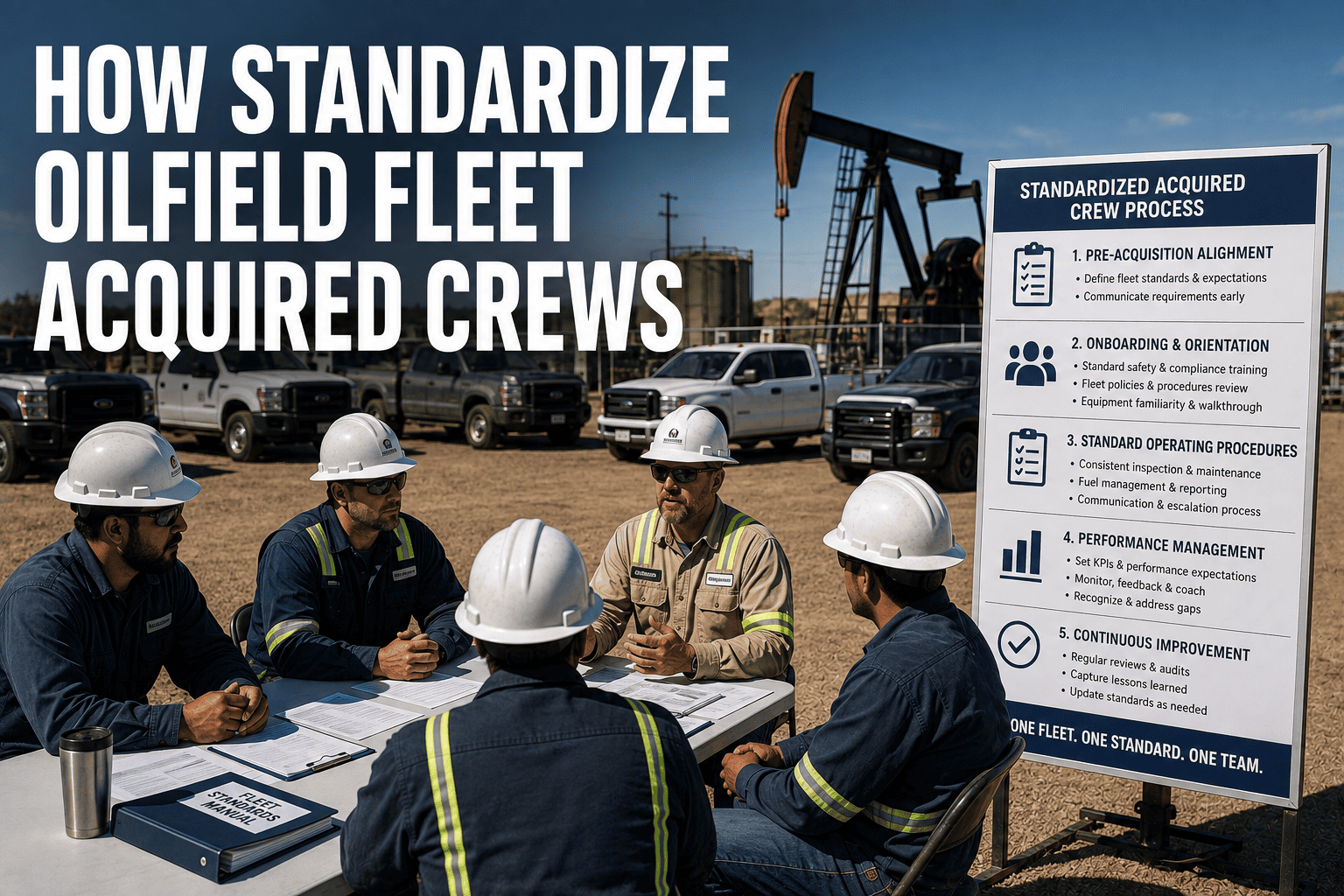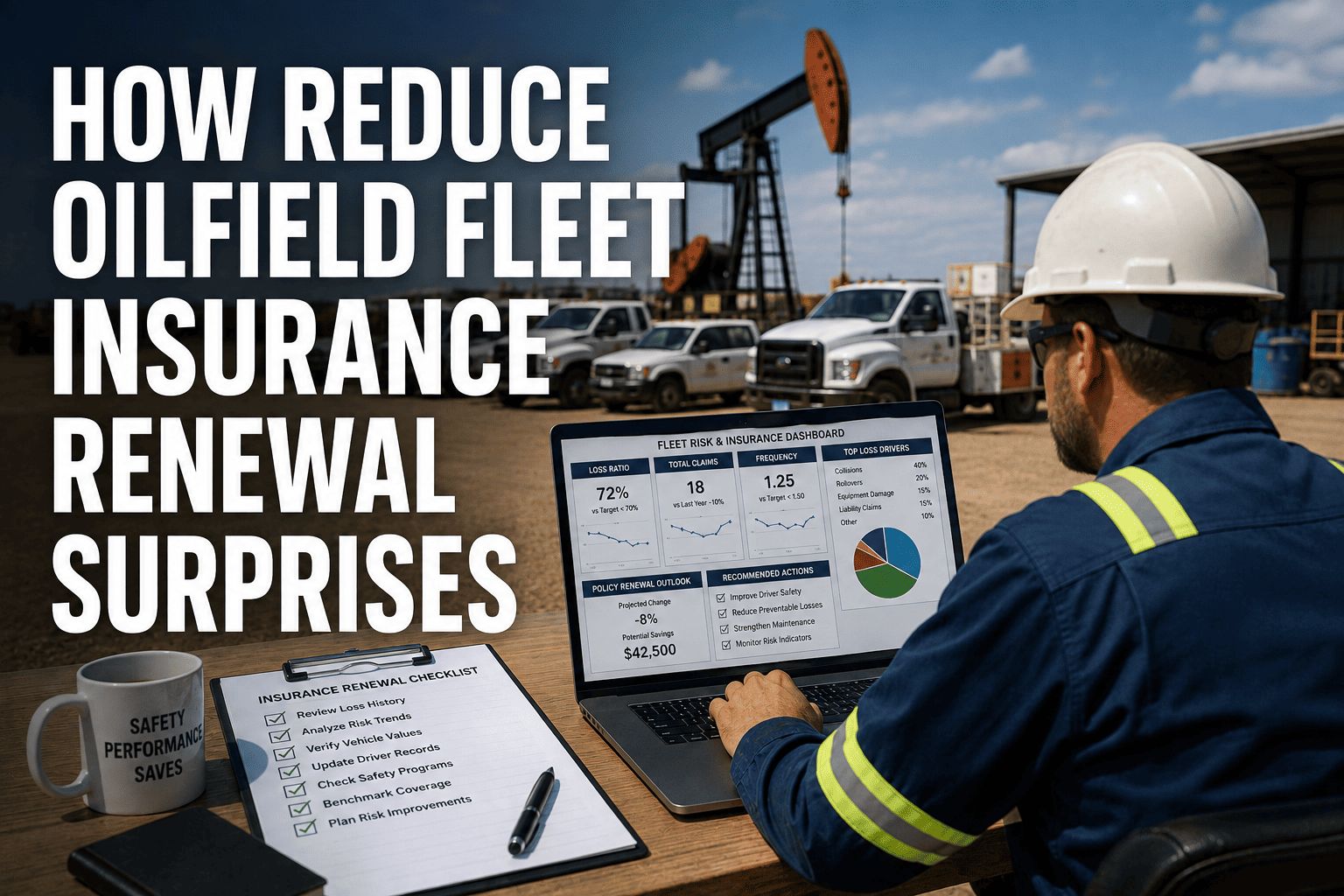
Oilfield drivers operating heavy-duty trucks and transporting hazardous materials face elevated risks due to remote locations, long shifts, and unpredictable terrain. To reduce incidents, companies should enforce strict fatigue management policies, implement real-time vehicle monitoring, and ensure routine safety training tailored to field conditions. When one operator recorded multiple near-miss events in a quarter, internal reviews showed that inconsistent route planning and lack of driver alerts contributed to unsafe situations—despite available telematics data. Modern digital systems can centralize driver behavior data, flag risks instantly, and enable proactive intervention before accidents occur. Book a demo to see how FleetRabbit's driver Safety Best Practices for Oilfield Operations.
Safety Practices for Oilfield Operations
Every oilfield route carries risk. Remote terrain, heavy equipment hauls, fatigue from 12-hour shifts, and unpredictable weather create a high-stakes environment where safety decisions happen in seconds — and the consequences of getting them wrong can last a lifetime. FleetRabbit gives fleet managers and executives real-time visibility, automated compliance tools, and behavior-based coaching to protect every driver on every run.
Oilfield fleets operate in some of the most demanding environments in the world. Drivers navigate dusty lease roads at dawn, haul heavy loads over mountain passes, and maintain strict delivery windows to keep rigs turning. Safety in this environment isn't a checkbox — it's a continuous discipline that requires the right systems, the right data, and leadership that treats safety as a non-negotiable operational standard.
FleetRabbit was built specifically for oil and gas operations. This guide outlines the key safety practices that industry-leading fleet managers enforce — and exactly how FleetRabbit automates and enforces each one across dispersed fleets operating 24/7 in remote locations.
- Fleet Managers overseeing oilfield service vehicles
- HSE Directors responsible for incident reporting
- Operations Executives monitoring safety KPIs
- Dispatch teams coordinating remote-site logistics
The Real Risk Profile of Oilfield Driving
How FleetRabbit Solves Oilfield Driver Safety
FleetRabbit integrates hardware, software, and automated workflows into a unified safety platform purpose-built for oilfield fleet operations. Here's how each challenge maps to a specific FleetRabbit capability.
Continuous In-Cab Behavior Scoring
FleetRabbit's telematics engine scores every driver on hard braking, rapid acceleration, speeding, cornering, and seatbelt usage — in real time. Each event is logged with GPS coordinates, timestamp, and severity. Fleet managers see a daily driver scorecard for every vehicle across the fleet, with automated coaching nudges sent directly to the driver's cab unit when unsafe behavior is detected.
Automated HOS Tracking & Fatigue Alerts
FleetRabbit's ELD-compliant Hours of Service module automatically tracks driving time, on-duty non-driving time, and required rest periods per FMCSA regulations. When a driver approaches their HOS limit, automated alerts fire to both the driver and the dispatch team. Supervisors can view fleet-wide HOS status on a live dashboard — no manual log review required.
GPS + Satellite Tracking Across Dead Zones
FleetRabbit operates on a dual-mode tracking system: cellular GPS for connected areas, satellite fallback for remote locations beyond cell coverage. Fleet managers maintain continuous visibility of every vehicle — whether on a highway, a remote lease road, or deep in a basin without a tower in 40 miles. Geofence alerts notify dispatch the moment a vehicle enters or exits a defined zone.
Load-Aware Speed Limits & Geofence Zones
FleetRabbit allows fleet managers to set dynamic speed thresholds by zone type: highway, lease road, rig site perimeter, and loading yard. Speed limits can differ based on whether the vehicle is loaded or empty — critical for heavy haul safety. Violations trigger instant in-cab alerts and escalate to supervisors if the driver does not correct within a configurable timeframe.
Digital Vehicle Inspection & Defect Reporting
FleetRabbit replaces paper DVIR forms with a mobile digital inspection workflow. Drivers complete pre-trip and post-trip inspections on the FleetRabbit mobile app, capturing photos of defects, tire condition, fluid levels, and safety equipment. Defects trigger automatic work orders routed to the maintenance team. Failed inspection items block vehicle dispatch until resolved.
Automated Incident Detection & SOS Response
When sensors detect a sudden impact event — characteristic of a collision or rollover — FleetRabbit immediately notifies the fleet manager with GPS location, vehicle ID, and incident severity. Drivers can also manually trigger an SOS alert from the cab unit. The platform logs a timestamped incident record, supporting insurance claims, regulatory reporting, and post-incident analysis automatically.
What Fleet Executives Need: A Safety Command View
For VP-level and C-suite operations leaders, driver safety isn't just a field concern — it's a liability, insurance, and regulatory exposure that appears directly on the balance sheet. FleetRabbit provides executive-level visibility without requiring manual data aggregation from field teams.
See FleetRabbit's Safety Platform in Action
Built for oilfield fleet managers and operations executives who need real-time safety visibility across remote, distributed fleets. Book a 30-minute demo tailored to your fleet size and basin.
10 Driver Safety Best Practices for Oilfield Fleet Managers
Seatbelt non-compliance is still a leading contributor to fatality in commercial vehicle accidents. Verbal policies are insufficient. FleetRabbit's in-cab sensor logging flags seatbelt-off events the moment the vehicle moves, triggering an alert to the driver and logging the violation for supervisor review.
A single fleet-wide speed limit ignores the physics of a loaded tanker vs. an empty service truck. FleetRabbit allows zone-specific and load-status-aware speed thresholds — enforced in real time with in-cab alerts and supervisor escalation. Oilfield lease roads warrant 25–35 mph limits; enforce them automatically.
Paper pre-trip inspections are routinely skipped, falsified, or lost. FleetRabbit's digital DVIR requires photo evidence of defects and blocks vehicle dispatch when critical items are flagged as failed. Every inspection is timestamped, geotagged, and stored — creating an incontrovertible maintenance record.
FMCSA HOS rules track hours-per-day, but oilfield rotation fatigue accumulates across 7–14 day cycles. FleetRabbit's HOS module tracks cumulative on-duty hours across the entire rotation, flagging drivers approaching unsafe fatigue levels before they reach FMCSA limits — not just when they exceed them.
Rig sites are high-pedestrian environments with heavy equipment moving in multiple directions. A vehicle entering a rig perimeter at highway speed is a catastrophic hazard. FleetRabbit geofences automatically reduce enforced speed limits when vehicles enter defined rig-site zones — no driver decision required.
Safety conversations that only happen after incidents are reactive. FleetRabbit generates monthly driver behavior scorecards that fleet managers can use in proactive coaching sessions. Drivers who see their own data respond to coaching with measurably better outcomes than those receiving verbal feedback alone.
Drivers operating beyond cellular range must have a reliable emergency communication channel. FleetRabbit's satellite-capable devices maintain two-way messaging and SOS functionality regardless of cellular coverage — a non-negotiable requirement for any fleet operating in basin interiors or remote pad locations.
A vehicle with overdue brake service should never be dispatched for a heavy haul. FleetRabbit links maintenance status directly into the dispatch workflow — flagging vehicles with open safety-critical work orders so dispatchers cannot inadvertently assign high-risk loads to compromised equipment.
Static pre-trip weather checks miss rapidly developing conditions — flash floods, ice storms, high-wind advisories — that emerge while drivers are already en route. FleetRabbit integrates weather feeds that push active alerts to drivers and dispatch teams when route conditions deteriorate during transit.
Safety culture is set at the top. When executives regularly review fleet-wide safety metrics — driver scores, near-miss events, HOS compliance rates, inspection failure trends — it signals organizational priority to field teams. FleetRabbit's executive reporting module delivers automated monthly summaries to leadership without requiring manual data pulls from field supervisors.
Measurable Safety Outcomes: FleetRabbit-Deployed Oilfield Fleets
Frequently Asked Questions
Protect Your Drivers. Protect Your Operation.
FleetRabbit's oilfield safety platform gives fleet managers and executives real-time visibility, automated compliance, and behavioral coaching tools to eliminate preventable accidents before they happen.