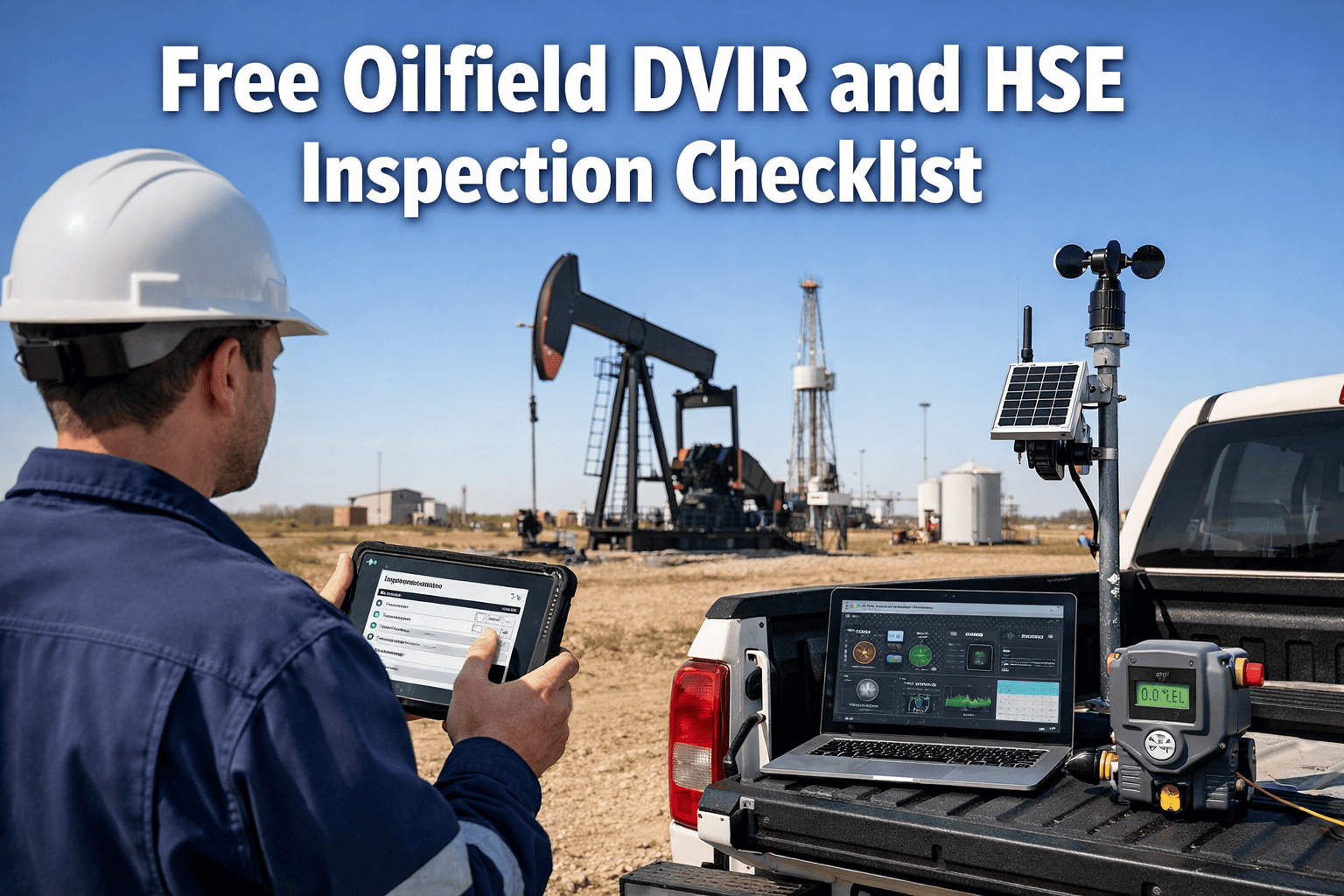
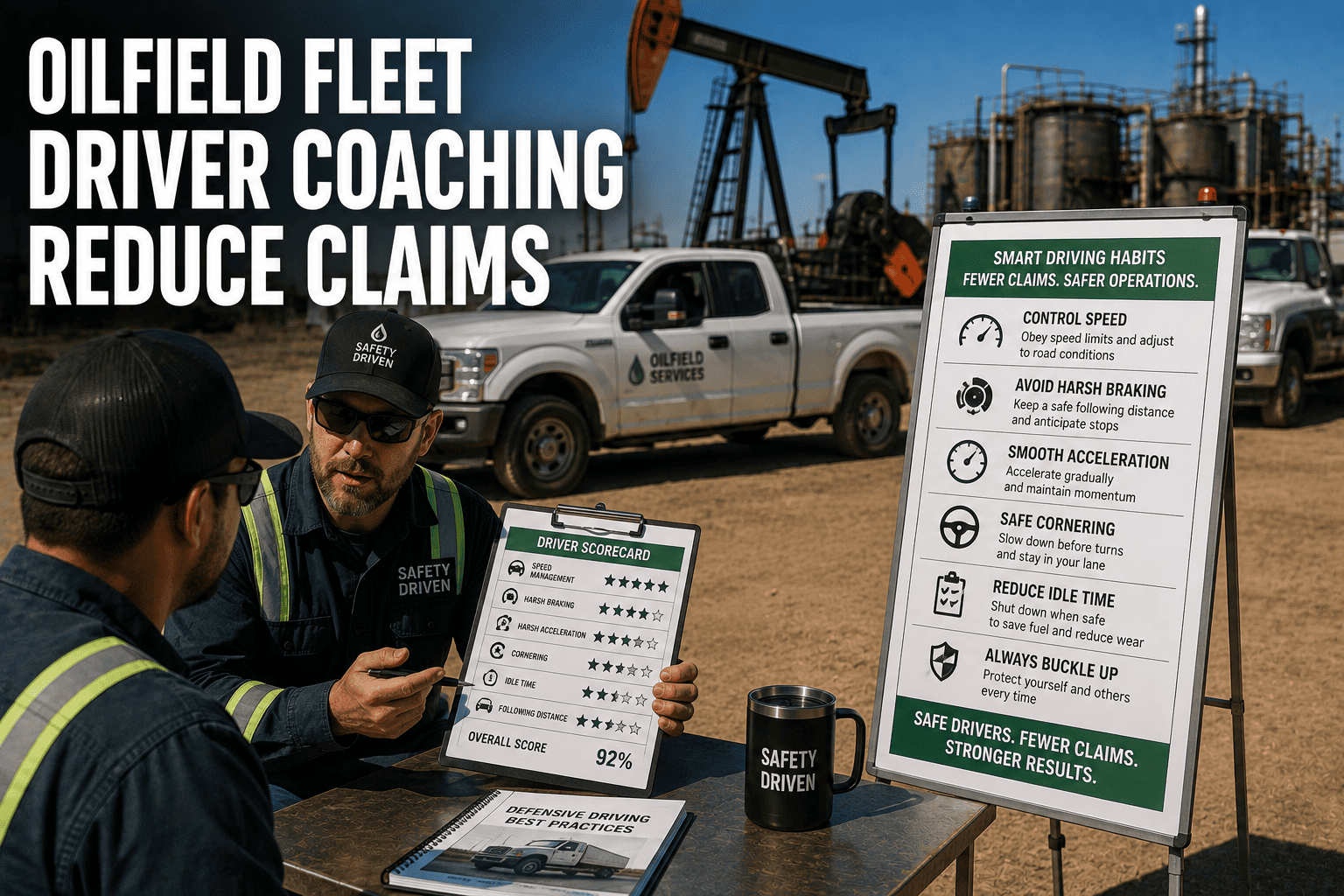
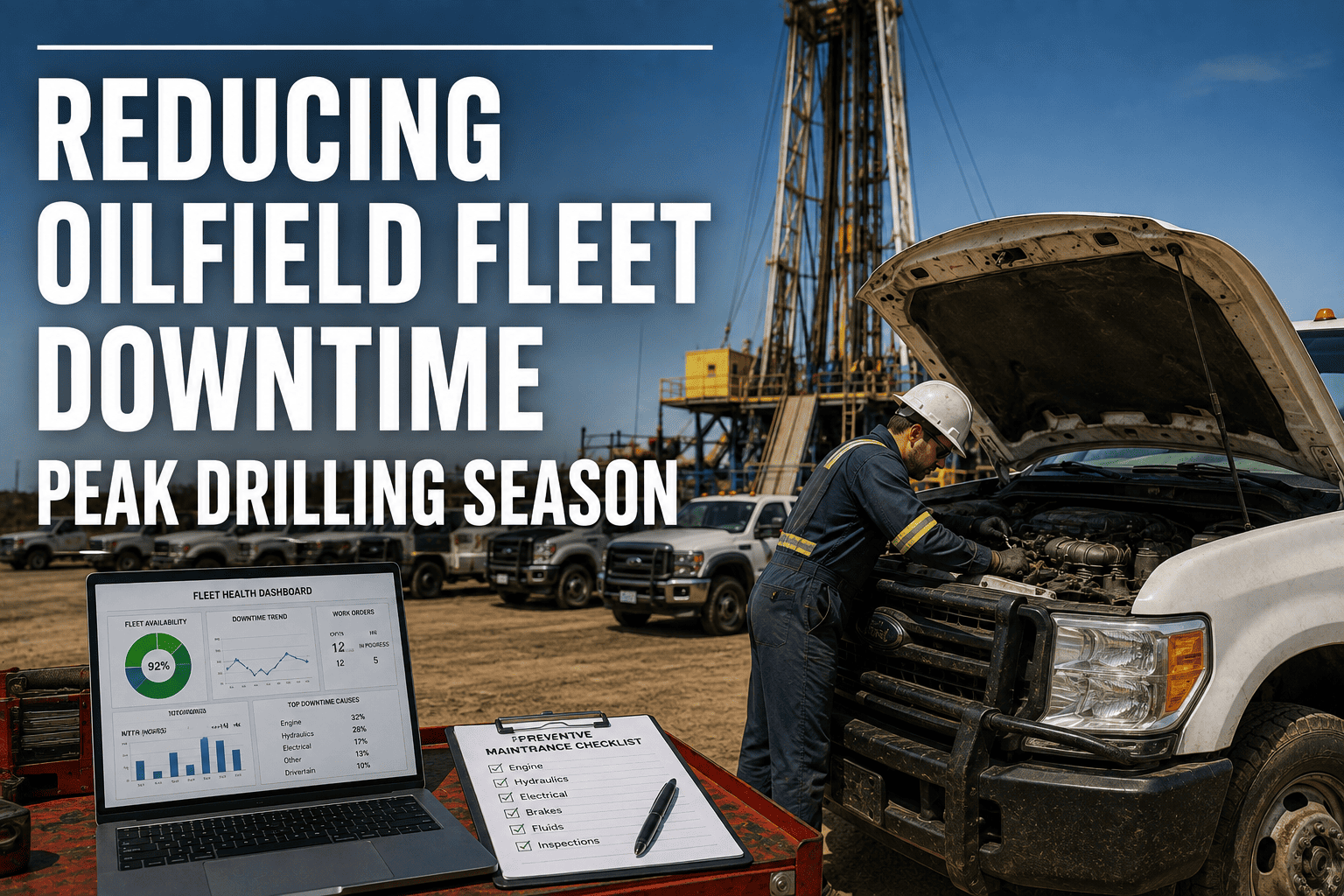
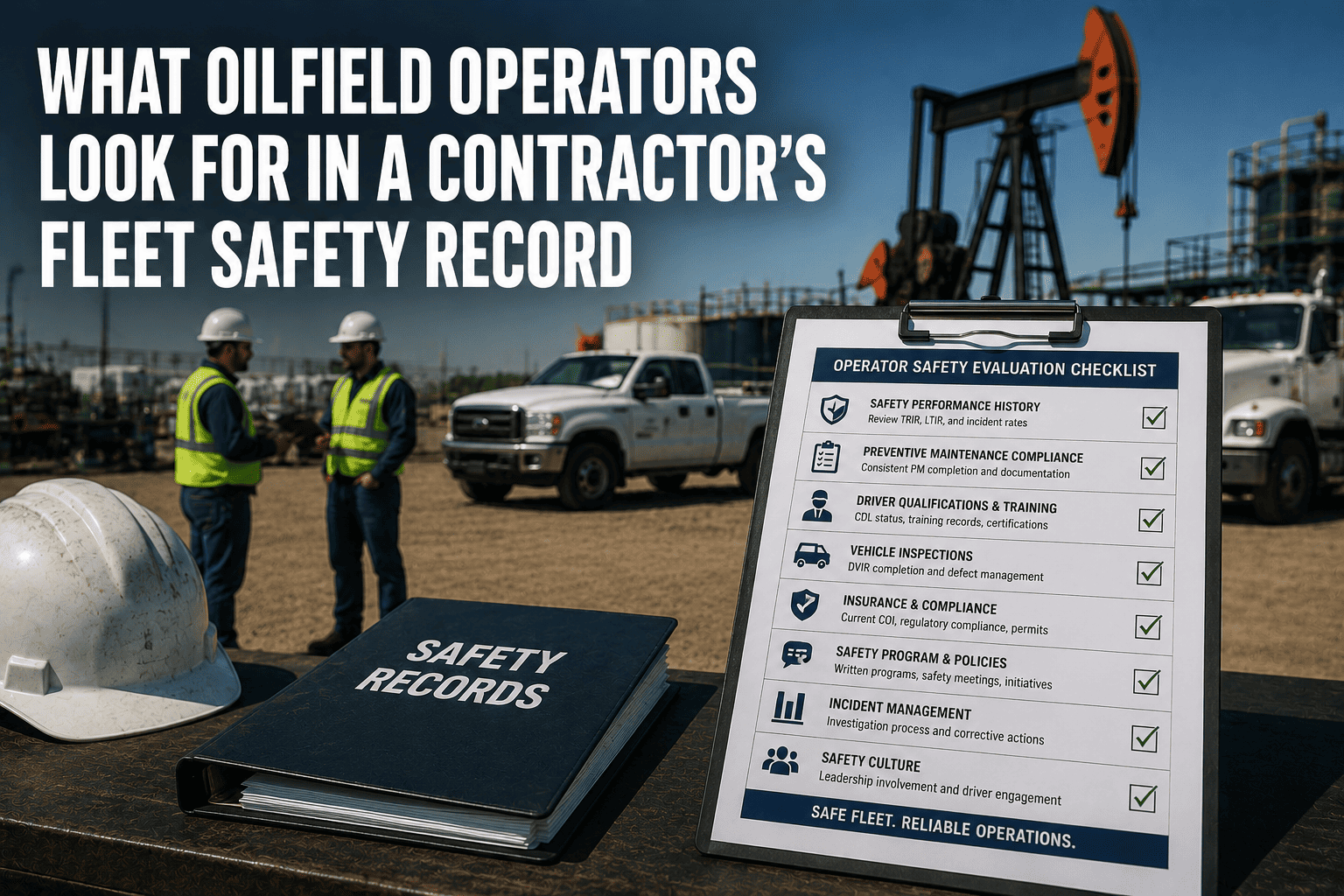
Oil and gas fleets operate in some of the harshest environments on earth — remote drilling sites, pipeline corridors, and fracking operations where equipment reliability, regulatory compliance, and safety are non-negotiable. A single vehicle or asset failure can halt operations, trigger hefty HSE fines, and cost $80,000–$250,000 per day in lost production. Traditional fleet management tools fall short with siloed data, delayed reporting, and no predictive intelligence. FleetRabbit is the best oil and gas fleet management software, combining real-time tracking, AI-powered predictive maintenance, digital HSE & DOT compliance, offline mobile inspections, and equipment utilisation analytics into one intelligent platform — empowering fleet managers and top executives to maximise uptime, ensure full regulatory adherence, and significantly reduce operating costs while following HSE DOT inspection best practices. Book a demo to see why FleetRabbit is the best oil and gas fleet management software for your operations.
Checklist Scope & Usage
This guide covers seven zones: engine and drivetrain health, brakes and steering systems, tyre and wheel condition, electrical and lighting, cab and body safety, fluid systems and leakage, and HSE and compliance documentation. Priority ratings are assigned per item based on failure consequence and detection window. Critical items have a short detection window to unrecoverable failure or safety incident. Monitor items require a work order and defined re-inspection date. Routine items are documented and trended over time. All FLAG and STOP findings require photo documentation before the work order is raised in FleetRabbit.
01Engine & Drivetrain: Health and Performance Assessment
The engine and drivetrain are the primary failure point for oilfield vehicles operating on engine-hour-intensive wellpad duties. OBD-II fault codes and engine hour accumulation are the primary running-vehicle indicators. Physical inspection of belts, hoses, and mounts requires direct access at every scheduled maintenance stop.
Engine Health — Running Vehicle and At Stop
Drivetrain and Transmission Condition
02Brakes & Steering
Brake and steering failures on oilfield access roads are the leading cause of serious vehicle incidents. Gradient terrain, loose surfaces, and heavily loaded vehicles demand full braking system integrity at all times. These items must be measured and recorded quantitatively, not estimated by feel during a test drive.
Brake System Condition and Performance
Steering System and Suspension
FleetRabbit Digital Inspection Platform
Digitise This Checklist in FleetRabbit
Zone-based inspection on mobile, timestamped photo capture, and automatic work order routing for every FLAG and STOP finding. Configured on your fleet asset hierarchy in 5–7 days.
Tyre failures are the most common cause of vehicle immobilisation in oilfield operations. Road surfaces, debris, and heavily laden conditions combine to create the most demanding tyre environment outside of motorsport. Tyre condition must be inspected physically, not inferred from mileage or age alone.
Tyre Condition and Pressure
Wheels and Wheel Fixings
04Electrical System & Lighting
Electrical failures cause the highest proportion of vehicle hold incidents in fleet operations. A single blown fuse or failed relay can immobilise a vehicle with no mechanical defect present. In oilfield environments operating in hours of darkness on remote roads, lighting failure is a direct safety hazard and a compliance breach.
Battery and Charging System
Exterior Lighting and Signals
05Cab & Body Safety
Cab condition directly determines driver safety in collision and rollover events — the most serious injury outcomes in oilfield fleet operations. Structural cab items are non-negotiable: a vehicle with compromised cab integrity should not be dispatched to remote locations where emergency response times are measured in hours, not minutes.
Cab Structure and Restraints
Body Condition and Load Security
FleetRabbit Digital Inspection Platform
Digitise This Checklist in FleetRabbit
Zone-based inspection on mobile, timestamped photo capture, and automatic work order routing for every FLAG and STOP finding. Configured on your fleet asset hierarchy in 5–7 days.
Fluid leakage is the most detectable early-warning sign of mechanical deterioration — yet it is consistently the most under-reported finding in paper-based inspection systems. A minor oil seep at an engine rocker cover gasket costs a fraction of what it costs when ignored for months and allowed to contaminate the clutch assembly. Leakage findings must be photographed and work-ordered on the day of detection.
Engine and Gearbox Fluid Integrity
Axle, Differential, and Hydraulic Systems
07HSE & Compliance Documentation
In oil and gas operations, vehicle compliance documentation is not a box-ticking exercise — it is the legal framework that determines whether a fleet manager or operator faces personal liability following a vehicle incident. Missing certifications can invalidate insurance, expose the employer to regulatory enforcement, and in serious incidents, result in prosecution of individuals. These items require positive confirmation, not assumption.
Vehicle Certification and Legal Compliance
Driver Documentation and Safety Equipment
Inspection Zone Summary: Frequency and Priority Distribution
Inspection Zone
Every Stop
Running Monthly
Critical
Monitor
Total
Zone 1 — Engine & Drivetrain
All items
OBD-II check only
3
5
13
Zone 2 — Brakes & Steering
All items
Brake fluid check
4
6
12
Zone 3 — Tyres & Wheels
All items
Pressure check
4
4
11
Zone 4 — Electrical & Lighting
All items
Lighting walk-round
3
4
10
Zone 5 — Cab & Body Safety
All items
Seatbelt & screen
3
5
11
Zone 6 — Fluid Systems
All items
Engine bay check
2
7
10
Zone 7 — HSE & Compliance
All items
Cert expiry check
5
6
15
Total Checklist Items
82
Selected
24
37
82
How FleetRabbit Transforms Oilfield Fleet Inspection
Fleet managers and top executives in oil and gas operations face a common and costly challenge: inspection data collected on paper never reaches the people who can act on it in time. FleetRabbit eliminates the gap between field-level finding and management-level action.
01
Automated Work Order Routing
Every FLAG and STOP finding from a zone inspection automatically generates a corrective work order, assigned to the correct maintenance team, with photo evidence attached. No manual transcription. No lost defect reports.
02
Timestamped Photo Evidence
Inspectors capture geo-tagged, timestamped photos directly in the FleetRabbit mobile app. Every finding is documented at the point of discovery — creating an unbroken chain of evidence for insurance, regulatory audit, and internal investigation.
03
Real-Time Executive Dashboard
Fleet managers and operations directors see the live status of every vehicle across every site on a single dashboard. Open defects, overdue inspections, and compliance gaps surface instantly — no waiting for weekly paper reports.
04
Certification Expiry Tracking
FleetRabbit tracks every certification, permit, licence, and medical across your entire driver and vehicle fleet. Automated alerts fire 60 days, 30 days, and 7 days before expiry — eliminating the risk of a grounded vehicle at a wellsite gate.
05
Offline Mobile Capability
Zone inspections complete and sync without a mobile data connection — critical for remote wellpad locations with no signal coverage. Data uploads automatically when connectivity is restored, with no data loss.
06
Multi-Region Compliance Export
FleetRabbit structures inspection records to satisfy audit requirements across UK/EU, USA/Canada, GCC, and India frameworks — including DVSA, FMCSA, ADNOC, and DGMS — without post-processing or manual report assembly.
FleetRabbit Compliance Coverage for Vehicle Inspection Records
Region
Applicable Inspection Frameworks
FleetRabbit Inspection Record Output
UK / EU
DVSA operator licence conditions, PUWER 1998, LOLER 1998, HSE HSG136, DVSA Guide to Maintaining Roadworthiness, EU 96/53/EC
Timestamped pre-trip and post-trip inspection records, defect log with photo evidence, DVSA-compatible maintenance history export, operator licence audit trail
Statutory inspection register entries, work order history per asset per inspection window, corrective action closure documentation for DGMS audit requirements
FleetRabbit Zone Inspection Results at Oil & Gas Fleet Sites
73%
Fewer Unplanned Breakdowns
Breakdown events at 12 months post structured zone inspection deployment across FleetRabbit-deployed oilfield fleet sites
97%
Inspection Compliance Rate
Zone checklist completion rate on critical vehicle inspection items across digital deployment oilfield fleets
5–7 days
Deployment Time
Average time to live digital zone inspections on a 50-vehicle oilfield fleet including asset hierarchy build and team onboarding
100%
Work Order Linkage
FLAG and STOP findings automatically routed to corrective work orders with photo evidence attached from the inspection event
Frequently Asked Questions
QAt what brake pad thickness should a vehicle be grounded versus scheduled for planned replacement?
Industry and regulatory practice distinguishes two thresholds: the planned intervention threshold, which triggers a scheduled pad replacement at the next convenient maintenance window, and the ground vehicle threshold, which requires immediate removal from service. For standard disc brakes, the planned threshold is 4mm pad thickness and the ground threshold is 2mm (or at wear indicators, whichever comes first). For heavy commercial vehicles operating on oilfield access roads with loaded descent sections, apply the more conservative threshold: planned replacement at 5mm, ground at 3mm. Vehicles with overheated or glazed pads should be grounded regardless of thickness remaining, as glazed material provides significantly less friction than thickness measurement alone suggests.
QHow does this checklist integrate with FleetRabbit's daily driver pre-trip inspection for running-fleet monitoring?
This zone checklist covers the full physical inspection regime at scheduled maintenance stops. FleetRabbit's daily driver pre-trip inspection form provides the between-stop monitoring layer — visual fluid checks, tyre pressure, lighting walk-round, and cab safety items completed by the driver each day before departure. The two checklists are complementary: the daily pre-trip detects developing defects in the days or weeks between scheduled zone stops, giving fleet managers actionable lead time rather than a reactive response to a condition that is already at the critical level by the next maintenance date. Both checklist types are available in the FleetRabbit mobile app with offline capability for remote wellpad completion.
QWhat causes accelerated tyre wear in oilfield fleet operations compared to highway operations?
Oilfield vehicles experience significantly higher tyre wear rates than equivalent vehicles on highway duties for four concurrent reasons: wellpad and access road surfaces impose far greater sidewall flexing stress than smooth asphalt, accelerating internal ply fatigue; loaded vehicles operating on gradient terrain produce substantially higher braking and acceleration forces per tyre contact patch; high ambient temperatures on Middle Eastern and African oilfield sites increase running temperature of tyre compounds, softening rubber and accelerating wear; and frequent low-speed manoeuvring with heavy steering inputs on loose surfaces scrubs tread faster than highway driving. For these reasons, mileage-based tyre replacement intervals are rarely appropriate for oilfield fleets — engine-hour or site-days-based replacement schedules, configured in FleetRabbit per asset type, are more accurate predictors of tyre condition.
QCan this checklist replace a formal third-party vehicle safety inspection by a qualified engineer?
No. This checklist is an operational preventive maintenance tool designed for use by trained fleet drivers and maintenance technicians as part of the standard inspection programme. It does not replace the formal periodic inspection conducted by a qualified vehicle technician or third-party inspection body, which includes brake efficiency testing on a roller brake tester, steering geometry measurement, emissions testing, and formal safety certificate issuance. The outputs of this zone checklist should feed directly into the periodic inspection brief — providing quantified condition trending data across multiple stops that makes the formal inspection significantly more targeted and actionable. FleetRabbit logs all zone inspection findings against the vehicle asset record, creating the documented maintenance history required by most regional regulatory frameworks.
QHow should this checklist be migrated from paper to FleetRabbit without losing historical inspection data?
The critical principle is that historical paper inspection data should be imported as structured records against each vehicle asset in FleetRabbit before digital checklists go live — the trending value of this zone checklist depends on inspection-to-inspection comparison, and that comparison requires historical baseline data to be accessible in the same system rather than archived in paper binders. FleetRabbit's implementation team provides structured data import from prior paper and spreadsheet records as part of the standard fleet onboarding. For most oilfield fleets of 20–100 vehicles, the full migration including asset hierarchy build, historical data import, checklist configuration, and driver training is completed within 5–7 working days. Discuss your migration timeline in a scoping call.
QHow do fleet executives gain visibility across multi-site oilfield operations using FleetRabbit?
FleetRabbit's executive dashboard consolidates inspection status, open defect counts, compliance certification health, and maintenance cost trending across every site and every vehicle in a single view. Operations directors and fleet managers can drill from portfolio-level KPIs down to a specific vehicle's inspection history and open work orders without switching systems. Automated exception reporting flags sites or vehicle categories where inspection completion rates drop below threshold — giving executives the early warning signal to intervene before a compliance or safety incident occurs. Scheduled digest reports can be configured for weekly or monthly distribution to senior stakeholders without requiring manual report assembly.
Deploy in 5–7 Working Days
Deploy This Checklist as Live Digital Zone Inspections in FleetRabbit
Every zone and every item in this checklist is available as a structured digital work order in FleetRabbit — assigned to your fleet asset hierarchy, triggered by scheduled maintenance events, and completed on mobile at the vehicle location with photo capture and automatic work order routing for every abnormal finding.