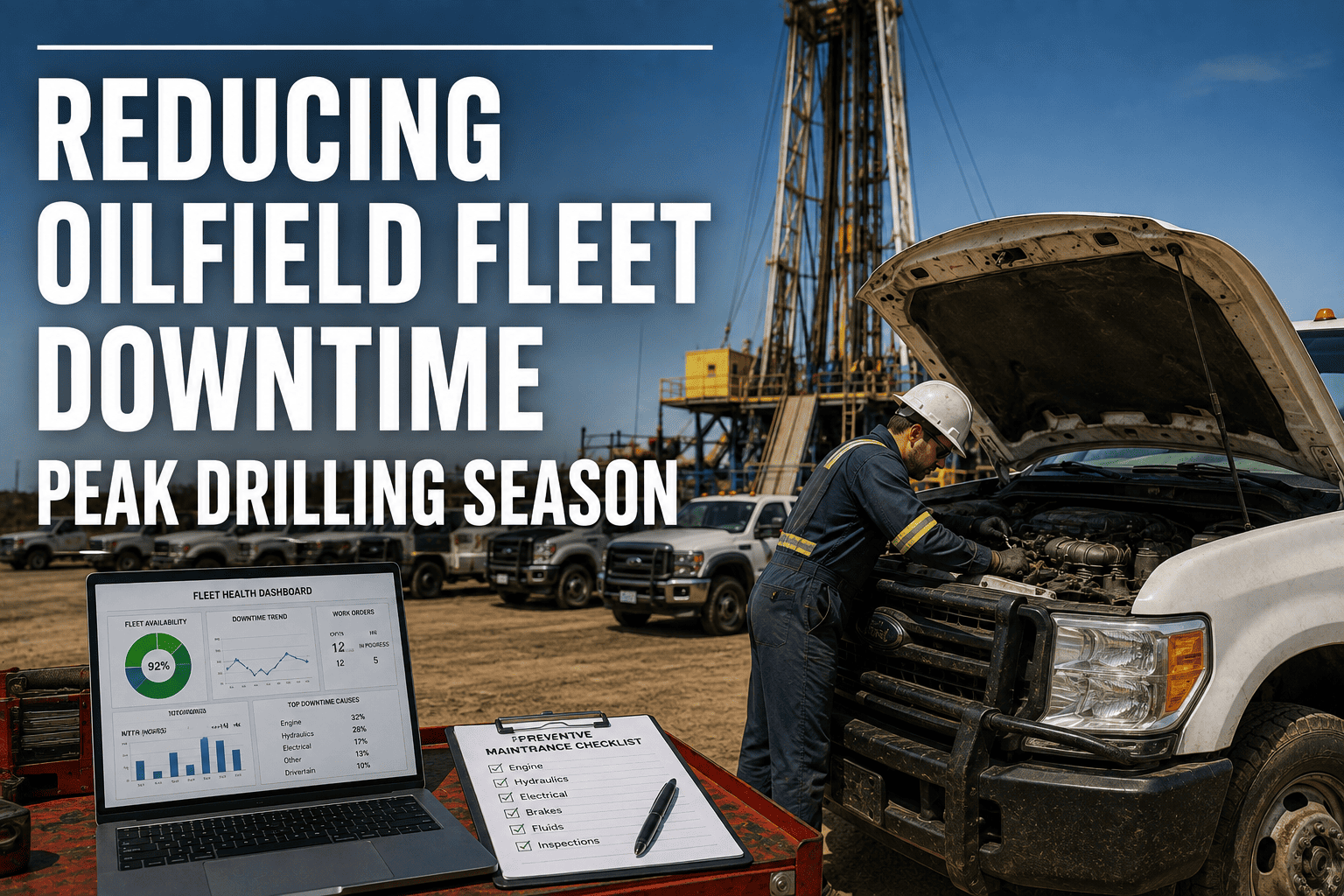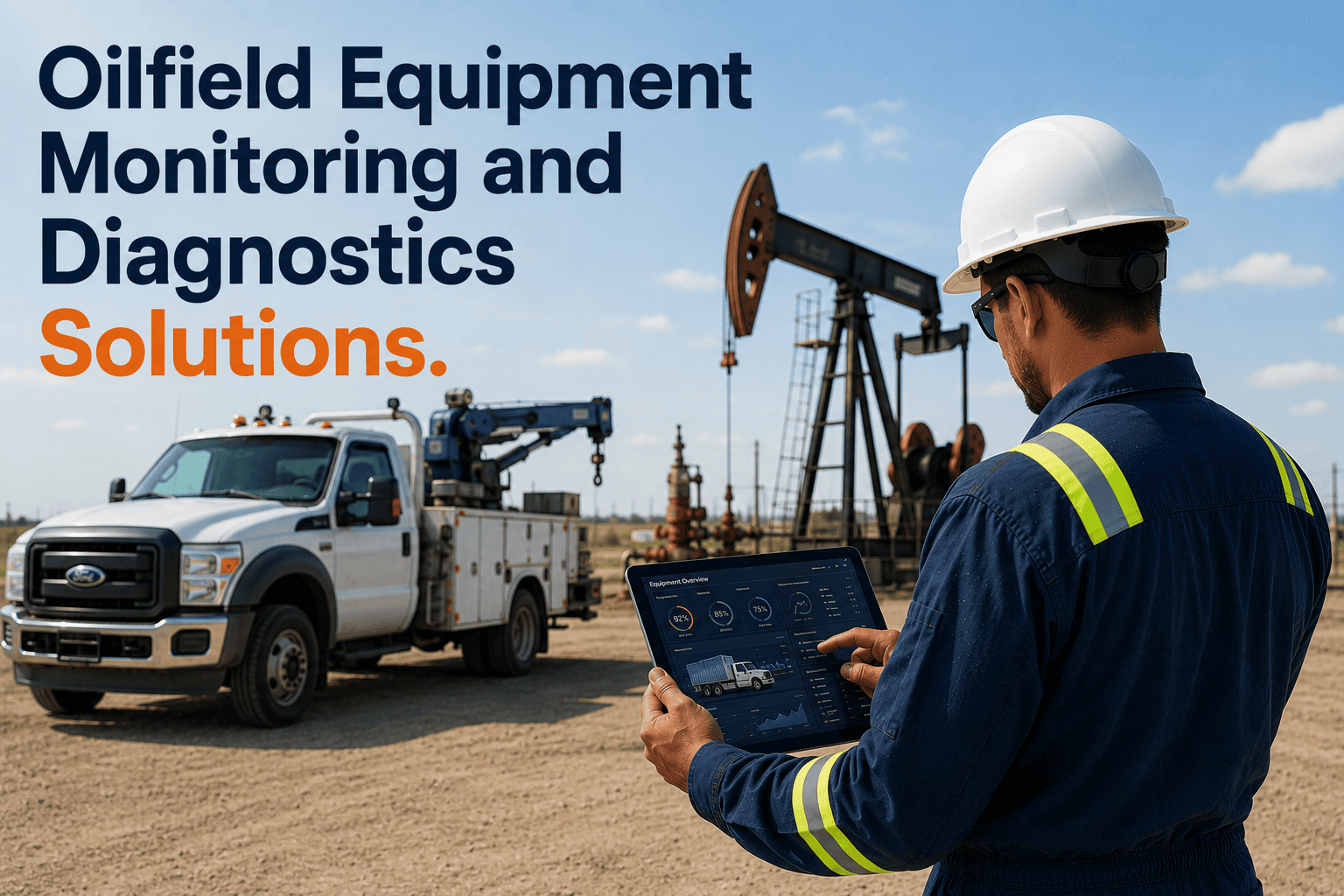
Oilfield equipment failures do not announce themselves — they develop through progressive mechanical degradation that generates measurable signals weeks before catastrophic breakdown forces emergency mobilisation, expedited parts procurement, and extended field downtime that costs basin operators four to eight times more than equivalent planned maintenance intervention. The fundamental challenge of oilfield equipment health management is not the absence of warning signals but the absence of monitoring infrastructure capable of detecting and interpreting them before they cross the threshold from manageable degradation into unrecoverable failure. A frac pump losing hydraulic efficiency gradually over six weeks, a crude tanker engine developing abnormal wear metal concentrations across four oil sampling intervals, a compressor bearing generating vibration frequency signatures indicating misalignment three weeks before audible symptoms emerge — these are all preventable failures that continuous equipment monitoring platforms identify while repair options remain scheduled, planned, and budget-controlled rather than emergency, reactive, and expensive. FleetRabbit's integrated equipment monitoring and diagnostics platform delivers real-time health intelligence across every asset in your oilfield fleet — combining telematics performance data, fluid analysis integration, vibration and acoustic monitoring, and predictive analytics algorithms that identify developing failures with documented accuracy 2-4 weeks before breakdown events disrupt operations, damage adjacent components, and generate emergency costs that systematic monitoring consistently prevents. Basin operators deploying FleetRabbit's diagnostics infrastructure achieve 85-92% reduction in catastrophic equipment failures, 35-45% total maintenance cost reduction, and 92-96% fleet availability rates that reactive maintenance approaches cannot sustain regardless of maintenance staff quality or budget allocation. Schedule an equipment diagnostics demonstration to see FleetRabbit's monitoring capabilities applied to your specific fleet composition.
Oilfield Equipment Monitoring and Diagnostics — Detect Failures 2–4 Weeks Before Breakdown
FleetRabbit's integrated diagnostics platform combines telematics performance monitoring, fluid analysis integration, vibration and acoustic diagnostics, and machine learning algorithms that identify developing equipment failures across every oilfield asset — enabling planned intervention before breakdown disrupts operations, damages adjacent components, and generates emergency costs that systematic monitoring prevents.
Seven Equipment Monitoring and Diagnostics Capabilities Oilfield Operators Must Deploy
Each monitoring capability addresses a specific failure mode prevalent in oilfield fleet equipment — from frac pump hydraulic degradation to crude tanker engine wear to compressor bearing misalignment — with documented detection lead times that enable planned repair rather than emergency response.
Real-Time Telematics Performance Deviation Detection
Engine performance degradation in oilfield equipment develops gradually across dozens of operating parameters — fuel consumption efficiency declining 2% per week, exhaust temperature rising incrementally, power output decreasing fractionally — creating patterns that are invisible during physical inspections and indistinguishable from day-to-day operational variation in monthly aggregate data. By the time performance degradation becomes noticeable to operators, mechanical damage has typically progressed through multiple repair-opportunity windows to a stage requiring major component replacement rather than targeted intervention.
Continuous telematics monitoring tracks engine parameters, hydraulic pressures, exhaust temperatures, power output efficiency, and fuel consumption ratios against equipment-specific baselines established from historical operating profiles. Statistical deviation detection algorithms identify emerging performance degradation patterns — 2% efficiency decline sustained across 72 operating hours generates a diagnostic alert with specific parameter deviation data — enabling maintenance investigation 7-14 days before performance degradation escalates to field equipment failure requiring emergency response mobilisation across remote basin locations.
Fluid Analysis Integration and Contamination Trend Monitoring
Oil analysis laboratory results from oilfield equipment samples arrive as disconnected snapshots — individual test results without the trending context that reveals whether wear metal concentrations are stable, gradually increasing, or accelerating toward component failure thresholds. Without integrated trend analysis, maintenance managers review each sample result in isolation, missing the 40% increase in iron concentration across three consecutive samples that predicts bearing failure 4-6 weeks ahead with high confidence when interpreted against equipment-specific degradation curves rather than generic industry reference ranges.
FleetRabbit integrates electronically with major oil analysis laboratories — receiving sample results automatically and plotting them against equipment-specific baseline trends established from the vehicle's operational history. Wear metal trend algorithms calculate rate-of-change across consecutive samples and compare progression against failure prediction models calibrated to equipment type, operating conditions, and mileage profiles. Contamination alerts trigger when coolant breakthrough, fuel dilution, or glycol contamination indicators cross intervention thresholds, enabling component investigation before secondary damage compounds the repair requirement.
Vibration and Acoustic Signature Analysis for Rotating Equipment
Oilfield rotating equipment — compressors, pump drives, generator sets, and tanker hydraulic systems — develops bearing wear, shaft misalignment, and mechanical imbalance through progressive degradation that generates characteristic frequency signatures in vibration data 2-4 weeks before audible symptoms emerge and 4-6 weeks before catastrophic failure. Without continuous vibration monitoring, these signatures go undetected until operators hear abnormal noise — typically 5-7 days before failure — or until failure itself forces emergency shutdown at the worst possible operational moment.
Vibration sensor networks on critical rotating equipment continuously capture frequency domain data — comparing spectral signatures against baseline profiles and failure mode libraries to identify bearing defect frequencies, unbalance harmonics, and misalignment patterns specific to each monitored component. Trend analysis tracks vibration amplitude progression across time, distinguishing normal operational variation from developing mechanical faults requiring intervention. Frequency-specific alerts identify the exact component generating anomalous signatures — enabling targeted bearing replacement or alignment correction rather than complete equipment overhaul that non-specific symptoms would otherwise require.
Temperature Monitoring and Thermal Anomaly Detection
Cooling system degradation, hydraulic fluid overheating, transmission temperature escalation, and exhaust thermal anomalies represent high-consequence failure pathways in oilfield heavy equipment operating under sustained high-load conditions at remote basin locations. Temperature gauge monitoring by operators catches acute overheating episodes but misses the gradual cooling system capacity degradation — rising peak temperatures across consecutive work cycles, extended cooldown periods, increasing differential between ambient and coolant temperatures — that predicts cooling system failure and engine damage 6-18 hours before crisis-level temperature events.
Multi-point temperature monitoring tracks engine coolant, transmission fluid, hydraulic system, exhaust, and ambient temperatures continuously — comparing operating temperatures against load-adjusted normal ranges rather than static threshold limits that miss the contextual variation between light and heavy-duty operating conditions. Thermal trend alerts identify gradual cooling efficiency degradation before acute overheating events, and load-normalised temperature analysis reveals cooling system components operating below design efficiency that inspections cannot detect without disassembly and flow-rate testing under load conditions.
Predictive Maintenance Scheduling and Work Order Automation
Fixed-interval preventive maintenance schedules based on manufacturer recommendations fail to account for the actual operating stress that oilfield equipment accumulates — a crude tanker completing 14-hour shifts across rough lease roads reaches calendar-based service intervals at vastly different actual wear states than a vehicle in light-duty field support service. Calendar-based scheduling creates systematic inefficiency where some components are replaced prematurely while others — which have accumulated disproportionate wear in high-duty-cycle applications — progress toward failure between service visits that arrive too late to prevent the developing degradation that condition-based monitoring would have detected weeks earlier.
Condition-based maintenance scheduling triggers service work orders based on actual equipment health indicators — engine hours accumulated under specific load profiles, fluid contamination trends indicating service requirement independent of mileage intervals, and component health scores generated from telematics and sensor data — rather than fixed calendar intervals that miss the operational reality of variable-duty oilfield equipment. Automated work order generation with parts requisition integration ensures components are available when monitoring indicates intervention timing, eliminating the deferred maintenance cycle where correct diagnosis arrives without parts availability to act on it.
Machine Learning Failure Pattern Recognition Across Fleet Population
Individual equipment health monitoring generates valuable asset-level data but misses the cross-fleet pattern intelligence that emerges when failure signatures are analyzed across multiple vehicles of the same type operating in similar basin conditions — the common degradation sequence that precedes hydraulic pump failure in a specific tanker configuration, the operating profile characteristics that predict differential failures in well service trucks with particular transmission specifications, the environmental conditions that accelerate bearing wear in compressor units during extreme temperature cycles.
FleetRabbit's machine learning algorithms analyze failure histories, pre-failure parameter signatures, and equipment configuration data across the entire monitored fleet population — identifying common failure precursor patterns that individual asset monitoring cannot surface without the comparative dataset that population-level analysis provides. Fleet-level pattern recognition continuously improves prediction accuracy as failure outcomes confirm or refine model predictions, producing diagnostic intelligence that compounds in value over deployment time as the algorithm library expands with additional equipment types, failure modes, and basin operating condition profiles.
Executive Equipment Health Dashboards and ROI Reporting
Equipment health monitoring programs that generate data without surfacing it in leadership-accessible formats fail to produce the organizational commitment and resource allocation decisions necessary to sustain systematic maintenance programs. When fleet managers cannot demonstrate to CFOs and operations leadership the specific financial return from predictive maintenance investment — prevented failures, avoided emergency costs, extended component lifecycles, and reduced downtime losses — monitoring programs compete unsuccessfully against short-term cost pressures that sacrifice long-term equipment health for immediate budget relief.
Executive equipment health dashboards aggregate asset health scores, maintenance compliance percentages, prevented failure counts, and avoided cost calculations across the entire monitored fleet — presenting return on monitoring investment in financial terms that support budget allocation decisions and demonstrate program effectiveness to leadership, insurers, and clients requiring equipment maintenance standard evidence for contractor qualification. Fleet managers receive asset-level health rankings enabling priority-based maintenance attention, while operations leadership sees fleet-wide availability trends and downtime reduction trajectories validating the operational value of systematic monitoring programs.
From Reactive Equipment Management to Predictive Health Intelligence
Platform Activation and Baseline Health Establishment
Vibration Monitoring Deployment and First Predictive Interventions
Machine Learning Calibration and Insurance Evidence Preparation
174-Vehicle Well Services Fleet: 88% Catastrophic Failure Reduction and $1.92M Annual Maintenance Savings Through FleetRabbit Diagnostics
South Texas well services company deploying crude haul, SWD, and completion equipment across Eagle Ford operations implemented FleetRabbit's full seven-capability monitoring platform across 174 vehicles — achieving 88% reduction in catastrophic equipment failures, improvement from 76% to 94% fleet availability, 42% total maintenance cost reduction, and $1.92M annual operational savings against $6,264 platform investment representing 30,657% ROI within 14 months of deployment. The single largest prevented failure event — a compressor catastrophic bearing failure identified through vibration signature analysis 19 days before mechanical collapse — avoided an estimated $186,000 in combined replacement, emergency mobilisation, and lost operational time costs that would have exceeded 30 years of platform subscription cost.
How Equipment Monitoring Intelligence Serves Every Level of Oilfield Operations Leadership
Priority-Based Maintenance Allocation Replacing Equal-Attention Fleet Management
Health score dashboards rank every fleet asset by current failure risk and maintenance urgency — directing maintenance team attention to assets requiring immediate investigation while confirming that lower-ranked vehicles can safely continue operational assignment. Fleet managers eliminate the guesswork allocation of limited maintenance resources across large asset populations operating at dispersed basin locations without central oversight capability.
Production Continuity Protection Through Failure Prevention Intelligence
Predictive equipment monitoring protects the operational reliability commitments that customer production schedules require — preventing the unannounced field failures that halt crude haul operations mid-shift, disrupt well service job schedules, and force customer notification conversations about equipment availability failures that damage contractor reputation and contract renewal positioning in competitive basin service markets where HSE and reliability records determine vendor selection outcomes.
Maintenance Cost Attribution and Capital Planning Intelligence
Lifecycle cost analytics tracking total maintenance expenditure by vehicle — including parts, labour, downtime losses, and emergency premium costs — provide the asset-level financial data that capital replacement decisions require. Identifying the 12% of fleet assets generating 44% of total maintenance cost enables targeted disposal or replacement decisions that reduce overall fleet cost structure while maintaining full operational capacity through the assets remaining in service.
Equipment Failure Risk Elimination Protecting Personnel and Regulatory Standing
Catastrophic equipment failures in oilfield transportation and services operations generate safety incident exposure beyond the mechanical failure itself — hydraulic system failures in crude tankers operating on lease roads, compressor failures under operating pressure, and generator failures in H2S-risk environments create personnel safety consequences that systematic equipment monitoring programs prevent through early intervention. Documented monitoring and maintenance programs demonstrate due diligence to regulators and insurers while providing the safety culture evidence that client HSE prequalification processes increasingly require.
Deploy the Seven-Capability Diagnostics Platform That Detects Equipment Failures 2–4 Weeks Before Breakdown Forces Emergency Response
FleetRabbit's oilfield equipment monitoring and diagnostics platform delivers telematics performance deviation detection, fluid analysis integration and trend monitoring, vibration and acoustic signature analysis, thermal anomaly detection, predictive maintenance scheduling, machine learning failure pattern recognition, and executive health dashboards — simultaneously across every asset in your fleet from a $3 per vehicle per month investment that documents 85–92% catastrophic failure reduction, 92–96% fleet availability, and 35–45% total maintenance cost reduction through systematic predictive intervention replacing reactive emergency response.