Equipment performance optimization in oilfield fleet operations represents systematic approach to maximizing asset productivity, extending component lifespan, reducing operational costs, and preventing premature failures through continuous monitoring, predictive maintenance intervention, and data-driven decision-making across entire vehicle population. Traditional equipment management operates reactively addressing failures after occurrence without proactive performance monitoring, lacks granular visibility into individual asset health degradation patterns, and misses optimization opportunities worth $180,000-$340,000 annually for typical 100-vehicle operation through undetected efficiency losses and preventable breakdowns. Manual performance assessment through periodic inspections provides snapshot visibility missing gradual degradation patterns developing between inspection intervals, quarterly maintenance reviews reveal problems months after emergence when correction costs already accumulated, and absence of comparative benchmarking prevents identification of underperforming assets consuming excessive maintenance resources relative to fleet average. FleetRabbit's integrated performance optimization platform delivers continuous equipment health monitoring through OBD-II diagnostic parameter tracking identifying developing faults 7-21 days before failure, automated maintenance scheduling preventing deferred service that accelerates component wear, fuel efficiency analytics revealing performance degradation from mechanical issues, comparative benchmarking identifying outlier assets requiring targeted intervention, and predictive analytics forecasting maintenance cost escalation patterns guiding optimal replacement timing decisions. Documented implementations achieve performance improvement results including 34% maintenance cost reduction through early fault detection and proactive repair scheduling, 73% fewer unplanned breakdowns preventing emergency repairs and operational disruptions, 18% component life extension through optimal maintenance timing, and $1.2-$2.4 million annual operational value for 100-vehicle fleet through systematic performance optimization across all improvement categories. Schedule consultation to explore performance optimization roadmap for your equipment fleet.
Oilfield Equipment Performance Optimization and Predictive Maintenance Strategy
Maximize asset productivity and extend equipment lifespan through continuous performance monitoring, predictive fault detection, and data-driven optimization. FleetRabbit delivers 34% maintenance cost reduction and 73% fewer breakdowns through systematic performance improvement across entire fleet.
Five Critical Equipment Performance Issues Detected Through Continuous Monitoring
Developing Mechanical Faults Before Breakdown Threshold
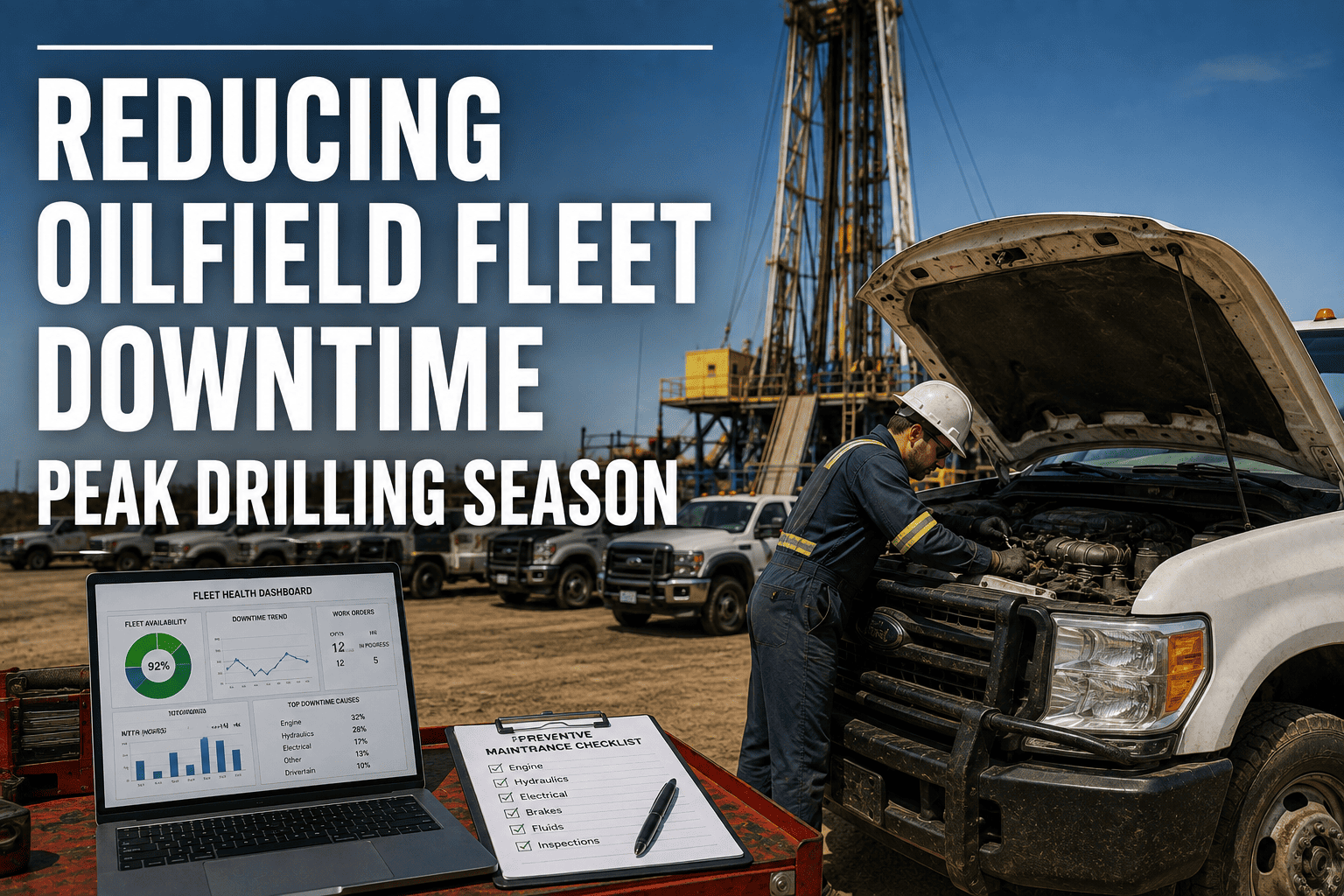
Engine diagnostic parameters reveal developing fault patterns 7-21 days before complete failure threshold when AI anomaly detection algorithms analyze OBD-II data streams. Early detection enables proactive repair scheduling during planned downtime windows preventing emergency breakdowns requiring premium repair costs and causing extended operational disruptions.
Deferred Preventive Maintenance Accelerating Component Wear
Manual PM tracking via spreadsheets results in 30-45% schedule adherence rates as services deferred during busy periods then forgotten until breakdown forces attention. Deferred maintenance accelerates component wear creating premature failures and shortening vehicle lifespan 15-25% versus properly maintained assets operating on systematic schedules.
Fuel Efficiency Degradation Indicating Mechanical Issues
Gradual fuel economy decline signals developing mechanical problems including air filter restriction, injector degradation, tire underinflation, or drivetrain inefficiency requiring diagnostic investigation. Without continuous monitoring these efficiency losses compound for months consuming excessive fuel costs before root cause identification and correction.
Comparative Performance Outliers Consuming Excessive Maintenance
Individual vehicles consuming 2-3X fleet average maintenance costs indicate chronic mechanical issues, operational misuse, or inherent asset quality problems requiring targeted intervention or strategic disposal. Without comparative benchmarking these outlier patterns remain invisible preventing corrective action on problem assets.
Lifecycle Cost Escalation Signaling Replacement Timing
Aging vehicles reach inflection point where maintenance costs escalate rapidly exceeding economic replacement threshold making continued operation more expensive than acquiring replacement asset. Without lifecycle cost tracking operators retain aging equipment beyond optimal replacement timing consuming excessive maintenance resources.
Equipment performance optimization requires continuous monitoring impossible through periodic manual inspections. FleetRabbit's automated platform detects developing issues at intervention window before they escalate into costly failures and operational disruptions. Start free trial — performance monitoring activates within 48 hours of deployment.
Four-Phase Performance Improvement Methodology
Performance optimization delivers measurable results within first 90 days through early fault detection, improved PM adherence, and targeted outlier intervention. FleetRabbit's systematic approach addresses all optimization opportunities simultaneously maximizing cumulative improvement impact. Schedule demo to review optimization methodology with your fleet data.
$1.64M Annual Value: 180-Vehicle Performance Optimization Case Study
Performance Optimization Benefits Across Leadership
Deploy Continuous Performance Monitoring Achieving 34% Cost Reduction
FleetRabbit's integrated performance optimization platform delivers systematic equipment improvement through predictive fault detection identifying issues 7-21 days before failure, automated PM scheduling achieving 90-95% adherence rate, fuel efficiency monitoring revealing mechanical degradation, comparative benchmarking targeting worst performers, and lifecycle cost modeling guiding replacement timing — achieving documented 34% maintenance cost reduction, 73% fewer breakdowns, and 18% component life extension worth $1.2-$2.4M annually for 100-vehicle fleet.