Hydrogen sulfide does not announce itself. It is colorless, heavier than air, and in concentrations above 100 parts per million it paralyzes the olfactory nerve so the driver cannot smell it even as it reaches lethal levels. Every oilfield truck operating in sour gas territory carries an H2S monitor on the driver's shirt, and every one of those monitors requires daily bump testing, periodic full calibration, and sensor replacement on a manufacturer-defined schedule. When any of those checks is missed, the monitor gives a false sense of safety that is worse than no monitor at all. This guide shows the H2S concentration levels that matter, the equipment checklist every truck must pass before entering sour gas areas, the maintenance cycle that keeps monitors reliable, and how to track readiness so no truck rolls with an untested or expired gas detector.
H2S is lethal at 700 parts per million and paralyzes the sense of smell at 100 ppm, meaning drivers cannot self-detect dangerous concentrations without a functioning monitor. Personal H2S monitors require a bump test before every shift, full calibration every 90 to 180 days depending on manufacturer, and sensor replacement every 12 to 36 months. Fleets that fail to document bump tests and calibrations face OSHA fines of 7,000 to 70,000 dollars per violation and immediate contract termination from operators in sour gas areas. A single H2S exposure event can cost 100,000 to 500,000 dollars in medical, legal, and regulatory costs.
H2S Concentration Levels and Effects
The danger of H2S is that the human nose cannot be trusted to detect it. At low concentrations the rotten-egg smell is obvious, but as concentrations rise toward dangerous levels, the olfactory nerve paralyzes within seconds and the smell disappears entirely. The scale below shows how quickly H2S escalates from permissible to lethal, and why a functioning monitor is the only reliable detection method at every concentration above 10 ppm.
The H2S Equipment Readiness Dashboard
Before any truck enters sour gas territory, five categories of gas detection equipment must be verified ready. The dashboard below shows what a real readiness check looks like, with each category displaying a status indicator, key verification data, and the timestamp of the last check. A single FAIL or DUE status means the truck does not enter the H2S area until it is corrected.
Personal H2S Monitors
PASSArea Monitors
PASSSCBA Equipment
DUECalibration Gas
PASSDocumentation
FAILThe Maintenance Cycle Every Monitor Must Follow
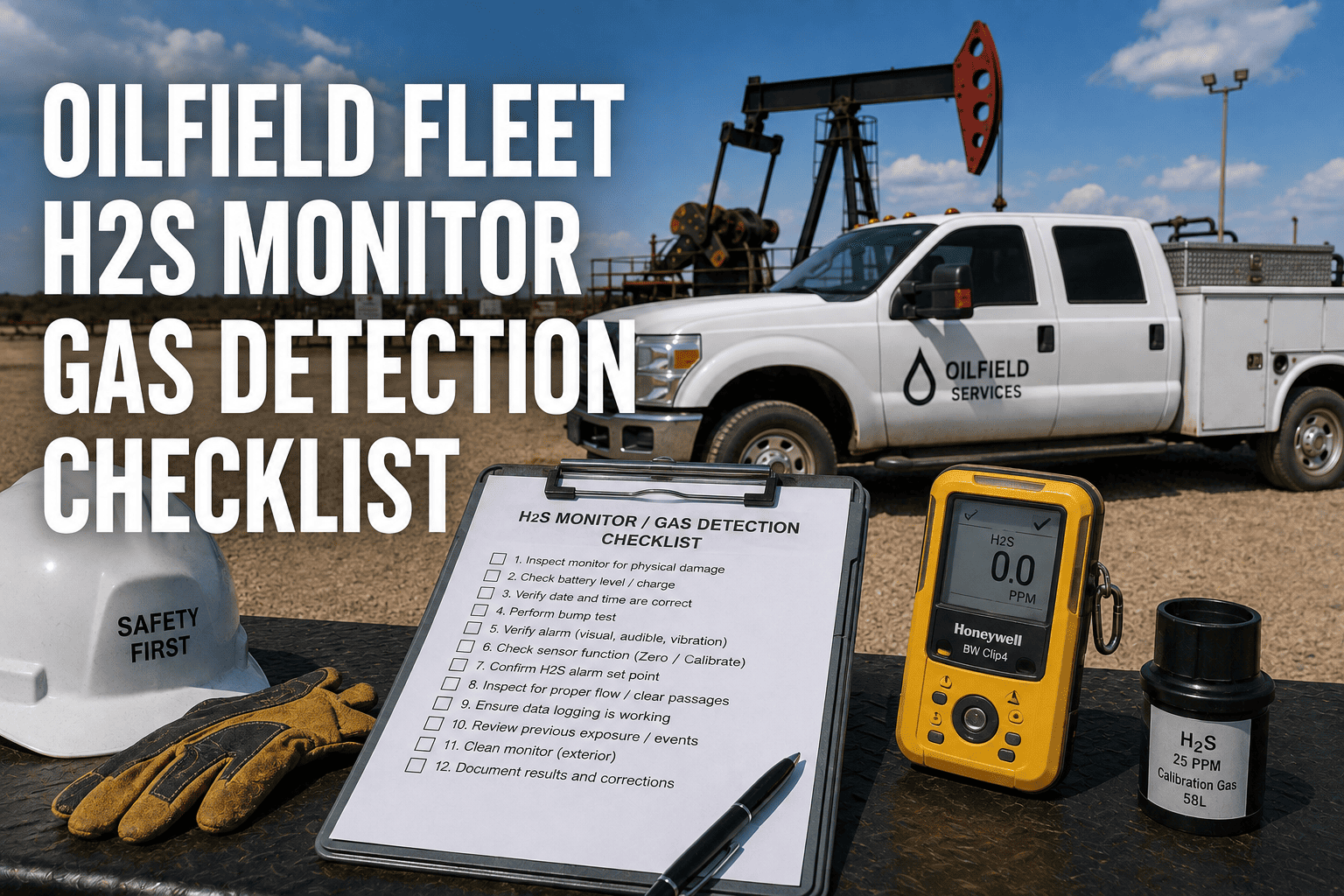
H2S monitors are not install-and-forget devices. Every monitor follows a strict maintenance cycle defined by the manufacturer and enforced by OSHA. Missing any interval in the cycle means the monitor cannot be trusted to alarm when it matters most. The six maintenance tasks below cover the full lifecycle from daily functional checks through multi-year sensor and cylinder replacement.
Bump Test
Expose monitor to known H2S concentration before every shift to verify the alarm triggers at the correct threshold. Takes 30 seconds and must be documented.
SCBA Air Check
Verify SCBA cylinder pressure is full before entering sour gas areas. A cylinder at 85% is not ready. Refill before dispatch, no exceptions.
Battery Inspection
Check battery health and charge status of all personal and area monitors. Replace batteries showing diminished capacity before they fail mid-shift.
Full Calibration
Span calibration using certified gas concentration per manufacturer schedule. Adjusts sensor readings to match known standard. Performed by trained technician.
Sensor Replacement
Replace electrochemical H2S sensors per manufacturer service life. Expired sensors produce false readings and cannot be calibrated reliably.
SCBA Hydrostatic Test
Pressure test SCBA cylinders per DOT requirements. Cylinders past their hydro test date cannot be legally filled or used and must be removed from service.
FleetRabbit maintains a digital bump test log per monitor, tracks calibration expiration with 30/60/90-day alerts, schedules sensor replacements before service life expires, and manages SCBA cylinder hydrostatic test dates per unit. Know exactly which monitors are past due before the next truck enters sour gas territory. Start free or book a 30-minute walkthrough to see your compliance status.
Common H2S Compliance Failures
Most H2S compliance failures are not caused by missing equipment. They are caused by missing documentation, expired calibrations, and sensors past their service life that still sit on a driver's shirt giving a false sense of safety. These five violations account for the majority of OSHA citations and operator compliance rejections in sour gas operations.
Monitors Not Bump Tested Before Shift
A digital bump test log per monitor ensures every driver documents the test before the truck moves. No log means no dispatch.
Calibration Expired Past 90 To 180 Day Window
Automatic calibration tracking with 30, 60, and 90-day alerts ensures no monitor passes its calibration window without triggering action.
Sensors Past Service Life
Sensor replacement dates tracked per monitor with alerts 90 days before expiration. Expired sensors are flagged and the monitor is pulled from service.
SCBA Cylinders Out Of Hydrostatic Test
SCBA cylinder serial numbers tracked with hydro test dates and automatic alerts 90 days before expiration. No cylinder past hydro stays in service.
No Documentation Of Tests And Calibrations
Every bump test, calibration, sensor replacement, and SCBA inspection is logged digitally with timestamp and technician identity. Audit-ready on demand.
How FleetRabbit Tracks H2S Equipment Readiness
FleetRabbit was built for oilfield fleets where an untested H2S monitor is not a paperwork issue. It is a life-safety issue that surfaces when a driver walks into a gas release with a device that will not alarm. The platform tracks every piece of gas detection equipment through its full maintenance lifecycle, from daily bump tests through multi-year sensor and cylinder replacement.
Digital Bump Test Log Per Monitor
Every monitor has a digital record showing the last bump test time, the driver who performed it, and the gas concentration used. No truck dispatches without a logged bump test for every monitor on board.
Calibration Expiration Tracking
Each monitor's calibration date, next due date, and certified gas batch number are tracked with automatic alerts at 90, 60, and 30 days before expiration. No calibration window closes without the fleet knowing.
Sensor Replacement Scheduling
Electrochemical sensor service life tracked per monitor with manufacturer-defined replacement dates. Alerts fire 90 days before expiration so sensors are ordered and installed before the old one produces false readings.
SCBA Cylinder And Air Tracking
SCBA cylinder serial numbers, hydrostatic test dates, air pressure levels, and facepiece inspection records tracked per unit. Cylinders past hydro test are flagged and blocked from dispatch until retested.
You can start a free FleetRabbit account and see your monitor compliance status within 24 hours, or book a 30-minute demo and we will show you exactly which monitors in your fleet have expired calibrations, past-due sensors, or missing bump test logs right now.
Frequently Asked Questions About H2S Monitor Readiness
Key Takeaways on H2S Monitor and Gas Detection Readiness
H2S is the one oilfield hazard where equipment readiness is not optional. A monitor that was not bump tested, a sensor past its service life, or an SCBA cylinder out of hydrostatic test can mean the difference between a driver walking away from a gas release and not walking away at all. The costs of getting it wrong start at 7,000 dollars per OSHA violation and escalate to millions in the event of an exposure incident.
The fix is straightforward. Bump test every monitor before every shift. Calibrate every 90 to 180 days. Replace sensors before their service life expires. Hydrostatic test SCBA cylinders every 5 years. Document every check. FleetRabbit was built to track all of this digitally, so no truck enters sour gas territory with an untested, expired, or undocumented gas detection system. The first compliance gaps typically surface within 24 hours of onboarding.
Every truck that rolls into H2S territory without a bump-tested, calibrated monitor with current sensors is one gas release away from a fatality and a six-figure regulatory fine. FleetRabbit tracks bump tests, calibration dates, sensor replacement, and SCBA cylinder compliance per truck and per monitor. Start free today or book a 30-minute demo and we will show you exactly which monitors in your fleet are past due right now.