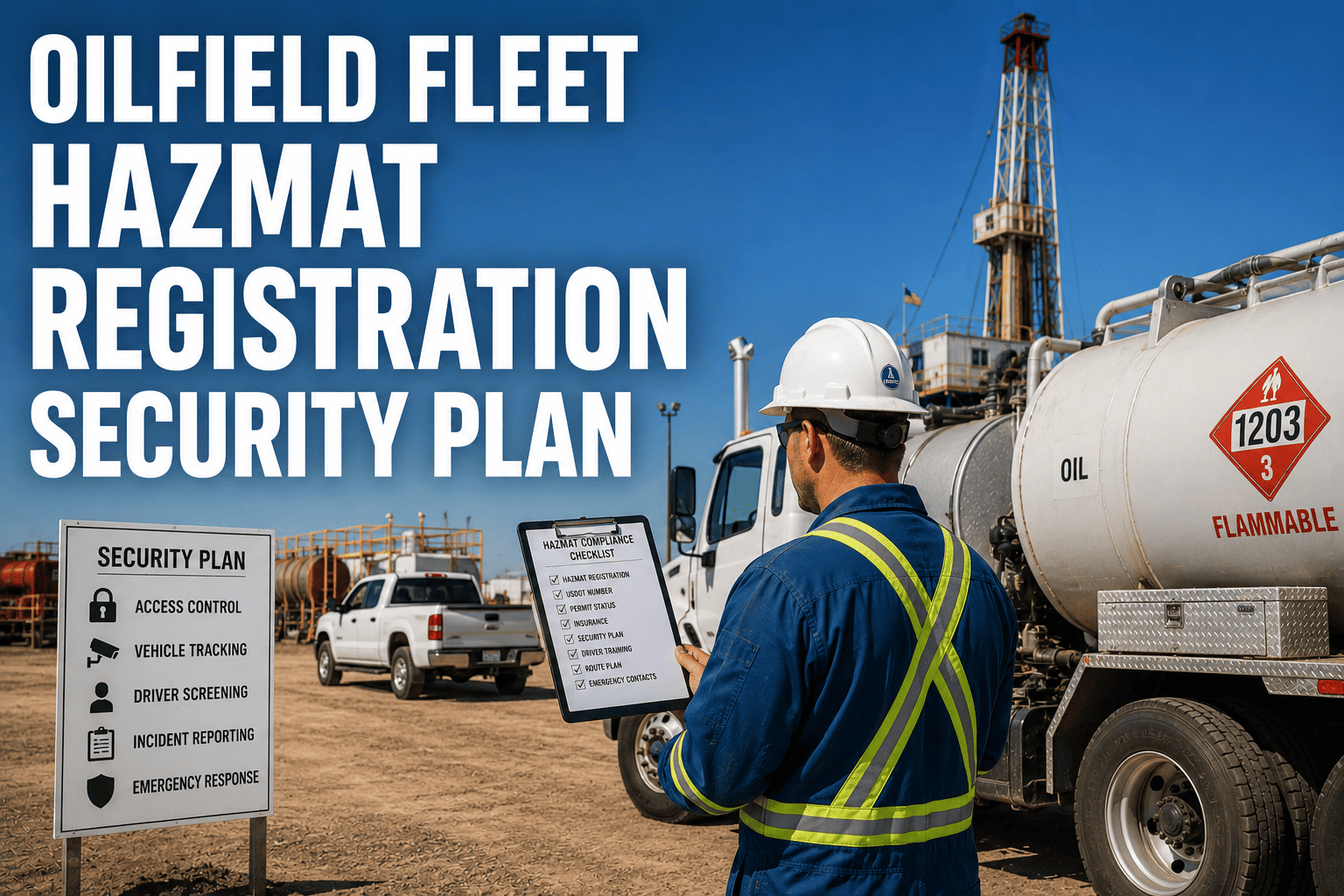
An acid truck loaded with hydrochloric acid for a well stimulation job is a routine sight on most oilfield locations. What is far less routine is whether the company running that truck has actually registered with PHMSA and put a written security plan in place. Hazmat registration is not triggered by working in the oil patch, it is triggered by specific hazard classes and quantities, and oilfield operations hit those thresholds constantly without anyone connecting the dots between the acid tank, the bulk fuel truck, and a federal filing deadline that has nothing to do with drilling.
Any carrier transporting hazardous materials that require placarding, including many oilfield acids, bulk fuel over 3,500 gallons, and certain radioactive well-logging sources, must register annually with PHMSA under 49 CFR 107.601 and, depending on the material and quantity, maintain a written security plan under 49 CFR 172.800. Registration runs July 1 through June 30 each year, and missing it can carry civil penalties running into tens of thousands of dollars per day. See how to organize registration status and security plan records for your fleet with a free FleetRabbit trial.
Do You Need to Register? The Threshold Test
PHMSA registration is not automatic for every hazmat shipment. It is triggered by specific categories, and oilfield operations frequently cross more than one of them without realizing it.
What Oilfield Hazmat Actually Looks Like
Outside the industry, hazmat conjures images of tanker trucks with skull-and-crossbones placards. Inside oilfield operations, the materials that trigger registration are often just part of the daily equipment list.
Acid and Stimulation Chemicals
Hydrochloric acid and other stimulation fluids used in well treatments are corrosive materials that commonly require placarding, putting the hauling company inside the registration requirement the moment a job is scheduled.
Bulk Fuel and Crude Oil Transport
Diesel and crude hauled in cargo tanks above the regulatory capacity threshold fall under the same bulk packaging trigger that applies to any other flammable liquid carrier, regardless of how routine the haul feels.
Radioactive Well-Logging Sources
Wireline and logging companies transporting sealed radioactive sources for formation evaluation may fall under route-controlled quantity rules, a registration trigger that has nothing to do with the volume of material and everything to do with the hazard class itself.
| Oilfield Material | Typical Hazard Class | Registration Trigger |
|---|---|---|
| Stimulation Acid | Class 8, Corrosive | Placarded quantity per shipment |
| Bulk Diesel or Crude | Class 3, Flammable Liquid | Cargo tank at or above capacity threshold |
| Well-Logging Sources | Class 7, Radioactive | Route-controlled quantity, any amount meeting the class threshold |
| Compressed Gas Cylinders | Division 2.3 or related classes | Placarding requirement regardless of cylinder count |
FleetRabbit helps oilfield carriers keep PHMSA registration status, security plan documentation, and hazmat training records organized and accessible across every truck and driver. Try it free with your current fleet, or walk through your hazmat compliance records with our team.
Building a Compliant Security Plan
Registration confirms who you are to PHMSA. A security plan, required for certain hazard classes and quantities under 49 CFR 172.800, documents how you protect the material once it is on the road. A compliant plan covers four core elements.
Personnel Security
Measures to confirm the background of job applicants who will have access to and handle the covered hazardous materials, consistent with applicable employment and privacy law.
En-Route and Unauthorized Access Security
Procedures addressing security risks during transportation, storage, and any point where the material is prepared, held, or unloaded incidental to the move.
Security Training
A documented plan for training hazmat employees on the security plan itself, including their specific duties and the actions expected of them in the event of a security breach.
Annual Review
The plan must be in writing, reviewed at least annually, and updated as circumstances change, with the current version accessible to the employees responsible for carrying it out.
Deadlines and Penalties Oilfield Carriers Miss
PHMSA registration runs on a fixed annual cycle from July 1 to June 30, with renewal due by June 30 regardless of when a carrier's operations actually started. Missing that renewal window is treated as operating without a required registration, a violation that can carry civil penalties reaching tens of thousands of dollars per day. Because oilfield contractors often add or drop hazmat-hauling capability as job types shift throughout the year, a fleet can cross the registration threshold mid-year without anyone flagging the change until an audit does it for them. If you want to walk through whether your current hauls trigger registration or a security plan requirement, it is worth taking a few minutes to book a demo with the FleetRabbit team.
Hazmat registration and security plan obligations rarely announce themselves. They show up quietly, tied to a hazard class or a tank capacity most crews never think to check against a federal threshold. Getting ahead of that means knowing exactly what your fleet hauls, in what quantities, and whether your paperwork matches it. If your operation is ready to organize its hazmat compliance records in one place, start a free trial with FleetRabbit or book a short demo to review your fleet's registration and security plan status.
FleetRabbit organizes PHMSA registration status, security plan documentation, and hazmat training records for every truck and driver in your oilfield fleet. Get started today, no credit card required.